
The dream of owning a piece of Wisconsin’s famed Bluff Country is a powerful one, but it can quickly turn into a nightmare if you overlook what’s buried beneath the surface. For many aspiring landowners, the biggest unknown isn’t the timber value or the trophy whitetail potential-it’s the condition of the septic and well systems. A failing system can mean tens of thousands in unexpected costs, derailing your plans for that perfect hunting cabin or country home. That’s why, as Wisconsin’s Land & Property Sales Specialists, we’ve created this complete septic and well inspection guide to give you the confidence and expert knowledge you need to protect your investment.
This guide demystifies the entire process from start to finish. You will learn exactly what inspectors look for, what critical questions to ask, and how to interpret the results like a seasoned professional. We’ll equip you to confidently evaluate a property’s water and waste systems, identify potential red flags before you buy, and use the inspection findings to negotiate from a position of strength. Consider this your essential roadmap to securing your piece of the Wisconsin outdoors without the costly surprises.
Key Takeaways
- Understand why a professional inspection is non-negotiable for protecting your investment and health when purchasing a rural Wisconsin property.
- This septic and well inspection guide demystifies the entire process, from locating the tank and drainfield to testing water quality and well mechanics.
- Learn to interpret the final report, confidently distinguishing between routine maintenance items and major defects that can influence negotiations.
- For sellers, discover a preparatory checklist that can prevent costly delays and demonstrate proactive property stewardship to potential buyers.
Why Septic & Well Inspections are Non-Negotiable for Wisconsin Land Buyers
When you invest in a piece of Wisconsin’s famed Bluff Country, you’re buying more than just acreage; you’re securing a self-sufficient lifestyle. Unlike properties on a city grid, your rural retreat operates on its own private well and septic system. These systems are the lifeblood of your home or cabin, yet a standard home inspection barely scratches the surface of their true condition. For the serious land buyer, understanding this hidden infrastructure is a critical step in protecting your investment.
To fully grasp the fundamentals of these essential rural systems, this overview is an excellent starting point:
A specialized inspection moves beyond the basics, providing the detailed intelligence needed to make a confident purchase. This septic and well inspection guide is designed to arm you with knowledge about the significant risks you avoid by being diligent. Ultimately, the peace of mind that comes from a clean report is invaluable, allowing you to focus on planning your food plots and enjoying your land, not budgeting for a failing drain field.
Financial Risks of Skipping the Inspection
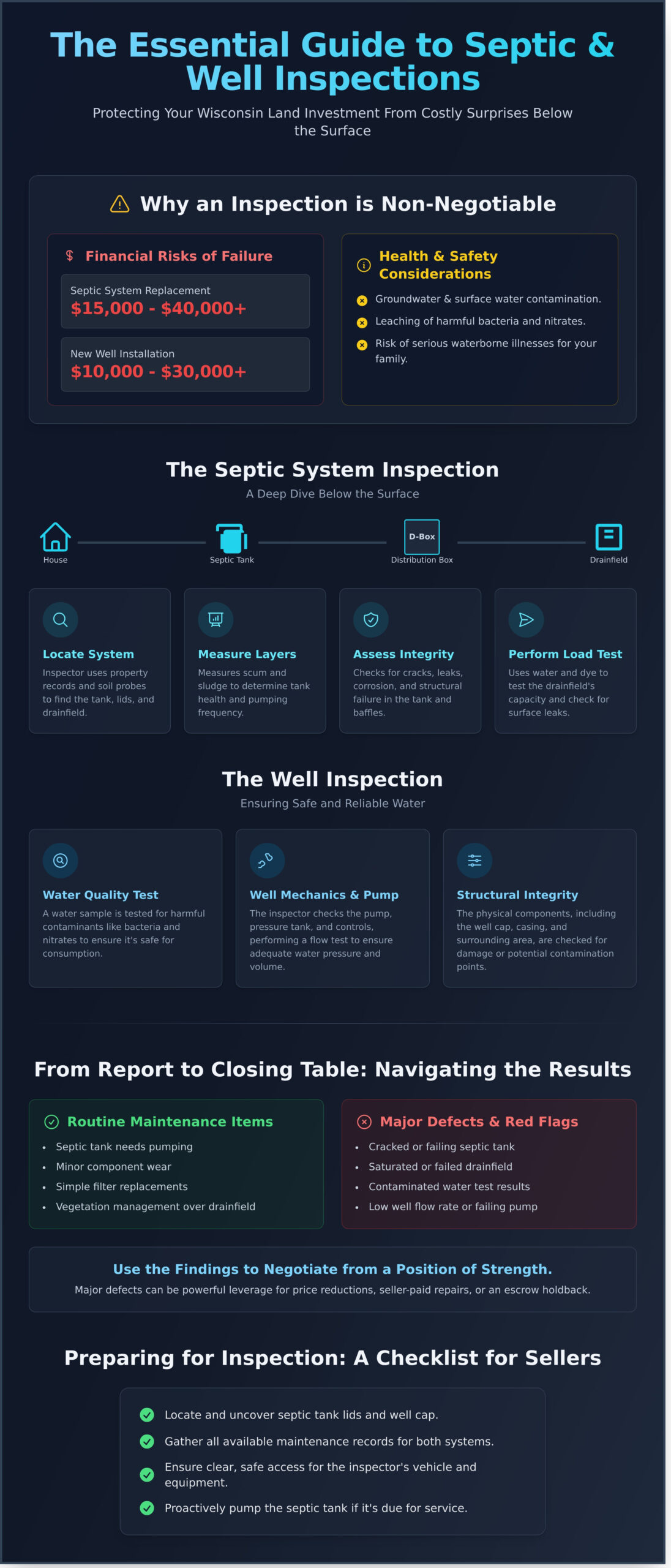
The financial consequences of an undiscovered system failure are staggering. Before you close, you must be aware of potential liabilities that can turn your dream property into a financial nightmare. Key costs to consider include:
- Septic System Replacement: A complete replacement in Wisconsin can easily cost $15,000 to over $40,000, especially for the complex mound systems required in many rural areas.
- New Well Installation: Drilling a new well can run from $10,000 to $30,000 or more, depending on the required depth and local geology.
These are not minor repairs; they are major, unbudgeted expenses that can cripple a new landowner and severely impact the property’s future resale value.
Health and Safety Considerations
Beyond the staggering costs, the health of your family and the surrounding environment is on the line. A failing septic system can contaminate groundwater and surface water-the very creeks and ponds that support the local wildlife. A basic understanding of how a septic system works makes it clear how a breakdown can leach harmful bacteria and nitrates directly into your water supply. A contaminated well can lead to serious waterborne illnesses, turning the water you rely on every day into a direct threat to your family’s well-being.
The Septic System Inspection: A Deep Dive Below the Surface
When you’re investing in a piece of Wisconsin’s prime land, the unseen infrastructure is just as critical as the acreage. A property’s septic system is its self-contained wastewater treatment plant, and its health is non-negotiable. A thorough inspection is designed to determine one core fact: does the system function as designed? Understanding this process is a crucial component of any comprehensive septic and well inspection guide. The system is typically composed of three main parts: the septic tank, which separates solids from liquid; a distribution box that channels effluent; and the drainfield (or leach field), where the treated water is naturally dispersed into the soil.
What the Inspector Checks
A professional inspection is a systematic, fact-finding mission. The specialist will first locate the tank and drainfield, using property records and soil probes to pinpoint their exact locations. Once the tank access lids are uncovered, the real evaluation begins. This includes:
- Measuring scum and sludge layers: These measurements determine if the tank is being properly maintained and when it was last pumped.
- Assessing tank integrity: The inspector checks for any cracks, leaks, corrosion, or signs of structural failure in the tank walls and baffles.
- Performing a load test: A hydraulic load test introduces a significant volume of water to simulate heavy usage, testing the drainfield’s capacity to accept effluent. A dye test may also be used to confirm that wastewater is not surfacing.
A certified inspector follows a detailed protocol, similar to the best practices outlined in the comprehensive EPA guide to septic systems, to ensure every component is rigorously evaluated.
Common Red Flags to Watch For
Before an inspector ever steps foot on the property, there are tell-tale signs of a stressed or failing system that every savvy land buyer should recognize. Keep an eye out for:
- Strong sewage or “rotten egg” odors near the tank or drainfield.
- Unusually lush, green grass or wet, spongy spots over the drainfield area.
- Slow drains, gurgling pipes, or frequent plumbing backups inside the home.
- Any evidence of wastewater pooling on the ground surface-a clear sign of system failure.
Understanding Different System Types
Not all septic systems are created equal. In Wisconsin, you will primarily encounter three types, each suited to different soil and site conditions. A key part of our septic and well inspection guide is knowing what you’re looking at. The most common are Conventional Systems, which use gravity to effectively treat wastewater in properties with suitable soil. For land with poor soil, shallow bedrock, or a high water table, a Mound System is often required, which uses an elevated sand mound to treat effluent. Finally, Aerobic Treatment Units (ATUs) are advanced, mechanized systems that use oxygen to treat waste more efficiently but require electricity and more frequent maintenance.
The Well Inspection: Ensuring Safe and Reliable Water
When you own a property in Wisconsin’s Bluff Country, your private well isn’t just a feature-it’s your lifeline. This is your only source of water for drinking, cooking, and cleaning, making its health and reliability paramount. A professional well inspection is a non-negotiable step that evaluates both the mechanical integrity of the system and the quality of the water it produces. This process is especially critical when considering older country homes, where systems have seen years of service. A thorough well assessment, a key part of any complete septic and well inspection guide, breaks down into three core components: the flow test, the equipment check, and water sampling.
Mechanical & Equipment Evaluation
An expert inspector will conduct a comprehensive evaluation of the well’s physical components to ensure they are functioning correctly and built to last. This isn’t just a quick look; it’s a detailed assessment of the system’s performance and safety. Key checkpoints include:
- Flow Test: This measures the well’s output in gallons per minute (GPM). A strong, consistent flow is essential for meeting a household’s daily demands without straining the pump.
- Pressure Tank & Switch: The inspector checks the pressure tank for proper air charge and the switch for correct operation, ensuring your water pressure remains steady and reliable.
- Well Cap & Casing: A secure, damage-free well cap and casing are your first line of defense against surface contaminants. The inspection verifies they are sealed and structurally sound.
- Setback Distances: We verify the well is a safe distance from potential contamination sources, such as the septic system, as required by state and local codes.
Water Quality Testing: What’s in Your Water?
The mechanical check confirms the system works; the water quality test confirms the water is safe to drink. This is the most critical part of this septic and well inspection guide. An inspector will draw samples according to strict protocols and send them to a certified lab for analysis. Common tests screen for:
- Bacteria: The standard test looks for Total Coliform and E. coli. Their presence indicates potential contamination from surface water or septic waste.
- Common Contaminants: Depending on the region and property history, tests often include nitrates (common in agricultural areas), arsenic, and lead.
- Understanding the Results: A failed test is not a deal-breaker. It is a diagnosis. Whether the solution is a simple shock chlorination or installing a dedicated filtration system (like a UV light or reverse osmosis), there are proven remedies to ensure your water is safe.
From Report to Closing Table: Navigating the Results
The septic and well inspection report will land in your inbox packed with technical terms, diagrams, and data. It can look intimidating, but it’s not a pass/fail grade on your dream property. Think of it as a strategic map for your investment. A challenging report doesn’t automatically mean you walk away; it means you negotiate from a position of strength, armed with undeniable facts.
Interpreting Septic System Findings
Understanding the severity of septic issues is crucial for making a sound decision. Most findings fall into one of three categories, each with a clear path forward:
- Minor Issue: The tank simply needs pumping. This is routine maintenance, similar to an oil change for a car, and represents a minor, predictable expense.
- Moderate Issue: Problems like a crushed pipe, a clogged filter, or a failing distribution box are more serious but are typically repairable without overhauling the entire system.
- Major Issue: A failed drainfield is the most significant finding. This often requires a full and costly replacement, but it provides you with a powerful point of negotiation.
Addressing Well and Water Quality Issues
Your well’s health is paramount for any rural property, providing the water for your home, garden, and any future food plots. A low flow rate might indicate the need for hydrofracking to improve water access or, in serious cases, drilling a new well. Water quality tests are equally important. A failed bacteria test often requires a simple shock chlorination, while the presence of contaminants like nitrates or arsenic may necessitate installing a permanent filtration system. These are almost always solvable problems with clear costs.
Negotiation Strategies for Buyers and Sellers
This is where an expert land agent proves their worth. Armed with a detailed inspection report, you have clear leverage. As a buyer, you can request that the seller perform specific repairs before closing or, more commonly, ask for a credit to cover the cost of future work. Sellers are often motivated to make reasonable concessions to keep the deal on track. This septic and well inspection guide is designed to empower you, and our team helps buyers make informed decisions every step of the way. As Wisconsin’s Land & Property Sales Specialists, we understand the land and the systems that support it, ensuring you secure your property on the best possible terms.
Preparing for Inspection: A Checklist for Wisconsin Sellers
When selling your Wisconsin property, a septic and well inspection is a critical milestone. A smooth inspection process is not a matter of luck; it’s the result of diligent preparation. Taking proactive steps not only prevents costly delays but also sends a powerful message to potential buyers: this property has been managed with care and expertise. Following this portion of our septic and well inspection guide ensures you’re positioned for a swift, successful transaction by saving everyone involved valuable time and money.
Being proactive demonstrates a history of responsible stewardship-a quality highly valued by discerning buyers of Wisconsin land. Use the following checklist to ensure you are fully prepared for inspection day.
Pre-Inspection Maintenance
Addressing system maintenance beforehand is the hallmark of a responsible landowner. This simple preparation can prevent minor issues from becoming major negotiation points. Before the inspector arrives, focus on these key areas:
- Pump the Septic Tank: If your septic tank hasn’t been pumped in the last 2-3 years, schedule the service. A recently pumped tank allows for a more thorough and accurate inspection of the tank’s interior components.
- Maintain Detailed Records: Keep a complete file of all septic pumping, well maintenance, and water quality tests. Providing a clear history of stewardship demonstrates your commitment to the property’s integrity.
- Address Known Issues: Fix any known problems, such as leaky faucets or running toilets, as these can affect the septic system’s load and may be flagged during the inspection.
Provide Clear Access and Documentation
An inspector’s time is valuable, and ensuring they can work efficiently reflects well on you as the seller. Unobstructed access and clear documentation are essential for a seamless evaluation of your property’s vital systems.
- Ensure Unobstructed Access: Clear any brush, snow, or stored items from around the wellhead and septic tank lids or manholes. Ensure any gates or access points to these areas are unlocked on inspection day.
- Gather All Relevant Paperwork: Compile any existing documentation you have for the systems. This includes original installation permits, system drawings or “as-builts,” and all maintenance records you’ve kept.
A prepared seller makes a superior impression and builds crucial trust. Our expert seller’s agents are specialists in marketing Wisconsin’s premier land and properties and can advise you on presenting your property in its best possible light. For more information on selling your land, contact Coulee Land Company today.
Secure Your Wisconsin Dream with Confidence
Purchasing a rural property is about securing a legacy, and in Wisconsin, that legacy depends on reliable water and waste systems. As we’ve covered, a professional inspection is not merely a suggestion-it is a critical safeguard for your investment. Understanding the condition of the septic system and the well empowers you to negotiate effectively and ensures the long-term viability of your country home or hunting retreat. This is the due diligence that turns a good property into a great one.
While this septic and well inspection guide provides the map, you still need an expert guide for the territory. As Wisconsin’s Land & Property Sales Specialists, we bring deep expertise in rural properties and an unmatched knowledge of Western Wisconsin’s famed Bluff Country. We live and breathe this land, and we understand the intricate details that matter most.
Let our team help you navigate the final steps toward ownership with confidence. Find your perfect Wisconsin country home or hunting property today. Your piece of the wild awaits.
Frequently Asked Questions About Septic & Well Inspections
How much does a septic and well inspection cost in Wisconsin?
In Wisconsin, a combined septic and well inspection typically ranges from $500 to $900. The cost varies based on system complexity and whether septic tank pumping is included, which is often required for a thorough evaluation. Additional water quality tests for bacteria or nitrates will also affect the price. Understanding these variables is a key part of our septic and well inspection guide, ensuring you can accurately budget for this essential step when investing in a rural property.
Who is qualified to perform a septic and well inspection?
For a septic system, you need a Wisconsin-licensed Master Plumber, POWTS (Private Onsite Wastewater Treatment System) Inspector, or a Certified Soil Tester. Well inspections demand a licensed Well Driller or Pump Installer. Using unqualified individuals is a risk you cannot afford when purchasing prime land. Ensuring your inspector holds the proper state credentials is non-negotiable for a reliable assessment of these critical systems, protecting your investment for years to come.
How long do septic systems and wells typically last?
A well-maintained septic system in Wisconsin can last 20 to 40 years, depending on the type and soil conditions. The well itself, including the casing, can have a lifespan of over 50 years, though components like the pump may need replacement every 10-15 years. Proper stewardship and regular maintenance are paramount to maximizing the life of these systems, ensuring your property remains a functional and valuable asset for generations of outdoor enjoyment.
What are the basic maintenance tasks for a new owner of a septic and well system?
As a new property owner, your primary septic task is pumping the tank every 3-5 years and protecting the drainfield from heavy equipment or soil compaction. For the well, conduct annual water quality tests and have the pump and pressure tank inspected periodically. This proactive approach is fundamental land management, ensuring your systems operate efficiently and safeguarding both your family’s health and the long-term value of your hunting paradise.
Are there specific septic and well regulations in Buffalo County, WI?
Absolutely. Buffalo County, like many prime hunting regions in Wisconsin, has its own specific ordinances governing private systems that often go beyond state minimums. The Buffalo County Zoning Department enforces regulations for setbacks, system types, and mandatory maintenance programs for all POWTS. As local land specialists, we guide our clients through these specific requirements to ensure any property you consider is fully compliant, securing your dream of owning a piece of record-book whitetail country.
Can a home sale be contingent on the septic and well inspection results?
Yes, and we strongly advise it. Making your Offer to Purchase contingent on a satisfactory septic and well inspection is a standard and critical safeguard for any buyer. This clause provides you with the power to renegotiate the price, request repairs, or even terminate the offer if significant defects are uncovered. It is an essential tool for protecting your investment and ensuring the property meets your standards before you commit to the purchase.
What happens if the well runs dry during a flow test?
If a well runs dry during a flow test, it’s a significant red flag indicating poor water recovery, a failing pump, or a depleted aquifer. This is a deal-breaker for many buyers, as it signals an unreliable water source. The next step involves further investigation, potentially by a hydrogeologist, to determine the cause. The solution could be as costly as drilling a new well, a major factor that must be negotiated before closing on your Bluff Country property.