
For anyone who hunts, farms, or invests in land in Wisconsin, one question always comes up:
Is now the right time to buy… or the best time to sell?
Timing the land market matters. Buying at the wrong time can mean overpaying, and selling
without the right strategy can leave serious money on the table.
That’s exactly why I spend so much time studying land values and market trends across the state.
As a land specialist with Coulee Land Company, I work directly with buyers and sellers of
hunting, recreational, and rural properties every day. I’m constantly evaluating habitat quality,
access, timber value, and buyer demand — not just acreage numbers.
Because the truth is:
Land value isn’t just about soil.
It’s about wildlife, access, terrain, and long-term potential.
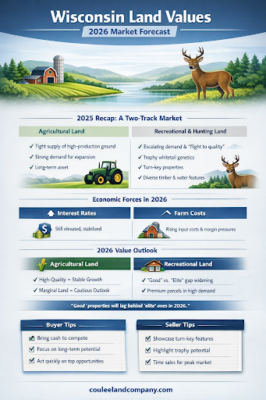
This breakdown shares my outlook for Wisconsin land values per acre in 2026, along with the key trends that will impact buyers and sellers across the state.
Key Takeaways for the 2026 Land Market
• Wisconsin land values are expected to remain stable to slightly increasing in 2026
• Premier hunting land continues outperforming average farmland in many areas
• Interest rates may slow some buyers, but cash buyers remain extremely active
• Western Wisconsin’s Driftless Region continues commanding top recreational land prices
Looking Back at the 2025 Wisconsin Land
Market
Before we talk about where land values are going, it helps to understand what shaped the
market over the last year. 2025 showed something I see often in land sales:
Not all land markets move the same way.
Agricultural ground and recreational land were influenced by very different factors. Interest rates created a little hesitation for some buyers, but demand for quality land never disappeared. Instead, the market shifted toward higher-quality properties with proven value.
Agricultural Land: Stable and Reliable
Wisconsin farmland held steady through 2025.
Productive ground is still in limited supply, and farmers looking to expand operations continue
competing for good acres. High-quality cropland remains one of the most stable assets in the Midwest, and that’s unlikely to change anytime soon.
As we move into 2026, I expect prime farmland to remain strong, especially in areas with top-
tier soil productivity and consistent rental demand.
Recreational Land: Demand for the Best
Properties
The recreational land market has been driven by one big trend:
Buyers want quality.
The properties attracting the most attention are those that already have the features serious
hunters and outdoor buyers want:
• Established food plots
• Good trail systems
• Water sources
• Diverse timber
• Proven wildlife history
Turn-key hunting properties — especially in Western Wisconsin — are still commanding
premium prices. Buyers today are looking for land they can hunt immediately, not spend years developing.
Key Factors That Will Influence Land
Prices in 2026
Several larger economic factors will shape land values in the coming year.
Interest Rates
Interest rates remain higher than they were several years ago, which has slowed some financed buyers. But something interesting has happened in the land market:
More buyers are paying cash. Serious hunting land buyers and investors often treat land as a long-term asset, so many are choosing to bypass financing altogether.
Farm Income and Commodity Prices
Crop prices, fuel costs, and fertilizer expenses all affect how aggressively farmers pursue
additional acreage. Even with tighter margins, productive farmland remains valuable because it produces income year after year.
Conservation Programs and Tax Programs
Programs like:
• CRP
• Managed Forest Law (MFL)
• Conservation easements
can significantly influence land value by lowering taxes or creating income opportunities.
Many recreational properties benefit from these programs, especially when they’re managed
properly for habitat and timber growth.
Forecast: Wisconsin Agricultural Land
Values in 2026
Based on current trends, farmland values should remain strong. Prime Cropland, Top producing ground could range roughly between $12,500 – $16,000+ per acre depending on soil quality and location. Competition for this land remains strong.
Pasture and Grazing Ground
Livestock land will likely fall in the range of
$4,500 – $7,500 per acre with premiums for properties that include:
• fencing
• water access
• proximity to dairy operations
Recreational and Hunting Land Outlook
for 2026
This is where my work really focuses.
And where land values often surprise people.
In many cases, high-quality hunting land can rival or exceed farmland prices.
Why?
Because buyers aren’t just buying acres.
They’re buying an experience and a legacy property.
Trophy Whitetail Potential
Land capable of producing mature bucks will always bring a premium. Areas known for trophy genetics — especially in Western Wisconsin — remain some of the most desirable hunting properties in the country.
Buyers look for:
• food plot potential
• thick bedding cover
• strong habitat diversity
• low hunting pressure history
When those factors line up, the value can increase dramatically.
Water, Timber, and Terrain
Certain property features consistently drive value higher:
• Creek or river frontage
• Spring-fed water sources
• Mature hardwood timber
• Ridge systems and valleys
In the Driftless region, these natural features create ideal travel corridors and bedding areas for deer. That’s why properties there continue to attract serious buyers.
Access and Improvements
Access is one of the most overlooked value drivers.
Good properties need:
• legal access
• quality trails
• easy entry points for equipment
Add a cabin, shed, or pole barn and the value can increase even more. Buyers love properties that are ready to enjoy from day one.
Regional Land Value Trends Across
Wisconsin
Wisconsin’s land market varies dramatically depending on the region.
Driftless Area (Western Wisconsin)
Counties like Buffalo, Trempealeau, and Vernon remain some of the most desirable hunting
regions in North America. The steep ridges, coulees, and hardwood forests create ideal whitetail habitat. Demand here remains extremely strong, and I expect that trend to continue into 2026.
Northern Wisconsin
The Northwoods market is driven by:
• timber value
• lake frontage
• recreational opportunities
Large tracts with timber potential remain a stable investment. Waterfront properties continue attracting buyers looking for a private getaway.
Central and Southern Wisconsin
Farmland dominates much of this region, but mixed parcels with timber and wetlands can offer excellent hunting potential. These properties sometimes fly under the radar but can produce exceptional wildlife.
What This Means for Buyers in 2026
If you’re planning to buy land next year, preparation is key. The best properties don’t stay on the market long.
Buyers should:
• have financing ready
• understand their goals
• work with a land specialist who knows the market
Having the right guidance can make the difference between finding an average property and securing a truly special one.
What This Means for Sellers in 2026
Selling land today requires more than just listing acres online. The properties that bring the highest prices are marketed correctly. That means telling the full story of the property.
High-end listings should include:
• professional photography
• drone video
• detailed mapping
• habitat analysis
When buyers can clearly see the potential of a property, they’re far more willing to pay premium
prices.
Why Work With a Land Specialist
Land is different than selling houses.
It requires a deeper understanding of:
• habitat
• wildlife patterns
• timber value
• access
• land management
That’s where working with someone who specializes in land really matters. Through my work with Coulee Land Company, I help clients evaluate not just acreage — but the true potential of a property. Because I’m a hunter and land manager myself, I approach every property the way serious buyers do.
Thinking About Selling Land in 2026?
If you’re considering selling your property, understanding its true market value is the most
important place to start. Every property is unique, and small details can make a big difference in price. If you’d like a professional evaluation of your land, I’d be happy to take a look and walk you through the current market.
Working with a land specialist means you’re getting insight from someone who studies the land buyers are looking for.