
You’ve secured your piece of Wisconsin’s legendary landscape, a property filled with untapped potential. Yet, the dream of consistently seeing mature bucks can feel distant when faced with the complexities of wisconsin land management for wildlife. The endless talk of food plots, timber stand improvement, and bedding areas can feel overwhelming, leaving many landowners wondering where to even begin turning their vision into reality.
As Wisconsin’s Land & Property Sales Specialists, we know the difference between a good property and a legendary one lies in strategic execution. This guide is your definitive blueprint. We will cut through the noise and provide the clear, actionable strategies needed to attract and hold trophy whitetail deer, whether you’re managing the rugged bluffs of Buffalo County or the dense forests of the Northwoods.
You will learn the foundational principles to create a thriving wildlife habitat, develop a year-round management plan, and ultimately increase both the recreational and financial value of your investment. It’s time to unlock your property’s true potential and create the premier hunting destination you’ve always envisioned.
Foundational Principles of Wildlife Management in Wisconsin
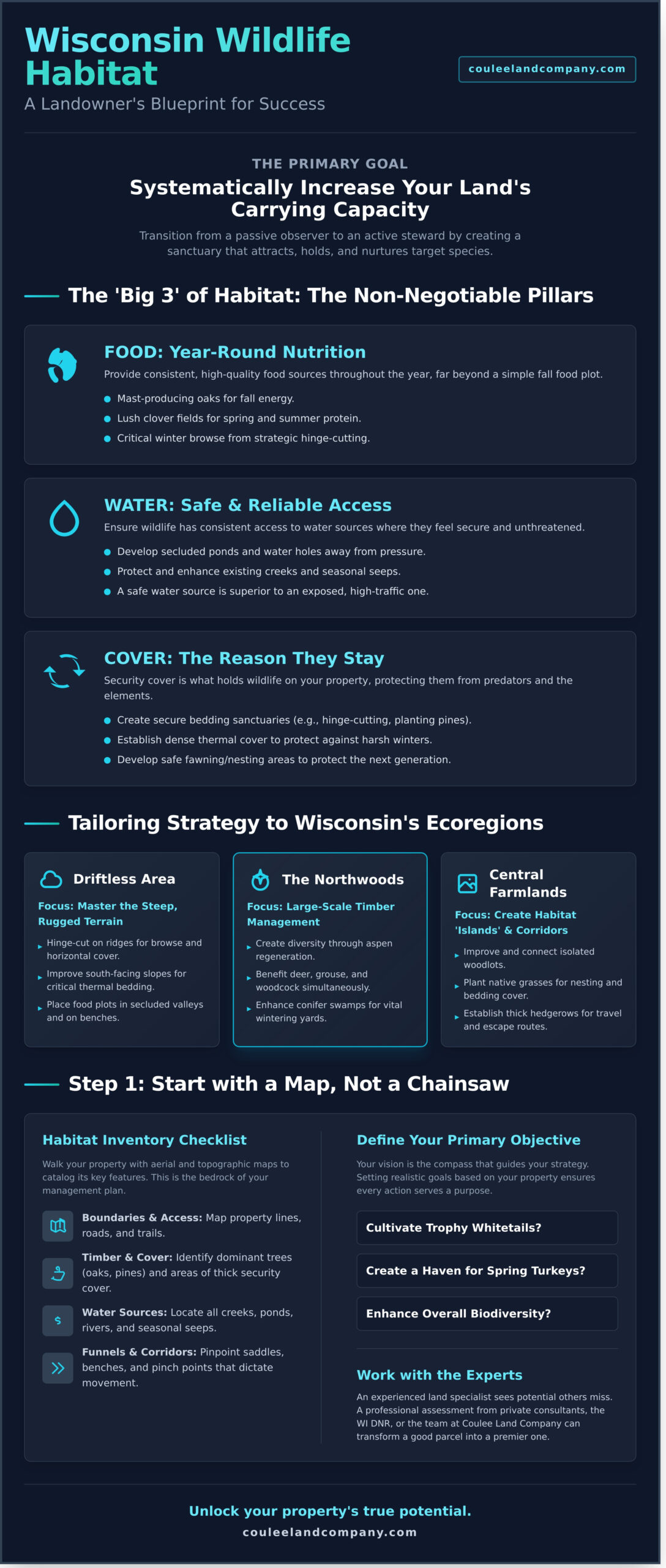
Owning a piece of Wisconsin is more than a purchase; it’s an investment in a legacy. To truly unlock a property’s wildlife capabilities, a landowner must transition from being a passive observer to an active steward. This is the essence of superior wisconsin land management for wildlife. The primary goal is simple yet profound: to systematically increase your land’s carrying capacity. This transforms your parcel into a sanctuary that not only attracts but holds and nurtures target species, from trophy whitetail bucks to thriving turkey populations. This strategic approach is built upon the well-documented foundational principles of habitat conservation, which we adapt for our state’s unique and diverse landscapes.
Every decision, from cutting a tree to planting a food plot, should be a deliberate step toward making your property the most desirable home for wildlife in the area. This requires a focus on the four key pillars of habitat: food, water, cover, and the space to utilize them.
The ‘Big 3’ of Habitat: Food, Water, and Cover
At the heart of any superior habitat plan are the three non-negotiable pillars that wildlife require to thrive. Neglecting even one can severely limit your property’s potential.
- Food: Provide consistent, year-round nutrition far beyond a simple fall food plot. Think mast-producing oaks, lush clover fields for spring, and critical winter browse from hinge-cut trees.
- Water: Ensure wildlife has safe, reliable access. A secluded pond or protected creek access is far superior to exposed, high-traffic sources where deer feel vulnerable.
- Cover: This is what holds wildlife on your property. Create secure bedding sanctuaries, dense thermal cover for harsh winters, and safe fawning areas to protect the next generation.
Understanding Wisconsin’s Ecoregions: Bluff Country vs. Northwoods
A successful management strategy is never one-size-fits-all; it must be expertly tailored to the land itself. Wisconsin’s diverse ecoregions present unique challenges and amazing opportunities for the diligent landowner.
- The Driftless Area (Bluff Country): Here, management revolves around mastering the steep, rugged terrain. We focus on hinge-cutting on ridges to create browse and horizontal cover, improving south-facing slopes for critical thermal bedding, and strategically placing food plots in secluded valleys to draw in mature bucks.
- The Northwoods: This region demands a focus on large-scale timber management. The key is creating diversity within vast forests through practices like aspen regeneration-which is dynamite for deer, grouse, and woodcock-and enhancing conifer swamps to serve as vital wintering yards.
- Central Farmlands: In these agricultural landscapes, the goal is to create habitat “islands” and corridors. This involves improving isolated woodlots, planting native grasses, and establishing thick hedgerows that provide crucial travel and escape cover.
Step 1: Assessing Your Property and Setting Clear Goals
The most successful land managers don’t start with a chainsaw; they start with a map and a plan. Before you plant a single tree or establish a food plot, the critical first step in effective wisconsin land management for wildlife is to develop a deep, comprehensive understanding of your property. This foundational stage involves taking inventory of your current assets and defining exactly what success looks like for you. By using free tools like aerial and topographic maps, you can gain a bird’s-eye view that reveals the hidden potential of your land and informs every decision you make moving forward.
Reading Your Land: A Habitat Inventory Checklist
Before you can enhance a habitat, you must intimately understand its current state. Walk your property with a map in hand and begin cataloging its key features. This initial inventory is the bedrock of a successful management plan. Your checklist should include:
- Boundaries and Access: Map your property lines, access points, roads, and existing trails. Note how you and wildlife currently move through the parcel.
- Timber and Cover: Identify your dominant timber types-are they mast-producing oaks, early successional aspens, or thermal-cover pines? Note areas of thick undergrowth that serve as security cover.
- Water Sources: Locate every creek, pond, river, and even seasonal seeps. Water is a critical resource that dictates wildlife movement.
- Natural Funnels and Corridors: Pinpoint existing bedding areas on south-facing slopes, saddles in ridges, and other natural travel corridors that deer and other wildlife use daily.
Defining Your Primary Objective
Every property is unique, and so is every landowner’s vision. Is your primary goal to cultivate trophy whitetails, create a haven for spring turkeys, or simply to enhance the overall biodiversity of your land? Your objective is the compass that guides your entire strategy. A 40-acre parcel in the Northwoods will have different potential than 200 acres in Buffalo County’s famed bluff country. Setting realistic expectations based on your property’s size, location, and natural features ensures that every management action, from timber stand improvement to food plot placement, serves a distinct purpose.
Working with the Experts
An experienced land specialist can see the potential in a property that others might miss, identifying subtle terrain features and habitat opportunities that can transform a good parcel into a premier one. This professional assessment is absolutely crucial when evaluating new Wisconsin hunting properties. In addition to private consultants, the Wisconsin Department of Natural Resources (DNR) provides valuable publications and can connect you with local biologists. At Coulee Land Company, our team doesn’t just sell land; we help buyers identify parcels with superior wildlife capabilities and develop the vision to unlock their full potential.
Core Habitat Improvement Strategies for Wisconsin Wildlife
Transforming your property into a true wildlife haven hinges on a simple principle: provide for an animal’s core needs better than your neighbors. Effective wisconsin land management for wildlife focuses on the proven triad of food, water, and cover. The goal is not to create a uniform landscape, but rather a diverse mosaic of habitats that appeals to a wide range of species, from trophy whitetail bucks to wild turkeys and grouse. By prioritizing projects that offer the biggest impact for your time and investment, you can implement small changes that yield significant, compounding results year after year.
Enhancing Food Sources Year-Round
A sustainable food plan goes far beyond a single food plot. The most resilient strategy is to enhance the native forage your property already offers. Techniques like hinge-cutting and Timber Stand Improvement (TSI) open the forest canopy, allowing sunlight to stimulate the growth of nutrient-rich browse. You must also protect and release your most valuable hard mast trees, like white and red oaks, by removing competing, less desirable trees. For more specific guidance on these forestry practices, the UW Extension wildlife management resources offer an incredible wealth of information. Supplement these natural sources by establishing soft mast orchards with hardy apple or pear trees. Use food plots strategically as a high-value nutritional supplement, especially during late season, not as the entire foundation of your plan.
Developing Water and Cover
Food will attract wildlife, but security cover and water are what will hold them. Mature deer, in particular, require sanctuaries where they feel completely secure. You can create these bedding thickets with strategic hinge-cutting, felling trees to create a tangled web of horizontal cover that is nearly impenetrable to predators and humans. Nearby, digging small, secluded waterholes provides a critical resource that minimizes a deer’s need to travel. To further enhance cover, establish stands of native warm-season grasses like switchgrass, which offer superb thermal protection in winter and ideal fawning and nesting habitat in the spring. Finally, focus on creating edge-the transitional zones where two different habitat types meet, such as a timber stand and a grassy field. These edges are biodiversity hotspots and natural travel corridors for countless species.
Managing for Key Wisconsin Species: From Whitetails to Grouse
A successful property is more than just land; it’s a purposefully managed ecosystem. Effective wisconsin land management for wildlife begins by tailoring practices to the specific annual cycle and habitat requirements of your target species. While every animal has unique needs, a sound plan often starts with the whitetail, as creating superior deer habitat provides a powerful foundation that benefits a multitude of other game and non-game animals across your property.
The Whitetail Deer: Wisconsin’s Ultimate Prize
For the serious landowner, managing for whitetails is a year-round commitment centered on food and security. This means providing secure bedding areas-thick, nasty cover for does and fawns, and separate, undisturbed sanctuaries for mature bucks. A diverse food strategy is equally vital, with plots that offer nutrition from early green-up through the harsh late season. This is especially critical in legendary trophy regions like Buffalo County, where superior genetics meet superior habitat. Use techniques like hinge-cutting and trail creation to improve cover and create natural funnels that dictate deer movement for predictable stand access.
Wild Turkey: Roost Trees and Nesting Habitat
A thriving turkey population requires two distinct habitat types. First, they need mature, open-canopy hardwoods like oaks or pines for safe nightly roosting. Second, and just as critical, are grassy openings and field edges. These areas provide essential nesting cover and serve as “bugging” areas where poults can feast on protein-rich insects. To further attract and hold flocks, consider establishing small, dedicated plots of chufa, clover, or winter wheat.
Ruffed Grouse and Woodcock: The Young Forest Connection
Often called “partridge,” the ruffed grouse thrives where other species cannot: in young, dense, regenerating forests. The most effective tool for creating this habitat is active timber management. Implementing rotational clear-cuts or heavy thinning, particularly in aspen stands, stimulates the thick, brushy regrowth that grouse and woodcock require for cover and food. A forest in the 5-to-15-year-old age class is grouse paradise, and this dynamic approach to forestry creates some of the most diverse and vibrant habitat possible on any property.
A Year-Round Wisconsin Land Management Calendar
A successful property transformation doesn’t happen by accident; it’s the result of a deliberate, year-round strategy. Breaking down your plan into a seasonal calendar makes large projects feel manageable and ensures critical tasks are performed at the optimal time. This proactive schedule is the foundation of effective wisconsin land management for wildlife, aligning your efforts with nature’s cycles to maximize results and minimize disturbance to the game you’re cultivating.
Winter (Dec-Mar): The Heavy Lifting Season
With the ground frozen and the woods open, winter is the prime time for significant habitat work. This is when you conduct Timber Stand Improvement (TSI) to open the canopy and encourage valuable undergrowth. It’s the ideal season for hinge-cutting to create immediate bedding and browse for whitetails. Use this period to cut new access trails with minimal impact and get your seed and tree orders placed for spring planting.
Spring (Apr-May): New Growth and Planting
As the land awakens, your focus shifts to regeneration. Execute prescribed burns to clear thatch, control undesirable species, and stimulate the native seed bank. This is your window for planting trees and shrubs that provide long-term food and cover. Prepare and plant your food plots for the coming season and begin a vigilant campaign against invasive species like buckthorn and honeysuckle before they get a foothold.
Summer (Jun-Aug): Maintenance and Scouting
Summer is about maintaining momentum and gathering intelligence. Keep your trails and food plot perimeters mowed to ensure clean access and create attractive edge habitat. Continue your assault on invasive plants during their peak growing season. This is also the perfect time for low-impact scouting. Deploy trail cameras to take a stress-free inventory of your deer herd, identifying target bucks and monitoring fawn recruitment.
Fall (Sep-Nov): Hunt, Observe, and Plan
This is the season you’ve worked for. While you enjoy the fruits of your labor during hunting season, your work isn’t over. Use your time in the stand to be a keen observer. Note how deer and other wildlife use the property and the improvements you’ve made. This firsthand data is invaluable for refining next year’s plan. In late fall, frost-seed clover or brassicas into existing plots to get a jump on next spring.
Executing a comprehensive land management plan requires expertise and dedication. If you’re looking to buy, sell, or maximize the potential of your own piece of Wisconsin, the specialists at Coulee Land Company have the deep, authentic knowledge to guide you.
Partnering with Experts to Maximize Your Land’s Potential
Transforming a parcel of land into a thriving wildlife haven is a rewarding journey, but you don’t have to walk it alone. Leveraging professional expertise is the single most effective way to accelerate your results and maximize your investment. An expert sees the potential in a property that others might miss, understanding how strategic improvements can dramatically increase both its recreational enjoyment and future resale value. A well-executed plan for wisconsin land management for wildlife turns a good property into a great one.
The Role of a True Land Specialist
A true land specialist does more than facilitate a transaction; they possess the vision to identify properties with the ‘bones’ for superior wildlife habitat. They understand how timber stand improvement, food plot placement, and access routes directly impact property value and huntability. This expertise is invaluable whether you are buying a project property or preparing for selling their land as a premier, turnkey hunting destination.
Wisconsin Programs and Resources
Wisconsin provides a wealth of resources for landowners committed to conservation and habitat improvement. Tapping into these programs can provide both expert guidance and financial assistance, making your management goals more attainable. Key resources include:
- Wisconsin DNR: Your local DNR foresters and wildlife biologists are incredible sources of free, on-the-ground advice tailored to your specific property and objectives.
- Natural Resources Conservation Service (NRCS): The NRCS offers powerful cost-sharing programs, such as EQUIP, that can help fund habitat projects like pollinator plantings, invasive species removal, and forestry practices.
- Managed Forest Law (MFL): Enrolling in the MFL program can provide significant property tax benefits in exchange for following a sustainable forest management plan, which often aligns perfectly with wildlife goals.
Achieve Your Vision with Coulee Land Company
At Coulee Land Company, we are the synthesis of real estate expertise and a deep, authentic passion for land stewardship. Our agents are dedicated land managers and hunters who live the lifestyle we promote. We specialize in helping clients find properties that perfectly match their wildlife management goals. From the famed Bluff Country to the Northwoods, we know what it takes to create an exceptional property. To get started, talk to one of our specialists like Bryan Lemke and let us help you turn your vision into a reality.
Transform Your Land into a Wildlife Legacy
Effective stewardship of your Wisconsin property is a journey, not a destination. As we’ve explored, it begins with a clear vision-assessing your land’s unique potential and setting achievable goals. From there, strategic habitat improvements become the building blocks for a thriving ecosystem that can attract and hold everything from trophy whitetails to ruffed grouse. Executing a thoughtful plan for wisconsin land management for wildlife is the most rewarding investment you can make in your outdoor heritage.
If you’re ready to find the perfect canvas for your vision, the next step is to partner with a team that lives and breathes this work. As specialists in Buffalo County-the #1 trophy whitetail county in the nation-our expert agents are also passionate hunters and land managers with a proven track record of buying and selling premier recreational properties. We don’t just sell land; we help you acquire the foundation for your wildlife masterpiece.
Let our unparalleled expertise guide you. View our premier Wisconsin hunting properties and start building your legacy today.
Frequently Asked Questions About Land Management for Wisconsin Wildlife
How much land do I need to effectively manage for wildlife in Wisconsin?
The effectiveness of management hinges more on habitat quality than sheer acreage. Significant improvements can be made on parcels as small as 10-20 acres, especially if they connect to larger blocks of habitat. However, to truly hold and manage a resident deer herd with dedicated food, water, and sanctuary areas, a property of 40 acres or more provides a superior foundation for creating a year-round wildlife haven and seeing consistent results.
Can I manage my property for both deer and turkeys at the same time?
Absolutely. The habitat needs of whitetail deer and wild turkeys overlap significantly, and managing for one often benefits the other. Practices like timber stand improvement, creating edge habitat, and planting mast-producing trees like oaks provide food and cover for both species. Establishing food plots with a mix of clover and grains will attract trophy whitetails while also providing crucial forage and bugging areas for turkey poults, creating a dynamic and productive property.
What is the single most impactful improvement I can make for deer habitat?
While food plots are valuable, the single most critical improvement is creating secure bedding and sanctuary cover. Mature bucks will not reside on a property where they don’t feel safe. Using techniques like hinge-cutting to create thick horizontal cover or planting dense stands of conifers like spruce provides the security and thermal protection that holds deer on your land. A buck that beds on your property is a buck you can hunt.
How long does it take to see results from land management efforts?
The timeline for results varies by the project. You can see increased wildlife usage from a new food plot or water source within the first season. More substantial changes, like timber stand improvement or planting trees for cover, are long-term investments. You might see deer browsing new growth immediately, but it can take 3-5 years for those areas to become prime bedding cover and a decade or more for significant mast production from newly planted oaks.
Are there any Wisconsin state programs that help pay for habitat improvements?
Yes, Wisconsin landowners have access to several excellent cost-share programs. The Wisconsin DNR offers technical assistance through its Deer Management Assistance Program (DMAP). Furthermore, federal programs administered through the Natural Resources Conservation Service (NRCS), such as the Environmental Quality Incentives Program (EQIP), can provide significant financial assistance for projects like timber stand improvement, native grass plantings, and creating pollinator habitat. These programs are powerful tools for achieving your property goals.
How does managing for wildlife affect my property’s value?
Strategic wisconsin land management for wildlife almost always increases a property’s recreational and market value. A turnkey hunting property with established food plots, trail systems, secure cover, and a history of holding mature bucks is a highly desirable asset. These improvements demonstrate the land’s full potential and command a premium price, transforming it from a simple parcel of land into a high-quality recreational property that produces tangible results and lasting memories.