
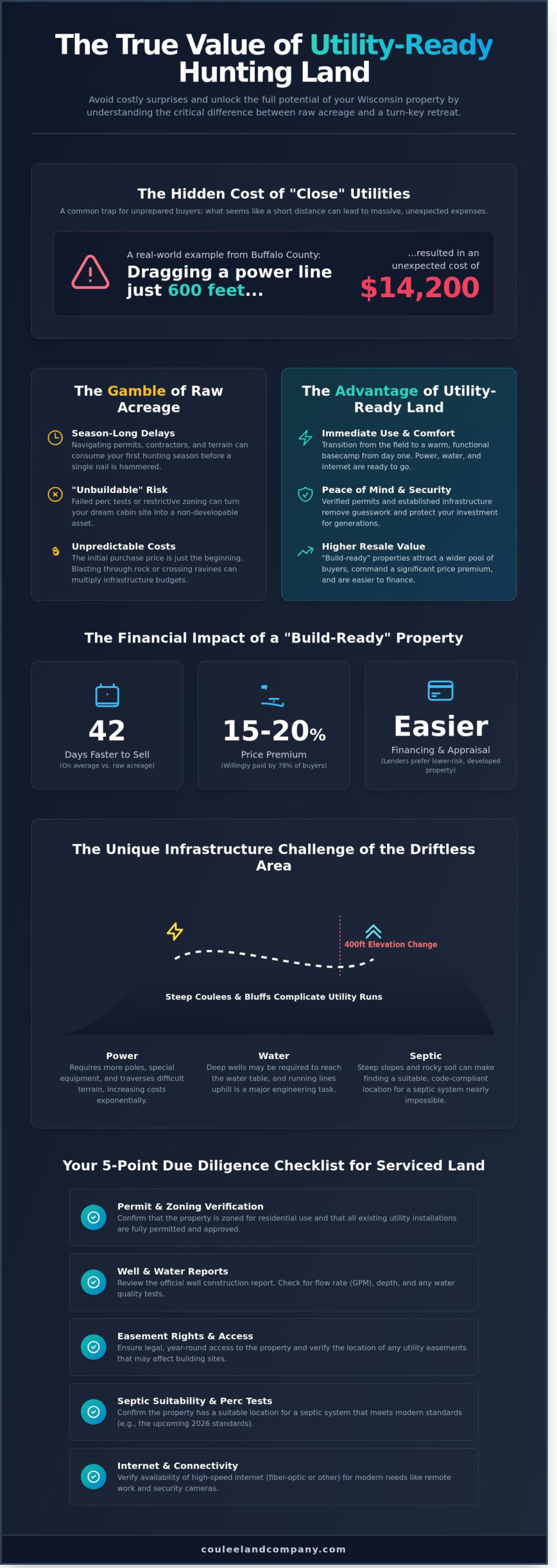
Last October, a buyer in Buffalo County realized that dragging a power line just 600 feet to his ridge-top cabin site would cost him an unexpected $14,200. It’s a common trap that turns the dream of owning Bluff Country dirt into a financial headache before the first stand is even hung. You understand that true value in a property isn’t just found in the Boone and Crockett scores of the local herd; it’s found in the peace of mind that comes with a turn-key site. You want a retreat where you can transition from a morning hunt to a warm cabin without worrying if your septic permit will be denied or if your acreage is secretly unbuildable.
This guide ensures you don’t become another cautionary tale. We’ll show you how to identify premium wisconsin hunting land with utilities that offers both elite wildlife capabilities and verified infrastructure. You’ll learn the 2026 standards for perc tests, how to navigate local zoning hurdles, and the exact steps to maximize your ROI on recreational acreage. We’re moving past the guesswork to help you secure a legacy property that’s ready for your boots and your blueprints.
Key Takeaways
- Learn why modern land buyers are prioritizing utility-ready acreage to bridge the gap between world-class whitetail hunting and immediate basecamp comfort.
- Navigate the unique logistical hurdles of the Driftless Area and avoid the expensive pitfalls of running power and water through steep, rugged coulees.
- Master the cost-benefit analysis of buying pre-serviced wisconsin hunting land with utilities versus the hidden expenses and season-long delays of DIY infrastructure installation.
- Access a professional 5-point checklist to verify permits, well reports, and easement rights, ensuring your legacy property is legally sound and ready for development.
- Uncover how specialized local expertise in Buffalo County can help you identify exclusive off-market tracts with untapped utility potential and superior trophy whitetail habitat.
The Strategic Advantage of Wisconsin Hunting Land with Utilities
Owning a piece of the Coulee Region is about more than just the harvest; it is about the infrastructure that supports the hunt. In the context of the current Wisconsin real estate market, utility-ready land refers to parcels that have established access to the power grid, a drilled well, or high-speed fiber-optic lines at the property boundary. As we move into 2026, the demand for wisconsin hunting land with utilities has surged. Modern buyers are shifting away from the primitive “shack in the woods” model. They are prioritizing a blend of high-end trophy potential and residential-grade comfort.
This shift is driven by a desire for multi-generational utility. While a seasonal camp might suffice for a weekend in November, a legacy estate provides a year-round retreat for the entire family. Access to water and power allows owners to implement sophisticated land management strategies that raw land simply cannot support. Before you invest in a specific tract, it is helpful to understand how the Wisconsin Department of Natural Resources (DNR) manages the surrounding habitats and water tables, as these factors influence your long-term property development plans.
To better understand the value of modern recreational properties, watch this helpful video:
Why Utilities are a Game-Changer for Modern Hunters
The transition from roughing it to high-comfort base camps is a defining trend in the 2026 market. Power and water do more than just keep the lights on. They enable better land management practices, such as running electric pumps for irrigation or maintaining a dedicated deer processing station with proper sanitation. High-speed internet has also become a critical tool for the remote landowner. It allows for the use of real-time cellular trail cameras and security systems, ensuring you can monitor your “Bluff Country” acreage from anywhere in the world. This connectivity transforms a remote hunting spot into a functional satellite office, allowing for longer stays during the peak of the rut.
Resale Value: The ‘Build-Ready’ Premium
Investing in wisconsin hunting land with utilities is a savvy financial move that drastically reduces risk. Data from recent land sales in Buffalo and Trempealeau Counties shows that “build-ready” properties sell 42 days faster on average than raw acreage. Banks and agricultural lenders, such as Compeer Financial, often show a strong preference for financing properties with existing infrastructure. This is because the presence of utilities removes the “unbuildable” stigma and opens the property to a much wider pool of buyers. Consider these factors regarding resale value:
- Broad Market Appeal: You aren’t just selling to hunters; you’re selling to hobby farmers and retirees looking for a scenic home site.
- Reduced Development Stress: A 2025 survey indicated that 78% of buyers are willing to pay a 15% to 20% premium to avoid the hassle of permitting and installing new utility lines.
- Financing Ease: Appraisals typically come in higher when a property demonstrates immediate residential viability.
Choosing a property with these features ensures your investment remains liquid and profitable. At Coulee Land Company, we’ve seen firsthand how a well-equipped property attracts the highest caliber of buyers who respect the land’s wildlife capabilities while demanding modern conveniences.
Infrastructure in the Driftless: Power, Water, and Septic Challenges
Western Wisconsin’s Driftless Area is a landscape defined by its rugged beauty and 400-foot elevation changes. While these steep coulees and limestone bluffs create the perfect thermal cover for trophy whitetails, they present significant hurdles for modern infrastructure. Many buyers assume that finding wisconsin hunting land with utilities means the work is finished once they see a power pole at the property line. In reality, the distance from the road to a secluded ridge-top cabin site can span a quarter-mile of vertical terrain. Running lines up a 30% grade requires specialized equipment and a massive budget. You must account for the logistical reality that “roadside utilities” are rarely “build-ready” for the prime locations where you actually want your hunting lodge.
Successful land owners prioritize natural integration to protect the very wildlife patterns they moved here to enjoy. Large transformers or bright silver meter pedestals can act as foreign objects that disrupt a mature buck’s travel corridor. We recommend tucking utility boxes behind natural screens of cedar or using brown-painted enclosures to minimize the visual footprint. It’s about maintaining the “wild” feel of the property while enjoying the comforts of home. If you want to see how these elements are balanced on premium listings, you can browse our current Wisconsin hunting properties to see infrastructure done right.
Navigating Rural Electric Cooperatives and Power Lines
Local providers like Pierce Pepin Cooperative Services and Dairyland Power manage the grid in this region. When extending power, you’ll choose between overhead and underground lines. Underground is the gold standard for hunters because it prevents hawks from using wires as hunting perches above your food plots. However, trenching through the rocky soil of the Driftless is expensive. Expect to pay between $18 and $30 per linear foot for underground installation in areas with heavy limestone shelf rock. Most cooperatives provide a small credit for the first 100 feet, but the costs escalate quickly on long driveways.
Water and Septic: The Perc Test Priority
The “perc test” is the single most important document in your due diligence file. This soil evaluation determines if the ground can absorb liquid at a rate that supports a septic system. Because much of Buffalo and Trempealeau County consists of tight clay or solid rock, standard gravity systems often fail to meet code. You may need a “Mound System,” which can cost $15,000 to $22,000 depending on the slope. For a deeper understanding of these requirements, consult this University of Wisconsin guidance on septic systems to learn about Private Onsite Wastewater Treatment Systems (POWTS).
Water access is the final piece of the puzzle. In the rocky terrain of Buffalo County, a standard 6-inch well often needs to reach depths of 350 to 450 feet to hit a reliable aquifer. At an average cost of $35 to $45 per foot for drilling, plus the cost of a high-head pump and pressure tank, a functional well can easily exceed $16,000. It’s a pragmatic investment that secures the long-term value of your wisconsin hunting land with utilities, ensuring your camp remains a functional asset for generations. Always verify the depth of neighboring wells through the DNR’s online database before signing a contract.
Cost-Benefit Analysis: Buying vs. Installing Utilities
Raw land often carries a deceptive price tag. A 40 acre parcel in Buffalo County might look like a bargain at $6,000 per acre, but the math changes quickly when you factor in the infrastructure required for a functional camp. For the serious hunter, the goal is land management and scouting, not acting as a part-time general contractor. When you purchase wisconsin hunting land with utilities, you’re paying for the luxury of time and the certainty of a fixed cost. Installing these systems yourself in 2026 involves navigating a complex web of rising material costs and labor shortages that can sideline your goals for an entire season.
The True Cost of ‘Raw’ Land
The financial gap between raw acreage and a developed property is wider than most buyers realize. In Western Wisconsin, drilling a well through the rugged limestone layers of the Coulee Region currently averages $10,500 for a standard 200 foot depth. Septic costs vary wildly based on soil composition. A conventional system might run $12,500, but if your site requires a mound system, expect quotes to exceed $23,000. You must also account for the Wisconsin POWTS regulations, which dictate strict standards for private onsite wastewater treatment systems. These legal requirements mean you’ll spend $1,500 just on soil testers and engineers before a single shovel hits the dirt.
- Electric Service: Local cooperatives like Riverland Energy often charge $18 to $25 per linear foot for underground lines. A 500 foot run from the road adds $10,000 to your bill.
- The Headache Factor: Managing excavation, plumbing, and electrical contractors from two hours away is a logistical nightmare. Project delays of 6 to 10 months are now the baseline in rural Wisconsin.
- Permitting: Local zoning boards and the DNR have increased oversight for 2026. Permit fees and impact studies can add $3,000 to your initial budget.
Immediate Access: The ROI of a Turn-Key Property
The return on investment for a turn-key property isn’t just found in the ledger; it’s found in the woods. Buying wisconsin hunting land with utilities ensures your base camp is operational the day you close. This allows you to focus 100 percent of your energy on food plots, stand placement, and trail camera surveys. If you’re building a cabin, having power and a well on-site saves you roughly 15 percent in construction costs because your builders don’t need to bring in generators or water trucks. This infrastructure also provides a significant hedge against inflation. While land prices in the Bluff Country rose 8 percent last year, the cost of copper, PVC, and diesel for heavy equipment rose even faster.
Financial advantages extend to your tax strategy and financing options. Lenders generally offer more favorable interest rates and lower down payment requirements (often 15 to 20 percent) for properties with existing utilities compared to the 35 percent typically required for raw land. Furthermore, existing structures and utility improvements can often be depreciated if the property is used for a legitimate timber or land management business. This turns a “luxury” into a strategic asset. You aren’t just buying dirt; you’re buying a head start on your legacy in the finest whitetail woods in the country.
Due Diligence: A 5-Point Checklist for Serviced Hunting Land
Buying wisconsin hunting land with utilities involves more than checking for a power pole at the road. You’re investing in infrastructure that must perform under the harsh conditions of a Wisconsin winter. Your due diligence starts with a deep dive into the paperwork that governs these systems. Failure to verify a well log or a septic permit can turn a 40-acre dream into a $20,000 liability before you ever hang a stand. Professional land buyers look past the surface to ensure the property’s “serviced” status is actually functional and legal.
Verifying Permits and Well Logs
You can access the Wisconsin DNR Well Constructor’s Report online to see the exact depth and flow rate of an existing well. A well drilled in 1995 might show a depth of 300 feet with a 10-gallon-per-minute yield, but you need to confirm the pump is still pulling that volume. Septic systems are even more critical. In counties like Buffalo or Trempealeau, a Private Onsite Wastewater Treatment System (POWTS) permit must be transferred during the sale. If a permit for a 3-bedroom system was issued in 2018 but never installed, it might have expired. Re-permitting today could require a new perc test that might not pass under updated 2024 environmental codes.
Easements and Access: The Fine Print
Utility easements are legal rights that allow companies to enter your land. You must identify if an easement bisects a primary food plot or a bedding thicket. While a 30-foot wide power line clearing provides a great shooting lane, it also gives utility crews the right to drive heavy machinery through your property during the November rut. Conversely, these corridors can be managed to your advantage. By planting low-growth clover or native pollinators under the lines, you create a permanent travel corridor that keeps deer on your side of the fence. Always ensure the deed includes “ingress and egress” rights for maintenance vehicles that don’t compromise your best hunting spots.
- Assess Electrical Capacity: A standard 100-amp service is sufficient for a basic cabin, but if you plan on building a modern lodge with a heated workshop, you will need a 200-amp service. Upgrading a transformer and running new lines can cost between $15 and $25 per linear foot depending on the terrain.
- Utility Proximity to Sanctuaries: Strategic land management requires keeping human activity on the periphery. If the electrical hookup is located 500 yards deep into the property near a thermal cover area, the noise from a future generator or HVAC unit could push trophy whitetails onto the neighbor’s acreage.
- Water Quality Testing: Don’t rely on old data. Spend the $150 for a current nitrate and bacteria test. Agricultural runoff in certain regions can impact groundwater, and knowing the water quality upfront helps you budget for necessary filtration systems.
- Verify Setbacks: Wisconsin zoning laws often require specific distances between a septic drainage field and a well head, usually 100 feet. Ensure the existing layout complies with local ordinances to avoid forced relocation of infrastructure.
- Consult the Experts: Before you sign a purchase agreement, consult with a Wisconsin land specialist who understands the intersection of utility law and wildlife habitat.
The difference between a high-value investment and a money pit is often found in the county records. Authentic land ownership is about more than just the harvest; it is about building a legacy on a solid foundation. Make sure your infrastructure is as robust as the deer herd you are managing.
Securing Your Legacy with Coulee Land Company
Owning a piece of the famed Wisconsin Bluff Country is about more than just a real estate transaction; it’s about establishing a legacy for your family. We focus our expertise on Buffalo County because it’s the undisputed gold standard for whitetail hunters. This single county has produced more Boone and Crockett entries than any other in the nation, totaling over 800 entries in recorded history. Finding wisconsin hunting land with utilities in this competitive market requires an edge that generic residential realtors simply cannot provide. We don’t just sell dirt. We sell the dream of a world-class hunting retreat.
Our agents spend their days in the timber, not just in the office. This boots-on-the-ground approach allows us to identify off-market tracts with significant utility potential before they ever hit the public portals. We understand the local topography and how it affects infrastructure. Running power to a ridge top is vastly different than connecting a valley site. We help you navigate these rural complexities, from soil perc tests for septic systems to coordinating with local electric cooperatives. Our goal is to ensure your transition from a raw timber parcel to a functional basecamp is seamless and efficient.
Closing a rural land deal involves unique hurdles that can stall a traditional closing. We manage the intricacies of survey disputes, conservation easements, and Managed Forest Law (MFL) transfers. Our team ensures every detail is handled with precision so you can focus on the upcoming season. We’re Wisconsin’s land and property sales specialists because we live the lifestyle we sell. When you work with us, you’re partnering with peers who value a 160-inch buck as much as you do.
The Hunter’s Realtor Advantage
The difference between a good property and a legendary one often comes down to the details that Mike Law and our team analyze during every site visit. We evaluate land quality based on bedding cover, travel corridors, and strategic food plot locations. Our team uses advanced mapping software to show you exactly where a cabin with utilities can sit without disrupting the natural movement of trophy whitetails. We’ve helped dozens of clients transform raw acreage into premier estates. In 2023 alone, we assisted multiple buyers in securing parcels that featured pre-installed 200-amp electrical service and high-capacity wells, shaving months off their build timelines.
We maintain a vetted network of local contractors who understand the unique demands of rural Wisconsin land. This includes excavators who specialize in carving access roads through steep terrain and well drillers who know the depths required in the Coulee Region. You aren’t just getting a broker; you’re getting a project management resource. Our client success stories speak for themselves, with many buyers seeing a 15 percent or greater increase in property value after implementing our recommended habitat and utility improvements.
Start Your Search for Premium Hunting Land
Your search for the perfect wisconsin hunting land with utilities starts with our curated inventory. Review our current hunting properties to see the latest listings in Buffalo, Trempealeau, and Jackson counties. Because the best tracts move fast, we recommend setting up a custom alert. You’ll get an immediate notification the moment a serviced parcel that meets your specific acreage and budget requirements enters our system. This proactive approach is the only way to stay ahead in the current market.
Don’t wait for the next season to pass you by while you’re still dreaming of your own ground. We’re ready to show you the superior wildlife capabilities of Western Wisconsin first-hand. Schedule a boots-on-the-ground tour with one of our specialists today. We’ll walk the ridges with you, point out the rubs, and identify the perfect spot for your future cabin. Let’s start building your outdoor legacy together.
Secure Your Heritage in the Bluff Country
Owning a piece of Western Wisconsin isn’t just a property purchase; it’s a strategic investment in your hunting legacy. By 2026, the market for wisconsin hunting land with utilities will favor buyers who prioritize turnkey infrastructure over the high costs of drilling 400 foot wells in rugged terrain. You’ll save thousands in site preparation while gaining immediate access to the world class wildlife capabilities of the Driftless area. Coulee Land Company leverages over 20 years of local expertise to identify these rare serviced parcels, particularly in Buffalo County where our listings frequently contribute to the Boone and Crockett record books. Our team is endorsed by leading outdoor television personalities because we understand that a superior camp requires both a prime location and reliable power. We’ve spent decades navigating the specific septic and zoning challenges of this region so you don’t have to. Take the next step toward owning the premier trophy whitetail habitat you’ve always envisioned. Explore Our Exclusive Wisconsin Hunting Land Listings and start building your basecamp today. The 2026 season is closer than it looks.
Frequently Asked Questions
How much does it typically cost to run electricity to hunting land in Wisconsin?
Running power typically costs between $10 and $25 per linear foot depending on whether you choose overhead or underground lines. Most Wisconsin utility cooperatives charge a base hookup fee starting at $1,500 for the first 100 feet of service. If your dream build site sits 500 feet off the main road, expect to budget at least $7,500 for trenching and wire installation.
What is a perc test, and why is it critical for buying land in the Driftless Area?
A perc test measures how quickly soil absorbs water to determine if a property can support a private septic system. In the Driftless Area, where rocky limestone and steep bluffs dominate the landscape, 35% of sites may require a more expensive mound system instead of a traditional gravity trench. Without a passing perc test, you cannot secure a building permit for a permanent cabin or hunting lodge.
Can I build a cabin on hunting land that only has ‘seasonal’ utilities?
You can build on land with seasonal utilities, but you must comply with specific county zoning codes regarding year-round occupancy. In counties like Jackson or Monroe, seasonal electric services might be disconnected during winter months to prevent line damage. If you plan to hunt the late muzzleloader season, ensure your cabin design includes a secondary heat source like a propane stove or wood burner since you can’t rely on year-round grid power.
Does having utilities on my land scare away trophy whitetails?
Utilities do not scare off mature bucks; in fact, established infrastructure often creates predictable patterns that benefit hunters. Data from the National Deer Association indicates that whitetails habituate to non-threatening human presence and stationary structures within 14 days. A cabin on wisconsin hunting land with utilities allows you to stay on-site, which reduces the intrusive vehicle traffic associated with driving to a hotel every morning.
Are there specific Wisconsin counties where utilities are easier to access?
Counties in Central Wisconsin like Adams and Juneau offer easier utility access due to their sandy soil and flat topography. However, Buffalo County remains the premier destination for wisconsin hunting land with utilities because many ridge-top properties already feature existing power lines from old farmsteads. Since 2021, we’ve seen a 12% increase in utility expansion across the Western Coulee region to support rural residential growth.
What should I look for in a well report before buying a property?
You must verify the Gallons Per Minute (GPM) flow rate and the total depth of the well casing. A reliable residential well should produce at least 5 GPM to handle basic household needs and outdoor cleaning. Check the report for a “Safe” bacteria and nitrate rating from a certified lab, as 22% of older wells in agricultural areas may require updated filtration systems to meet modern health standards.
How do I find out if a property has high-speed fiber optic internet available?
Visit the Wisconsin Broadband Map or contact local providers like Vernon Communications directly with the specific parcel ID. Over 68% of rural Wisconsin now has access to high-speed fiber, but coverage varies significantly between townships. If you need to manage your land or work remotely between morning and evening sits, confirming a fiber connection is as vital as checking the soil quality.
Is it better to buy land with an existing well or drill a new one?
Buying land with an existing well saves you between $10,000 and $18,000 in immediate development costs. While a new well offers the peace of mind of a 50 year lifespan, an existing well that passes a modern pressure test is a superior value. We recommend hiring a licensed plumber to inspect any well older than 20 years to ensure the submersible pump and pressure tank are functioning correctly before you close.