
Did you know that Wisconsin’s post-hunt deer population has climbed to over 1.6 million animals, even as the annual harvest shows a slight downward trend? Success in the field today requires more than just a good stand location; it demands a precise mastery of the Wisconsin DNR regulations for hunting deer. As the 2026 season approaches, staying ahead of evolving rules is the only way to protect your heritage and ensure your harvest is recorded correctly. Whether you’re tracking a trophy buck through the rugged ridges of Bluff Country or managing your own private acreage, the landscape of compliance is shifting.
You likely agree that the complexity of modern hunting laws, from shifting baiting bans to the nuances of antlerless tag systems, can feel like a distraction from the hunt itself. We promise to simplify these hurdles, giving you the confidence to focus on the chase rather than the paperwork. This guide provides a definitive breakdown of the 2026 season dates, essential harvest registration steps, and the specific mandates governing private land stewardship. From the opening of archery on September 12 to the late-season holiday hunts, you’ll have every detail needed for a legendary year in the woods.
Key Takeaways
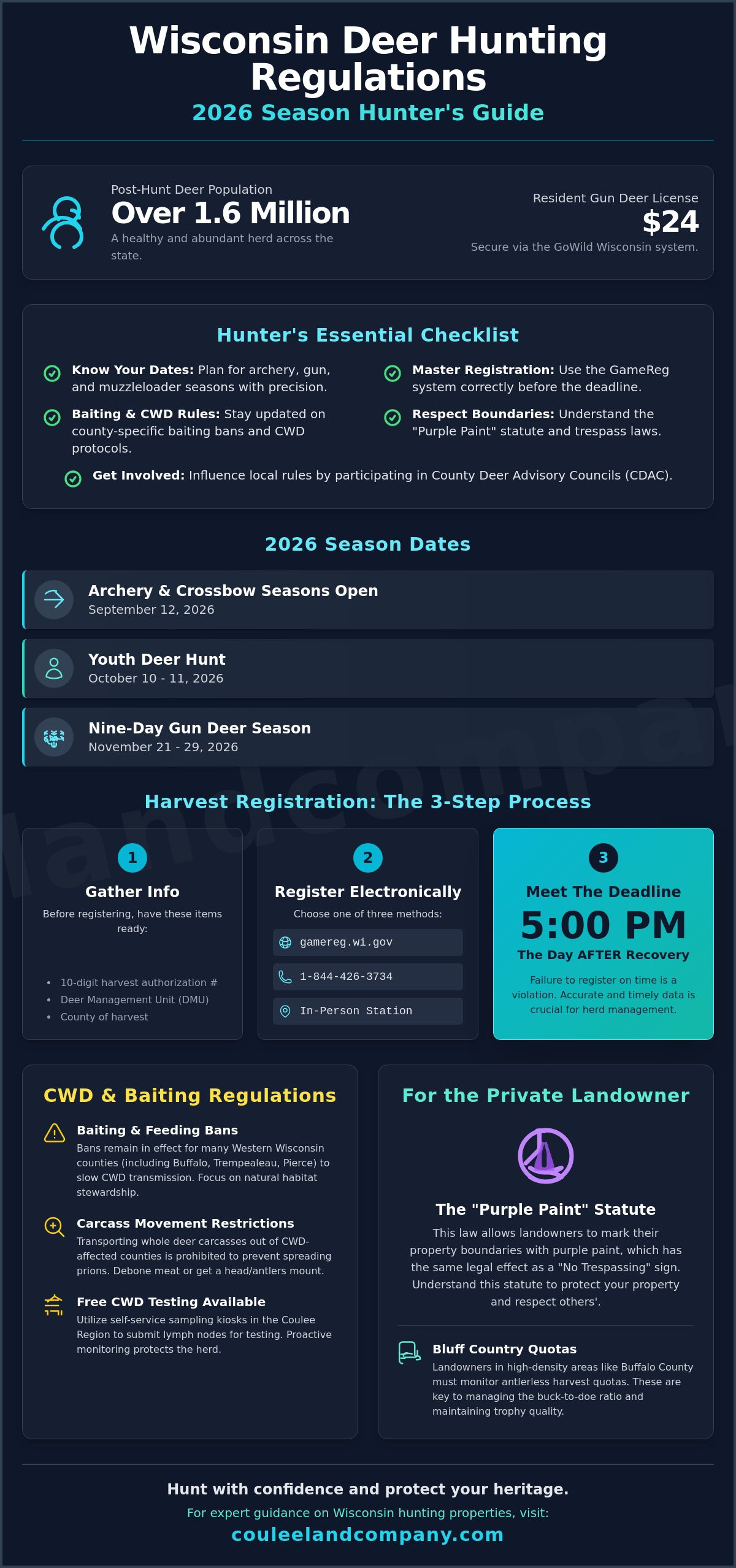
- Identify the specific 2026 season dates for archery, gun, and muzzleloader hunts to plan your time in the field with professional precision.
- Navigate the latest Wisconsin DNR regulations for hunting deer regarding county-specific baiting bans and Chronic Wasting Disease (CWD) management protocols.
- Master the electronic harvest registration system to ensure your harvest is documented legally before the 5 p.m. next-day deadline.
- Protect your property boundaries and rights by understanding the “Purple Paint” statute and the latest trespass laws governing private hunting land.
- Learn how to influence local management rules through participation in County Deer Advisory Councils (CDAC) to enhance the quality of your personal hunting grounds.
Understanding the 2026 Wisconsin Deer Season Framework
The Wisconsin DNR regulations for hunting deer are built on a rigorous, science-based framework designed to balance the health of the white-tailed deer population with the diverse habitat types found across the state. This system relies on Deer Management Units (DMUs) to set specific harvest goals that reflect local biological data and hunter feedback. By dividing the state into the Northern and Southern Forest zones, the DNR manages hunting pressure differently; northern zones often face harsher winters and different predator dynamics compared to the agricultural-rich southern farmland and the rugged ridges of Bluff Country.
To better understand how these regulations are developed and applied in the field, watch this expert overview:
2026 Season Dates and Licensing
The 2026 calendar offers ample opportunity for every discipline, starting with the archery and crossbow seasons opening on September 12, 2026. The centerpiece of the year, the traditional nine-day gun deer season, is set for November 21 through November 29. Hunters must use the GoWild Wisconsin system to secure licenses and antlerless harvest authorizations. Currently, a resident gun deer license is $24. First-time hunters and youth can take advantage of the Youth Hunt on October 10 and 11, which provides a controlled environment for new participants to learn ethical field practices and the importance of compliance with Wisconsin DNR regulations for hunting deer.
Zone-Specific Rules for Bluff Country
Managing hunting properties in the Driftless Area requires a deep understanding of DMU boundaries that often follow river systems and highways. Because of the incredible soil quality and habitat, Buffalo County deer hunting is subject to intense scrutiny regarding antlerless harvest quotas. These quotas are vital for maintaining the world-class trophy quality the region is known for. Owners of land in Western Wisconsin must stay diligent, as high deer densities in these farmland zones often result in more liberal antlerless tag availability to prevent overbrowsing and maintain a healthy buck-to-doe ratio.
Field Regulations: Baiting, CWD, and Harvest Registration
Adhering to the Wisconsin DNR regulations for hunting deer is a matter of both legal compliance and personal ethics. In 2026, baiting and feeding bans remain in effect for many Western Wisconsin counties to slow the transmission of Chronic Wasting Disease (CWD). For those managing high-value hunting properties, these restrictions reinforce the importance of natural habitat stewardship over artificial attractants. Success in Bluff Country relies on understanding the landscape and respecting the Fair Chase standards that define our state’s hunting heritage. By following the latest Wisconsin deer hunting regulations, you contribute to a sustainable future for the herd while protecting your own standing as a responsible outdoorsman.
The Step-by-Step Harvest Registration Process
All harvested deer must be registered electronically by 5:00 p.m. the day after the animal is recovered. You can fulfill this requirement through the GameReg system online at gamereg.wi.gov, by calling 1-844-426-3734, or at select in-person registration stations. Ensure you have your 10-digit harvest authorization number, the specific Deer Management Unit (DMU), and the county of kill ready before beginning the process. Providing accurate data helps biologists monitor harvest trends and adjust population goals for future seasons.
CWD Management in the Coulee Region
The Coulee Region remains a focal point for proactive disease management. Hunters in Buffalo, Trempealeau, and Pierce counties have access to numerous self-service sampling kiosks, making it easy to submit lymph nodes for free CWD testing. It’s also vital to follow carcass movement restrictions, which prohibit transporting whole carcasses out of CWD-affected counties to prevent the spread of infectious prions. If you’re considering a land purchase, our expert land brokers can help you evaluate how these regional management zones impact long-term property value and herd health. Proper carcass disposal at designated sites is a simple yet powerful way to protect the ridges and valleys we call home.
Regulations for the Wisconsin Landowner
Owning property in Bluff Country is a dream for many, but it comes with the responsibility of active stewardship. Your role as a landowner is central to the broader strategy of Wisconsin deer management, especially when it comes to habitat health and population control. Beyond the woods, you have a seat at the table through County Deer Advisory Councils (CDAC). These councils allow you to influence the Wisconsin DNR regulations for hunting deer by providing direct feedback on harvest quotas and season structures in your specific county. Participating in these meetings ensures that the rules reflect the reality you see from your own tree stands.
Private Land Access and Trespass Rights
Wisconsin provides robust protections for property owners through strict trespass laws. The “Purple Paint” statute allows you to mark your boundaries with vertical purple lines on trees or posts, which serves as a legal notice against trespassing. If a neighbor needs to track wounded game onto your land, state law requires they obtain your permission first. Handling these requests with a clear, pre-established agreement fosters better neighbor relations and maintains the integrity of your sanctuary. For precise advice on property boundary management and securing your perimeter, experts like Mike Law and Bryan Lemke offer deep regional expertise to help you protect your investment.
Managing Your Acreage Within DNR Guidelines
Enhancing your land with food plots or timber stand improvements is a proven way to attract and hold mature bucks. You must ensure these improvements align with 2026 guidelines, particularly regarding soil disturbance and seed choices in sensitive areas. Understanding how these Wisconsin DNR regulations for hunting deer apply to your specific soil types is the first step toward building a world-class hunting property. If you’re looking to maximize your ROI, knowing these rules is essential when selling hunting land in Wisconsin. Buyers are looking for turnkey properties where the management work is already compliant and the trophy potential is proven. We can help you navigate the Managed Forest Law (MFL) to balance tax benefits with your hunting access goals, ensuring your land remains a premier destination for generations.
Preparing for a Legendary 2026 Season
Success in the Wisconsin woods is built on preparation long before the first frost hits the ridges. You now have the essential details for the upcoming season dates and the critical steps for electronic harvest registration. Mastering the Wisconsin DNR regulations for hunting deer ensures that your focus remains where it belongs; on the chase and your deep connection to the land. Whether you’re navigating the “Purple Paint” statute on your own acreage or managing a trophy sanctuary in Buffalo County, compliance is the foundation of a sporting legacy.
Our team at Coulee Land Company consists of expert brokers who are active hunters and dedicated land managers. We specialize in Buffalo County trophy whitetail land and bring unparalleled regional expertise to every transaction. We understand the unique attributes of Western Wisconsin and help you find acreage that meets both your sporting goals and your investment needs. Find your dream hunting property in Wisconsin’s Bluff Country and start building your own outdoor tradition today. It’s time to secure your piece of the Driftless Area and prepare for a season you’ll never forget.
Frequently Asked Questions
Do I need a separate license for archery and crossbow hunting in Wisconsin in 2026?
You must possess a license specific to the equipment you’re using, though the DNR offers a reduced-rate upgrade if you wish to hunt with both. In 2026, an archery license doesn’t grant crossbow privileges by default. You’ll need to purchase the crossbow upgrade through the GoWild system to ensure you’re in full compliance while carrying both a vertical bow and a crossbow during the season.
Is baiting deer legal in Buffalo County, Wisconsin for the 2026 season?
Baiting and feeding deer are strictly prohibited in Buffalo County for the 2026 season. This restriction is a central part of the Wisconsin DNR regulations for hunting deer designed to manage the spread of Chronic Wasting Disease. Hunters in this region should rely on natural mast, high-quality food plots, and strategic habitat management rather than artificial attractants to maintain a legal and ethical hunting environment.
How many antlerless deer can I harvest in the Southern Farmland Zone?
The harvest limit for antlerless deer is determined by the specific number of authorizations you hold for your designated Deer Management Unit. In the Southern Farmland Zone, most hunters receive one or more unit-specific antlerless tags with their base license. You can typically purchase additional bonus authorizations for $12 as a resident if the local population goals allow for a higher harvest to maintain herd health.
What are the blaze orange or fluorescent pink requirements for the 2026 gun season?
During any gun deer season, at least 50% of your outer clothing above the waist must be solid blaze orange or fluorescent pink. This requirement includes your head covering, such as a hat or cap. If you’re hunting from a ground blind on public land, you’re also required to display a minimum of 144 square inches of solid blaze orange or pink visible from all directions to ensure safety.