
Finding a massive shed on your property isn’t just a lucky break; it’s a definitive biological report card that proves your land management strategy is working. Most landowners in the Coulee Region understand the frustration of finding a squirrel-gnawed main beam in April or, even worse, accidentally bumping a mature buck off the property in mid-February. You want to be the first one in the woods to secure that “white gold,” but you also can’t afford to compromise the security of your deer herd. Determining exactly when do deer shed their antlers in Wisconsin is the critical first step in mastering your post-season inventory check.
It’s common to feel confused when one buck drops in December while a neighbor’s trophy holds its head until March. We’ve spent years managing high-value Bluff Country acreage, and we know that factors like nutrition, social stress, and the post-rut testosterone drop dictate the timeline. This guide provides a clear window for the Wisconsin shed season and explains the biological triggers specific to our region. You’ll learn how to time your walks to beat the rodents and how to use shed data to prove your land’s trophy potential to hunting partners or future buyers.
Key Takeaways
- Identify the peak window for when do deer shed their antlers in wisconsin, focusing your scouting efforts between mid-February and late March for maximum success.
- Discover how biological triggers like the photoperiod and nutritional stress influence the timing of the drop, helping you time your entry to beat the rodents without spooking mature bucks.
- Learn to pinpoint high-probability shed locations within the unique Bluff Country terrain, specifically targeting south-facing slopes and thermal cover.
- Use found antlers as a definitive “inventory check” to evaluate the age structure and trophy potential of a property before making a land purchase or management decision.
- Translate shed locations into actionable scouting data by mapping primary winter bedding areas and travel corridors for strategic stand placement.
The Wisconsin Shed Season: A Biological Timeline
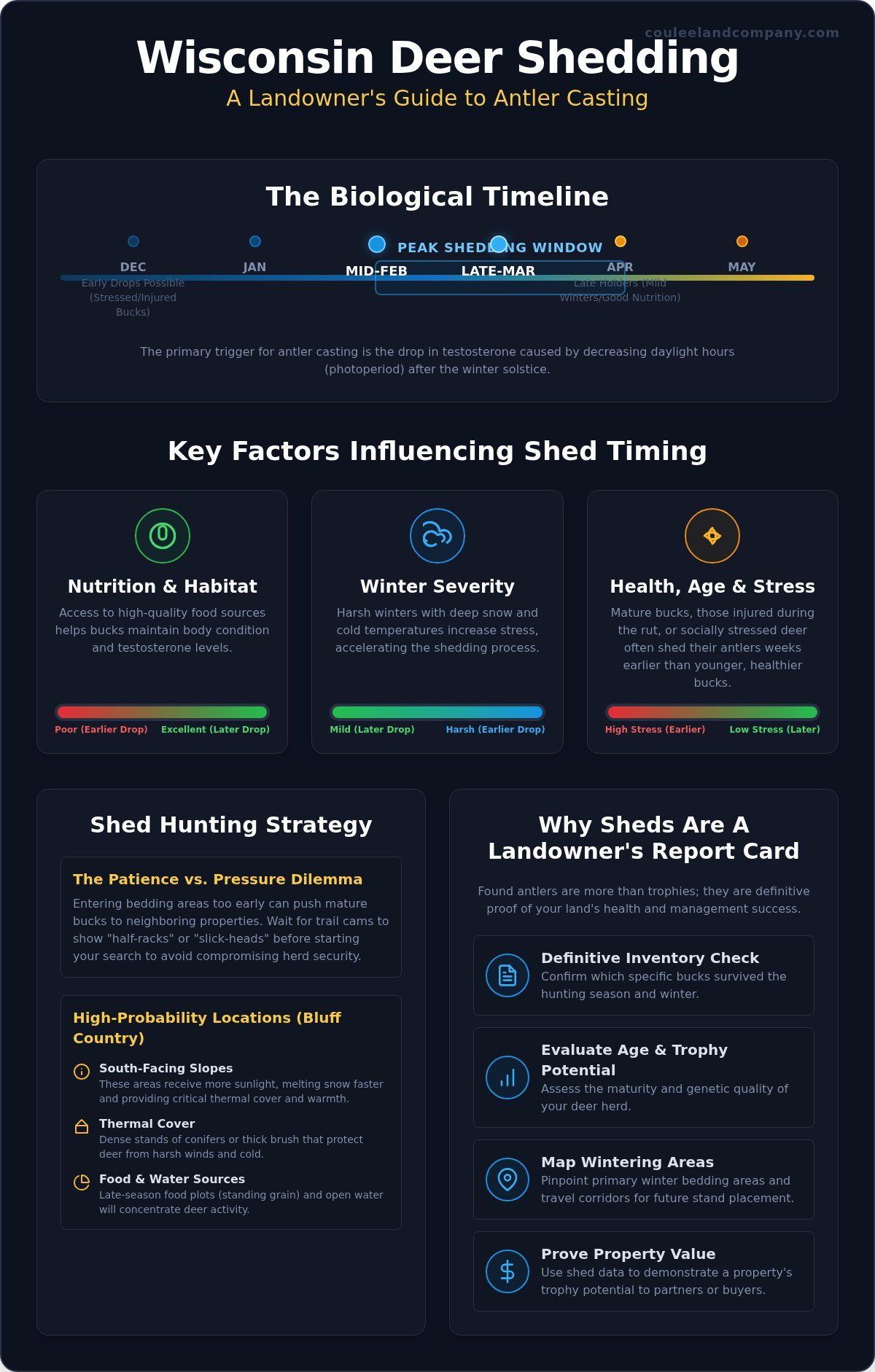
In the heart of the Coulee Region, the cycle of annual antler growth and shedding is governed strictly by the photoperiod. As daylight hours decrease following the winter solstice, a buck’s testosterone levels begin to plummet. This hormonal shift triggers the biological response that dissolves the calcium at the pedicle. Antler casting is the biological process where the bone-to-bone connection at the pedicle weakens until the antler falls. While we often see a few early droppers in late December, the vast majority of whitetails across the state hold their headgear much longer.
If you’re asking when do deer shed their antlers in Wisconsin, the primary window typically falls between mid-February and late March. However, timing is never static. Every year is different based on environmental stressors. A harsh 2026 winter cycle with deep snow and limited forage can tax a buck’s system, potentially shifting the peak shedding window earlier by two or three weeks. Conversely, a mild winter with easy access to standing grain often results in bucks carrying their racks well into April.
To better understand this biological process, watch this helpful video:
The “Patience vs. Pressure” Dilemma
Landowners often struggle with the urge to hunt for “white gold” the moment the season ends. The danger of “bumping” deer is real. Entering sensitive bedding areas too early can push mature bucks onto neighboring properties just days before they drop. This pressure can ruin your chances of recovery and stress the herd during the most vulnerable time of year. Use trail cameras as your primary indicator. Don’t lace up your boots until your SD cards consistently show “half-racks” or “slick-heads” across your property.
The rodent race adds another layer of complexity. Squirrels, mice, and porcupines quickly find sheds to consume them for essential calcium. You have to balance the need to let deer rest with the reality of losing antlers to the elements. On high-quality hunting properties, wait until the bulk of your target bucks have dropped before conducting a systematic sweep. This professional approach ensures you gather accurate inventory data without compromising the security of your sanctuary areas.
Factors Influencing Shedding in the Wisconsin Bluff Country
While daylight sets the internal clock, environmental stress acts as the final arbiter for when do deer shed their antlers in Wisconsin. In the rugged terrain of Buffalo County and the surrounding Coulee Region, nutrition is the primary driver of antler retention. Bucks with access to high-quality standing grain or late-season food plots maintain higher testosterone levels longer than those struggling in poor habitat. The U.S. Fish & Wildlife Service provides detailed insights into how antlers are shed, noting that the process is a direct result of this hormonal decline. When winter severity peaks early, you can expect to see antlers hitting the ground well before the traditional February window.
The “Bluff Country” effect creates unique concentrations of “white gold” that you won’t find in flatter agricultural zones. Our steep topography forces deer into specific thermal cover, primarily on south-facing slopes where the sun clears snow and provides much-needed warmth. This behavior concentrates sheds in very small, predictable areas. Determining exactly when do deer shed their antlers in Wisconsin requires observing these local health indicators. Additionally, the physical toll of the rut plays a significant role. Mature bucks often drop their headgear weeks before yearlings because they’ve exhausted their fat reserves and suffered more physical trauma during the breeding season. A buck wounded in November might even cast his antlers in December as his body redirects energy toward healing.
Habitat Health as a Timing Indicator
Properties managed with professional Wisconsin land management for wildlife typically see later shedding dates. Superior habitat provides a buffer against the elements, allowing bucks to maintain their condition even during deep snow years. When snow depths exceed 18 inches, deer often exhibit “yarding” behavior, huddling in cedar thickets or dense conifers. This behavior creates high-density shed zones that are a dream for landowners to scout. If you’re looking to acquire a legacy property with this kind of trophy potential, our team specializes in identifying high-value hunting properties throughout the region.
Using Sheds to Evaluate Wisconsin Hunting Land
In the world of high-end land management, shed antlers are far more than seasonal trophies; they are the ultimate currency of “proof of life.” Finding a matched set from a 160-inch buck provides the definitive evidence that a property possesses the age structure and security buyers crave. It confirms that your target bucks survived the gauntlet of the hunting season and the stresses of the rut. Understanding when do deer shed their antlers in Wisconsin allows you to conduct a precise inventory check, giving you a clear picture of the trophy potential waiting for you in the fall.
Shed locations also act as a biological map of your property’s “bedroom.” By marking where you find antlers, you can identify primary winter bedding areas and the specific travel corridors deer use when they are most focused on conservation of energy. This data is invaluable for strategic stand placement. We pay close attention to factors influencing when deer shed, as early drops often point to localized stress or a lack of thermal cover. High shed density is a leading indicator of habitat health, which directly impacts the desirability and market value of Buffalo County WI land for sale. A property that consistently holds deer through the winter is a property that will produce results year after year.
Working with a specialized land broker who understands whitetail biology helps you see the hidden value in a listing. We don’t just look at boundary lines; we evaluate the land through the eyes of a hunter and a steward. We can help you interpret shed data to determine if a property is a “holding” piece or just a pass-through tract. This insider knowledge ensures your investment is backed by biological facts rather than just hopeful scouting reports.
Evaluating Your Next Investment
Finding “white gold” near your standing corn or brassica patches is the best way to verify the success of your food plot program. It proves your land management is providing the necessary nutrition when the herd needs it most. For buyers, we recommend walking potential properties in early spring. The lack of foliage makes it easier to see the “bones” of the terrain, from hidden benches to old rubs. If you’re wondering when do deer shed their antlers in Wisconsin to time your tour, aim for that late February to March window when the evidence is freshest on the ground.
Ready to find your own piece of Bluff Country? Browse our exclusive Wisconsin hunting properties.
Unlock the Potential of Your Bluff Country Acreage
Mastering the timing of the Wisconsin shed season is more than a hobby; it’s a critical component of professional land stewardship. By aligning your scouting with the biological triggers of the Coulee Region, you protect your herd from unnecessary pressure while securing the “white gold” that proves your property’s trophy potential. You’ve learned that while most bucks drop between mid-February and late March, local nutrition and rugged terrain dictate the specific hotspots where antlers accumulate.
At Coulee Land Company, we leverage deep roots in Western Wisconsin’s Bluff Country and a specialized focus on Buffalo County trophy whitetail land to assist our clients. Our team is endorsed by regional land management experts because we recognize that a property’s true value is written in its habitat and age structure. Understanding when do deer shed their antlers in wisconsin provides the data you need to make informed investment decisions. We’re ready to help you find or manage a legacy property that produces results every season.
Find Your Dream Hunting Property in Wisconsin
Get out there this spring and discover the hidden potential your land has been holding all winter.
Frequently Asked Questions
Do deer shed both antlers at the same time in Wisconsin?
Deer don’t always shed both antlers simultaneously. While a buck might cast both within minutes of each other, it’s common for a single side to drop and the other to remain for several days. This delay usually happens when one side is knocked loose by brush or physical activity while the other side’s pedicle connection hasn’t fully dissolved yet.
Is it legal to keep deer sheds found on public land in Wisconsin?
It’s perfectly legal to collect and keep shed antlers found on public lands across Wisconsin. State law permits the collection of sheds from any wild animal that has an established open season, as long as you follow general land use regulations. You should always verify specific access rules for state parks or federal refuges, as some areas may have seasonal closures to protect wintering wildlife.
What is the best way to find matched sets in the Coulee Region?
The most effective way to find matched sets in the Coulee Region is to target the exact points where deer exert the most physical force. Focus your search on fence crossings, steep creek jumps, and the edges of south-facing bedding benches. Knowing when do deer shed their antlers in Wisconsin allows you to hit these high-probability zones at the peak of the drop, increasing your chances of finding both sides before they’re moved.
Why do some Wisconsin bucks still have antlers in April?
Bucks retaining antlers into April are usually those with exceptional nutrition and minimal physical stress. If a property provides high-quality standing grain and thermal cover, a buck’s testosterone levels may not drop as sharply, delaying the casting process. Understanding when do deer shed their antlers in Wisconsin requires looking at these localized habitat factors that allow specific bucks to carry headgear well into the spring.