
In the legendary Bluff Country of Buffalo County, a picturesque farmhouse is only as valuable as the soil it sits on and the infrastructure buried beneath it. You’ve likely spent hours scrolling through listings, dreaming of sunrise views over a quiet valley, yet the fear of a failing septic system or a boundary dispute keeps you from committing. Knowing exactly what to look for when buying a country home in wisconsin requires a shift in perspective. You aren’t just buying a kitchen and three bedrooms; you’re acquiring a complex biological and legal ecosystem.
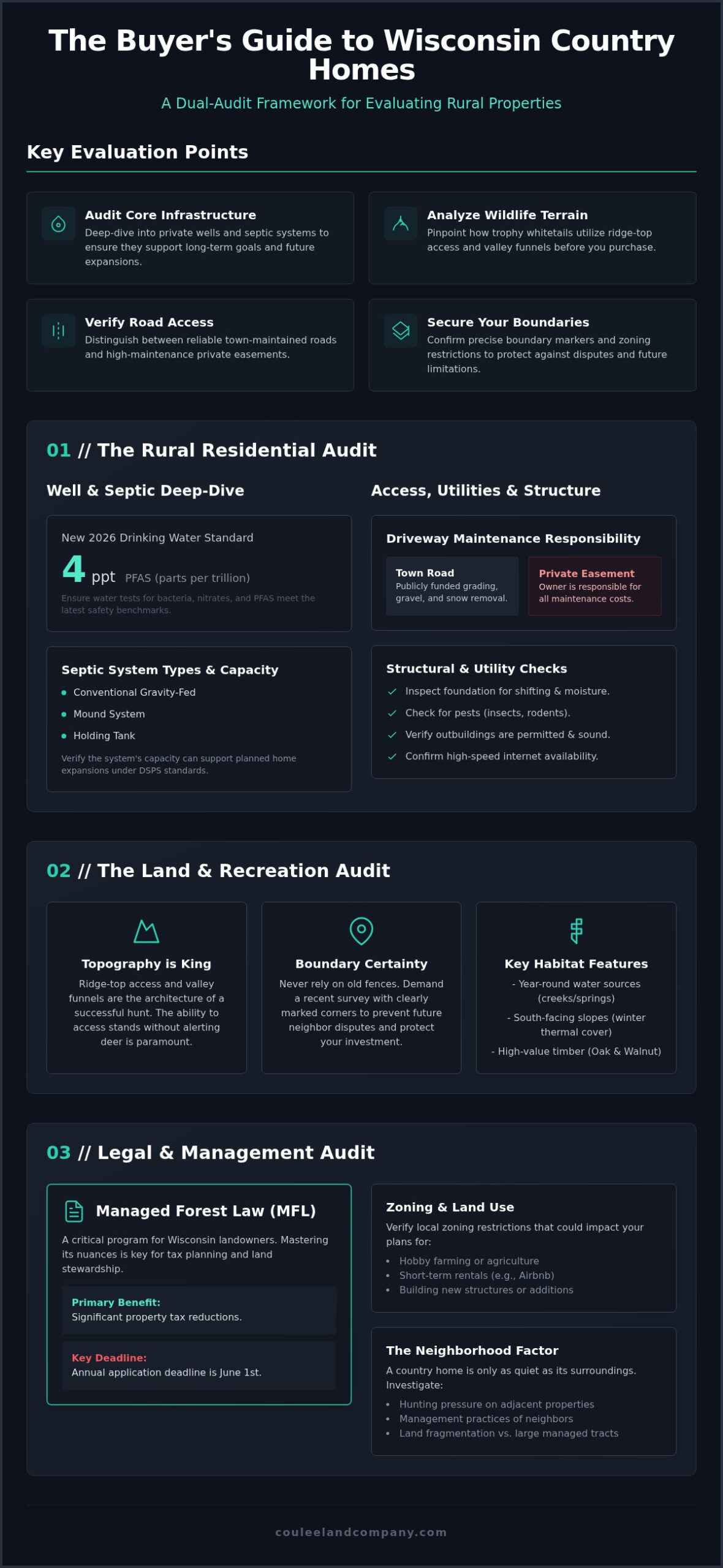
It’s natural to feel overwhelmed by the technicalities of rural living. This guide provides a dual-audit framework to help you master the evaluation of both the home’s structural integrity and the land’s recreational potential. We will dive into critical 2026 updates, from the new 4 parts per trillion PFAS drinking water standards to the June 1st Managed Forest Law deadlines. You’ll gain the confidence to identify high-value acreage in the nation’s premier trophy whitetail territory while avoiding the expensive pitfalls that often catch buyers off guard.
Key Takeaways
- Conduct a deep-dive audit of private wells and septic systems to ensure the property’s infrastructure can support your long-term goals and future home expansions.
- Analyze ridge-top access and valley funnels to pinpoint exactly how trophy whitetails utilize the terrain before you commit to a purchase.
- Learn what to look for when buying a country home in wisconsin to distinguish between reliable town-maintained roads and high-maintenance private easements.
- Secure your investment by verifying precise boundary markers and zoning restrictions that could impact your plans for hobby farming or short-term rentals.
- Master the nuances of Wisconsin’s Managed Forest Law (MFL) to maximize significant property tax benefits while maintaining elite land stewardship.
Foundational Infrastructure: The Rural Residential Audit
Buying a rural property involves more than a standard home inspection. You’re auditing a standalone utility system that must survive the rigors of the Driftless Area. Knowing exactly what to look for when buying a country home in wisconsin starts with the invisible systems that keep the household running. In regions like Buffalo County, these systems are often stressed by steep topography and seasonal extremes. You need to ensure the foundation of your investment is as solid as the limestone bluffs surrounding it.
To better understand the essential dos and don’ts of this process, watch this helpful video from local experts:
The Septic and Well Deep-Dive
Don’t settle for a basic “perc test” from decades ago. Wisconsin law requires well water testing for bacteria and nitrates at the time of sale. As of 2026, the updated PFAS standards of 4 parts per trillion are the new benchmark for safety. You must verify if the property utilizes a conventional gravity-fed system, a holding tank, or a complex mound system. Each has different maintenance requirements and replacement costs. If you plan on adding bedrooms or a guest suite, ensure the current septic capacity can handle the increased load under DSPS standards.
Access and connectivity are equally critical. Determine if the driveway is a private easement or a town-maintained road. This distinction dictates who pays for gravel, grading, and snow removal during a heavy Wisconsin winter. For those looking to manage a Hobby farm or a remote hunting camp, verify the availability of high-speed fiber-optic lines or a clear line of sight for Starlink. If you’re eyeing a ridge-top for a new shed, assess the cost of extending power lines from the main road, as trenching through rocky terrain can quickly inflate your budget.
Structural Integrity in a Rural Context
The unique soils of Western Wisconsin require a stable foundation. Inspect the basement for signs of shifting or moisture issues common in the region. Rural structures also face pressure from wood-boring insects and rodents that city homes rarely encounter. Our specialists at Coulee Land Company frequently help buyers evaluate country homes to ensure all outbuildings, such as pole barns or sheds, are permitted and structurally sound. A beautiful barn is a liability if it wasn’t built to handle the heavy snow loads of the upper Midwest.
Evaluating the Land: Habitat, Topography, and Recreation
The true value of a rural residence isn’t confined to its four walls. In the Coulee Region, the surrounding acreage dictates the property’s recreational ceiling. When considering what to look for when buying a country home in wisconsin, you must evaluate the land with the same scrutiny as the home’s foundation. Topography is the primary driver of deer movement. Ridge-top access points and natural valley funnels are the architecture of a successful hunt. If you can’t reach your stand without alerting every animal in the hollow, the land’s utility is compromised.
Boundary certainty is another non-negotiable factor. Never rely on rusted wire or old stone walls to define your investment. Demand a recent survey with clearly marked corners to prevent future neighbor disputes. This diligence protects your peace of mind and your long-term property value. Identifying year-round water sources like springs or creeks ensures wildlife remains anchored to your dirt even during dry July spells.
Bluff Country Specifics: Ridge vs. Valley
In the steep terrain of Buffalo County, south-facing slopes provide critical thermal cover that holds deer during harsh winters. High-quality oak and walnut stands offer a dual benefit; they represent significant standing timber value and provide the mast crops essential for big game. You need to assess the “huntability” of the terrain. Can you access stand locations without blowing your scent across the entire property? Our land specialists can help you analyze these nuances before you sign.
The Neighbors and the Neighborhood
A country home is only as quiet as the surrounding parcels allow. Investigate the hunting pressure on next-door properties. Large, managed tracts are preferable to fragmented land with high turnover. A property’s potential is often tied to the management practices of the neighborhood. For a deeper look at the regional trophy potential that has made this area famous, consult our Buffalo County Wisconsin Deer Hunting guide. Knowing who shares your fence line is just as important as knowing what is on your own side of it.
Legal, Financial, and Management Considerations
Zoning represents the invisible boundary of what you can actually achieve on your new acreage. When researching what to look for when buying a country home in wisconsin, never assume that a “rural” designation grants you total freedom. Local ordinances often dictate whether you can establish a hobby farm, operate a short-term rental, or build additional structures for guests. You must verify these land use restrictions at the county level before moving past the inspection phase. Failing to do so can turn a dream property into a legal headache that limits your future plans.
If you are exploring waterfront properties, the legal landscape becomes even more complex. Riparian rights in Wisconsin are governed by strict DNR regulations that oversee shoreline restoration and building setbacks. You should also check for conservation easements that might exist on the deed. These “hidden” restrictions often prevent landowners from clearing timber for food plots or erecting new hunting blinds in specific zones. Understanding these legal layers ensures your long-term vision for the land remains viable.
Managed Forest Law (MFL) Pro-Tip
Wisconsin’s Managed Forest Law (MFL) is a powerful tool for reducing your annual tax bill. For land entered after 2004, the 2026 tax rates are $1.90 per acre for open land and $9.49 per acre for closed land. While the savings are significant, you must weigh them against the mandatory timber harvesting schedules and potential public access requirements. It is vital to remember that an existing MFL management plan automatically transfers to the new owner upon closing; you are legally bound to the previous owner’s commitments unless you pay a withdrawal fee.
Final Financial Due Diligence
Agricultural land in Wisconsin often benefits from “Current Use” valuation, which keeps taxes low. However, if you plan to stop farming or build on that specific acreage, you may trigger a “conversion charge” that can cost thousands of dollars. We recommend consulting with Mike Law or Bryan Lemke to analyze these costs. Their expertise ensures the asking price aligns with the true market value of Bluff Country assets while protecting you from unforeseen financial liabilities after the sale.
Securing Your Legacy in the Driftless Area
Owning a piece of Wisconsin’s Bluff Country is a dream that requires a rigorous, dual-audit approach. By evaluating the structural integrity of the residence alongside the biological potential of the acreage, you ensure your investment stands the test of time. You now understand the importance of 2026 water standards and the strategic value of ridge-top access for elite hunting. You’ve also learned how to navigate the complexities of Managed Forest Law to protect your financial future and land stewardship goals.
Mastering what to look for when buying a country home in wisconsin means looking beyond the aesthetic appeal of a farmhouse to see the long-term potential of the soil and habitat. At Coulee Land Company, we bring decades of experience and the endorsement of industry-leading hunting experts to every transaction. We specialize in the unique terrain of Western Wisconsin, ensuring our clients find properties that offer both residential comfort and world-class recreational opportunities.
View Our Exclusive Wisconsin Country Home Listings to begin your journey toward owning a premier rural asset today. Your legacy in the outdoors starts with the right foundation and a partner who understands the land as well as you do.
Frequently Asked Questions
What is the most important thing to check when buying a house with land in Wisconsin?
The most critical step is verifying the integrity of the private infrastructure and the legal access to the property. While the home’s interior matters, a failing septic system or a hidden easement can cost you thousands or lead to legal battles with neighbors. This is a foundational part of what to look for when buying a country home in wisconsin. You must confirm that the well meets current safety standards and that the driveway is legally secured.
How do I know if a property has good hunting potential before visiting?
You can evaluate hunting potential by analyzing topographical maps for ridge-top funnels and south-facing thermal cover. Look for high-value mast-producing timber like oak and walnut stands which anchor trophy whitetails in the Driftless Area. Check the surrounding parcels for large-tract management or high hunting pressure. Digital scouting for year-round water sources like springs or creeks will also signal if the land can hold game during the dry summer months.
Does Managed Forest Law (MFL) enrollment lower my property taxes?
Yes, MFL enrollment significantly reduces your property taxes in exchange for following a sustainable forest management plan. This program allows you to maintain elite land stewardship while keeping carrying costs manageable. For land entered after 2004, the tax rates are substantially lower than standard property tax assessments. However, you must adhere to timber harvesting schedules and understand the specific public access requirements of your enrollment category to avoid penalties.
What is a “Perc Test” and why does it matter for a country home?
A “Perc Test” or soil evaluation measures how quickly water drains through the ground to determine what type of septic system the land can support. This evaluation is a vital component of what to look for when buying a country home in wisconsin because it dictates the cost and location of your waste management system. If the soil has poor drainage, you might be forced to install a more expensive mound system rather than a conventional gravity-fed one.