
You own a prime piece of Wisconsin land, a personal slice of the hallowed ground that dominates the record books. Yet, you find yourself wondering why mature bucks treat your property like a pass-through instead of a sanctuary. The truth is, owning the land is only the first step; unlocking its full wildlife potential requires a strategic, hands-on approach. This is the core principle behind the timber stand improvement Wisconsin’s most successful land managers use to cultivate not just healthier forests, but legendary hunting grounds. It’s the definitive method for transforming your woods from passive scenery into an active asset.
In this comprehensive guide, we will demystify the process of TSI. You’ll gain a clear understanding of powerful techniques like crop tree release and hinge-cutting, learning how they create the critical bedding and browse that trophy whitetails require. We’ll show you how to increase the long-term timber and resale value of your property while becoming a more confident and effective steward of your investment. Prepare to turn your property into the whitetail haven you’ve always envisioned-a legacy of superior land management.
Key Takeaways
- Frame Timber Stand Improvement not as simple logging, but as a strategic “gardening” of your woods to unlock its full potential for wildlife and value.
- Discover how specific TSI techniques are the most powerful tool a landowner has to create the superior cover and browse needed to hold mature whitetail bucks.
- A well-executed plan for timber stand improvement wisconsin is a direct investment that significantly boosts both your future timber revenue and overall property value.
- Learn the actionable steps for developing a professional TSI plan, from finding a qualified forester to securing potential cost-share assistance for your project.
What is Timber Stand Improvement (TSI) and Why It’s Crucial for Wisconsin Landowners
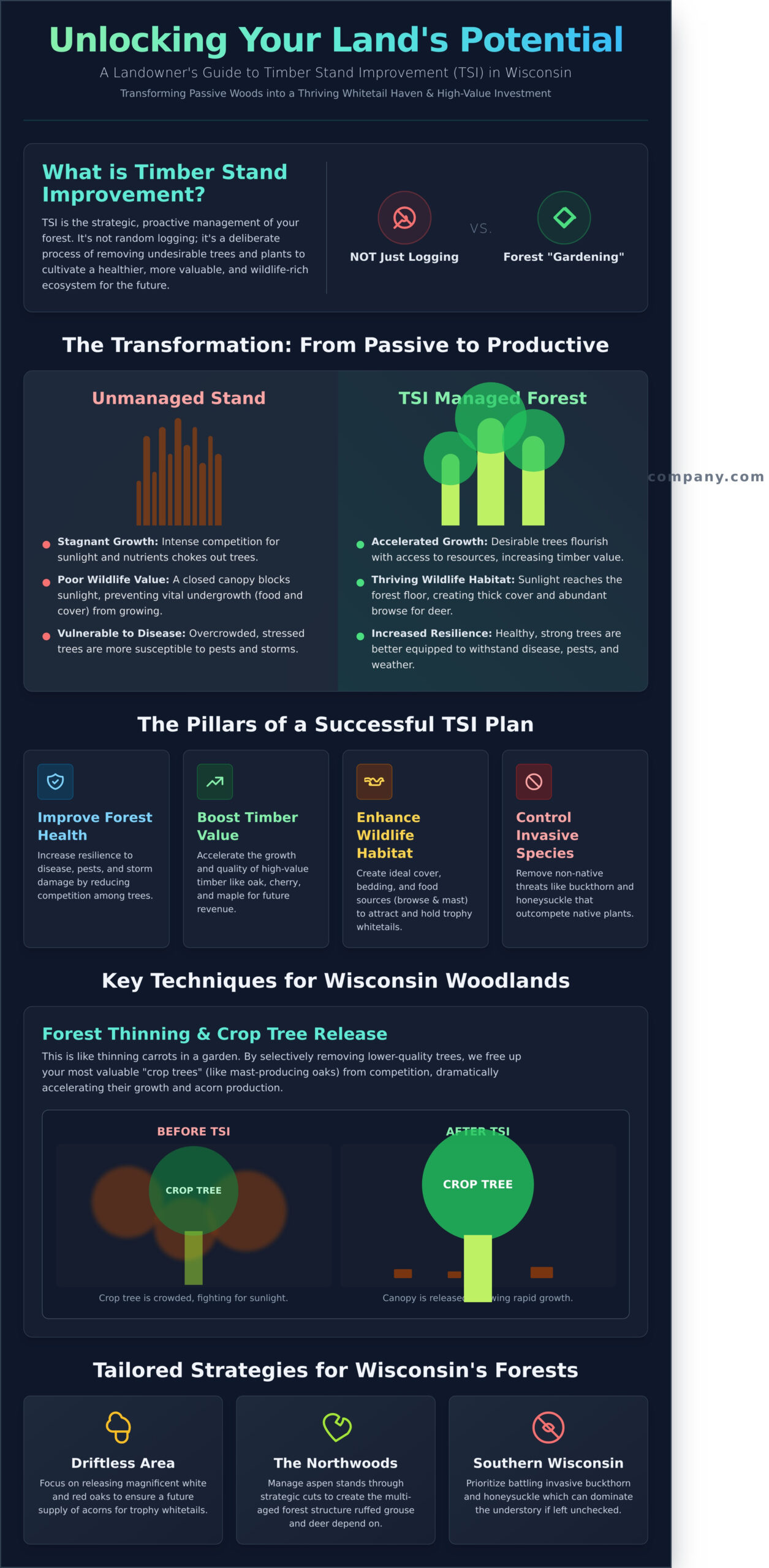
For serious landowners, a property isn’t just a plot of land; it’s a legacy. Timber Stand Improvement (TSI) is the proactive management practice that transforms your woods from a passive asset into a thriving, high-performance ecosystem. Think of it less as logging and more as ‘gardening’ your forest-a deliberate process of cultivating the best and weeding out the rest. An unmanaged stand often becomes a dense, choked-out thicket where trees compete for limited sunlight and nutrients, resulting in slow growth and poor wildlife value. A managed forest, however, is a picture of health and productivity. This is the core principle of Silviculture, the art and science of controlling forest growth to meet specific objectives.
Defining TSI Beyond Just Cutting Trees
TSI is not about random clearing. It is a strategic, long-term process designed to improve the future health, composition, and value of your timber. The practice involves selectively removing undesirable elements-such as low-value tree species, diseased or poorly formed trees, and invasive plants-to give your most desirable trees the resources they need to flourish.
The Primary Goals of a TSI Plan
A well-executed TSI plan delivers powerful, tangible results that directly enhance your property’s value and your enjoyment of it. Key objectives typically include:
- Improving Forest Health: Increasing resilience to disease, pests, and storm damage by reducing competition.
- Boosting Timber Value: Accelerating the growth rate and improving the quality of high-value timber trees like oak, cherry, and maple.
- Enhancing Wildlife Habitat: Creating ideal conditions for specific game species, from releasing mast-producing oaks for deer and turkey to regenerating aspen for grouse.
- Controlling Invasive Species: Actively removing non-native threats that can overtake a forest floor and stifle regeneration.
Wisconsin’s Unique Forests: Why TSI is Not One-Size-Fits-All
Effective timber stand improvement in Wisconsin requires a tailored approach that respects our state’s diverse ecosystems. In the iconic Bluff Country of the Driftless Area, TSI often focuses on releasing magnificent white and red oaks from competition, ensuring a future supply of acorns for trophy whitetails. Head to the Northwoods, and the goal might shift to managing aspen stands through strategic cuts to create the multi-aged forest structure that ruffed grouse and deer depend on. In Southern Wisconsin, a primary challenge is battling invasive buckthorn and honeysuckle, which can completely dominate the understory if left unchecked. Your property’s location, soil, and specific goals dictate the right strategy.
Key Timber Stand Improvement Techniques for Wisconsin Woodlands
A successful timber stand improvement plan is not a single action but a strategic combination of proven forestry techniques. Each method serves a specific purpose, and when applied correctly, they work together to dramatically enhance the health, value, and wildlife capabilities of your property. Understanding these core practices is the first step toward transforming your woods into a thriving, productive ecosystem. The most effective timber stand improvement wisconsin landowners implement involves a tailored mix of the following essential strategies.
Forest Thinning & Crop Tree Release
Imagine your woodland as a garden. Just as you would thin carrots to allow the best ones to grow, forest thinning removes less desirable trees to reduce competition for critical resources like sunlight, water, and soil nutrients. This practice often focuses on “crop tree release,” where we identify your most valuable trees-like mast-producing red and white oaks-and remove the surrounding, lower-quality trees that are crowding their canopies. The result is accelerated growth for your best timber and a significant increase in acorn production, a vital food source for whitetails and turkeys.
Controlling Invasive Species
Non-native invasive species are a direct threat to the health of Wisconsin’s woodlands. Aggressive invaders like common buckthorn, honeysuckle, and garlic mustard create dense, shaded thickets that choke out native trees, smother vital undergrowth, and offer almost no nutritional value for wildlife. Effective timber stand improvement wisconsin professionals will prioritize controlling these pests using targeted methods such as cut-stump herbicide treatments for woody shrubs and foliar spraying for herbaceous plants. Removing these invasives is a critical step in restoring the natural balance of your forest.
Creating Regeneration Openings & Hinge Cutting
Actively managing for wildlife means creating diverse habitats, and two powerful techniques for this are regeneration openings and hinge cutting. By creating small, strategic clearings, we allow sunlight to hit the forest floor, stimulating an explosion of new, native growth that provides exceptional browse. Hinge cutting, a practice of partially cutting smaller, non-valuable trees to fell them while keeping them alive, creates immediate horizontal cover. These practices are cornerstones of effective TSI for whitetail habitat, providing the secure bedding areas and accessible food sources that hold trophy bucks on your property.
The #1 Payoff: How TSI Creates Elite Whitetail Habitat
While a well-managed forest increases timber value, for the serious land manager, the true payoff is transforming your property into a whitetail paradise. Timber Stand Improvement is not just a forestry practice; it is the single most powerful tool for actively managing your deer herd’s health, size, and movement. A healthier, more diverse forest directly supports a more robust deer population. It’s no coincidence that many of the premier Wisconsin hunting properties we represent have active TSI plans in place to maximize their wildlife capabilities.
Boosting Food Sources: More Browse and Mast Production
By selectively thinning less desirable trees, you open the canopy and allow sunlight to flood the forest floor. This sparks an explosion of new growth at deer-level, creating tons of natural browse from highly palatable native species like dogwood, maple saplings, and raspberry canes. Simultaneously, releasing your best oak trees from competition gives them the resources to produce more consistent and abundant acorn crops, ensuring a critical food source for fall and winter.
Engineering Better Cover: Bedding Areas and Fawning Habitat
Strategic hinge cutting creates immediate, dense horizontal cover that mature bucks seek for secure bedding sanctuaries. The resulting regeneration in these openings provides the thick, secluded habitat that does need for fawning in the spring. Furthermore, these practices create critical thermal cover-dense pockets that block harsh winds and intercept snow, helping deer conserve vital energy. These techniques are cornerstones of any serious plan for timber stand improvement in Wisconsin.
Influencing Deer Movement: Creating Natural Funnels
TSI allows you to become the architect of deer movement on your land. By using hinge cuts and strategically felling trees, you can create natural barriers and funnels that steer deer along preferred travel corridors-right past your stand locations. The “edge” habitat created by these cuts is a natural magnet for whitetails. This level of active management, detailed in resources like the official Wisconsin Silviculture Guide, is a hallmark of properties in legendary trophy regions like Buffalo County, where every advantage counts.
Maximizing Your Investment: The Economic Benefits of a TSI Plan
While enhancing wildlife habitat is a primary driver for many landowners, Timber Stand Improvement is also one of the most direct and powerful investments you can make in your property’s financial value. A well-managed forest isn’t just healthier-it’s a high-performance asset. For savvy buyers, a property with a documented TSI plan is vastly more attractive than a raw, unmanaged parcel. This proactive management signals long-term value and is a critical consideration for landowners thinking about selling their land in the future.
Increasing Future Timber Value
At its core, TSI is about concentrating your land’s productive power. By selectively removing low-value, poorly formed, or competing trees, you redirect sunlight, water, and nutrients to your most desirable “crop trees” like oak, walnut, and maple. This strategic thinning accelerates their growth, producing high-quality, marketable sawlogs in a shorter timeframe. Furthermore, well-planned commercial thinnings can provide periodic income long before a final harvest, turning your woods into a recurring revenue source.
Boosting Recreational and Resale Value
A property with a history of professional timber stand improvement in Wisconsin is a turnkey hunting paradise, and discerning buyers know it. They will pay a significant premium for land that already has:
- Established food plot locations cleared and ready.
- Bedding areas and travel corridors strategically created.
- Improved access trails for trucks, UTVs, and quiet entry to stand locations.
These features, often natural byproducts of TSI work, save the next owner years of time and thousands of dollars, dramatically increasing your property’s marketability and final sale price.
Qualifying for Wisconsin Tax Programs
One of the most immediate financial benefits of a formal forestry plan is eligibility for state incentive programs. Wisconsin’s Managed Forest Law (MFL) program offers substantial property tax reductions to landowners who commit to long-term sustainable forest management. A key requirement for enrollment is a written forest stewardship plan prepared by a certified forester, and TSI practices are almost always a central component of that plan. Enrolling in MFL not only lowers your annual carrying costs but also adds documented value to your property.
How to Implement a TSI Plan on Your Wisconsin Property
Transforming your vision for a premier hunting property into reality is a deliberate process, and a well-executed TSI plan is your roadmap. While the work requires effort, the path to getting started is straightforward. This is a manageable and accessible process for any landowner committed to maximizing their property’s potential for both timber and trophy wildlife.
Step 1: Find a Qualified Cooperating Forester
Your first and most critical move is partnering with an expert. A cooperating forester acts as your strategic advisor, assessing your timber and aligning management practices with your specific goals-whether that’s creating thick bedding cover, promoting mast-producing oaks, or improving timber value. For landowners focused on wildlife, finding a forester with proven habitat expertise is non-negotiable. The Wisconsin DNR provides an invaluable forester lookup tool to connect you with certified professionals in your county.
Step 2: Develop a Forest Stewardship Plan
With your forester, you’ll create a Forest Stewardship Plan. Think of this as the official blueprint for your property’s future. This comprehensive document includes detailed maps, descriptions of your timber stands, and a clear schedule of TSI activities for the next decade. This plan is not just a guide; it’s the key to unlocking powerful programs like the Managed Forest Law (MFL) and is essential for securing financial assistance for your projects.
Step 3: Explore Wisconsin Cost-Share Programs
Executing a professional plan for timber stand improvement in Wisconsin doesn’t have to break the bank. Numerous cost-share programs exist to support landowners, including the federal Environmental Quality Incentives Program (EQIP) and the state’s Wisconsin Forest Landowner Grant Program (WFLGP). These programs can reimburse you for a substantial portion of the costs for practices like thinning and invasive species control. Your forester is your guide to navigating the application process and securing these critical funds.
By following these steps, you can systematically turn your property into the superior hunting parcel you’ve always envisioned. It’s a strategic investment that pays dividends for generations. At Coulee Land Company, we don’t just sell land; we understand the entire journey of land ownership and management.
Transform Your Wisconsin Property Into a Legacy
As we’ve explored, timber stand improvement is far more than just forest maintenance; it is a strategic investment in the future of your land. By implementing these proven techniques, you actively enhance your property’s timber value, ecological health, and, most importantly, its ability to produce and hold trophy-class whitetails. A well-executed plan for timber stand improvement wisconsin landowners can trust is the definitive path to unlocking a property’s full potential.
Whether you’re seeking to maximize your current acreage or acquire a new parcel, expert guidance is the key to success. At Coulee Land Company, we are more than agents; we are a team of passionate, expert land specialists and avid hunters with unmatched expertise in recreational properties throughout Wisconsin’s famed Bluff Country. We understand the vision and the hard work required to create a true outdoor paradise.
Ready to see what a premier, expertly managed property looks like? Take the next step in your land ownership journey.
View our properties with premier habitat improvements.
Frequently Asked Questions About Timber Stand Improvement
How much does Timber Stand Improvement cost in Wisconsin?
The cost for timber stand improvement wisconsin varies based on forest density, terrain, and project goals, but landowners can typically expect to invest between $150 to $400 per acre. Properties with dense invasive species or challenging Bluff Country terrain may fall on the higher end of that range. Obtaining a quote from a certified forester is the best way to get a precise estimate tailored to your specific piece of land and its unique management needs.
Can I perform TSI work myself or do I need to hire a contractor?
A landowner with the proper chainsaw skills, safety gear, and forestry knowledge can perform their own TSI work. However, hiring an insured, certified contractor is often the superior choice for efficiency and results. A professional has the expertise to identify the right trees to remove or release, ensuring you meet your wildlife and timber objectives. This professional approach guarantees the job is done correctly, saving you time and maximizing the return on your land management investment.
How long does it take to see wildlife benefits from TSI?
You will see initial wildlife benefits remarkably fast. Increased sunlight on the forest floor stimulates new, lush undergrowth within the first growing season, creating immediate browse and cover for whitetail deer, turkey, and grouse. More significant benefits, like increased mast production from released oak trees, will develop over the next 5 to 10 years. This work transforms your property into a dynamic habitat that holds game year-round.
Is a Timber Stand Improvement plan required to enroll in the Managed Forest Law (MFL) program?
Yes, a comprehensive forest management plan is a mandatory requirement for enrolling a property in Wisconsin’s Managed Forest Law (MFL) program. This plan, authored by a certified plan writer, will specifically outline required practices. Timber Stand Improvement is one of the most common and essential practices prescribed in these plans, as it is fundamental to actively managing your land for long-term forest health, productivity, and wildlife value.
What is the difference between TSI and a commercial timber harvest?
The core difference is the primary objective. A commercial timber harvest is focused on generating immediate revenue by selling marketable trees. In contrast, TSI is an investment in your forest’s future health and wildlife capabilities. TSI focuses on culling non-commercial, invasive, or low-quality trees to give valuable “crop trees” like oaks and maples the resources they need to thrive. While some TSI can yield firewood, its goal is improvement, not income.
Does TSI negatively impact the aesthetics of my woods?
Immediately following the work, your woods will look temporarily “messy” with felled trees on the ground. This is a short-term phase of a long-term improvement. Within a single growing season, new growth will begin to flourish, and the downed logs will provide critical habitat for small game. The ultimate result is a healthier, more open, and vigorous forest that is far more productive and visually appealing than an unmanaged, overcrowded stand.