
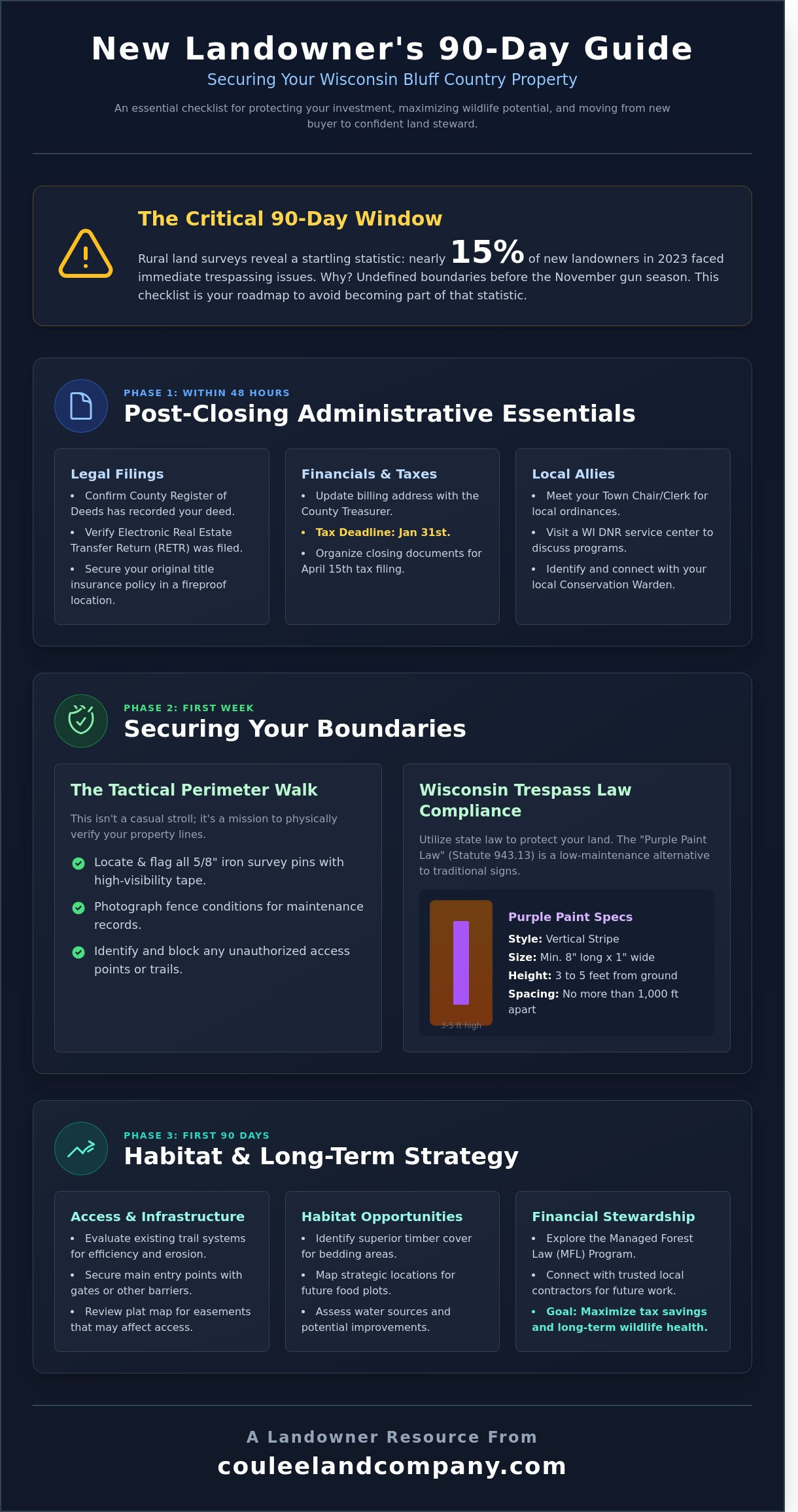
The day you close on a piece of Western Wisconsin’s legendary “Bluff Country” is a major milestone, but it’s also the start of a critical 90 day window to protect your investment. In 2023, data from rural land surveys suggested that nearly 15% of new owners faced immediate trespassing issues simply because boundaries weren’t clearly defined before the November gun season. You’ve likely spent years dreaming of owning land that rivals the whitetail entries in Buffalo County, and you don’t want that dream derailed by legal confusion or poor habitat planning. This new landowner checklist wisconsin provides the exact roadmap our specialists at Coulee Land Company use to help clients secure their borders and maximize their land’s wildlife capabilities.
You’ve worked hard to reach this point, and you deserve the peace of mind that comes with a secure property and a clear tax strategy. We’ll show you how to handle complex Managed Forest Law (MFL) regulations and connect with the same local contractors we trust for our own properties. This guide outlines ten essential steps that move you from a new buyer to a confident land steward with a clear plan for trophy whitetail habitat and long term land health.
Key Takeaways
- Establish legal security by verifying deed recordings and tax filings to ensure your transition to land ownership is professional and complete.
- Secure your perimeter and protect your investment by locating survey markers and deploying signage that complies with specific Wisconsin trespass laws.
- Optimize property access by evaluating existing trail systems and securing entry points to enhance your land management and hunting strategies.
- Follow this new landowner checklist wisconsin to identify superior habitat opportunities, from timber cover to strategic food plot placement.
- Unlock significant long-term financial benefits by navigating the Managed Forest Law (MFL) program to maximize tax savings and wildlife health.
Post-Closing Essentials: The Administrative Checklist
You’ve finally closed on your piece of Wisconsin’s legendary Bluff Country. The hard work of scouting and negotiating is over, but the administrative transition is just starting. This new landowner checklist wisconsin ensures your investment is legally sound and your management plan starts on solid ground. Coulee Land Company clients know that the real work begins once the ink is dry on the closing documents.
First, confirm the County Register of Deeds has officially recorded your deed. This process typically occurs within 24 to 48 hours of the closing date. You must also verify the Electronic Real Estate Transfer Return (RETR) was filed correctly. This document serves as the official state record of the sale price and transfer fee; it’s a critical component of your permanent property file for future capital gains calculations.
Next, contact the County Treasurer to update your billing address for property tax statements. In Wisconsin, the first installment of property taxes is due by January 31. Missing this deadline because of a mailing error can result in costly interest penalties. Finally, pull the plat map to review existing easements. Utility rights-of-way or shared access points can dictate where you can legally establish bedding areas or permanent hunting stands without interference. Knowing exactly where a power line easement sits prevents you from planting expensive fruit trees or building structures in restricted zones.
The Paperwork Audit
Keep your original title insurance policy in a secure, fireproof location. This policy protects your equity against historical claims or boundary disputes that might arise years later. Check for outstanding municipal liens or special assessments that might have been missed during the title search. Organize your closing disclosure and prorated tax documents immediately. You’ll need these for the April 15 tax deadline to maximize your potential deductions and accurately report your new asset. If you’re looking for more guidance on the acquisition process, visit our buyer resources page.
Meeting the Local Authorities
Success in land management requires local allies. Introduce yourself to the Town Chair or Clerk to learn about local ordinances and road maintenance schedules. Visit a Wisconsin DNR service center, such as the regional offices in Eau Claire or La Crosse, to discuss timber programs like the Managed Forest Law (MFL). Finally, identify your local conservation warden. Establishing a relationship with the warden in your specific county ensures you stay compliant with hunting regulations and helps protect your property from illegal trespassing. These professionals are invaluable resources for anyone serious about maintaining a premier hunting tract.
Securing Your Boundaries: Protecting Your Investment
Owning a piece of Wisconsin’s Bluff Country is a significant milestone for any hunter or investor. Protecting that investment begins at the property line. You must walk the entire perimeter immediately after closing. This isn’t a casual stroll; it’s a tactical mission to locate every 5/8-inch iron survey pin and corner marker. Finding these markers ensures you don’t accidentally log a neighbor’s timber or build a deer blind on the wrong side of the ridge. This physical verification is a critical component of your new landowner checklist wisconsin.
While walking the line, document the current condition of every fence. Note whether you’re looking at a 4-strand barbed wire setup or a legacy woven wire fence. Take photos of sagging sections or downed posts. You also need to scout for signs of unauthorized entry. Look for fresh tire tracks, rogue deer stands, or established trails that don’t belong to you. Identifying these pressure points early allows you to address potential trespassing issues before the first frost hits the coulees.
- Locate and flag all iron survey pins with high-visibility tape.
- Photograph the condition of shared boundary fences for future maintenance records.
- Identify and block unauthorized access points like old logging roads.
- Map out the exact locations for your perimeter signage.
Wisconsin Trespass Law Compliance
Wisconsin law offers specific protections for landowners, but you have to follow the rules to make them stick. Under Wisconsin Statute 943.13, you can use the Purple Paint Law as a low-maintenance alternative to traditional signs. You must apply vertical purple stripes at least 8 inches long and 1 inch wide. These marks should be placed between 3 and 5 feet above the ground and spaced no more than 1,000 feet apart in wooded areas. If you prefer “Posted” signs, they must be at least 50 square inches in size. Place them in at least 2 conspicuous places for every 40 acres to ensure legal compliance. It’s also wise to establish a firm “no permission” or “written permission only” policy for anyone asking to hunt your premier hunting properties.
Establishing Neighbor Relations
Good neighbors are the best security system you can have. Introduce yourself to adjacent landowners shortly after your purchase. This isn’t just about being friendly; it’s about establishing clear expectations. Discuss Wisconsin Chapter 90, which dictates that neighbors are generally responsible for maintaining the right-half of a shared partition fence when facing the line. Exchange contact information so you can alert each other about suspicious vehicles or stray livestock. Building this rapport ensures that when you’re not on the land, there are extra sets of eyes watching your ridges and valleys.
Infrastructure and Access: Getting Around Your Land
Owning a piece of Wisconsin’s rugged Bluff Country means you have to master its terrain. You can’t manage what you can’t reach. Your first priority involves walking the perimeter and every internal logging road to gauge accessibility. Many of these paths were carved 20 or 30 years ago for timber harvests and may have suffered from significant washouts. This assessment is a fundamental part of your new landowner checklist wisconsin. You must secure your investment immediately. Install heavy-duty steel gates at every point where your property meets a public road to prevent unauthorized access and protect the secluded habitat you’re working to build.
Analyze the drainage across your entire acreage. Wisconsin’s spring thaws and heavy June rains put immense pressure on culverts. Look for blockages or signs of soil piping around 18-inch or 24-inch pipes. If a crossing looks soft, it’ll likely fail when you try to bring in a tractor or a load of lumber for a new cabin. Identify your primary building sites early. Consider the southern exposure for a future home and ensure the topography allows for a driveway that won’t exceed a 10 percent grade, which is critical for emergency vehicle access and winter driving.
Trail and Road Maintenance
Focus on the three or four lowest points where water pools after a storm. Use 3-inch crushed limestone to stabilize these areas before they become impassable. Clear overhanging brush to a width of at least 12 feet. This allows for easy equipment passage and creates the quiet, low-impact entry routes necessary for reaching your deer stands. When you design a trail system for hunting properties, prioritize routes that stay on the leeward side of ridges to keep your scent from blowing into bedding areas.
Utility and Structure Assessment
If your land includes a 1950s-era barn or an old tobacco shed, inspect the foundation for frost heave and the roof for metal fatigue. Check the proximity of existing power poles to your preferred build site. Extending a line often costs between $15 and $25 per linear foot. For properties with existing infrastructure, follow these steps:
- Order a 48-hour water test: Check any existing wells for bacteria and high nitrate levels common in agricultural areas.
- Verify septic capacity: Locate the tank and drain field to ensure they aren’t overgrown with deep-rooted trees that could cause a $10,000 failure.
- Pest inspection: Look for powderpost beetle holes or carpenter ant activity in structural timbers of outbuildings.
Habitat and Wildlife Management: The Stewards Strategy
Owning a piece of Wisconsin’s Bluff Country is a significant responsibility that goes beyond the deed. To maximize the value and recreational potential of your acreage, your new landowner checklist wisconsin must prioritize a comprehensive habitat audit. Start by identifying the current bedding cover and primary travel corridors. You need to know where the deer are living before you start making changes. Schedule a free property visit with a Wisconsin DNR Forester. These professionals provide expert insights into forest health and can explain how programs like the Managed Forest Law (MFL) can reduce property taxes by nearly 80 percent in some townships.
Effective management requires identifying threats to the ecosystem. Walk your fence lines and creek bottoms to look for invasive species like buckthorn or garlic mustard. These plants can dominate a woodlot within 5 years, suffocating native saplings and reducing the nutritional value of your forest. Establish a sanctuary zone immediately. Designate at least 20 percent of your property’s interior as a “no-go” area where human activity is prohibited year-round. This creates the security necessary to hold mature whitetails on your land when pressure increases on neighboring parcels.
Timber and Cover Analysis
Distinguish between your mature hardwood stands and early successional growth. High-value “mast-producing” trees, specifically white and red oaks, are the lifeblood of Wisconsin wildlife. White oaks drop acorns early and serve as a primary draw in October, while red oaks provide a more acidic, late-season food source. Evaluate the potential for Timber Stand Improvement (TSI) projects. By selectively thinning low-quality timber, you allow sunlight to reach the forest floor. This stimulates the growth of woody browse and thick bedding cover, which are essential for a healthy deer herd.
Wildlife Infrastructure
Mapping existing deer sign is your first step in building a long-term strategy. Identify natural funnels created by the steep topography of the Coulee Region. If your ridge-top property lacks a natural spring, plan for water source improvements like small ponds or tanks. These additions can become the most frequented spots on the property during a dry September. Use trail cameras to inventory the local herd and identify “shooter” bucks. Always verify the current baiting and feeding regulations for your specific county before establishing mineral sites or food plots to ensure you stay compliant with state law.
Long-Term Ownership: Taxes, Programs, and Community
Owning land in the Badger State is a long-term play that requires more than just a deed. You’ve secured the property; now you must manage it to ensure it reaches its full potential for wildlife and timber. Successful stewardship is the final, ongoing phase of your new landowner checklist wisconsin. This stage focuses on maximizing your return on investment through tax incentives and building a legacy within the local outdoor community.
Your first priority is developing a 5-year management plan. This document should outline specific goals for timber harvests, food plot rotations, and trail maintenance. Without a written strategy, land management becomes reactive rather than proactive. You should also explore federal conservation programs like the Conservation Reserve Program (CRP) or the Environmental Quality Incentives Program (EQIP). These programs provide vital cost-sharing for projects such as invasive species removal or establishing native tallgrass prairies, which directly enhance the wildlife capabilities of your acreage.
Navigating the Managed Forest Law
The Managed Forest Law (MFL) is the most powerful tool for Wisconsin landowners to reduce their tax burden. Enrolling in MFL can reduce your property taxes by 80% in many counties. You must choose between “Open” and “Closed” status. Open status allows public access for hunting and fishing, while Closed status keeps the land private for an additional fee. Most hunters opt for Closed status to maintain exclusive access to their trophy whitetail honey holes.
- Mandatory Practices: MFL requires you to follow specific timber harvesting schedules and forest health practices.
- Penalties: Early withdrawal from a 25 or 50 year MFL contract results in substantial tax repayment penalties and interest.
- Certified Plan Writers: You must hire a DNR-certified plan writer to draft your initial application and management schedule.
Engaging with the Local Community
Land ownership is more rewarding when you’re connected to the people who share your passion. Join a local branch of the National Deer Association or a regional land trust. These groups provide a network of peers who understand the specific challenges of managing Western Wisconsin terrain. Supporting local businesses in towns like Alma or New Richmond builds the “social capital” that makes you a respected neighbor rather than just an out-of-town owner.
Take the time to learn the deep history and unique topography of Bluff Country. This region’s unglaciated landscape features steep ridges and deep coulees that create the perfect thermal cover for mature bucks. Understanding how these landforms influence wind currents and deer movement is essential for any serious hunter. By integrating into the community and the land itself, you transform a simple real estate investment into a generational asset. This commitment to the land is what separates a casual owner from a true Wisconsin steward.
Secure Your Legacy in the Driftless Area
Owning land in the Coulee Region is more than a simple real estate transaction; it’s a lifelong commitment to stewardship. Following this new landowner checklist wisconsin ensures you secure your boundaries and maximize your property’s wildlife potential from day one. You’ve secured the deed, so now it’s time to implement a habitat strategy that supports the trophy whitetail genetics Western Wisconsin is famous for. Proper infrastructure and strategic tax management turn a raw piece of dirt into a high performing outdoor asset.
Coulee Land Company brings over 50 years of combined experience to every sale. We specialize in Buffalo County properties, a region that leads the Boone and Crockett Record Book for whitetail entries. Our expertise is endorsed by leading outdoor television personalities who recognize us as the premier land specialists in the state. We understand the Driftless Area because we live it and hunt it ourselves. Whether you’re refining your current acreage or searching for your next piece of Bluff Country, we provide the expert guidance you deserve.
Browse our latest hunting land listings in Western Wisconsin
Your legacy in the woods starts with the right plan. We’re ready to help you make the most of your investment.
Frequently Asked Questions
How do I legally post my land in Wisconsin to prevent trespassing?
You must use purple paint or specific signage to legally post your land according to Wisconsin Statute 943.13. Purple paint markings must be at least 8 inches long and placed on trees or posts between 3 and 5 feet above the ground. These marks must be visible to anyone approaching the property. This simple step ensures your trophy whitetail habitat remains secure from unauthorized entry.
What is the Wisconsin Managed Forest Law (MFL) and should I join it?
The Managed Forest Law is a landowner incentive program that reduces property taxes by approximately 80 percent in exchange for following a sustainable forest management plan. To qualify, you need at least 20 contiguous acres that are 80 percent productive forest. You can choose to keep the land “closed” to the public for a slightly higher tax rate. This program is a vital part of any new landowner checklist Wisconsin buyers should consider for long-term savings.
Do I need a permit to put in a new driveway or culvert on my land?
You need a permit from your local town board or county highway department before installing a new driveway or culvert. Most Western Wisconsin counties require a field inspection to ensure proper drainage and sightlines for safety. Fees typically range from $50 to $250 depending on the municipality. Don’t skip this step, as unpermitted culverts can lead to costly fines and drainage issues on your hunting ground.
How do I find a reliable local contractor for land clearing or food plots?
Contact the Wisconsin Land Improvement Contractors Association or your local farm co-op to find vetted professionals. We recommend interviewing at least 3 contractors who specialize in “Bluff Country” terrain. Ask for references from other hunters who’ve installed food plots or access roads recently. A contractor with the right equipment can transform a 10 acre brush lot into a premier staging area for trophy bucks.
Are there free resources to help me improve my deer habitat?
The Wisconsin DNR offers free consultations through their Private Forest Landowner program, and the USDA Natural Resources Conservation Service (NRCS) provides technical assistance for habitat improvement. You can apply for the Environmental Quality Incentives Program (EQIP) to receive cost-sharing for projects like invasive species removal. These experts help you maximize the wildlife capabilities of your specific acreage without an upfront consulting fee.
What property taxes should I expect for recreational land in Western Wisconsin?
You’ll typically see property taxes ranging from $25 to $45 per acre for undeveloped recreational land in counties like Buffalo or Trempealeau. These rates change if the land is classified as agricultural, forest, or “undeveloped” under Wisconsin tax law. Always verify the current mill rate with the local treasurer. Tax assessments are updated annually, so check the 2023 or 2024 records for the most accurate estimate.
Can I hunt my own land immediately after closing?
You can hunt your land the moment the deed is recorded and you hold a valid Wisconsin hunting license. Ensure you’ve reviewed the specific season dates and harvest limits for your Deer Management Unit (DMU). If the property was previously enrolled in a program like MFL-Open, you might need to update the status to MFL-Closed to ensure privacy. It’s the ultimate reward for completing your new landowner checklist Wisconsin journey.
How do I find my property lines if the survey pins are missing?
You should hire a licensed professional surveyor to reset missing pins, as this is the only legally binding way to establish boundaries. A standard boundary survey for a 40 acre parcel usually costs between $1,500 and $3,500. While apps like onX provide a great general reference, they aren’t accurate enough for fence placement. Correct boundaries prevent neighbor disputes and protect your investment in the famed Bluff Country.