
While most folks are hunkered down by the fireplace, the most successful landowners in Buffalo County are out in the woods. Winter isn’t the off-season; it’s the “Strategy Season” where the lack of foliage allows you to see the true bones of a property. Preparing land for sale in winter gives you a distinct advantage because it’s the only time you can truly evaluate timber stands and whitetail bedding without the distraction of summer’s thick canopy. When the leaves are down, the topography and trail systems that define a high-value tract become clear.
It’s natural to feel a sense of inactivity during these cold months or to worry that harsh weather might damage your infrastructure before you can list. This guide will show you how to leverage this period to enhance your property’s habitat, secure your assets, and maximize market value for 2026. You’ll discover a high-impact checklist for winter stewardship that focuses on timber stand improvement and strategic frost seeding. We’ll also cover how to position your land for a premium spring sale, ensuring you don’t miss the window for critical habitat enhancements that drive buyer interest.
Key Takeaways
- Master Timber Stand Improvement (TSI) techniques to enhance your timber value while the ground is frozen and the sap is down.
- Learn why preparing land for sale in winter allows you to map critical bedding areas and travel corridors that summer foliage often obscures.
- Secure your property’s perimeter and infrastructure by following a professional winterization checklist for cabins and boundary markers.
- Discover how to audit your property tax assessments and Managed Forest Law (MFL) exemptions to ensure your financial records are buyer-ready.
- Understand how evaluating topography during the dormant season helps you accurately price and position your land for a premium spring sale.
Winter Habitat Stewardship: Preparing for Trophy Whitetails
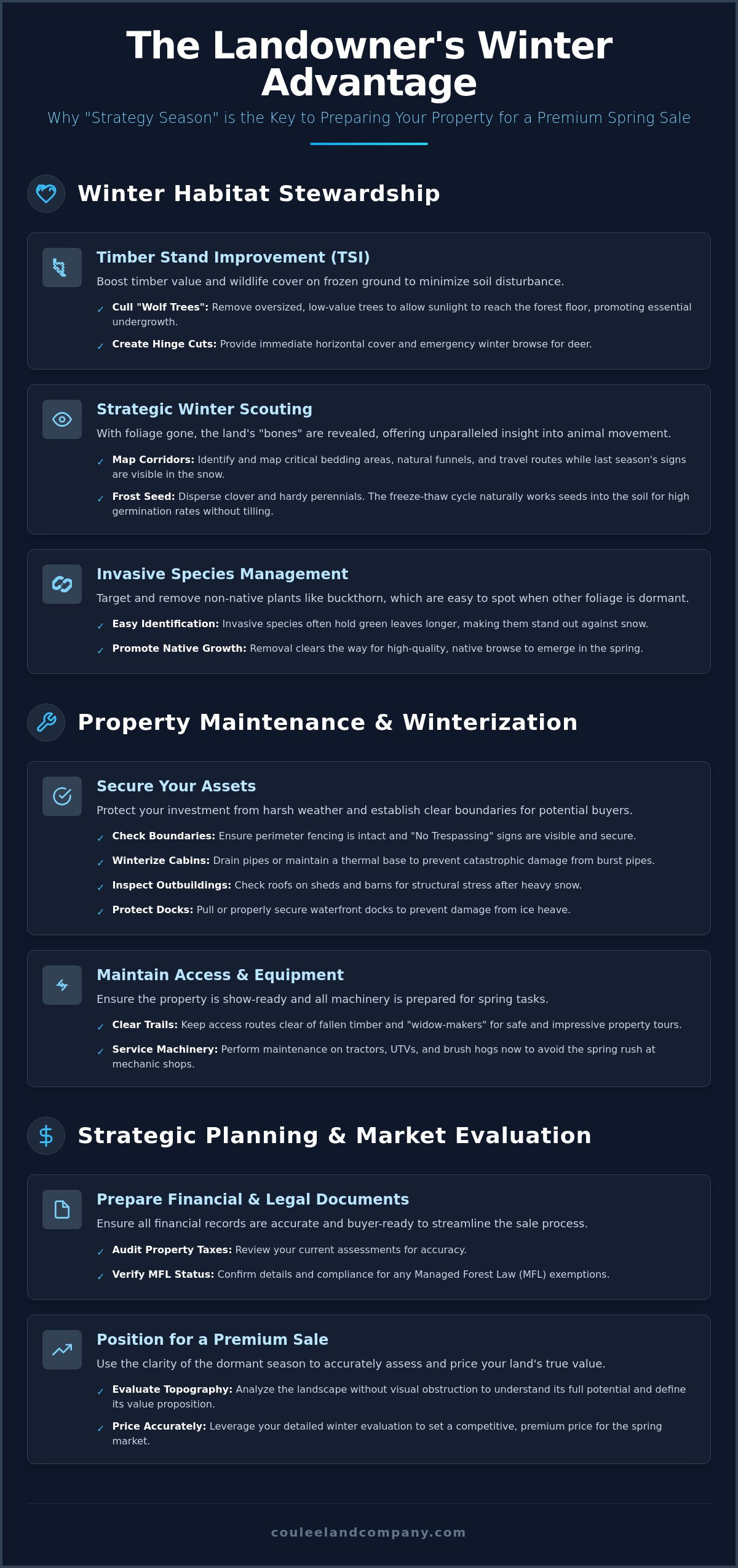
Winter isn’t just a time for dormancy; it’s the most critical window for active stewardship. Successful hunting properties in Buffalo County aren’t built in the summer. They’re engineered during the freeze. By applying fundamental land management principles now, you ensure the property is in peak condition for the spring market. Preparing land for sale in winter allows you to move heavy equipment across frozen ground without rutting sensitive soils or damaging root systems. This is also the best time to handle invasive species like buckthorn. These plants often hold their green leaves longer than native species, making them easy to identify against the snow. Removing them now clears the way for high-quality browse to emerge once the spring thaw begins.
To better understand this concept, watch this helpful video:
Timber Stand Improvement (TSI) for Enhanced Cover
Culling low-value “wolf trees” is a priority. These massive, wide-spreading trees often shade out the forest floor, preventing the growth of essential understory cover. By removing them, you allow sunlight to reach the soil, which triggers a flush of native vegetation. You can also create hinge cuts to provide immediate horizontal cover. This tactic offers deer secure bedding and emergency winter browse during the leanest months of 2026. For detailed instructions on these methods, refer to our Wisconsin land management for wildlife guide. Executing TSI while the sap is down and the ground is frozen minimizes soil disturbance and protects the health of your remaining timber.
Leveraging Winter Scouting for 2026 Planning
Bluff Country terrain hides its secrets under summer foliage. When the leaves are gone, the “bones” of the land reveal natural funnels and pinch points that are otherwise invisible. Use this time to map bedding areas and travel corridors while last season’s sign is still fresh in the snow. Preparing land for sale in winter means you can accurately show buyers exactly how deer move through the property. Marking stand locations and entry routes now ensures the next owner is ready for a successful 2026 season from day one. Don’t forget to prepare for frost seeding clover and hardy perennials. The late winter freeze-thaw cycles naturally work the seed into the soil, ensuring high germination rates without the need for heavy tilling.
Property Maintenance and Winterization Checklist
Winter weather in the Midwest doesn’t care about your listing timeline. It’s a relentless force that tests every structure on your acreage. While some suggest winter is just for paperwork, preparing land for sale in winter requires a boots on the ground approach to maintenance. Start by securing your boundary lines. Ensure all perimeter fencing is intact and that “No Trespassing” signs are clearly visible; this establishes clear borders for potential buyers and prevents liability issues. If your property includes a seasonal residence or country home, follow a comprehensive winter home maintenance checklist to drain pipes or maintain a consistent thermal base. Burst pipes in a remote cabin can cause catastrophic damage before anyone notices.
Don’t neglect your heavy machinery during the cold months. Servicing tractors, brush hogs, and UTVs now saves you from the spring planting rush when local mechanics are overwhelmed. This preparation ensures your equipment is ready to clear trail systems of “widow-makers” or fallen timber. Keeping these paths open is vital for safety and for showing the property’s full potential to serious prospects during the deep freeze. A clean trail system is often the difference between a buyer seeing a manageable tract or a neglected mess.
Securing Your Rural Investment
Midwest blizzards bring heavy snow loads that can buckle older outbuilding roofs. Inspect your sheds and barns after every major storm to identify structural stress early. For those with waterfront properties, ice heave is a significant threat. Ensure your docks are either pulled or properly secured to survive the expansion of the ice. If you’re unsure how these elements impact your land’s value, consider consulting with a land specialist who understands the specific challenges of Bluff Country estates.
Trail and Access Management
Spring washouts often start as minor winter blockages. Clear your culverts of ice and debris now to prevent road erosion when the snow eventually melts. Maintaining primary access roads is non-negotiable. If a buyer can’t reach the best ridge on the property because of a blocked trail, you’ve lost the sale. Preparing land for sale in winter means keeping the property showable at all times. A well-maintained road system proves you’ve been a diligent steward of the land, which builds immediate trust with a buyer.
Strategic Planning and Market Evaluation
Strategy isn’t just about moving dirt or cutting trees. It’s about knowing exactly what those improvements are worth in the current market. Preparing land for sale in winter gives you a visibility advantage that summer sellers simply don’t have. When the canopy is gone, the true value of your ridges, thermal hubs, and hidden springs becomes undeniable. This is the time to update your long-term management plan based on the harvest data you collected this past fall and the scouting observations you’ve made in the snow. Professional land stewardship requires looking past the current frost to see the property’s potential for the next decade.
Assessing Land Value in the Off-Season
Serious buyers don’t wait for green grass; they want to see the “bones” of the property. Walking your acreage with a land specialist broker Wisconsin during the dormant season allows you to highlight unique features that summer growth hides. It’s also the ideal window for professional photography. Aerial shots taken now showcase the topography and drainage patterns with surgical precision, providing a clear map for any savvy investor. Identifying high-ROI improvements now, such as clear-cutting a specific bedding thicket or improving a creek crossing, ensures you’re ready when the spring market surge hits.
Financial and Legal Housekeeping
Clean records are just as important as clean trails. Review your property tax assessments and verify that all Managed Forest Law (MFL) or agricultural exemptions are current for the 2026 tax year. If you’ve had timber sales, agricultural leases, or hunting contracts, organize those documents now. It’s also wise to review the latest Buffalo County Wisconsin deer hunting regulations. Ensuring your management goals align with state laws protects you and provides peace of mind for the future owner. Preparing land for sale in winter means having every legal and financial document ready for a smooth, professional closing. This diligence signals to buyers that the property has been managed by an expert who understands the complexities of rural real estate.
Position Your Property for a Premier 2026 Sale
Success in the spring real estate market is earned during the coldest months of the year. By focusing on Timber Stand Improvement and securing your infrastructure now, you transform your property from a simple tract of land into a high-value managed estate. Preparing land for sale in winter isn’t about waiting for the thaw; it’s about leveraging the unique visibility of the dormant season to highlight the superior topography and trophy potential of your acreage. Whether you’re managing a legacy farm or a prime piece of Buffalo County timber, the work you do today defines the premium closing price you’ll see tomorrow.
Coulee Land Company stands as the undisputed authority in Western Wisconsin Bluff Country. Our team of active hunter-stewards is endorsed by top industry whitetail experts and has successfully managed millions in land sales across this prized territory. We understand that your property is more than a tax ID; it’s a dream realized through diligent stewardship and expert design. Ready to see what your land is worth this winter? Contact Coulee Land Company for a property valuation. Let’s walk your land while the bones of the terrain are clear and ensure your legacy is positioned to lead the market in 2026.
Frequently Asked Questions
What is the most important maintenance task for land in the winter?
The most critical maintenance task is executing Timber Stand Improvement (TSI) while the ground is frozen and the sap is dormant. This allows you to cull low-value trees and create hinge cuts without damaging the soil or root systems of high-value timber. Maintaining clear trails is also essential. Ensuring your road system is accessible allows land specialists to walk the property and evaluate its topography while the foliage is absent.
Can I plant anything on my land during the winter months?
Yes, late winter is the premier time for frost seeding clover and hardy perennials. As the ground undergoes freeze-thaw cycles, the soil expands and contracts, naturally pulling the seeds into the earth for optimal spring germination. This method is highly effective when preparing land for sale in winter because it establishes lush food plots that will be vibrant and attractive to buyers by the time the spring listing goes live.
Is winter a good time to sell my hunting land in Wisconsin?
Winter is an exceptional time to list because the lack of leaves reveals the true bones of the land, such as hidden ridges and bedding thickets. Serious buyers and investors are active during these months because they want to understand the terrain and deer movement before the spring rush. Showing a property now allows you to highlight the strategic habitat improvements you’ve made without the visual clutter of summer canopy.
How do I protect my country home from freezing pipes if I am not there?
You must either drain the entire plumbing system and add non-toxic antifreeze to traps or maintain a consistent minimum heat level of at least 55 degrees. For remote properties, installing a smart thermostat with freeze alerts is a pragmatic way to monitor conditions from afar. It’s also vital to shut off the main water supply and open faucets to relieve pressure, ensuring your rural investment remains secure during harsh Wisconsin blizzards.