
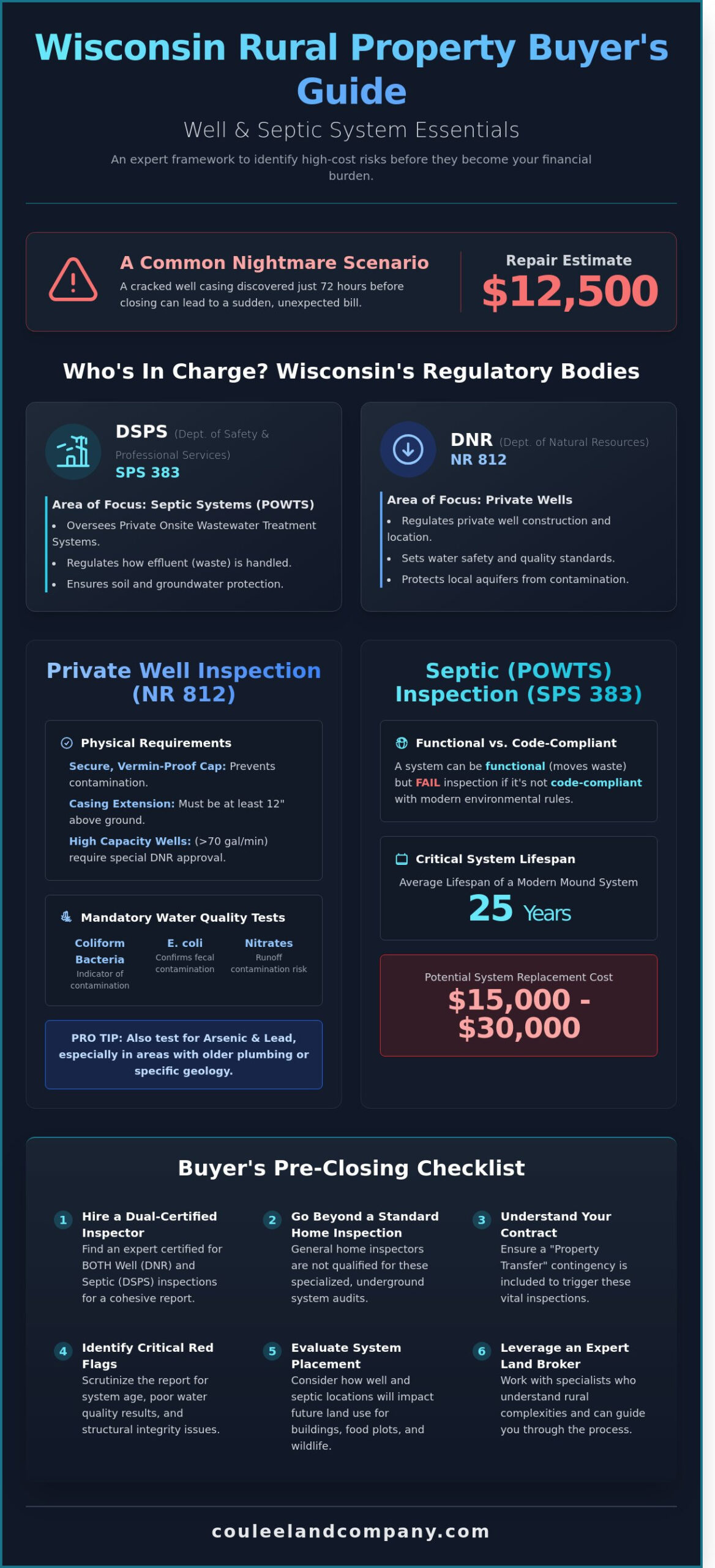
Last October, a buyer in the Coulee Region discovered a cracked well casing just 72 hours before their scheduled closing, resulting in a sudden $12,500 repair estimate. It’s a nightmare scenario that can derail even the most promising land deal in an instant. We understand that your goal is to secure a legacy property in Wisconsin’s Bluff Country without the stress of hidden liabilities. This septic and well inspection guide for wisconsin provides the expert framework you need to identify these high cost risks before they become your financial burden.
You already know that buying rural land requires more diligence than a standard suburban home purchase. We promise to help you master the complexities of state regulations so you can protect your investment and ensure a smooth closing. This guide breaks down the 2026 compliance standards, explains the 25 year average lifespan of modern mound systems, and clarifies the specific roles of the DNR and DSPS in your transaction.
Key Takeaways
- Understand the specific DSPS 383 and NR 812 regulations that govern Wisconsin rural properties to ensure your POWTS and private well meet state standards.
- Prepare for the inspection process by learning how the Hydraulic Load Test evaluates a septic system’s real-world capacity and structural integrity.
- Identify critical red flags in water quality and system age that can fail an inspection, even if the utilities appear to be working perfectly.
- Leverage this comprehensive septic and well inspection guide for wisconsin to protect your investment and ensure a seamless closing in the heart of Bluff Country.
- Discover how strategic well and septic placement impacts your future land management for wildlife and the long-term value of your hunting acreage.
Navigating Wisconsin’s Well and Septic Requirements for Rural Property
Securing a trophy whitetail property in the heart of Bluff Country is a major milestone, but the infrastructure beneath the soil often dictates the true value of your investment. In Wisconsin, rural properties rely on two critical components: Private Onsite Wastewater Treatment Systems (POWTS) and private wells. Understanding this septic and well inspection guide for wisconsin is vital because state law treats these systems with a high level of scrutiny compared to urban utilities. A basic understanding of What is a Septic System? helps, but Wisconsin’s specific regulations go much deeper than general mechanics. Most 2026 real estate contracts include a “Property Transfer” contingency that triggers these inspections. This ensures the buyer isn’t inheriting a failing system that could cost $15,000 to $30,000 to replace.
To better understand these complex rural systems, watch this helpful video:
Inspectors differentiate between a “functional” system and a “code-compliant” system. A septic system might be functional, meaning it currently moves waste away from the house, yet fail a code-compliance check. For example, a system installed in 1992 might not meet the modern soil separation requirements found in DSPS 383. If a system isn’t code-compliant, you might face immediate orders for remediation after the closing date. We see this often in older farmsteads where systems were grandfathered in but don’t meet current environmental protections.
The Role of DSPS and DNR in Your Inspection
The Department of Safety and Professional Services (DSPS) oversees the septic side of the equation through Chapter SPS 383. They focus on how the POWTS handles effluent and protects the soil. Conversely, the Department of Natural Resources (DNR) regulates well construction and water safety under code NR 812. They ensure your drinking water is free of bacteria and nitrates. Hiring a single inspector certified in both disciplines is a massive advantage for rural buyers. It provides a cohesive report on the property’s entire water cycle without the need for multiple site visits.
Why “Standard” Home Inspections Aren’t Enough
A general home inspector is an expert at checking roofs, electrical panels, and HVAC systems. However, they are rarely certified to perform a full Wisconsin well and septic audit. Relying on a surface-level check for underground infrastructure is a massive gamble that could lead to environmental contamination or dry wells. Specialized land brokers like the team at Coulee Land Company always recommend third-party experts to verify these systems. This septic and well inspection guide for wisconsin serves as your first line of defense against unforeseen costs in the backcountry.
Understanding POWTS and Private Well Regulations in Wisconsin
Buying land in the Driftless Area requires more than just checking trail cameras. You need to understand the state’s strict environmental codes before signing a closing statement. Wisconsin NR 812 mandates that every well has a secure, vermin-proof cap and a casing that extends at least 12 inches above the finished ground grade. For properties with over 40 acres or significant agricultural needs, the 2026 standards for High Capacity wells, which are systems capable of pumping 70 gallons per minute or more, require additional DNR approvals to protect local aquifers.
On the waste side, POWTS Regulations in Wisconsin under DSPS 383 dictate how your Private Onsite Wastewater Treatment System must function. In the rugged terrain of Buffalo County, the 20% or greater slopes often found in Bluff Country make standard drainage impossible. You’ll likely deal with specialized systems designed for thin soil over limestone. This septic and well inspection guide for wisconsin highlights that structural integrity of the tank is only half the battle; the soil’s ability to absorb effluent is the real deal-breaker for rural development.
Well Construction and Water Quality Standards
Wisconsin law requires testing for Coliform bacteria, E. coli, and Nitrates during any property transfer. In 2026, experts suggest adding Arsenic and Lead screens, especially in counties with older plumbing or specific geological veins. You can verify the history of your water source by checking the Well Construction Report on the DNR’s online database. This record shows the exact depth and geological layers the driller encountered when the well was first sunk.
Septic (POWTS) Classifications and Soil Tests
Western Wisconsin properties typically use conventional, mound, or at-grade systems. If a property lacks clear records, a fresh soil boring or perc test is mandatory to determine if the ground can handle a replacement system. When planning your hunting properties, remember that septic sites must avoid designated wildlife food plots or heavy equipment travel corridors to prevent soil compaction. A failed perc test on a 5-acre ridge top can turn a dream cabin site into an unbuildable lot, so always verify the soil’s capability before moving forward with a purchase.
The Inspection Process: What Every Buyer and Seller Should Expect
Inspection day is the moment of truth for any Western Wisconsin land deal. This septic and well inspection guide for wisconsin outlines the exact sequence of events when the inspector’s boots hit the dirt. The process begins with the “Don’t Pump Yet” rule. Sellers often think they’re being helpful by emptying the septic tank before an inspection, but this is a critical mistake. An inspector needs to see the liquid at its natural operating level to determine if the tank is leaking or if the drain field is backing up. If a tank is pumped within 30 days of the inspection, the results are usually considered invalid under Wisconsin municipal codes.
The core of the evaluation involves two primary methods: the Hydraulic Load Test and visual camera inspections. During the Hydraulic Load Test, the inspector introduces a specific volume of water, often between 100 and 150 gallons per bedroom, into the system over a 24 hour period. This simulates heavy daily usage to see if the soil can still absorb effluent. Simultaneously, they use high resolution cameras to inspect the well casing for cracks and the septic lines for root intrusion. They’re looking for structural integrity in the tank baffles and ensuring the well pump maintains a steady 40 to 60 psi pressure range without short-cycling.
Pre-Inspection Checklist for Sellers
Preparation prevents delays and keeps your closing on track. Before the inspector arrives, Sellers should ensure the septic manhole cover is fully exposed. If the cover is buried 3 feet deep under frozen Bluff Country soil, the inspection will stop before it starts. Clear all brush and debris away from the well head to allow for a 360 degree visual check. Finally, gather at least 5 years of maintenance records and pumping receipts. Having this paper trail proves the system has been managed with the same care you’ve given your timber stands.
What Buyers Must Watch For During the Walkthrough
Smart buyers look for red flags long before the official report is filed. When walking hunting properties with existing cabins, pay close attention to the vegetation. Lush, unnaturally green grass over a drain field or “spongy” soil underfoot often signals a failing system where effluent is surfacing. Check the well head’s proximity to livestock pens or old barn sites; Wisconsin law requires specific setbacks to prevent nitrate contamination. Low water pressure in the kitchen sink or a “rotten egg” smell from the tap are immediate indicators that the well needs more than just a simple water test. Using this data helps you negotiate from a position of strength and ensures your piece of the Coulee Region doesn’t come with a 20,000 dollar surprise.
Analyzing Results: Common Red Flags and Remediation Costs
Once the lab results and the pumper’s report arrive, the path to closing either clears or becomes a steep climb. A “Safe” water report confirms the absence of coliform bacteria and nitrate levels below the 10 milligrams per liter threshold. If the report comes back “Unsafe,” the deal stops until remediation occurs. This is a critical step in any septic and well inspection guide for wisconsin because lenders won’t fund a loan on a property without potable water.
Sellers often argue that an old system is fine because it’s currently working for their family. In Wisconsin, functionality doesn’t equal compliance. Under DSPS Code 383, a system fails if it discharges effluent to the surface or if the tank is structurally unsound. A 40 year old concrete tank often has a corroded baffle or a cracked floor that allows groundwater to enter. These aren’t just suggestions; they are hard failures that require immediate replacement before a deed transfer in many counties.
- Well Cap Replacement: $450 to $650. A simple fix for a non-vermin proof cap or a cracked seal.
- Pressure Tank Replacement: $1,200 to $2,500. Common when the internal bladder fails.
- Cracked Septic Tank: $5,000 to $8,500 for tank replacement and labor alone.
- New Mound System: $18,000 to $32,000. These are standard in the rocky, shallow soils of Western Wisconsin.
Dealing with Bacteria and Nitrate Hits
A bacteria hit usually triggers a well chlorination process. A licensed professional introduces a concentrated chlorine solution to the well, lets it sit for 24 hours, and then flushes the system. It’s often a one-time fix for a well that sat idle during the listing period. Nitrates are a different beast. High nitrate levels often stem from agricultural runoff and require a specialized reverse osmosis system at the kitchen sink. These water quality issues directly impact the market value of country homes, as modern buyers expect clean water as a baseline requirement.
The “Failing” Septic System: Options for Negotiation
If an inspection reveals a failure in the dead of winter, you can’t dig a new drain field in frozen ground. We often use an escrow agreement where the seller puts 150 percent of the estimated replacement cost into a holdback account. This satisfies the lender and allows the closing to proceed while the ground thaws. In the rugged Bluff Country, where steep slopes and thin soil are the norm, a standard trench system rarely works; you’ll likely need a mound system. Understanding these regional soil limitations is an essential part of our septic and well inspection guide for wisconsin. Buyers should negotiate a price reduction or a seller credit to cover these 2026 costs, as a failed septic can tank a mortgage appraisal instantly.
Ready to find a property with a proven, reliable system? View our current listings for buyers to see high-quality land and homes in Western Wisconsin.
Protecting Your Investment in Bluff Country
Securing a clean bill of health for your rural utilities is the most effective way to preserve long-term land value. In the Driftless Area, a failed septic system or a contaminated well can result in immediate repair costs exceeding $20,000, which directly eats into your equity. This septic and well inspection guide for wisconsin serves as your roadmap to avoiding these financial pitfalls. We believe that true land stewardship begins with the infrastructure that supports your home or hunting cabin. A functional, compliant system ensures that your property remains a liquid asset that will attract top-tier buyers for generations to come.
Strategic placement of these systems is also a vital part of land management for wildlife. You don’t want a septic drain field or a noisy well pump located in a high-traffic transition zone for trophy whitetails. We help you analyze the property layout to ensure utility footprints don’t interfere with bedding areas or food plot designs. It’s about looking at the land through the eyes of both a homeowner and a hunter. This dual perspective is why working with a dedicated Land Specialist is superior to hiring a general residential agent who lacks experience with rural acreage.
The Coulee Land Company Advantage
Our team of specialists, including veteran agents like Mike Law, provides a hands-on approach to the due diligence process. We have deep roots in Buffalo County and the surrounding Bluff Country, giving us access to a vetted network of local contractors. These experts understand the unique challenges of drilling wells through limestone layers or installing mounds on steep slopes. We treat every well and septic report as a vital part of our “Hunter’s Realtor” service. Our goal is to protect your interests in a region that dominates the record books, ensuring your piece of the woods is both functional and productive.
Next Steps for Buyers and Sellers
Success in the 2026 market requires proactive planning. We encourage all prospective landowners to visit our Buyers page for a comprehensive due diligence checklist that covers every technical detail. If you plan to list or buy during the 2026 spring push, schedule your inspections as early as possible. Contractor backlogs in Western Wisconsin can frequently reach 45 days during the peak season. Following a professional septic and well inspection guide for wisconsin will help you stay ahead of the curve.
- Review the full inspection history before making an offer.
- Coordinate with local specialists who know the Bluff Country terrain.
- Verify all permits are on file with the county zoning office.
Don’t leave your rural investment to chance. The team at Coulee Land Company has the expertise and the local connections to guide you through every technical hurdle. Contact us today to start your search for the perfect Wisconsin property and experience the difference of working with the region’s premier land specialists.
Secure Your Legacy in Wisconsin’s Premier Hunting Grounds
Owning a piece of Buffalo County is a dream for many, but protecting that investment requires diligent attention to the 2026 mandates. This septic and well inspection guide for wisconsin highlights that modern POWTS regulations now demand verified maintenance records every 36 months. You’ll also need to account for the specific well testing standards that protect the water quality across the Driftless Area. Identifying a failing drainage field early saves buyers from $15,000 in unexpected replacement costs. Don’t let a technicality stand between you and a trophy whitetail property.
Coulee Land Company remains the undisputed authority in Western Wisconsin real estate. We’ve earned the trust of leading outdoor television personalities through our deep knowledge of land management and local regulations. Our team specializes in the unique attributes of Bluff Country, ensuring every transaction is handled with expert precision. Start Your Search for Premium Wisconsin Land with Coulee Land Company. Your future in the heart of the Midwest’s best hunting territory starts with a partner who knows the soil as well as the game.
Frequently Asked Questions
Do I need to be present for the well and septic inspection?
You aren’t required to be present, but we recommend attending so you can see the system’s layout firsthand. Being on-site allows the inspector to point out the specific location of the septic tank and the well head, which is vital for future land management. Most inspections for properties in the Coulee Region occur during weekday business hours and provide a perfect opportunity to ask about the system’s capacity for your hunting camp or homestead.
How long does a typical Wisconsin well and septic inspection take?
A typical Wisconsin well and septic inspection takes between 2 and 4 hours to complete. The septic portion requires about 2 hours to locate the tank, check the baffles, and verify the drain field’s health. The well inspection adds another hour to test the pressure tank and collect water samples. This septic and well inspection guide for wisconsin ensures you budget enough time to get a full report on your property’s infrastructure.
Who is responsible for paying for the well and septic inspection in Wisconsin?
The buyer typically pays for the well and septic inspection, though this is a negotiable item in your offer to purchase. In roughly 90% of rural land transactions we facilitate, the buyer covers these costs to ensure they have an unbiased report from a licensed professional they trust. Expect to pay between $400 and $800 for a combined inspection depending on the specific tests required by your lender or the county.
What is a POWTS, and how is it different from a regular septic system?
A POWTS is a Private Onsite Wastewater Treatment System, which is the legal term used by the Wisconsin Department of Safety and Professional Services. While people use “septic system” as a general term, a POWTS specifically includes any system that treats and disposes of sewage on the property. This category encompasses traditional gravity-fed systems, mound systems, and holding tanks, all of which must comply with the SPS 383 administrative code.
Can a well inspection fail if the water tastes fine?
Your well can fail an inspection even if the water tastes and looks perfectly clear. Invisible contaminants like coliform bacteria or nitrate levels exceeding the 10 milligrams per liter state limit will trigger a failure. These issues often stem from cracked well caps or agricultural runoff in the bluff country. A failing grade requires immediate chlorination or system repairs to ensure the water is safe for your family and guests.
What happens if my septic system fails the hydraulic load test?
If your system fails a hydraulic load test, it means the soil absorption area can’t process water at the required rate. This test mimics a heavy usage day by adding roughly 150 to 300 gallons of water to the system. A failure usually signals a clogged drain field or a saturated site. In these cases, you’ll likely need to replace the entire system, which can cost between $10,000 and $25,000 in Western Wisconsin.
How often should I test my well water after I purchase the property?
You should test your well water at least once every 12 months for bacteria and nitrates. The Wisconsin DNR recommends this annual schedule because groundwater quality can shift due to seasonal runoff or nearby land use changes. Since 20% of private wells in the state show elevated nitrate levels, staying diligent ensures your property remains a healthy retreat. This regular maintenance is a core part of any septic and well inspection guide for wisconsin landowners.
Does a “mound system” decrease the value of my Wisconsin land?
A mound system doesn’t decrease the value of your Wisconsin land; it’s a superior solution for the rocky or heavy clay soils found in our region. These systems are engineered to provide high-quality treatment where traditional gravity systems might fail. Approximately 40% of new POWTS installations in the state are mound systems. Buyers in the Coulee Region understand that a functioning mound system is a reliable asset that protects the environment and the property’s utility.