
Your back forty is a high-performance engine that requires active management to produce trophy results. While many landowners hesitate to cut trees for fear of ruining their sanctuary, sustainable timber harvesting wisconsin is actually the most effective way to build superior deer woods. You don’t have to choose between a healthy forest and a profitable one. This approach allows you to curate the land for the next generation while enjoying the financial rewards of a well-managed timber stand.
We understand the anxiety that comes with seeing a logging truck enter your gate. You likely worry about soil compaction, ruined trails, or the loss of your favorite stand locations. This guide will show you how sustainable timber harvesting wisconsin balances these concerns with the need for high-quality browse and bedding cover. We’ll preview the essential steps for implementing a harvest, explain the tax benefits of the Managed Forest Law, and demonstrate why sustainable timber harvesting wisconsin is the gold standard for increasing property value in our legendary Bluff Country.
Key Takeaways
- Learn how science-based forestry preserves the unique topography of Wisconsin’s Bluff Country while ensuring robust forest regeneration.
- Discover why hiring a professional forester is the critical first step in successful sustainable timber harvesting in Wisconsin to protect your soil and water quality.
- Identify the specific criteria for selecting logging contractors who adhere to SFI Training Standards to protect your land’s long-term integrity.
- Learn why savvy buyers in premier regions like Buffalo County prioritize properties with managed timber as a hedge against inflation and a mark of quality.
- Find out how to transform your acreage into a trophy whitetail sanctuary by using timber harvests to create strategic bedding and browse.
The Fundamentals of Sustainable Forestry in Wisconsin’s Bluff Country
True forest stewardship isn’t about clearing the land; it’s about curating it for the next generation. The Fundamentals of Sustainable Forestry involve the science-based removal of specific trees to ensure long-term forest health and vigorous regeneration. In the Driftless Area, this practice is vital for maintaining the structural integrity of the landscape.
Western Wisconsin’s “Bluff Country” presents unique challenges that flatter landscapes don’t face. Our steep topography and specific soil types require specialized silvicultural approaches to prevent erosion and maintain water quality. Effective sustainable timber harvesting in Wisconsin must account for these vertical gains to protect the deep valleys and limestone ridges that serve as critical wildlife corridors.
To see how these principles look on the ground, watch this video of modern equipment in action:
The Wisconsin DNR provides essential technical support to help private landowners balance timber yield with “High Conservation Values.” This balance ensures that your harvest protects vital watersheds and maintains the thermal cover necessary for a healthy whitetail population. Managing your woods with this level of precision turns a simple property into a premier land legacy.
Certification Standards: SFI vs. FSC
The Sustainable Forestry Initiative (SFI) and the Forest Stewardship Council (FSC) represent the gold standards for Wisconsin timber management. These certifications signal to potential buyers that the land has been managed under strict environmental and social protocols. When evaluating hunting properties, savvy investors look for these marks as proof of a high-quality, sustainable investment that won’t require decades of restoration.
Biodiversity and Ecosystem Health
Wisconsin sits in a biological “tension zone” where northern and southern forest types overlap. Following world-class examples like the Menominee Forest model, we prioritize a mix of Northern Hardwood and White Pine to create a resilient ecosystem. Targeted harvesting prevents stagnant monocultures from taking hold. Instead, it promotes a diverse forest floor packed with the woody browse and security cover that keeps trophy bucks on your acreage year-round.
Implementing a Sustainable Harvest: From Planning to Timber Stand Improvement
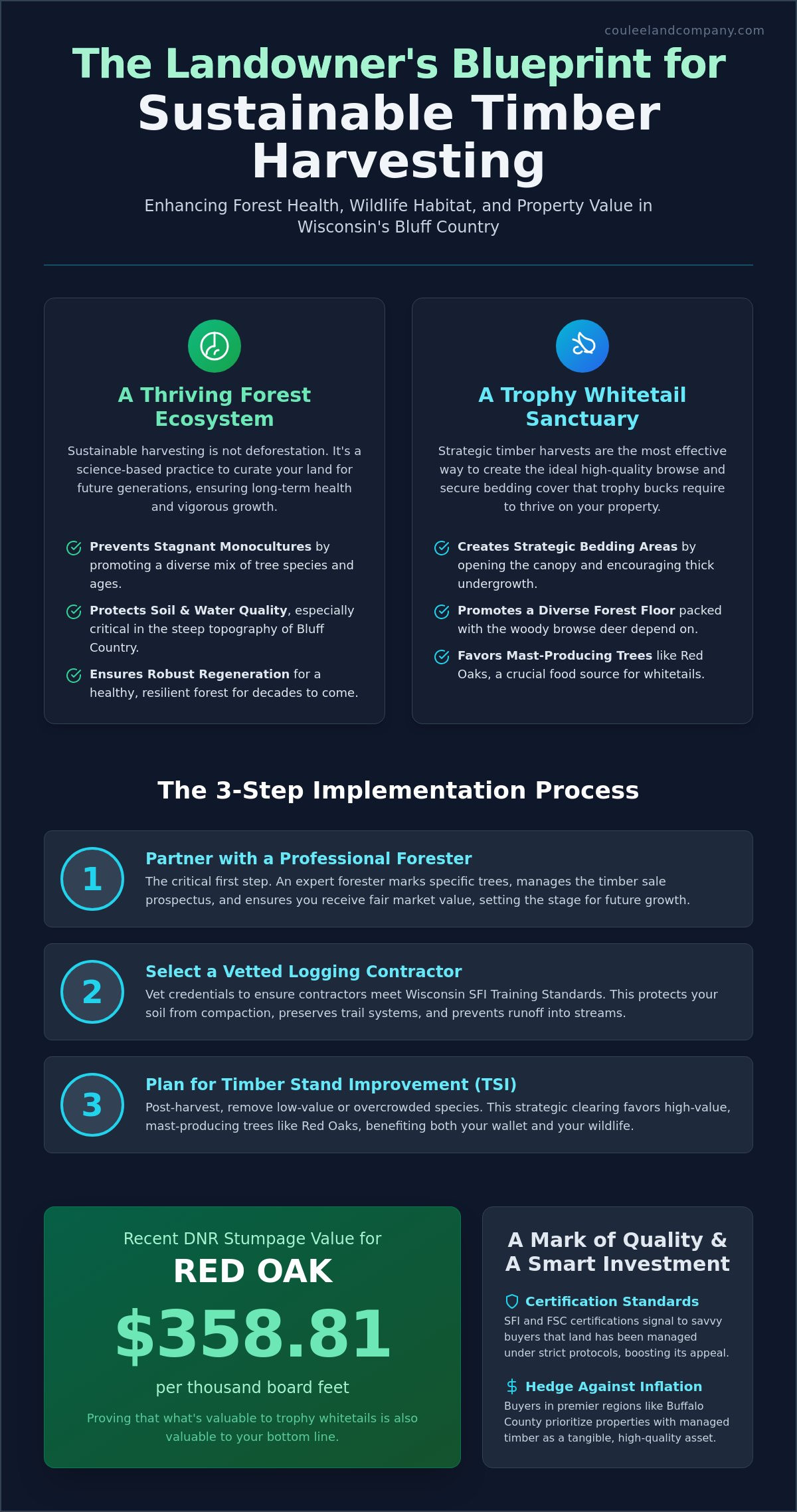
Implementing a sustainable harvest begins with a professional forester, not a chainsaw. You need an expert to mark specific trees and manage a timber sale prospectus that ensures you get fair market value for your logs. This isn’t just about the immediate check; it’s about setting the stage for future growth. A forester understands how Wisconsin’s Forests And Climate Initiatives influence long term land health and carbon sequestration.
Selecting a logging contractor is the next critical hurdle. You must vet their credentials to ensure they meet Wisconsin SFI Training Standards. These standards protect your soil from compaction and your trout streams from runoff. Before the first tree falls, you should also plan for Timber Stand Improvement (TSI). By removing low-value or overcrowded species, you favor mast-producing trees like Red Oaks. These oaks recently saw DNR stumpage values of $358.81 per thousand board feet, proving they are as valuable to your pocketbook as they are to the trophy whitetails that crave their acorns. Proper harvest prep also keeps your existing trail systems and stand locations intact, ensuring your hunting season isn’t sidelined by the work.
Step-by-Step Harvesting Process
The process starts with a comprehensive forest inventory to determine stand density and age classes across your acreage. Your forester will then mark the harvest using either selection cutting for uneven-aged stands or shelterwood systems to promote sun-loving species. Understanding your stumpage revenue is vital. This is the value of the standing timber, and a transparent prospectus ensures this return flows directly back to you as the landowner.
Post-Harvest Management for Wildlife
The real magic happens after the loggers leave. Sustainable timber harvesting in Wisconsin creates edge habitat and early successional growth that serves as a magnet for deer. This new sunlight hits the forest floor, triggering a flush of woody browse and thick bedding cover. To maintain this advantage, you’ll need to stay diligent with invasive species control and consider prescribed fire management to keep the ecosystem productive. If you are looking to optimize your property for the next generation, our team specializes in identifying high-potential hunting properties that are ready for professional management.
How Managed Timber Impacts Your Wisconsin Property Value
Landowners often fear that cutting trees devalues their property. In reality, the opposite is true when you follow a documented management plan. There is a massive market gap between “logged-over” land, which often looks like a disaster zone, and land that has undergone sustainable timber harvesting in Wisconsin. Savvy buyers, particularly those looking for a legacy in Buffalo County, view a mature, managed stand as a rock-solid hedge against inflation. They aren’t just buying dirt; they’re buying a growing asset that produces periodic revenue while supporting a world-class whitetail herd.
Timber acts as a powerful secondary revenue stream. It effectively offsets ownership costs and property taxes. At Coulee Land Company, we position ourselves as the expert guide for buyers who want to find acreage with high timber and habitat potential. We understand that a forest is more than just a backdrop; it’s a financial engine that increases the property’s overall desirability and future resale price.
Attracting the High-End Recreational Buyer
Professional forestry records serve as powerful “social proof” for the diligent land steward. When you can show a buyer a history of responsible harvests, you prove the land’s productivity and health. A healthy, open-canopy forest offers far more aesthetic appeal than a choked, unmanaged woodlot. This visual and functional superiority is exactly what we highlight when selling hunting land in Wisconsin to elite buyers. They want to see the result of your vision: a forest floor teeming with life rather than a wall of invasive brush.
Timber and Tax Benefits
Programs like the Managed Forest Law (MFL) offer significant tax reductions for landowners who commit to long-term management. For land entered after 2004, the 2023 through 2027 tax rate for closed land is just $9.49 per acre. Compare that to standard recreational tax rates, and the savings are clear. Investing in quality silviculture today ensures a high-value harvest decades from now. This long-term ROI makes sustainable timber harvesting in Wisconsin one of the smartest moves a landowner can make. It transforms a potential tax liability into a thriving, self-sustaining ecosystem that pays you back.
Secure Your Land Legacy Through Strategic Forestry
Your Wisconsin acreage is more than a parcel of land; it’s a living legacy that demands expert stewardship. By embracing sustainable timber harvesting in Wisconsin, you transform your property from a static woodlot into a high-performance habitat and an appreciating financial asset. We’ve explored how science-based forestry protects the rugged Bluff Country topography while creating the early successional growth that trophy whitetails require. You now understand that professional management plans and tax programs like the MFL don’t just save money; they build powerful credibility for future buyers.
Our team at Coulee Land Company brings unmatched expertise to the Buffalo County region. We’re more than brokers; we’re a dedicated group of land specialists and hunters who understand the heartbeat of the Driftless Area. Endorsed by high-profile industry figures in the outdoor space, we have the specialized vision to identify and market a property’s true potential. Whether you’re looking to buy or sell, we provide the pragmatic, results-oriented guidance you need to succeed in this competitive market.
View our exclusive Wisconsin hunting land listings with managed timber and take the first step toward owning a piece of the world’s finest whitetail territory. Your dream of owning a perfectly managed forest is within reach.
Frequently Asked Questions
Does timber harvesting ruin deer hunting in the short term?
Timber harvesting actually creates an immediate magnet for whitetails rather than driving them away. While the noise of machinery causes temporary displacement, deer often return within hours of the crew leaving to feed on the tender, nutrient-dense buds of fallen tree tops. This “slash” provides instant high-quality browse and horizontal security cover that didn’t exist before the harvest. Within one growing season, the increased sunlight reaching the forest floor triggers a massive flush of native forbs and woody regeneration that keeps deer on your property year-round.
What is the Managed Forest Law (MFL) in Wisconsin and should I enroll?
The MFL is a strategic tax incentive program that encourages long-term forest stewardship by offering significant property tax reductions. For land entered after 2004, the current rate for closed land is just $9.49 per acre through 2027. Enrolling is a smart move if you want to lower your overhead while following a professional plan for sustainable timber harvesting in Wisconsin. It requires a written management plan from a certified writer, which ensures your harvest timing aligns with both ecological health and your personal hunting goals.
How much does it cost to hire a professional forester in Wisconsin?
Forester fees are typically structured as either a flat rate for plan writing or a percentage of the final timber sale revenue. While we don’t quote specific pricing for these independent professionals, their involvement usually pays for itself by preventing you from leaving money on the table during a harvest. A professional forester ensures your logs are sorted correctly and sold at current stumpage rates, such as the $358.81 per thousand board feet recently seen for Red Oak. They act as your advocate to ensure the logging crew respects your land’s long-term value.
What is the difference between clear-cutting and sustainable selection cutting?
Clear-cutting involves removing all trees in a specific area to regenerate sun-loving species like Aspen, while selection cutting removes individual trees to maintain a diverse, uneven-aged forest. Both are essential tools for sustainable timber harvesting in Wisconsin depending on your specific forest type. Selection cutting is ideal for hardwoods where you want to maintain continuous canopy cover. Clear-cutting is often the best choice for creating the dense, early-successional thickets that provide world-class bedding habitat for mature bucks and nesting cover for upland birds.