
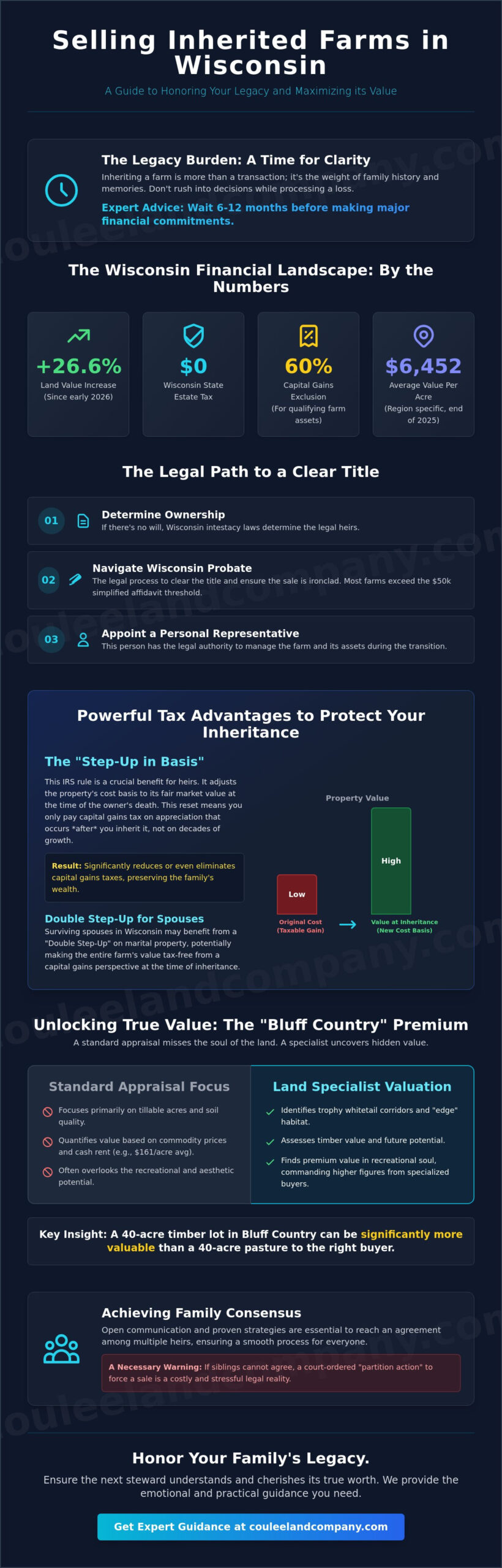
What if the most respectful way to honor a century of family history isn’t by letting the fences fall into disrepair, but by ensuring the land finds a steward who truly understands its value? When you’re Selling Inherited Farms in Wisconsin: Emotional and Practical Guidance is often hard to find, especially when you’re caught between the guilt of letting go and the pressure of managing a property that’s seen a 26.6% value increase since early 2026. You likely want to do right by your siblings and your ancestors, but the technicalities of Wisconsin probate and capital gains can feel like a minefield.
We understand that this isn’t just a real estate transaction; it’s the closing of a chapter in your family’s story. This guide will show you how to navigate the legal complexities while maximizing your financial return to honor that legacy. You’ll learn how to leverage the 60% capital gains exclusion for farm assets and utilize the federal stepped-up basis to protect your inheritance. We’ll also provide a roadmap for finding a buyer who values the trophy whitetail potential and wildlife capabilities of your Bluff Country acreage as much as you do.
Key Takeaways
- Learn how to navigate the 2026 Wisconsin probate landscape to clear titles efficiently and secure the legal authority needed to move forward with a sale.
- Discover why “Bluff Country” properties command a premium by identifying hidden assets like trophy whitetail corridors and timber value that standard appraisals often overlook.
- Gain expert perspective on Selling Inherited Farms in Wisconsin: Emotional and Practical Guidance to balance the weight of a family legacy with the necessity of financial stewardship.
- Implement proven strategies for reaching a consensus among multiple heirs and understand the legal reality of partition actions if siblings cannot agree.
Navigating the Legal and Emotional Landscape of Inherited Wisconsin Land
Inheriting a farm in the Coulee Region is a heavy honor. It’s often called the “Legacy Burden” because you aren’t just inheriting dirt; you’re inheriting memories of harvests and deer camps. Taking the lead on Selling Inherited Farms in Wisconsin: Emotional and Practical Guidance starts with acknowledging this weight. You shouldn’t feel rushed to sign a listing agreement while you’re still processing a loss. Most experts suggest waiting six to twelve months before making major financial commitments to ensure clarity and family consensus.
If your loved one passed without a clear plan, you’ll need to understand Wisconsin intestacy laws to determine who legally owns the property. Clearing the title is the first hurdle in the 2026 probate process. This legal phase ensures that when you eventually find a buyer who respects the land, the transaction is ironclad and free of future disputes. Fortunately, as of March 23, 2026, Wisconsin still has no state estate tax, meaning more of the land’s value stays with your family.
To see how other families handle these transitions, watch this brief overview:
Wisconsin Probate Options: Formal vs. Informal
Wisconsin offers a simplified transfer affidavit for estates valued under $50,000, but most working farms will exceed this threshold. You’ll likely work with a Personal Representative who has the authority to manage the farm’s wildlife capabilities and agricultural leases during the transition. This role is vital for maintaining the land’s value until the sale is finalized. Our team at Coulee Land Company often works with families through our seller services to ensure every acre is accounted for during the appraisal process.
The Power of the Step-Up in Basis
A Step-Up in Basis is the adjustment of a property’s value to its fair market value at the time of the owner’s death. This rule protects heirs from paying taxes on decades of land appreciation by resetting the “cost” of the farm to its current value. In Wisconsin, surviving spouses may benefit from a “Double Step-Up” on marital property, which can virtually eliminate capital gains taxes on the entire farm. When Selling Inherited Farms in Wisconsin: Emotional and Practical Guidance is paired with these tax advantages, you can maximize the return that honors your family’s hard work.
Maximizing the Value of Your Farm: More Than Just Tillable Acres
A standard appraisal might tell you your soil quality is excellent, but it won’t tell you that a trophy buck crosses your back forty every November. When you’re seeking Selling Inherited Farms in Wisconsin: Emotional and Practical Guidance, you have to look beyond the corn and beans. Western Wisconsin’s “Bluff Country” carries a unique premium that traditional residential realtors often overlook. While the average farmland value in the region hit $6,452 per acre at the close of 2025, properties with superior wildlife capabilities often command much higher figures from specialized buyers who value the land’s recreational soul.
Preparing the land for a sale involves more than just cleaning out the machine shed. Small management tweaks, like maintaining access trails or identifying natural bedding areas, can significantly increase the “wow factor” for high-end land buyers. We understand the emotional toll of selling a farm, but showcasing its full potential is the best way to honor the legacy of the land. It ensures the next steward recognizes the true worth of what your family built over generations.
Agricultural vs. Recreational Value
In regions like Buffalo County, the price per acre isn’t just about tillable yield. Topography and “edge” habitat create corridors for Boone and Crockett whitetails, making a 40-acre timber lot potentially more valuable than a flat 40-acre pasture. With benchmark farmland values seeing a 26.6% change at the beginning of 2026, it’s vital to capture every dollar of that growth. A standard realtor might focus on the $161 average cash rent for non-irrigated cropland, while a land specialist sees the five-figure premium for a world-class hunting ridge.
The Land Specialist Advantage
A broker who only understands residential sales will likely leave thousands on the table because they don’t know how to market “wildlife capabilities.” You need an expert like Mike Law who can speak the language of both the modern farmer and the dedicated hunter. Coulee Land Company leverages endorsements from the outdoor television world to reach a niche audience that values land management and trophy potential. If you’re curious about how your property compares to the best in the state, you can browse our current hunting properties to see what serious buyers are looking for right now.
Moving Forward: Family Consensus and the Sales Process
Reaching a consensus among siblings is often the most grueling part of Selling Inherited Farms in Wisconsin: Emotional and Practical Guidance. When multiple heirs are involved, emotions can run as high as the ridge tops in Buffalo County. If your family hasn’t established a clear path forward, Wisconsin’s intestate succession laws provide the legal framework for how property is divided when a valid will is absent. While we always aim for a peaceful agreement, sometimes a Wisconsin Partition Action becomes a necessary last resort. This legal tool allows a court to order the sale of the property so each heir receives their fair share of the equity, though it’s always better to reach a private agreement to avoid extra legal fees.
Marketing the legacy is about more than just listing a property; it’s about telling a story. We position your farm’s history as a premier asset for the next generation of land stewards. Buyers aren’t just looking for acreage; they’re looking for a connection to the land that your family has nurtured for decades. Providing a clear roadmap through the final sale helps everyone move forward with confidence.
Steps to a Successful Family Farm Sale
A successful transition requires a clear, professional strategy. First, obtain a comprehensive valuation that accounts for both agricultural income and recreational potential. Our team provides detailed assessments on our sellers page to ensure no value is overlooked. Next, maintain transparent communication with all heirs regarding the marketing plan and the 5.84% average commission rate common in 2026. Finally, choose your listing window wisely. Spring showcases the tillable potential, while late summer or early fall captures the imagination of hunters looking for their next trophy whitetail property.
Finding the Right Buyer
We target buyers who view themselves as conservationists and land managers. These individuals are often willing to pay a premium for properties that have been well-maintained over the years. To reach them, we utilize professional photography and high-definition drone footage to showcase those iconic Bluff Country vistas. Highlighting the property’s history alongside its 2026 market value ensures you find a buyer who respects the land as much as your family does. Closing this chapter is a major milestone, and we’re here to ensure the transition is as smooth as possible.
Securing Your Family’s Wisconsin Land Legacy
Your family’s farm is much more than a legal description on a deed; it’s a vital piece of Wisconsin’s heritage. Successfully Selling Inherited Farms in Wisconsin: Emotional and Practical Guidance requires a partner who understands both the 60% capital gains exclusion for farm assets and the specific draw of a trophy whitetail corridor. You’ve navigated the transition from the complexities of probate to identifying the hidden recreational value that defines our region. It’s time to ensure that the land’s next chapter is as prestigious as its last.
We specialize in the unique, rugged terrain of Western Wisconsin’s Bluff Country. Our deep expertise in Buffalo County trophy whitetail land is the reason we’re endorsed by respected leaders in the outdoor television world. We don’t just see tillable acres; we recognize the wildlife capabilities that drive premium market values for discerning buyers. When you’re ready to move forward, we’ll ensure your inheritance is honored through an amazing, results-oriented sales process. Take the first step toward a successful transition today.
Get a Professional Valuation for Your Inherited Wisconsin Farm
Frequently Asked Questions
How long does it typically take to sell an inherited farm in Wisconsin in 2026?
The timeline for selling an inherited farm in 2026 generally spans six to eighteen months depending on the complexity of the probate process and the specific county requirements. Clearing the title is the primary bottleneck for most families. Once the property is legally cleared for sale, the marketing and closing phase usually takes an additional ninety to one hundred twenty days. This depends on whether you list during peak seasons like spring for tillable land or fall for trophy whitetail ground.
Do I have to pay capital gains tax if I sell my parents’ farm immediately?
You likely won’t owe significant capital gains tax if you sell immediately because of the federal “stepped-up basis” provision. This rule resets the property’s cost basis to its fair market value on the date of the original owner’s death. Since Selling Inherited Farms in Wisconsin: Emotional and Practical Guidance often involves a timely transition, the difference between the inherited value and the sale price is usually minimal. This effectively eliminates the tax burden on decades of land appreciation.
What happens if one sibling wants to keep the farm but the others want to sell?
When heirs disagree, the most common solution is for the sibling who wants the land to buy out the others’ shares based on a professional land appraisal. If a buyout isn’t financially feasible and no consensus is reached, Wisconsin law allows for a partition action. This is a legal last resort where a court orders the sale of the farm so the proceeds can be divided proportionally. It’s almost always better to settle privately to avoid the high costs of litigation and family strain.
How do I find out the true value of the hunting land on the inherited property?
Determining the true value of hunting land requires an assessment from a specialist who understands trophy whitetail corridors and wildlife capabilities rather than just soil quality. Standard agricultural appraisals often focus solely on the $6,452 per acre benchmark for tillable land seen in early 2026. A land expert evaluates the topography, edge habitat, and timber quality that drive significant premiums in Bluff Country. We analyze these specific recreational features to ensure the market price reflects the land’s actual worth to a dedicated hunter.