
Your Wisconsin hunting property is more than just acreage on a map; it’s a legacy built on years of careful stewardship, strategic land management, and unforgettable moments in the stand. The thought of selling it can be daunting, shadowed by the concern that a standard real estate agent won’t grasp its true worth. When navigating the specialized process of selling hunting land in Wisconsin, the greatest fear for most landowners is leaving money on the table because a typical agent simply can’t see its full potential-the established food plots, the value of mature timber, or the travel corridors that produce trophy whitetails.
This guide is engineered to eliminate that uncertainty. As Wisconsin’s Land & Property Sales Specialists, we understand what makes a recreational parcel exceptional. Here, you will learn the proven strategies for preparing, accurately pricing, and marketing your property to attract qualified buyers who appreciate its unique value. Follow these essential steps to navigate the sale with confidence, ensuring a smooth process that honors your property’s legacy and maximizes your financial return.
Key Takeaways
- Discover how to prepare your property through the eyes of a hunter, showcasing its trophy potential and recreational value to command a premium price.
- A standard appraisal misses the true value of your land; learn the key factors that determine the premium price of a premier hunting property.
- Successfully selling hunting land in wisconsin means avoiding mass-market websites and implementing a niche strategy to reach qualified hunters and land investors.
- The skills needed to sell recreational land are fundamentally different from residential real estate; see how a specialist’s expertise translates to a higher profit.
Understanding the Wisconsin Hunting Land Market
To achieve maximum value when selling hunting land in Wisconsin, you must first understand what makes this market so distinct and dynamic. Wisconsin is not just another state with deer; it is a premier destination where passionate hunters and savvy land investors converge. The demand for high-quality recreational properties is consistently strong, driven by a deep-seated outdoor heritage and world-class hunting opportunities. The true value of your parcel is ultimately determined by a powerful combination of three key factors: its specific location, the quality of its habitat, and its proven history of producing mature wildlife.
What Makes Wisconsin Land So Valuable to Hunters?
Wisconsin’s reputation as a hunting paradise is built on a solid foundation of tangible assets that directly appeal to discerning buyers. The state’s diverse landscape, when guided by sound principles of wildlife management, creates a thriving ecosystem that consistently produces exceptional game. Key value drivers include:
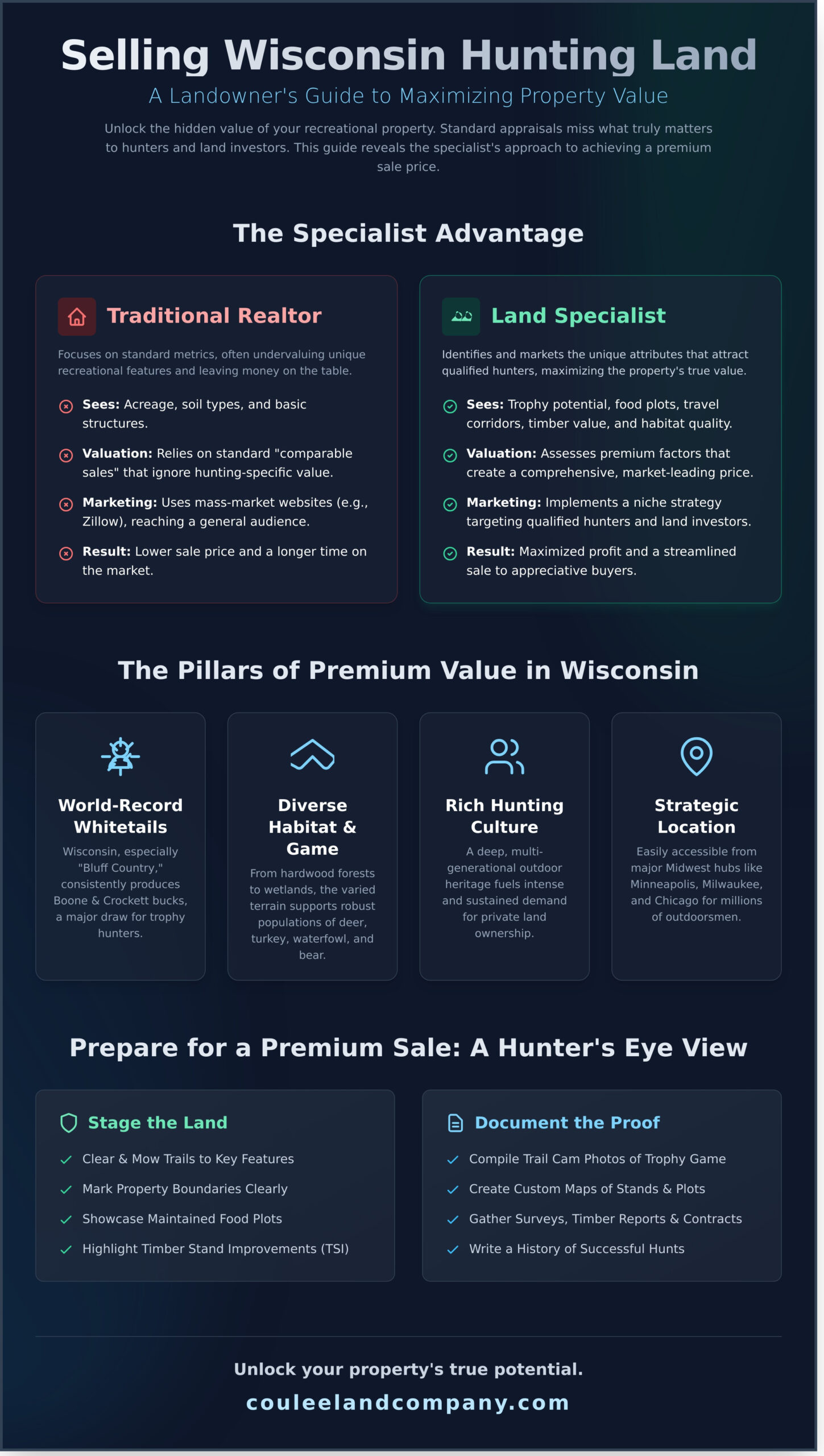
- World-Record Whitetails: The state, particularly its western counties, is legendary for producing trophy whitetail bucks that dominate the Boone and Crockett record books.
- Diverse Habitat & Game: From rolling agricultural fields to dense hardwood forests and wetlands, the varied terrain supports healthy populations of deer, turkey, waterfowl, and black bear.
- Rich Hunting Culture: A strong, multi-generational hunting heritage fuels intense and sustained demand for private land ownership.
- Strategic Location: Wisconsin is within easy driving distance of major Midwest metropolitan areas like Minneapolis, Milwaukee, and Chicago, making it a convenient escape for millions of outdoorsmen.
The ‘Bluff Country’ Advantage: Buffalo County and Beyond
Nowhere is this value more concentrated than in the famed “Bluff Country” of Western Wisconsin. This region, part of the geologically unique Driftless Area, was untouched by ancient glaciers, leaving behind a dramatic landscape of deep coulees, steep ridges, and fertile valleys. This topography creates natural funnels, travel corridors, and secluded sanctuaries that allow bucks to reach maturity. It is this distinct advantage that has cemented the region’s legendary status. Learn more about the renowned Buffalo County community and see for yourself why it stands apart.
Preparing Your Property for Sale: Staging for the Hunter’s Eye
Selling a piece of land is much like selling a home-first impressions are absolutely critical. When you’re selling hunting land in Wisconsin, the potential buyer isn’t just looking at soil types and acreage; they’re envisioning future hunts, scouting trips, and memories made in the outdoors. Staging your property for a hunter’s eye means showcasing its full recreational and wildlife potential. Simple, strategic improvements don’t just make the property look better; they can directly increase its perceived value and command a superior sale price.
Enhancing Habitat and Accessibility
A potential buyer must be able to easily see and access the key features that make your land special. Start by clearing and mowing well-defined trails to food plots, potential building sites, and prime stand locations. This simple act transforms a rough tract into a navigable, turn-key hunting paradise. Clearly marking your property boundaries with fresh paint or flagging prevents any confusion during a showing and demonstrates diligent ownership. Furthermore, showcasing evidence of quality land management, such as Timber Stand Improvement (TSI) or well-maintained food plots, signals a healthy and productive ecosystem. Demonstrating a history of sound Wisconsin wildlife habitat management tells a buyer they are investing in a property that has been expertly cared for.
Documenting Your Land’s Assets
The story of your land is one of its most powerful selling points. Compile a portfolio that proves its wildlife capabilities. This should include:
- Trail camera photos of trophy whitetail bucks and other game from previous seasons.
- Custom maps that clearly mark food plots, established tree stand or blind locations, water sources, and access points.
- Essential documents like recent surveys, timber cruise reports, and any contracts for government programs (e.g., MFL, CRP).
- A written history noting successful hunts, unique wildlife sightings, or specific land features that make it a premier hunting property.
The ‘Do Not Do’ List
Just as important as what you do is what you don’t do. Avoid these common pitfalls that can detract from your property’s value:
- Don’t over-improve: Expensive projects like building a new cabin or digging a large pond rarely provide a full return on investment. Let the new owner build to their vision.
- Avoid aggressive logging: A last-minute, heavy timber harvest can make the property look scarred and significantly reduce its appeal to a hunter. Consult with a professional forester and your land specialist first.
- Don’t neglect existing structures: If there’s a cabin or shed, ensure it’s clean, accessible, and free of debris. Basic maintenance shows the entire property has been well-kept.
Strategic Pricing: How to Value Your Wisconsin Hunting Land
Determining the true market value of prime Wisconsin hunting land is more art than science. It’s a nuanced process that goes far beyond a simple price-per-acre calculation. A standard residential appraisal will inevitably miss the critical features that drive value for a recreational property, as the appraiser won’t recognize the difference between a south-facing slope for bedding and a fallow field. Understanding this distinction is the first step to a successful sale. The single greatest mistake a seller can make is overpricing their property from the start, leading to a stale listing that serious buyers ignore.
Key Factors That Determine Value
Seasoned buyers and land specialists evaluate a property based on a specific set of criteria that directly impacts its hunting quality and long-term worth. These core drivers create premium value and separate an average tract from a world-class parcel.
- Location & Comparables: What have similar hunting tracts sold for recently? Proximity to renowned trophy areas like Buffalo County can command a significant premium.
- Trophy Potential: A documented history of mature, Boone and Crockett-class whitetails is a powerful value multiplier that speaks directly to the land’s management and genetic quality.
- Access: Deeded, year-round legal access is non-negotiable. Poor or land-locked access will drastically reduce a property’s value and buyer pool.
- Water Sources: The presence of year-round creeks, springs, rivers, or ponds significantly enhances wildlife habitat, aesthetics, and overall property value.
Elements Beyond the Acreage
The land itself is just the beginning. A comprehensive valuation must also account for the property’s existing assets and future potential. These elements add tangible financial returns and immediate usability for a new owner.
- Timber Value: Marketable timber, especially mature hardwoods like oak and walnut, can represent a substantial portion of the property’s worth.
- Income Potential: Existing tillable farm rent, CRP payments, or the potential for lucrative hunting leases adds a clear financial return on investment.
- Improvements: A well-maintained cabin, lodge, or a cleared buildable site with utilities in place adds immediate, functional value.
- The ‘X-Factor’: Never underestimate the emotional driver of a sale. Breathtaking bluff country views, absolute seclusion, and the overall “feel” of a property can be the deciding factor.
Getting a Professional Land Valuation
When it comes to selling hunting land in wisconsin, a specialist’s insight is indispensable. A land specialist has a proprietary database of comparable hunting property sales and understands the intricate details-like pinch points, food plot locations, and bedding areas-that a passionate hunter is willing to pay a premium for. They see the land through the buyer’s eyes. Our team provides a free, no-obligation valuation for sellers, giving you an accurate, data-driven assessment based on decades of specialized experience in Wisconsin’s premier hunting regions.
Marketing Your Property to the Right Buyers
Selling your Wisconsin land requires a fundamentally different strategy than selling a residential home. Your target buyer isn’t scrolling general real estate platforms for a 3-bed, 2-bath; they are searching for a legacy property, a private hunting paradise, or a sound land investment. Reaching them means abandoning the mass-market approach and adopting a niche strategy that speaks their language and appears where they spend their time.
Effective marketing is about making an emotional connection. It’s about telling the story of your land-the trophy whitetails captured on trail cams, the secluded food plots, the morning sun rising over a ridge. This narrative, supported by superior visuals, is what transforms a parcel of land into a dream property and ultimately commands a premium price.
Crafting a Compelling Listing
First impressions are everything. A powerful listing starts with professional-grade visuals that capture the land’s true character and potential. This is non-negotiable.
- Professional Photography & Videography: Crisp, high-resolution photos taken during the best seasons highlight key features like mature timber, water sources, and established food plots. Video tours create an immersive experience for out-of-state buyers.
- Essential Drone Footage: Aerial views are critical for showcasing the property’s layout, topography, access points, and surrounding landscape. It provides a perspective that ground-level photos simply cannot match.
- A Written Narrative: The property description must go beyond acreage and tax data. It should paint a picture of the hunting experience, detailing the wildlife, stand locations, and land management improvements. For premier examples of how visuals and narrative combine, review these top-tier Wisconsin hunting properties.
Reaching a Niche Audience
Once your listing is perfected, it must be placed in front of the right eyes. The key to successfully selling hunting land in wisconsin is targeted exposure. This is achieved through a multi-channel approach that bypasses the general public and focuses directly on qualified hunters and land investors.
A specialist’s marketing plan leverages platforms where serious buyers are actively looking, including specialized land listing websites, influential social media hunting groups, and publications dedicated to the outdoors. The most powerful tool, however, is a deeply-rooted network. At Coulee Land Company, we tap into our exclusive list of qualified buyers-individuals we know are looking for a property just like yours. This direct access, built over years of dedication to the Wisconsin land market, is what sets our marketing strategy apart and delivers superior results.
Why a Land Specialist Outperforms a Traditional Realtor
Selling a home and selling a prime piece of Wisconsin hunting ground are two fundamentally different transactions. A traditional residential realtor markets square footage and curb appeal; a land specialist markets habitat, wildlife potential, and the outdoor legacy your property represents. When you’re selling hunting land in wisconsin, this distinction is critical to maximizing your financial return and ensuring a smooth, successful sale.
A land specialist speaks the language of the buyer because they are one. They understand the motivations, the terminology, and the specific features that transform a parcel of land into a dream hunting property. This authentic expertise builds immediate credibility and attracts the right kind of attention from serious, qualified buyers.
Expertise in Land and Wildlife
A true land specialist doesn’t just see acreage; they see a dynamic ecosystem. They can walk your property and instantly identify key features that create value for a hunter: natural funnels, bedding areas providing thermal cover, and south-facing slopes for late-season food sources. They understand how timber stand improvement, food plot placement, and water sources directly impact the quality of the deer herd and the property’s overall trophy potential.
A Qualified Buyer Network
While a local agent’s contact list is filled with prospective home buyers, a land specialist’s network is a curated list of dedicated outdoor enthusiasts and investors. This network is the key to creating a competitive market for your property. A specialist can:
- Market your property directly to a database of active buyers specifically seeking hunting land.
- Leverage nationwide connections with hunting groups, investors, and high-net-worth individuals.
- Thoroughly vet potential buyers to ensure they are financially qualified, saving you time and preventing frustrating delays.
Navigating Complex Transactions
The complexities of selling hunting land in wisconsin extend far beyond a standard closing. Issues like deeded easements, mineral rights, timber contracts, and government programs like Managed Forest Law (MFL) or CRP can derail a sale if not handled by an expert. A dedicated land professional like Bryan Lemke has the deep experience required to navigate these challenges, protecting your interests and ensuring every detail is managed correctly. Don’t leave your most valuable asset in the hands of a generalist-trust the specialists at Coulee Land Company to unlock your property’s true potential.
Maximize Your Return with Wisconsin’s Premier Land Specialists
Successfully selling your property requires more than just a sign in the ground. As we’ve covered, understanding the unique hunter mindset, preparing your parcel to showcase its wildlife capabilities, and partnering with a true land specialist are critical steps. This specialized approach is the key to a profitable outcome when selling hunting land in Wisconsin.
At Coulee Land Company, we are Wisconsin’s Premier Land & Property Sales Specialists. Our unmatched expertise in the famed Bluff Country trophy whitetail properties and our proven track record of maximizing seller returns mean we understand your land’s true value-not just as real estate, but as a hunter’s legacy. We know what discerning buyers are looking for because we are hunters ourselves.
Are you ready to unlock the full potential of your investment? Request a Free, Confidential Valuation of Your Hunting Property Today and let our team of dedicated experts ensure you get the maximum return your property deserves.
Frequently Asked Questions About Selling Wisconsin Hunting Land
What is the best time of year to sell hunting land in Wisconsin?
The prime selling season is late summer through early fall. During this period, the property is at its most impressive with full foliage, established food plots, and clear wildlife trails. More importantly, buyers are actively looking as hunting season approaches, creating peak demand. Listing your property when a buyer’s excitement for chasing a trophy whitetail is at its highest gives you a significant strategic advantage for achieving maximum value.
How much is an average acre of hunting land worth in Wisconsin?
There is no single “average” price, as value is determined by specific attributes. A parcel in the famed Bluff Country with established food plots and trophy whitetail genetics will command a premium over remote northern timberland. Factors like timber value, water access, road frontage, and proximity to population centers all heavily influence the price. A true land specialist can provide an accurate valuation based on your property’s unique wildlife capabilities and market position.
Do I need to get a new survey done before I sell my property?
While not legally required in every sale, a new survey is a powerful marketing tool that we highly recommend. It provides a buyer with absolute confidence in the boundary lines and exact acreage, eliminating potential disputes and simplifying the closing process. For properties with ambiguous lines or those being split from a larger parcel, a survey is essential. It demonstrates transparency and can make your property far more attractive to serious, qualified buyers.
How are existing hunting leases handled during a sale?
Typically, the terms of an existing hunting lease transfer to the new owner and must be honored for the duration of the agreement. This is a material fact that must be disclosed to all potential buyers from the outset. The details of the lease, including income and hunter access, can be a selling point for an investor but may deter a buyer wanting immediate personal use. A clear, written lease agreement is crucial for a smooth transaction.
Can I sell my hunting land myself (FSBO) to save on commission?
While selling For Sale By Owner (FSBO) is an option, it presents significant challenges. Marketing a specialized asset like hunting land requires access to a network of qualified buyers-something most individuals lack. When you are selling hunting land in Wisconsin, an expert land agent understands how to price for trophy potential, navigate complex negotiations, and ultimately secure a higher sale price that far outweighs the commission, ensuring you don’t leave money on the table.
How long does it typically take to sell a quality hunting property?
The timeline for selling a quality hunting property depends heavily on pricing, location, and marketing. A premier property in a highly sought-after county, when priced correctly and exposed to the right network, can sell in as little as 30 to 90 days. However, a more typical timeframe for a well-marketed parcel is between 6 and 12 months. Strategic exposure to a nationwide audience of passionate outdoorsmen is the key to an efficient and profitable sale.