
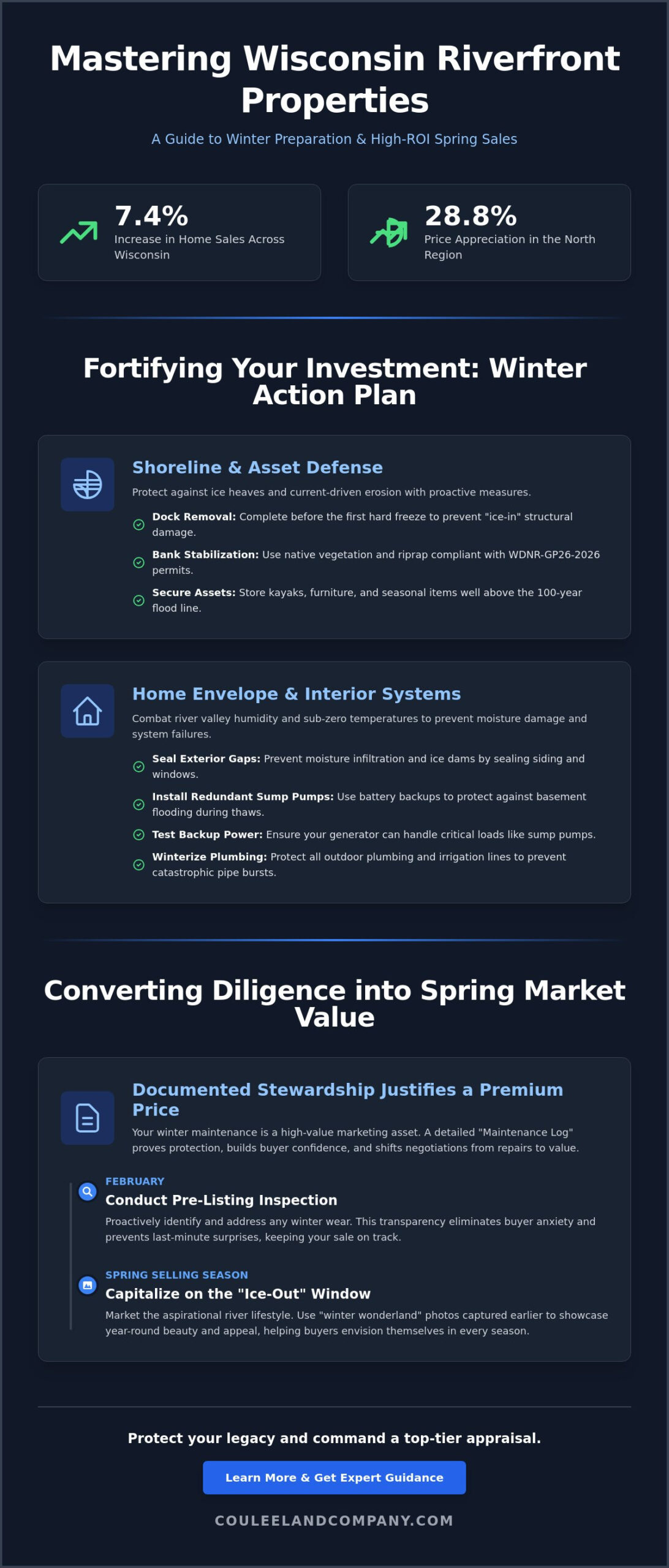
The most successful spring listings aren’t built in April; they’re forged in the sub-zero temperatures of January. While many sellers wait for the thaw to prep their properties, seasoned land stewards know that a premium sale is the result of proactive winter defense. With home sales rising 7.4% across the state and the North region seeing price appreciation of 28.8% as of April 2026, the stakes for your riverfront investment have never been higher. Mastering Seasonal Maintenance for Riverfront Homes in Wisconsin: Winter Prep and Spring Selling Strategies is the only way to ensure your shoreline remains an asset rather than a liability when the ice moves.
We understand the pressure of protecting a legacy property against shoreline erosion and the complexity of DNR regulations. You want a damage-free transition that commands a top-tier appraisal in a competitive rural market. This article provides a clear roadmap to protect your investment through the harshest conditions and leverage that diligence into a high-ROI spring sale. We will examine the latest WDNR-GP26-2026 permit requirements for shoreline stabilization, the nuances of riparian rights under Wis. Stat. § 30.132, and the specific maintenance steps that prove your property is the finest on the river.
Key Takeaways
- Protect your shoreline from ice heaves and current-driven erosion by mastering the critical timeline for dock removal and DNR-compliant stabilization.
- Discover the best practices for Seasonal Maintenance for Riverfront Homes in Wisconsin: Winter Prep and Spring Selling Strategies. These steps help you build a documented history of stewardship that justifies a premium listing price.
- Learn why identifying winter wear through early pre-listing inspections prevents costly surprises and keeps your spring deal on track.
- Capitalize on the “ice-out” window to market the aspirational river lifestyle, focusing on the unique recreational value of your specific stretch of water.
Fortifying Your Riverfront Investment Against Wisconsin Winters
Riverfront ownership in Wisconsin demands more than standard winterization; it requires a tactical defense against the unique hydraulic forces of moving water. Unlike static lakefronts, properties along the Mississippi and its tributaries face constant current-driven erosion and the devastating power of river ice heaves. Mastering Seasonal Maintenance for Riverfront Homes in Wisconsin: Winter Prep and Spring Selling Strategies ensures your bank remains stable when the spring runoff hits. Protection begins with your structural assets. Wisconsin dock removal should ideally occur before the first hard freeze to avoid “ice-in” damage, which can twist steel frames and snap pilings. While you secure the shore, don’t overlook the home’s exterior envelope. River valley humidity can lead to moisture infiltration, so understanding What is an ice dam? helps you identify why specialized sealing of siding and windows is vital for bluff-side homes.
To better understand how these seasonal tasks protect your investment, watch this helpful video:
Shoreline Stewardship and Ice-Out Preparation
Effective bank stabilization requires a blend of native vegetation and riprap that follows the natural contour of the shoreline. Under the WDNR-GP26-2026 general permit, projects must comply with specific water quality standards to prevent sediment loss during the spring thaw. Secure all riparian assets, including kayaks and seasonal furniture, by storing them well above the 100-year flood line. Riparian rights in Wisconsin grant property owners the legal authority to access the water and maintain regulated structures like docks and boathouses, provided they adhere to DNR and local zoning ordinances. Expert waterfront property brokerage teams often look for this documented stewardship when valuing a listing.
HVAC and Humidity Control in the River Valley
The microclimate of Bluff Country valleys creates a unique challenge for interior climate control. High humidity levels near the water can trigger mold growth during winter dormancy if your HVAC system isn’t tuned for the season. Ensure your mechanical room is ready for the spring thaw by prioritizing these updates:
- Install redundant sump pumps with battery backups.
- Test your generator or backup power systems to ensure they handle pump loads.
- Seal all exterior siding gaps to block valley humidity from entering the envelope.
- Winterize all outdoor plumbing and irrigation lines to prevent the catastrophic pipe bursts common in sub-zero Wisconsin winters.
These precautions prevent basement flooding when the river rises and the ground saturates. Taking these steps now protects your equity and ensures a smooth transition to the spring market.
Converting Winter Diligence into Spring Market Value
Winter maintenance isn’t just a chore; it’s a high-value marketing asset. A detailed “Maintenance Log” serves as a powerful instrument of trust for buyers of waterfront properties. It proves you’ve protected the shoreline and mechanical systems against the Wisconsin freeze. Successfully executing Seasonal Maintenance for Riverfront Homes in Wisconsin: Winter Prep and Spring Selling Strategies translates directly to buyer confidence. Conducting a pre-listing inspection in February allows you to fix minor winter wear before the spring rush. This transparency eliminates buyer anxiety and keeps negotiations focused on value rather than repairs.
Strategic interior refreshes during the colder months yield the highest ROI for your listing. While the landscape is dormant, focus on capturing “winter wonderland” photos to showcase the property’s year-round appeal. This visual storytelling helps spring buyers imagine themselves enjoying the quiet beauty of the river in every season. If you’re looking to maximize your return, our expert listing team can help you document these stewardship efforts to build a compelling narrative for your property.
The ROI of Native Landscaping Buffers
DNR-compliant buffer zones are more than just regulatory requirements. They’re critical value-adds that protect water quality and provide natural privacy. Planning your spring plantings during the winter months allows you to source native Wisconsin grasses that appeal to eco-conscious buyers. These deep-rooted plants offer superior stabilization against high-water levels often seen during the spring thaw. This proactive planning shows prospective owners that the property is engineered for long-term resilience.
Interior Staging for the Bluff Country Aesthetic
Selling the river lifestyle requires maximizing the connection between the home and the landscape. Clean every window to ensure river views are unobstructed and bright. In regions like Buffalo County, staging a mudroom for the hunting and fishing lifestyle creates an immediate emotional bond with the target demographic. Highlight recreational proximity by organizing gear storage areas, signaling that the home is a functional base for outdoor enthusiasts. These small details underscore the property’s unique position in the market.
Spring Selling Strategies for Signature Waterfront Properties
The moment the ice breaks on the Mississippi and its tributaries, the market for premium riverfront real estate wakes up. In Wisconsin, “ice-out” acts as the starting gun for serious buyers who have spent the winter months scouting for the perfect retreat. With statewide inventory sitting at a tight 3.7 months as of April 2026, your timing determines your leverage. Your commitment to Seasonal Maintenance for Riverfront Homes in Wisconsin: Winter Prep and Spring Selling Strategies becomes your strongest negotiating tool when these high-profile buyers arrive. Transparency regarding flood zones and shoreline regulations doesn’t just fulfill a legal requirement; it builds the buyer confidence necessary to close a deal in a niche market.
Marketing a signature estate goes beyond listing square footage. You’re selling an authentic outdoor experience, from watching bald eagles hunt over the channel to launching a boat for a sunrise fishing run. This lifestyle appeal is what draws buyers from coastal “refuge markets” to the relative affordability of the Midwest. Navigating these complex transactions requires more than a general realtor. A dedicated land specialist understands how to articulate the value of your riparian rights and the structural integrity of your shoreline defenses, ensuring you don’t leave money on the table.
Pricing Strategies for Riverfront Acreage
Valuing riverfront property in Western Wisconsin requires moving beyond standard residential comps. A bluff-top view overlooking the river valley adds a significant premium that traditional appraisals often miss. Furthermore, the proximity to high-value hunting properties drives residential values higher, as buyers often seek homes that serve as a basecamp for world-class wildlife opportunities. In the North region, where prices appreciated by 28.8% in early 2026, accurate pricing is the difference between a 39-day sale and a stagnant listing.
High-Impact Digital Marketing for Rural Estates
Rural estates demand a specialized digital presence to reach out-of-state buyers. Drone photography is essential for capturing the dramatic topography of Bluff Country and the true scale of your river frontage. We use these high-definition visuals to showcase the property’s relationship with the surrounding landscape, providing a perspective that ground-level photos can’t replicate. This targeted approach ensures your property stands out to the demographic looking for a legacy investment in the heart of Wisconsin’s most desirable natural corridors.
Secure Your Legacy on the River
Owning a piece of Wisconsin’s riverfront is a privilege that comes with a specific set of responsibilities. Your diligence in managing ice heaves and maintaining DNR-compliant buffers isn’t just about property preservation; it’s about building a narrative of stewardship that commands a premium. By mastering Seasonal Maintenance for Riverfront Homes in Wisconsin: Winter Prep and Spring Selling Strategies, you’ve already done the hard work of protecting your equity. Now, the focus shifts to translating that care into a successful transaction.
As specialists in Western Wisconsin’s Bluff Country, we understand the nuances of riparian rights and the structural demands of riverfront acreage. Our team has a proven track record with high-value waterfront sales, and we know how to navigate the complexities of DNR regulations to benefit your bottom line. We bridge the gap between professional real estate and the authentic outdoor lifestyle you’ve cultivated. We speak the language of the land because we live it every day.
Don’t leave your spring ROI to chance. Get a professional valuation for your riverfront home today and let us showcase the true worth of your land. Your riverfront legacy deserves an expert guide to lead the way to a successful closing. We look forward to helping you reach your goals on the water.
Frequently Asked Questions
When is the best time to remove my dock from a Wisconsin river?
You should remove your dock by mid-to-late October or early November, well before the first hard freeze. Wisconsin rivers present unique challenges; shifting currents can pack ice against structures with immense pressure. Removing equipment early prevents ice-in damage that warps frames or snaps pilings. Including this in your Seasonal Maintenance for Riverfront Homes in Wisconsin: Winter Prep and Spring Selling Strategies ensures your hardware remains in top condition for a premium spring listing.
Do I need a permit to repair my shoreline after winter ice damage?
You generally need a permit for any work that alters the bank or bed of a navigable waterway. Wisconsin law requires that shoreline repairs maintain the natural contour and prevent sediment from entering the river. While some minor maintenance might fall under general exemptions, most structural stabilization requires DNR approval and local county zoning permits. Consulting with a land specialist ensures you remain compliant with riparian regulations while protecting your bank from future ice damage.
How much does riverfront property value increase with professional landscaping?
Professional landscaping that prioritizes shoreline resilience and native vegetative buffers typically yields a high return by reducing future maintenance costs and enhancing privacy. While we don’t quote specific percentage increases, documented stewardship is a primary driver for premium appraisals in Western Wisconsin. Buyers are often willing to pay more for a property where the hard work of bank stabilization and flood protection has already been expertly completed.
Is it better to list my riverfront home in late winter or early spring?
The most effective time to list is early spring, though your preparation must start months earlier. Executing Seasonal Maintenance for Riverfront Homes in Wisconsin: Winter Prep and Spring Selling Strategies during the off-season allows you to hit the market the moment the river opens. This timing ensures you’ll be ready to capture buyers who want to be moved in by peak summer boating season, giving your property maximum exposure during the year’s highest demand window.