
While most hunters still chase the skyrocketing prices of the southern bluff country, the savvy land buyer is looking toward the water in the north. It’s a bold move to suggest that the next frontier for world-class whitetails isn’t in a famous ridge-and-valley county, but the data for 2026 points directly to the river systems of the Northwoods. This Rusk County Recreational Land Guide: Rivers highlights why this region is the premier alternative for those who want elite habitat without the inflated price tags of traditional trophy zones.
You’ve likely felt the frustration of watching land prices climb 15% or more in just a few seasons, making your dream of owning a legacy property feel out of reach. We understand that you aren’t just looking for dirt; you’re looking for a strategic investment that holds its value and produces mature bucks year after year. By reading this guide, you’ll discover how the Flambeau, Chippewa, Jump, and Thornapple rivers create natural funnels and thick security cover that sustain trophy populations. We’ll break down the specific river corridors that fit your budget and show you how to identify high-value tracts that combine river access with superior wildlife capabilities.
Key Takeaways
- Identify the “Big Four” river systems that define Rusk County as a premier destination for high-value recreational land and “Wild Rivers” habitat.
- Understand how river corridors act as natural travel funnels and provide the elite security cover necessary to hold mature, trophy whitetails.
- Use this Rusk County Recreational Land Guide: Rivers to evaluate the specific hunting pressure and investment potential of each unique water system.
- Master the critical due diligence required for riverfront property, from navigating FEMA floodplains to understanding DNR “Wild Rivers” regulations.
- Learn why partnering with a land specialist who sees the terrain through the eyes of a woodsman is the key to identifying superior acreage.
The Big Four: Rusk County’s Major River Systems
Rusk County stands as the undisputed “Wild Rivers” capital of the state. While the vertical ridges of Buffalo County define the southern driftless region, this territory relies on its massive aquatic footprint to produce elite wildlife habitat. In Rusk County, Wisconsin, the river systems aren’t just scenery; they’re the primary drivers of property value and biological diversity. This Rusk County Recreational Land Guide: Rivers highlights how these corridors create the strategic pinch points and bedding cover necessary for world-class hunting. It’s a different beast than the southern bluff country. Instead of 300-foot elevation changes, you’re managing land defined by floodplains, oxbows, and thick riparian edges.
To visualize the scale of these river-bottom properties, watch this overview of a premier listing in the heart of the county:
The Chippewa and Flambeau: The Powerhouse Corridors
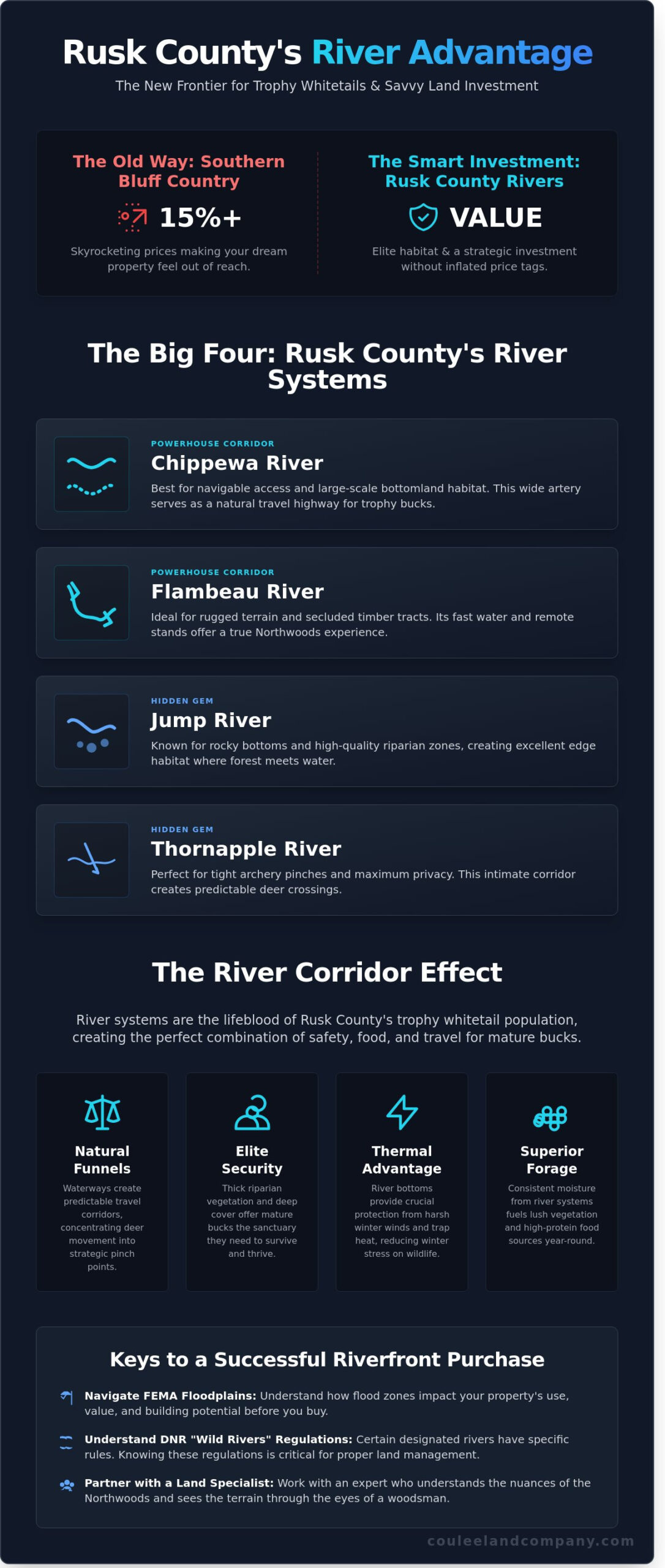
The Chippewa River serves as a wide, navigable artery that has shaped local history since the logging era of the 1800s. It creates massive bottomland flats that hold high-protein forage and provide a natural travel highway for trophy bucks. Conversely, the Flambeau River offers a more rugged experience with its fast water and secluded timber stands. These major waterways act as thermal heat sinks; they moderate local temperatures during early autumn frosts and provide consistent moisture that fuels lush vegetation. For buyers seeking waterfront properties, these rivers represent the gold standard of investment because they offer both recreation and a permanent barrier to neighbor encroachment.
The Jump and Thornapple: Hidden Gems for Private Land
The Jump River is famous for its rocky bottoms and high-quality riparian zones. It offers excellent edge habitat where the forest meets the water’s edge. It’s a dynamic system where the water levels shift, creating fresh mineral deposits and new growth that attracts wildlife year-round. The Thornapple River is a tighter, more intimate corridor. Its narrower width makes it a dream for archery setups, as deer frequently cross at predictable shallow points. These smaller systems often provide superior privacy for the landowner. You won’t see the same level of motorized boat traffic here as you do on the Chippewa, making your hunting properties feel like a truly isolated sanctuary.
- Chippewa River: Best for navigable access and large-scale bottomland habitat.
- Flambeau River: Ideal for rugged terrain and secluded timber tracts.
- Jump River: Known for rocky crossings and diverse riparian edges.
- Thornapple River: Perfect for tight archery pinches and maximum privacy.
This Rusk County Recreational Land Guide: Rivers demonstrates that water is the ultimate land manager. It dictates where the deer sleep, where they eat, and how they move through the 584,000 acres of Rusk County’s diverse landscape. Understanding these four systems is the first step in making a wise investment in the Northwoods.
The River Corridor Effect: Why Rusk County Produces Trophy Whitetails
Rusk County’s river systems are the lifeblood of its whitetail population. Mature bucks are survival experts, and they use the intricate waterways of the Chippewa and Flambeau systems to navigate the landscape with minimal exposure. These riparian zones act as the ultimate security cover in the Northwoods, providing dense vegetation that obscures movement from predators and hunters alike. This Rusk County Recreational Land Guide: Rivers focuses on how these corridors dictate herd health and hunter success.
During the harsh Wisconsin winters, where temperatures often drop below zero for weeks at a time, river bottoms offer crucial thermal advantages. The lower elevation and dense coniferous cover trap heat and block biting winds, making these corridors preferred late-season yarding areas. Additionally, the ancient silt deposits left by seasonal flooding create high-quality soils. These nutrient-rich pockets allow landowners to establish superior food plots that outperform the thinner, more acidic soils found in the surrounding uplands.
Natural Funnels and Pinch Points
Bucks use river bends as natural steering mechanisms during the rut. A sharp oxbow in the river creates a physical bottleneck, forcing deer into a narrow strip of land where their movement becomes predictable for a well-placed stand. Identifying “island” habitats, which are often small pockets of dry ground surrounded by marsh or water, is a proven strategy for finding unpressured deer. These secluded spots often harbor the oldest bucks in the county because they’re nearly inaccessible to the average person. Water acts as a definitive physical boundary that allows hunters to pattern buck movement effectively by limiting travel to specific land bridges and bank crossings.
Habitat Diversity in the Riparian Zone
The diversity of vegetation along the water is a primary driver for trophy potential. You’ll find thickets of tag alders and willows that provide impenetrable bedding, while cedar swamps offer year-round thermal protection. Managing these areas requires a specialized approach to Wisconsin land management for wildlife to maximize the property’s potential. Within the Flambeau River State Forest, which encompasses over 90,000 acres, and surrounding private tracts, Timber Stand Improvement (TSI) should focus on releasing river-bottom hardwoods like swamp white oak. Removing competing low-value species increases acorn production and winter browse. If you’re ready to find your own piece of this habitat, our current waterfront properties offer some of the best river-bottom access in the state.
Comparing the Systems: Which River Fits Your Goals?
Selecting the right river system requires a clear understanding of your recreational priorities. The Chippewa River offers expansive water and diverse structure, while the Flambeau River provides a more rugged, remote experience. This Rusk County Recreational Land Guide: Rivers highlights that your choice of water often dictates your hunting success. Private riverfront owners benefit from significantly lower hunting pressure compared to the 80,000 acres of public land in the county. By securing private access, you control the habitat and the harvest.
Data and research from the UW-Madison Forest and Wildlife Ecology Extension shows that river corridors serve as vital travel lanes for mature bucks. Owners who manage their riparian zones effectively see a 25% to 30% increase in daytime deer activity. Multi-species opportunities are the standard here. You can target 50-inch muskies in the morning and glass for waterfowl in the afternoon from the same ridge. The long-term appreciation for these properties is driven by their finite nature; they aren’t making any more riverfront.
The Angler-Hunter Hybrid Property
For the buyer who refuses to choose between a rod and a rifle, the Flambeau River stands out. Its fast water and rocky bottom are prime for smallmouth bass and muskies. Owning land here allows you to access “float-in only” timber stands that are virtually unreachable by the public. This tactical advantage ensures your stands remain undisturbed throughout the season. The demand for waterfront properties in the 2026 market remains high because these parcels offer year-round utility that dry acreage simply lacks.
The Investment Perspective: Rusk vs. Buffalo County
Strategic investors are looking north of the traditional hotspots. While Buffalo County Wisconsin deer hunting sets the gold standard for trophy potential, the entry price often exceeds $8,000 per acre for premium ground. In contrast, Rusk County riverfront land offers a more accessible price point, frequently trading at 40% less than Buffalo County. This price gap provides a significant margin for long-term appreciation as more hunters seek value outside the Driftless Area.
Tax considerations also play a major role in the investment math. Utilizing the Managed Forest Law (MFL) program can reduce property taxes by up to 80% for eligible landowners. Rusk County is the strategic choice for 2026 because it combines the trophy genetics of the Northwoods with a lower cost of entry. This allows you to build equity while you hunt, turning a passion into a performing asset.
Buying Riverfront Land: Due Diligence and Logistics
Owning a stretch of the Chippewa or Flambeau is a dream for many, but Rusk County river properties require a hard look at the data before you sign. You aren’t just buying water; you’re buying a complex set of regulations and geological realities. This Rusk County Recreational Land Guide: Rivers helps you identify the logistical hurdles that impact long-term value and property utility.
The distinction between “High Bank” and “Low Bank” property is the first factor to evaluate. High bank acreage offers superior building sites and commanding views, providing a natural buffer against rising water. However, these sites often make water access difficult without expensive stair systems. Low bank land provides immediate access for kayaks and boats, but it is prone to seasonal saturation. Professional land buyers prioritize the “High Bank” for residential investment and the “Low Bank” for pure wildlife habitat.
Access remains a primary concern in Northern Wisconsin. Many riverfront parcels are served by seasonal roads that the county doesn’t plow in winter. You must verify legal easements and check if existing river crossings are sturdy enough for heavy equipment or emergency vehicles. A property is only as valuable as your ability to reach it year-round.
Shoreline Zoning and Building Setbacks
The Wisconsin DNR and Rusk County zoning departments enforce strict 75-foot setbacks from the ordinary high-water mark. You cannot clear-cut to the water’s edge because native vegetation buffers are required to prevent sediment runoff. Before planning a cabin, you need a perk test. River-bottom soils often contain high silt or sand content, which can cause a traditional septic system to fail. Partnering with buyers agents who understand these rural nuances ensures you don’t buy a parcel where you can’t build. Experts can help you navigate the “Wild Rivers” regulations that protect the natural aesthetics of the waterway.
Floodplain Management for Landowners
FEMA maps are more than just insurance requirements; they’re scouting tools. Use these maps to identify where water pushes deer during high-flow events. 100-year floodplains often hold the best thermal cover for deer because the moisture supports dense, thick bedding cover that stays warmer in winter. Managing these areas involves mitigating erosion with bioengineering or strategic plantings to protect your acreage. This Rusk County Recreational Land Guide: Rivers highlights that while floodplains limit structures, they maximize hunting potential by creating secure, secluded holding areas for trophy bucks.
Partnering with Wisconsin’s Land Specialists
Standard residential realtors focus on kitchen finishes and school districts. They rarely understand how a river oxbow creates a natural funnel for trophy bucks or how spring flooding impacts seasonal access. This Rusk County Recreational Land Guide: Rivers highlights why you need a specialist who walks the draws and ridges. A hunter’s realtor sees the land through your eyes. We evaluate every property based on wind direction, bedding areas, and water access. Our team identifies the wildlife capabilities of a tract long before we look at the plat map.
Coulee Land Company identifies off-market and pocket listings through deep local ties. In many Wisconsin counties, nearly 20 percent of high-quality recreational land sells through private networks before it ever reaches a public website. We tap into those connections to give our clients an advantage. We don’t just wait for a notification; we actively scout for land that meets your specific criteria for timber, water, and terrain.
Expert Guidance from the Field
Our team consists of specialists who live and breathe the outdoor lifestyle. Mike Law knows these river systems firsthand. He understands the nuances of the Flambeau and Chippewa watersheds, providing insights that only come from years of boots-on-the-ground experience. When you’re looking at large acreage acquisitions, Bryan Lemke provides the expertise needed to navigate complex transactions. He understands the long-term value of land management and investment potential. Our commitment to the hunting properties niche ensures that your goals as a sportsman remain our top priority.
- Professional evaluation of thermal cover and bedding areas
- Analysis of river access points and water flow patterns
- Expertise in Managed Forest Law (MFL) and land tax implications
- Strategic advice on food plot placement and timber value
Your Search Starts Here
Securing your piece of the Northwoods for 2026 requires a proactive strategy. You can start by viewing our current inventory of Wisconsin hunting land for sale. If you have a specific river corridor in mind, we offer custom property searches to find exactly what you need. We use advanced mapping and local intelligence to find tracts that others miss. Owning riverfront land in Rusk County is more than a financial investment; it’s a legacy move. It creates a sanctuary for your family and a permanent connection to the wild. Contact us today to begin the search for your ultimate recreational retreat.
Secure Your Legacy in the Rusk County River Corridors
Owning a piece of the Northwoods is about more than just acreage; it’s about securing a legacy within the “Big Four” river systems that define this region. This Rusk County Recreational Land Guide: Rivers highlights how the Flambeau and Chippewa corridors provide the essential thermal cover and travel routes necessary to produce world-class whitetails. These waterways act as natural funnels for trophy bucks, a geographical advantage we’ve utilized to help clients find success in both Rusk and Buffalo County, which holds the number one spot for Boone and Crockett record entries in the United States.
Coulee Land Company stands as Wisconsin’s Land and Property Sales Specialists. We’ve earned the trust of outdoor television hosts and whitetail experts through a proven track record of land sales across the state’s most prestigious hunting grounds. Our team focuses on the distinct wildlife capabilities of every riverfront tract we represent. You aren’t just buying dirt; you’re investing in a managed ecosystem designed for superior hunting results.
Find Your Rusk County Riverfront Property Today
Your pursuit of a premier hunting property starts with an expert who knows the land as well as you know the hunt.
Frequently Asked Questions
Is Rusk County good for trophy whitetail hunting?
Rusk County is an exceptional destination for trophy whitetail because its 250,000 acres of county forest allow bucks to reach the 4.5 to 5.5 year age class. The region features a perfect mix of cedar swamps and agricultural edges that provide the thermal cover and nutrition necessary for massive antler growth. While it hasn’t reached the price point of the southern counties, the deer quality remains top-tier for serious land managers.
What are the building restrictions for riverfront land in Rusk County?
Shoreland zoning in Rusk County follows the Wisconsin NR 115 standards, which require a minimum 75-foot setback from the ordinary high-water mark for all structures. You’ll need at least 100 feet of frontage for sewered lots or 200 feet for unsewered parcels to meet current development codes. These regulations protect the water quality and ensure your investment stays surrounded by the natural beauty of the Northwoods.
How do the Chippewa and Flambeau rivers differ for land buyers?
The Chippewa River offers a larger water volume and expansive flowages that are perfect for musky fishing and motorized boating. In contrast, the Flambeau River provides a rugged wilderness experience, especially near the 90,000-acre Flambeau River State Forest. Buyers looking for seclusion and fast-water fly fishing typically gravitate toward the Flambeau, while those wanting recreational versatility choose the Chippewa.
Can I hunt on my own land if it falls within a floodplain?
You can hunt on any private land you own within a floodplain, provided you follow standard Wisconsin DNR regulations and local firearm ordinances. These areas often hold the best bedding cover and thickest security habitat on a property, making them prime spots for hanging stands. This Rusk County Recreational Land Guide: Rivers notes that while you can’t build permanent homes in these zones, they’re invaluable for wildlife habitat.
What is the “Wild Rivers” designation in Wisconsin, and does it affect me?
The “Wild Rivers” designation applies specifically to the Pine, Popple, and Pike rivers under Wisconsin Statute 30.26 to keep them in a primitive state. While Rusk County rivers like the Flambeau aren’t under this specific statutory title, the state manages much of the shoreline with similar restrictive covenants. This benefits you as a landowner by preventing large-scale commercial development and preserving the quiet, wild character of the region.
How do land prices in Rusk County compare to Buffalo County?
Rusk County offers a much lower entry point for buyers, with land prices often sitting at 50% of the cost per acre found in Buffalo County. This price gap allows hunters to purchase a 160-acre tract in Rusk for the same investment as a 40-acre parcel in the southern bluff country. It’s the strategic choice for the buyer who wants to own a larger piece of the map without sacrificing trophy potential.
What should I look for in a Rusk County land specialist?
You need a specialist who understands the Rusk County Recreational Land Guide: Rivers and can identify subtle terrain features like pinch points and thermal hubs. Don’t settle for a generalist; find an agent who knows the specifics of the Managed Forest Law (MFL) and how soil types affect food plot success. A true land expert talks about deer movement and timber value rather than just square footage and paint colors.
Are there public land hunting areas near the Rusk County rivers?
Rusk County is home to over 250,000 acres of public land, including massive tracts of county forest that border both the Chippewa and Flambeau rivers. This creates a huge advantage for private landowners because it acts as a permanent buffer against neighbor encroachment. You can walk from your own back door into thousands of acres of additional hunting ground, giving you a massive range for tracking mature bucks.