
The most breathtaking ridge in Buffalo County is just an expensive view if the county surveyor won’t grant you a driveway approach. You’ve likely spent years dreaming of a cabin nestled in the timber of the Driftless Area, but the fear of buying unbuildable land keeps many hunters on the sidelines. It’s frustrating to realize that a single missed checkbox regarding Rural Home Building on WI Land: Permits can lead to thousands of dollars in fines or permanent construction delays. We agree that you shouldn’t need a law degree just to put a roof over your head on your own soil.
This guide provides a clear, expert roadmap for 2026, designed to help you secure your site’s viability before the first shovel hits the ground. You’ll gain the confidence to handle the complex sequence of state versus county requirements without the typical bureaucratic headache. We’ll walk you through the essential steps of soil morphology tests, zoning petitions, and sanitary permits, giving you a professional sequence of operations to ensure your Wisconsin legacy property is built right the first time.
Key Takeaways
- Understand why the “Perc Test” serves as the ultimate gatekeeper for your building dreams before you ever move a single shovel of dirt.
- Master the essential sequence of Rural Home Building on WI Land: Permits to ensure your sanitary approval properly clears the way for zoning.
- Learn to identify topographical traps in Bluff Country that can turn a prime hunting tract into unbuildable land if not properly vetted.
- Navigate the 2026 regulatory landscape with a professional roadmap designed specifically for Wisconsin landowners and hunting property buyers.
- Gain the expert insights needed to transform your vision of a driftless region retreat into a tangible, legally compliant reality.
The Foundation of Wisconsin Rural Building: Zoning and Soil Requirements
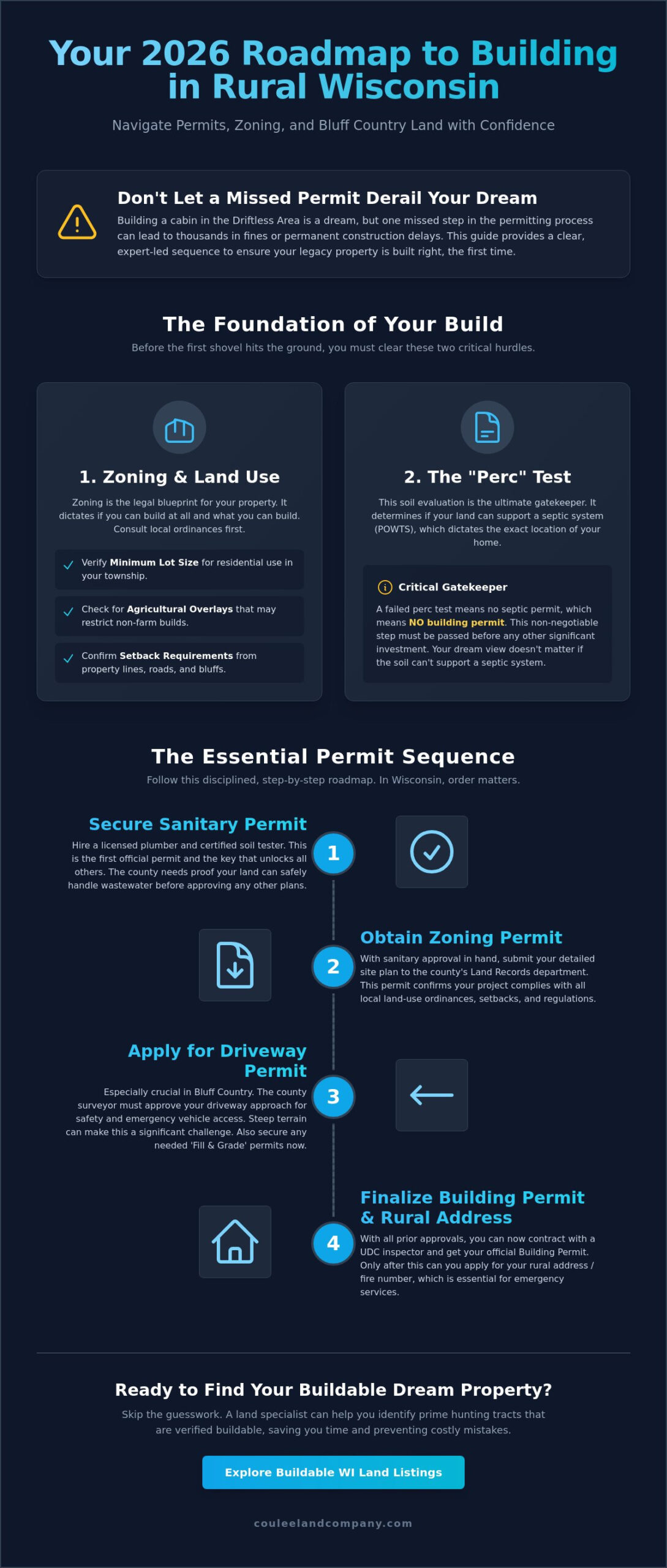
Securing a piece of Wisconsin’s famed Bluff Country is a dream for many hunters and outdoor enthusiasts, but the reality of Rural Home Building on WI Land: Permits begins with a deep dive into local ordinances. Zoning acts as the legal blueprint for your property. It dictates whether you can build a seasonal hunting cabin or a full-time residence. Building codes and zoning laws often overlap; however, zoning is what decides if a shovel ever hits the dirt. In 2026, Western Wisconsin counties have updated their land-use plans to balance residential growth with conservation goals.
Zoning Classifications and Parcel Size
Your acreage must meet specific minimum requirements to qualify for a building permit. Many prime hunting tracts in Buffalo County and surrounding areas fall under exclusive agriculture overlays. These designations protect farming operations and often restrict non-farm residential builds unless specific criteria are met. Before you close on a property, consult with a land specialist broker in Wisconsin to decode these local ordinances. They help you identify if a parcel is truly buildable or strictly recreational. Key factors to verify include:
- Minimum lot sizes for residential use in your specific township.
- Agricultural overlays and available density credits.
- Setback requirements that prevent building too close to property lines or bluff edges.
The Critical Role of the Soil (Perc) Test
The Perc Test is the scientific evaluation of soil drainage used to permit septic systems. This test is the ultimate gatekeeper for rural development in 2026. A certified soil tester must evaluate the ground to determine which type of private onsite wastewater treatment system (POWTS) your land requires. Soil results dictate the exact location of your home. You can’t just pick a spot for the view; the septic field needs specific drainage capabilities to function. When planning Rural Home Building on WI Land: Permits, remember that your dream cabin location must stay within legal setbacks. These rules ensure your home isn’t too close to neighbors or sensitive environmental features like trout streams.
The Essential Permit Sequence: A Step-by-Step Roadmap
Building in Wisconsin’s rugged Bluff Country requires more than just a vision; it demands a disciplined approach to the regulatory timeline. Skipping a single step in the permit sequence can halt your project for months, costing you valuable time during the 2026 construction season. Success in Rural Home Building on WI Land: Permits depends on following a linear path that satisfies both state safety codes and local land-use ordinances.
From Sanitary Approval to Zoning Issuance
In almost every Wisconsin county, the Sanitary Permit is the gatekeeper for all subsequent development. You must obtain this through a licensed plumber who acts as your professional agent with the county. Once the sanitary system is approved, you’ll submit your detailed site plan to the Land Records and Regulations Department for your official Zoning Permit. Before any of this happens, verify that your legal title is fully recorded at the Register of Deeds. This sequence ensures your land can support a dwelling before you invest in final architectural plans. If you’re still searching for the perfect site, you can browse prime land listings that already meet these foundational requirements.
Building Codes and Rural Addressing
- Contract with a certified Uniform Dwelling Code (UDC) inspector to oversee critical construction phases, ensuring your home meets 2026 safety and energy efficiency benchmarks.
- Apply for a Rural Address, commonly known as a fire number, only after your primary permits are secured. This is vital for emergency services to locate your property in remote areas.
- Secure a Driveway Permit to ensure safe entry for heavy equipment and fire trucks, particularly on the steep terrain found throughout Western Wisconsin.
If your dream build sits near navigable waters or atop a steep bluff, you’ll likely need a ‘Fill and Grade’ permit. This regulation prevents erosion and protects the integrity of the local watershed. Managing these Rural Home Building on WI Land: Permits correctly preserves the hunting and wildlife capabilities that make this region a premier destination for land buyers. Following these steps ensures your legacy in the Coulee Region is built on a solid legal and structural foundation.
Strategic Site Selection for Bluff Country Landowners
Securing a spot in the driftless region requires a tactical approach that goes beyond basic paperwork. It’s about topographical strategy. While obtaining Rural Home Building on WI Land: Permits is a critical step, the physical layout of the terrain dictates your ultimate success. Many buyers looking for hunting properties fall into the trap of purchasing land that looks perfect on a map but proves unbuildable due to extreme slope gradients or soil instability. A site that lacks a clear path for a driveway or a flat enough grade for a septic system quickly becomes a financial burden. Proper permitting also directly impacts the long-term equity of your country home in Western Wisconsin. A property with fully documented, compliant structures commands a higher price because it removes legal risk for the next owner.
Topography and Excavation Challenges
Steep slopes in the Coulee Region, particularly those exceeding a 12 percent grade, often trigger requirements for specialized erosion control and stormwater management permits. These regulations ensure that your construction doesn’t wash out the hillside or damage local watersheds. You also have to balance building needs with hunting goals. Don’t drop your house right on a natural funnel or a primary deer travel pattern. Preserving the quiet security of the interior woods is vital for maintaining the trophy whitetail potential of the land. Strategic placement ensures your daily activity won’t blow out the very bucks you moved here to hunt.
The Value of Expert Guidance
A standard residential realtor often lacks the boots-on-the-ground experience to spot red flags in rugged terrain. Managing the specific nuances of Buffalo County regulations requires a specialist who understands both zoning laws and land management. Agents like Mike Law or Bryan Lemke provide an essential service by assessing buildability before you sign a contract. They identify where Rural Home Building on WI Land: Permits might be difficult to obtain due to local ordinances or conservation easements. Ready to find your buildable slice of heaven? Explore our current listings to find a property with true potential.
Secure Your Legacy in the Wisconsin Wilds
Navigating the 2026 regulatory landscape for Rural Home Building on WI Land: Permits requires a precise strategy. You’ve seen how critical it’s to align your soil testing with county zoning codes before breaking ground. Success in Western Wisconsin depends on following the established permit sequence and selecting a site that balances structural integrity with wildlife potential. Buffalo County remains a premier destination for those seeking land that dominates the Boone and Crockett record books, but securing a buildable tract there demands local expertise and a clear understanding of the Driftless Area’s topography.
Coulee Land Company stands as the undisputed authority in Bluff Country real estate. We aren’t just agents; we’re specialists in trophy whitetail land management with endorsements from the most respected hosts in outdoor television. Our team provides the diligent, hands-on guidance you need to turn a raw piece of dirt into a world-class hunting retreat. Start your search for the perfect buildable property with Coulee Land Company and lean on our deep knowledge of the land’s true value. It’s time to claim your spot in the famed hills of Western Wisconsin.
Frequently Asked Questions
Do I need a permit for a small hunting shack or storage shed?
You’ll need a land use permit if your structure exceeds 200 square feet or features permanent footings and utilities. Wisconsin Uniform Dwelling Code standards govern most habitable structures even on remote hunting tracts. If you’re placing a simple 120-square-foot gear shed on skids, some Western Wisconsin counties might offer exemptions. You should always verify specific setbacks with the local zoning office to protect your investment in the Bluff Country.
How long does it typically take to get a building permit in rural Wisconsin?
It typically takes between 14 and 45 days to receive approval after you submit a complete application package. Navigating Rural Home Building on WI Land: Permits involves coordination between county zoning departments and state-certified inspectors. During the busy spring season, review times at the Wisconsin Department of Safety and Professional Services often reach the 6-week limit. Planning your project timeline around these administrative windows ensures your cabin’s ready for the fall rut.
Can I install my own septic system to save on permit costs?
You can’t install your own septic system because Wisconsin state law SPS 383 requires a licensed Master Plumber or certified installer. Property owners aren’t permitted to pull sanitary permits independently under these state regulations. This strict oversight protects the groundwater and wildlife capabilities of your land. Hiring a professional ensures your system meets the 100-foot setback requirements from private wells as established by the Wisconsin DNR.
What happens if I build a structure without obtaining the proper permits?
Building without permits triggers double-fee penalties and legal orders to remove the non-compliant structure. Zoning administrators in counties like Buffalo or Jackson use geographic information systems to monitor new developments and ensure land management compliance. You’ll likely encounter major issues during a future sale. Most title companies won’t provide clear insurance for unpermitted buildings, which can stall a closing for 30 days or more.