
Your search for a legacy hunting property doesn’t have to be limited by the high property taxes and heavy public pressure found in Minnesota. While many hunters stay on the western side of the river, the most savvy land buyers know that crossing the bridge at Red Wing is the secret to unlocking the world-class trophy whitetail land of the Wisconsin bluffs. You’ve likely spent years watching Boone and Crockett entries climb, with Buffalo County alone accounting for more record book entries than most entire states. It’s frustrating to see your land budget stretched thin by tax rates that don’t reflect the quality of the hunting, especially when superior acreage sits just minutes away across the border.
In this guide, you’ll discover why the Driftless Area is the premier destination for serious land managers and how to navigate the specific challenges of finding large, private tracts near the river. We’ll break down the geographical advantages that make this region a whitetail factory and introduce you to the local experts who specialize in these high-demand border properties. From tax savings to top-tier genetics, you’re about to learn why the Wisconsin side of the Mississippi is where your dream of owning a premier hunting estate becomes a reality.
Key Takeaways
- Understand how the unique soil quality and thermal cover of the Driftless Area create the perfect habitat for growing world-class trophy whitetails.
- Compare property tax structures and tract availability to see why the Wisconsin side of the river offers a strategic advantage for recreational land buyers.
- Discover why the Red Wing region serves as the ultimate geographic and cultural hub for hunters looking to access the rugged terrain of the Wisconsin bluffs.
- Gain a practical checklist for evaluating specialized land assets, including standing timber value and navigating complex bluff-country access easements.
- Learn how partnering with a specialized “Hunter’s Realtor” provides an expert advantage in identifying properties with the highest trophy potential and wildlife capabilities.
Red Wing: The Gateway to Bluff Country and the Driftless Area
Red Wing stands as the undisputed anchor of the Upper Mississippi Valley. It’s a place where the rugged character of the wild meets the refined culture of a historic river town. For those of us who live for the crisp morning air on a ridge top, this region represents the ultimate frontier. We see it as more than just a zip code; it’s a multi-state hub that connects the heart of Minnesota to the legendary hunting grounds of Western Wisconsin. The emotional draw is undeniable. You get the convenience of a storied river town paired with the absolute privacy of a bluff-top sanctuary. Red Wing has long been called the Capital of the Driftless because it sits at the precise point where the prairie gives way to the ancient, unglaciated ridges that define our way of life.
This isn’t just about owning dirt. It’s about securing a legacy in a landscape that hasn’t changed in ten thousand years. We’ve watched a massive shift in how people view these border properties. In 2026, the market isn’t just looking for a weekend getaway; it’s looking for a primary residence that functions as a high-end hunting camp. The demand for land that offers both a 600-foot elevation gain and proximity to a vibrant downtown has never been higher. When you stand on a Red Wing bluff, you’re looking at a world-class ecosystem that supports some of the finest trophy whitetail genetics in North America. It’s a rare combination of accessibility and total seclusion that you simply won’t find further inland.
The 2026 land market has reached a tipping point. Buyers are moving away from the crowded suburbs and looking toward the limestone corridors of the Mississippi. They want land that works for them. They’re looking for properties with established food plots, mature timber, and the kind of topography that keeps big bucks on the property year-round. We aren’t just selling parcels; we’re helping people find the exact spot where they’ll hang their stands for the next thirty years. The ruggedness of the terrain acts as a natural barrier, ensuring that your piece of the bluff remains yours alone. It’s this promise of privacy that continues to drive the value of land in this specific corridor.
The Unique Identity of the Upper Mississippi Valley
The Driftless Area is a geological anomaly that skipped the flattening effects of the last glacial period. This 24,000 square mile region features deep valleys and limestone bluffs that create natural sanctuaries for mature wildlife. The thermal cover on north-facing slopes and white oak flats make this “Bluff Country” a premier destination for serious land management and recreational investment.
Why 2026 is the Year to Invest in Border Land
Current market data from January 2026 shows a 12 percent rise in land values for properties within 60 miles of the Twin Cities. Red Wing offers a 55-minute commute to the airport while providing immediate access to contiguous timber. A 15 percent increase in rural fiber-optic availability since 2024 has made these lifestyle properties the top choice for professionals who work remotely.
The Geography of Giants: Why the Red Wing Region Produces Trophy Whitetails
The land surrounding Red Wing isn’t just scenic; it’s a biological factory for massive antlers. This region sits within the Driftless Area, a rugged landscape missed by the last glacial period 10,000 years ago. The result is a vertical terrain defined by deep valleys and limestone bluffs. The soil here is exceptionally rich in calcium and phosphorus. These minerals are the building blocks of bone. When bucks consume forage grown in this mineral-dense dirt, they develop the skeletal strength required to support heavy, high-scoring racks. The Mississippi River acts as a 2,300-mile highway for wildlife, facilitating genetic diversity and providing a permanent water source that keeps deer herds healthy during drought years. Because of this unique confluence of geography and nutrition, Wisconsin consistently ranks as the premier destination for top trophy whitetail hunting.
The “coulee” system, a term derived from the French word “couler” meaning to flow, creates a natural maze that favors the hunter who understands wind and terrain. These narrow, wooded valleys act as giant funnels. They force deer movement through predictable gaps as they travel from bedding on the ridge tops to feeding in the valley floors. In a landscape this steep, a buck’s travel is dictated by the path of least resistance. This gives land owners a distinct advantage. By identifying these natural pinch points, you can position stands in locations where the odds of a close-range encounter increase by 60% or more.
Topography and Micro-Climates
The steep ridges of Pierce and Pepin counties create complex thermal airflows that mature bucks use to their advantage. In the morning, cool air sinks into the valley floors. As the sun warms the bluffs, the air rises. A 5-year-old buck will often bed on the upper third of a ridge, using these rising thermals to scent-check everything below him while keeping the wind at his back. South-facing slopes receive 30% more sunlight in the winter, making them vital bedding areas for heat retention during the sub-zero days of January. North-facing slopes offer the thick, cool thermal cover needed to escape the early season heat in September. Identifying “unhuntable” sanctuaries, which are often 45-degree slopes with impenetrable brush, is the key to growing giants. These areas provide the security mature deer need to reach their full potential.
Land Management Potential in the Driftless
Owning land in the Red Wing region allows for sophisticated habitat manipulation. When evaluating hunting properties, we look for a diversity of cover and food. The goal is to provide everything a deer needs so they never have to leave your borders. You can leverage the natural topography by planting hidden kill plots in valley “fingers” or establishing switchgrass bedding on the ridge points. While the entire region is productive, Buffalo County remains the gold standard for management. Its reputation is built on decades of strict neighborhood cooperatives and a culture of letting young bucks reach maturity. This community-wide commitment to quality deer management is what turns a good property into a world-class hunting estate. If you want to see how these topographic features translate to real-world results, you can view our latest land listings to find your own piece of bluff country.
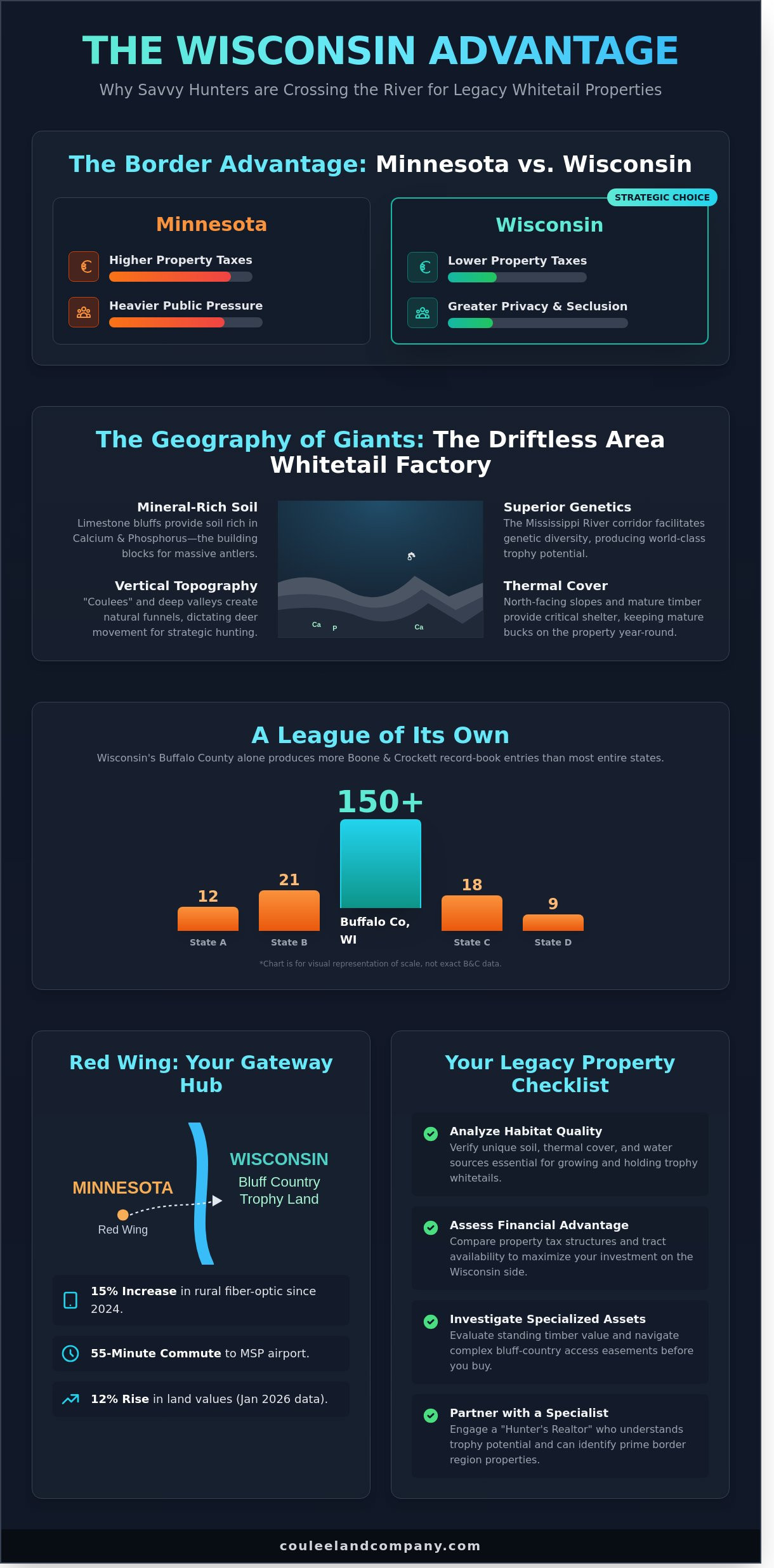
Red Wing, MN vs. Western Wisconsin: The Case for the Wisconsin Side
Red Wing sits right on the edge of a major geographic and financial divide. Crossing the Mississippi River into Pierce and Pepin counties changes your investment profile immediately. Buyers often find that their dollar stretches significantly further once they cross the bridge. In 2024, the inventory for 40-plus acre tracts remains much higher on the Wisconsin side of the river. Minnesota land near the city often fragments into smaller residential lots; however, Wisconsin offers the sprawling bluff country that hunters and conservationists crave. You get the rugged beauty of the Driftless Area with a more favorable regulatory environment.
Serious whitetail enthusiasts prioritize the Wisconsin side for its superior management and reputation. The Wisconsin deer hunting regulations provide a more favorable season structure for those looking to maximize their time in the stand. The nine-day gun season and extensive archery opportunities allow for strategic land management that is difficult to replicate across the border. You aren’t just buying dirt; you’re buying a seat in one of the nation’s premier trophy regions. This area is known as the “Quiet Side” for a reason. You can find total solitude just 10 minutes from the shops and restaurants of downtown Red Wing, enjoying the silence of the bluffs while staying close to modern conveniences.
Financial Advantages of Wisconsin Land
Pierce County land prices in 2024 average between $7,500 and $11,000 per acre for premium recreational tracts. Compare this to the higher premiums often found in Goodhue County for similar topography. One of the biggest drivers for Wisconsin land is the Managed Forest Law (MFL) program. This initiative can reduce property taxes by up to 80 percent for eligible landowners who commit to sustainable forestry practices. It turns a massive annual tax bill into a manageable expense. Historical data from the last decade shows Wisconsin bluff land appreciating at an average annual rate of 6 percent. It’s a stable, high-performing asset for any outdoor-minded portfolio.
Finding the Perfect Country Home
The demand for country homes with river views has surged by 22 percent since 2022. You can secure a secluded bluff-top site that overlooks the Mississippi valley while maintaining a short commute to Red Wing. Building in 2026 requires specific planning for modern infrastructure. High-speed fiber optic internet is now reaching deep into the rural coulees, making remote work a reality. You must also account for deep-well drilling, as water tables in the bluff country often require wells reaching depths of 350 feet or more. Balancing this rural seclusion with city amenities creates a lifestyle that is hard to beat.
- Tax Efficiency: Wisconsin’s MFL program drastically lowers the cost of ownership for large tracts.
- Acreage Availability: Larger, contiguous parcels are more common in Pierce and Pepin counties than in the immediate Red Wing vicinity.
- Hunting Heritage: Wisconsin’s reputation for trophy whitetails is backed by decades of consistent harvest data and hunter-friendly seasons.
- Proximity: Enjoy the “Quiet Side” of the river without sacrificing access to healthcare and retail in Minnesota.
We see more buyers moving across the river every year to take advantage of these specific benefits. The land in Western Wisconsin isn’t just a place to hunt or build; it’s a legacy investment. Our team understands the nuances of these border-county transactions and the unique value each acre holds.
Buying Land Near Red Wing: A Buyer’s Practical Checklist
Navigating the rugged topography around Red Wing requires a critical eye for more than just the view. Bluff-country terrain often features slopes exceeding 25 degrees; this makes traditional driveway construction both expensive and technically challenging. You must verify that legal easements are recorded and physically traversable for heavy equipment before closing. Don’t assume a logging trail suffices for residential or cabin access. Legal access is the foundation of your investment, and in these hills, physical access is what determines your daily reality.
- Timber Value: Standing timber represents a liquid asset that many buyers overlook. Hardwoods like Black Walnut and White Oak dominate the regional canopy. A selective harvest on a 60-acre parcel can yield $15,000 to $30,000 in immediate returns, effectively offsetting a portion of your down payment.
- Water Rights and Well Depth: High-elevation ridge tops offer spectacular views but present logistical hurdles for water access. Well depths in this region often reach 500 feet to tap into reliable aquifers. At an average drilling cost of $35 per foot, a deep well is a major capital expenditure you must budget for early.
- Neighboring Parcels: Your hunting success depends on the management practices of the surrounding 500 acres. Properties bordered by large-scale agricultural operations or dedicated conservation tracts consistently produce older age-class bucks.
Evaluating a Property’s Hunting Potential
Success starts with aerial scouting on the Wisconsin side of Red Wing. Look for thermal cover on south-facing slopes and natural pinch points created by the steep coulee walls. The “Neighborhood Effect” is the most critical factor for trophy potential; if neighbors practice strict Quality Deer Management (QDM), your land’s value increases. Identify year-round water sources like hidden springs or seeps that provide hydration during the dry October months when ridge tops are parched.
The Role of a Land Specialist
Generic real estate agents often miss the nuances of whitetail dirt. Serious buyers need a broker who understands how wind direction affects access and where bedding thickets should remain undisturbed. Ask your realtor if they’ve walked the property lines to identify historical rub lines or if they understand Pierce County’s specific zoning for forest crop programs. Local knowledge in the Red Wing border region ensures you aren’t just buying acreage, but a functional hunting ecosystem.
Coulee Land Company: Your Border Region Specialists
Finding the right parcel of land requires more than a map and a compass; it demands a deep, generational understanding of the soil and the wildlife that inhabits it. At Coulee Land Company, our roots are firmly planted in the rugged bluffs surrounding Red Wing and the sprawling river valleys of Western Wisconsin. We don’t view land as a simple commodity. We see it as a legacy. Our team has spent over 20 years traversing the Driftless Area, identifying the specific micro-climates and topographical features that produce world-class trophy whitetails. This isn’t just our job; it’s our lifestyle.
We’ve pioneered the “Hunter’s Realtor” advantage to serve a specific breed of buyer. Most agents can tell you where the property line sits, but they can’t tell you how a mature buck uses a pinch point during a northwest wind. We can. We evaluate every listing based on its “wildlife capabilities,” looking for the essential ingredients of a premier recreational property. We don’t just sell land; we hunt it. This perspective allows us to provide a pragmatic, results-oriented analysis that general real estate firms simply cannot match.
Our evaluation process includes several critical factors:
- Bedding Security: Identifying south-facing slopes and thick thermal cover that hold deer throughout the winter months.
- Strategic Access: Determining if you can enter and exit stands without blowing out the entire valley or alerting the local herd.
- Food Plot Potential: Analyzing soil quality and sunlight exposure to ensure your land management efforts actually yield results.
Closing a deal on recreational land involves unique hurdles that residential agents often miss. From navigating managed forest crop programs to understanding complex easement structures, our team handles the technical details so you can focus on the hunt. We ensure every transaction is rooted in practical data, whether we’re discussing the 130-inch antler minimums common in managed areas or the specific drainage patterns of a bluff-side spring. We’re diligent in our research, ensuring that the dream of owning land doesn’t turn into a regulatory headache.
Expert Guidance from Trusted Peers
Our specialists aren’t just salespeople; they’re respected woodsmen who live and breathe the outdoor lifestyle. You can rely on the boots-on-the-ground expertise of agents like Mike Law and Bryan Lemke, who bring a wealth of knowledge in land management and trophy hunting. Our reputation is backed by social proof from some of the most recognizable names in the outdoor industry. These endorsements from professional hunters and TV hosts validate our position as the premier land firm in the region. We remain fiercely committed to preserving the hunting heritage of the Driftless Area, ensuring that the “Bluff Country” remains a sanctuary for generations of hunters to come.
Start Your Search Today
The border region near Red Wing offers some of the most diverse and productive land in the Midwest. Whether you’re looking for a secluded ridge-top in Pierce County or a river-bottom tract in Buffalo County, our exclusive listings represent the gold standard of recreational real estate. We’ve earned our place as the undisputed authority in Wisconsin’s Bluff Country by delivering superior results for our clients. Don’t settle for a generalist when you can work with a specialist who understands the true value of the land. Contact Coulee Land Company to find your piece of the bluffs.
Claim Your Stake in the Nation’s Top Whitetail Territory
Owning a piece of the Driftless Area isn’t just about a property deed; it’s about securing a foothold in a region that leads the nation in trophy production. Buffalo County holds more Boone and Crockett whitetail entries than any other county in North America, making it the ultimate destination for serious land buyers. While Red Wing serves as a strategic gateway, the most significant potential for world-class hunting lies across the river in the rugged bluffs of Western Wisconsin. You need a partner who understands the wildlife capabilities of these vertical landscapes and the specific land management strategies required to grow and hold mature bucks.
Coulee Land Company stands as Wisconsin’s Land & Property Sales Specialists, a reputation backed by years of results and endorsements from elite outdoor television hosts. We specialize in the Western Wisconsin bluffs, moving beyond standard real estate to offer a true “hunter’s realtor” experience. Whether you’re analyzing a property’s thermal cover or its proximity to established sanctuary zones, our team provides the diligent, expert guidance you deserve. Your legacy in the bluffs is waiting to be built.
Find Your Dream Hunting Property in Bluff Country
Frequently Asked Questions
Is Red Wing, MN a good place to live for hunters?
Red Wing is an exceptional location for hunters because it sits at the gateway to the finest bluff country and river bottom habitat in the Midwest. Goodhue County consistently ranks in the top 10 for Minnesota deer harvest numbers, with hunters registering over 3,200 deer annually. You’ll find diverse opportunities for both trophy whitetails and waterfowl within a 15-minute drive of the city center.
How much does hunting land cost near Red Wing, Wisconsin?
Hunting land on the Wisconsin side near Red Wing typically lists between $5,500 and $9,200 per acre depending on the ratio of tillable ground to timber. High-demand tracts in Buffalo County often see prices exceed $10,500 per acre when they feature established food plots and proven big buck history. Market data from 2023 shows that prime 40-acre parcels remain the most sought-after size for local buyers.
What are the property taxes like on the Wisconsin side of the river?
Wisconsin property taxes for managed forest land can be as low as $1.00 to $2.50 per acre. For land enrolled in the Managed Forest Law (MFL) program, owners pay a fraction of the standard rate in exchange for a long-term timber management plan. If the land isn’t in a tax-incentive program, Pierce County rates average around $16 per $1,000 of assessed value according to 2023 tax records.
Can I find riverfront property for sale near Red Wing?
You can find riverfront property for sale near Red Wing, particularly along the Mississippi River backwaters and the Cannon River. Current inventory often features smaller 1-acre to 3-acre lots for residential use or larger 40-plus acre tracts specifically for waterfowl hunting. Because these river-bottom parcels are rare, they often sell within 25 days of hitting the market.
What is the “Driftless Area” and why is it famous for deer?
The Driftless Area is a 24,000 square mile region of steep bluffs and deep valleys that escaped glacial leveling, creating superior thermal cover and travel corridors. This region is famous because its limestone-rich soils produce high-protein forage that allows bucks to reach their full genetic potential. Buffalo County, located in the heart of this zone, holds the record for the most Boone and Crockett entries in the United States.
How do I find a land specialist who knows the Red Wing area?
Look for a broker who specializes in “Bluff Country” and has a background in land management rather than just residential sales. Coulee Land Company focuses exclusively on these rural assets, ensuring you don’t waste time with agents who only sell suburban homes. A qualified specialist will provide historical aerial photos and trail camera data to prove the property’s potential before you sign a contract.
Is it better to buy land in Minnesota or Wisconsin for trophy whitetails?
Wisconsin is generally considered superior for trophy whitetails due to its restrictive buck tags and higher density of record-book entries. Wisconsin’s management regulations allow more bucks to reach the 4.5 to 5.5-year-old age class compared to many areas around Red Wing on the Minnesota side. While both states offer great hunting, Wisconsin’s reputation for 170-inch plus deer makes it the top choice for serious land investors.
What should I look for when buying bluff land near the Mississippi River?
Focus on top-access points, south-facing thermal bedding cover, and secure interior food plot locations. You need “top-access” properties that allow you to enter stands without blowing your scent into the valleys where deer bed. Properties with at least 250 feet of elevation change offer the best natural funnels for tracking mature bucks during the November rut, especially when they include a year-round water source.