
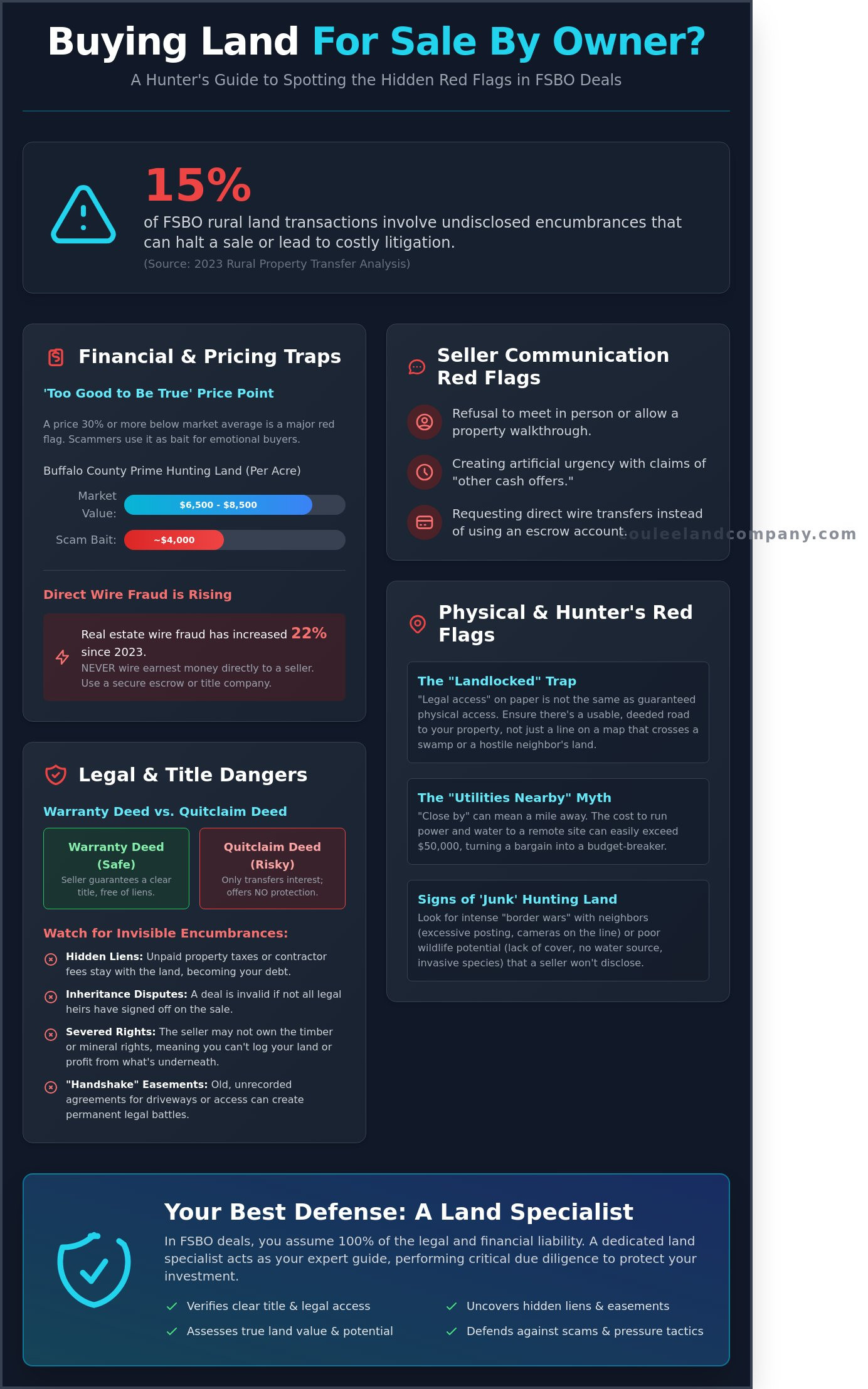
That 40-acre tract in the heart of Buffalo County might look like a hunter’s dream, but buying it without a professional guide is a gamble where the house usually wins. While the appeal of a direct deal is high, a 2023 analysis of rural property transfers found that nearly 15% of FSBO transactions involve undisclosed encumbrances that halt a sale or lead to litigation. You’ve worked hard to save for your piece of the Bluff Country, and it’s natural to want every dollar to go toward the acreage rather than a commission. However, failing to spot the red flags when buying land for sale by owner can turn a $250,000 investment into a permanent legal headache before the first frost hits.
This guide will teach you how to identify invisible liabilities, such as undisclosed easements or severed timber rights, that often hide behind a hand-painted “For Sale” sign. I’m providing a clear checklist of warning signs and legal traps so you can evaluate owner-financed deals with the same precision you use to scout a trophy whitetail. We’ll break down exactly how to verify legal access and ensure your dream property doesn’t become a landlocked liability that you can’t even step foot on.
Key Takeaways
- Master the difference between a Quitclaim and a Warranty Deed to ensure your piece of Bluff Country isn’t burdened by hidden liens or inheritance disputes.
- Learn how to spot the red flags when buying land for sale by owner that indicate poor wildlife potential or intense “border wars” from neighboring properties.
- Uncover the hidden costs of raw land development by looking past “utility close by” claims to see the true price of bringing power and water to your site.
- Understand the “Landlocked Trap” and why having legal access on paper doesn’t always guarantee you can physically reach your hunting grounds.
- Discover how a dedicated land specialist acts as your ultimate defense against sentimental markups and the invisible liabilities of direct-to-seller deals.
The Allure and Risk of Buying Land for Sale by Owner (FSBO)
Buying land directly from the title holder, known as a For Sale by Owner (FSBO) transaction, skips the traditional listing agent mediation. Many buyers gravitate toward these deals in Western Wisconsin’s Bluff Country because they want to avoid the standard 5% to 6% broker commission. They believe direct communication with the seller will lead to a more transparent deal and a lower final price point. However, this path removes the professional barrier that typically filters out fraudulent listings and legal complications.
Understanding the intricate details and potential pitfalls of FSBO land deals is paramount. These transactions often hide complex legal issues, undisclosed easements, or title defects that an untrained eye might miss. Without the due diligence performed by experienced land specialists, buyers are far more susceptible to encountering these costly errors.
In 2026, the digital landscape has made land fraud more sophisticated than in previous decades. Identifying the red flags when buying land for sale by owner is essential because you’re responsible for verifying the title and checking for hidden easements. Recent data from the FBI’s Internet Crime Complaint Center shows a 22% rise in real estate wire fraud since 2023. When you remove a professional land specialist from the equation, you take on 100% of the legal and financial liability. You’re responsible for ensuring the property actually has the trophy whitetail capabilities the seller claims. Without a broker’s oversight, you’re flying blind in a high-stakes environment.
The ‘Too Good to Be True’ Price Point
A listing priced 30% or more below the current market average is the most common of the red flags when buying land for sale by owner. In Buffalo County, prime hunting ground consistently commands between $6,500 and $8,500 per acre. If you see a listing for $4,000 per acre, it’s likely scam bait rather than a genuine bargain. Legitimate “distress sales” rarely drop more than 15% below market value before savvy investors or neighbors buy them up. Scammers use these low prices to target emotional buyers who are desperate to own a piece of the famed Bluff Country before prices rise again.
Communication Red Flags with the Seller
Your interaction with the seller provides vital clues about the deal’s legitimacy. Professional land specialists look for these specific warning signs during the discovery phase:
- Refusal to Meet: If a seller won’t meet you at the property or allow a physical walkthrough, the listing is likely a ghost property. They might claim they’re out of state or dealing with a family emergency.
- Artificial Urgency: Scammers often use pressure tactics, claiming they have “three other cash offers” to force you into a hasty decision without proper inspections.
- Direct Wire Requests: Never wire earnest money directly to a seller. A legitimate transaction requires funds to be held in a secure escrow account or by a licensed title company.
These tactics are designed to bypass your logic and exploit your desire for a perfect hunting spot. Authentic sellers in the Coulee Region understand the value of their land and won’t mind waiting for a proper title search and soil test. If the seller seems more interested in your money than the closing process, it’s time to find a different property. You’re looking for a legacy investment, not a legal nightmare.
Legal and Title Red Flags: Uncovering Invisible Liens
Buying a 40-acre tract in the heart of Bluff Country is a dream for many hunters, but the legal reality can quickly turn into a nightmare if you ignore the paperwork. One of the primary red flags when buying land for sale by owner is the presence of “invisible” encumbrances. You aren’t just purchasing the timber and the ridges; you’re inheriting every legal error or unpaid debt attached to that parcel. If a seller seems rushed or avoids title discussions, they’re likely hiding a clouded history that could cost you thousands in legal fees later.
Hidden liens are a frequent hazard in FSBO transactions. These aren’t always obvious on a surface level. For example, unpaid property taxes from the 2022 assessment or a mechanic’s lien filed by a contractor who cleared a food plot in 2021 can stay attached to the land regardless of who owns it. Family inheritance disputes are equally dangerous. If three siblings inherited a property in 2019 but only one is listed on the sales contract, you don’t actually have a valid path to ownership. You’ll find yourself caught in a family feud that has nothing to do with your hunting goals.
Ancient “handshake deals” are another trap for the unwary. A verbal agreement made back in 1998 between neighbors to share a driveway or allow cattle grazing can cloud a title for decades. These informal arrangements don’t show up on a casual walk-through, but they’ll appear during a professional title search. Without a clean break from these past agreements, your “private” hunting ground could remain legally accessible to strangers.
Deed Types and Their Implications
A Warranty Deed is the gold standard because the seller guarantees they own the land free and clear. If a FSBO seller pushes for a Quitclaim Deed, they’re essentially saying they’ll give you whatever interest they might have, but they won’t promise they actually own it. This is a massive red flag. In Wisconsin, roughly 92% of professional land transactions utilize a Warranty Deed to protect the buyer. You should always verify the seller’s identity against the 2023 recorded deed at the County Register of Deeds to ensure the person signing the paper is the legal owner.
Encroachments and Boundary Disputes
Don’t trust an old cedar post or a rusted barbed-wire fence as a definitive marker. Physical boundaries are often incorrect. A 2022 survey analysis in Western Wisconsin found that 15% of property lines deviated from existing fence rows by at least 3 feet. If a seller refuses to provide a survey dated within the last 5 years or refuses to pay for a new one, you’re looking at a major red flag. You might discover that a neighbor’s $12,000 equipment shed or a permanent driveway is actually sitting on your land, leading to an immediate and costly legal battle with your new neighbors.
Closing without professional title insurance is a gamble you’ll likely lose. It’s the only way to protect your investment from 100-year-old claims, forged signatures, or clerical errors at the county office. When you consult with land specialists, they ensure every lien is satisfied and every boundary is verified before a single dollar changes hands. This expert oversight is what separates a successful land legacy from a permanent legal headache.
Professional title companies identify issues that the average buyer would miss 100% of the time. They look for easements that might allow a utility company to clear-cut your best bedding thicket or old mineral rights leases from the 1940s that could grant someone else the right to drill on your property. Never let a seller’s desire for a “simple” transaction talk you out of the protections that keep your investment secure.
Physical Red Flags: Access, Utilities, and Zoning
FSBO sellers often highlight the sunset views while glossing over the logistical nightmares hidden in the dirt. One of the most dangerous red flags when buying land for sale by owner is the distinction between legal access and physical access. You might find a 1992 survey showing a legal easement, but if that route requires crossing a 45 percent grade or a protected trout stream, your physical access is functionally zero. Engineering a driveway through steep Bluff Country terrain can cost $30,000 or more before you even clear a building pad. If the seller can’t prove a vehicle can reach the build site today, you’re looking at a massive liability.
Never take “utilities nearby” at face value. In rural Wisconsin, “nearby” often means the nearest transformer is 1,320 feet down the road. Local electric cooperatives frequently charge $15.00 to $20.00 per linear foot to extend power lines. A quarter-mile run could result in a $26,400 surprise bill. It’s the same story with water. If neighboring wells are drilled to 400 feet, you should budget at least $12,000 for a casing and pump system. Sellers won’t always volunteer these costs, so you must verify the distance to the nearest hookup with the utility provider yourself.
Local zoning and restrictive covenants can kill a project faster than a bad foundation. Many FSBO properties in prime hunting counties have 40-acre minimums for residential permits or strict “no RV” clauses. If you plan to park a camper for three months during the rut, you might find yourself in violation of a town ordinance that carries a $500 daily fine. Always check the specific “Ag-Residential” or “Forestry” classifications with the county zoning office to ensure your intended use is actually legal.
Identifying unbuildable land requires looking past the current season. A parcel that looks like a dry oak savanna in August could be a federally protected wetland in April. The Wisconsin DNR Surface Water Data Viewer is an essential tool here. If more than 25 percent of the acreage shows up as a “wetland indicator” soil, your building footprint will be severely restricted. State law prohibits filling these areas without permits that are nearly impossible for a private landowner to obtain.
The Nightmare of Prescriptive Easements
A handshake agreement between neighbors from 1995 can destroy your property’s privacy. Prescriptive easements occur when a neighbor has used a trail or driveway openly for over 20 years. This gives them a permanent legal right to cross your land. Watch out for shared driveways that lack a recorded 50/50 maintenance agreement. Without this document, you could be stuck paying the entire $4,000 annual bill for gravel and snow removal while the neighbor uses the road for free.
Soil Quality and Perc Test Failures
Soil quality is a primary red flag when buying land for sale by owner because it dictates your septic options. A failed “perc” test means the ground won’t absorb water, making the land virtually worthless for a home. If the soil has a high clay content or a perched water table within 24 inches of the surface, you’ll be forced to install a $25,000 mound system instead of a $6,000 conventional one. Don’t sign anything unless the offer is contingent on a fresh soil evaluation by a certified tester.
The Hunter’s Red Flags: What Makes a Property ‘Junk’ Land?
Buying a hunting tract without professional representation often leads to “buyer’s remorse” once the first frost hits. One of the most common red flags when buying land for sale by owner is a seller who markets “thick brush” as a prime bedding area. In many cases, that 40-acre block of cover is actually a biological desert filled with invasive species like Buckthorn or Honeysuckle. These plants choke out the native red oaks and white oaks that produce the mast crops deer depend on. If the property doesn’t provide a high-quality food source and diverse habitat, it won’t hold mature bucks during the rut.
Neighbor pressure is a silent killer of land value. You must investigate the “border wars” before signing a contract. A 60-acre parcel loses its appeal if it’s surrounded by four different 10-acre tracts, each with a permanent box blind sitting 5 feet from your property line. Small-parcel hunting intensity can ruin the sanctuary feel of a property. If the neighbors are shooting every 1.5-year-old buck that crosses the fence, your chances of growing a 160-inch whitetail are zero. Always check the satellite imagery for neighbors who have cleared every tree right up to your boundary.
The Managed Forest Law (MFL) program is a specific Wisconsin trap that FSBO sellers often gloss over. While MFL can reduce property taxes by 80%, you must verify if the land is “Open” or “Closed.” If it is enrolled in “Open” MFL, any member of the public can legally walk onto your land to hunt, fish, or hike. Converting “Open” to “Closed” or withdrawing from the program entirely can cost thousands of dollars in back taxes and penalties. Don’t take a seller’s word on the tax status; verify the MFL order with the DNR yourself.
Topography can make or break a property’s huntability. In the vertical terrain of Wisconsin’s Bluff Country, a 50-acre parcel might only have 5 acres of “huntable” flat ground. If the ridges are too steep for a tractor or an ATV, you’ll struggle to put in food plots or retrieve a downed deer. Swirling winds on a 60-degree slope will blow your scent in every direction, making it impossible to hunt specific stands consistently. “Vertical” land often sells for a premium price but delivers a frustrating experience for the serious woodsman.
Habitat Degradation and Timber Issues
High-grading is a major red flag when buying land for sale by owner. This occurs when a seller harvests all the high-value veneer logs within the last 24 months, leaving behind “junk” trees and a mess of slash. You’re left with a property that has zero timber value for the next 40 years. Furthermore, if invasive species have taken over the understory, the “holding power” of the land is compromised. A property needs a balance of water, bedding, and food to be a true hunting honey hole.
The Buffalo County Standard
In Buffalo County, the expectations are higher because the dirt is some of the best in the world. A red flag here is a property that lacks a natural sanctuary. If the neighboring land has 500 acres of unpressured timber, the deer will live there and only visit your land at night. We specialize in finding hunting properties that meet the strict “trophy whitetail” criteria required for consistent success in the Coulee Region.
Work with Wisconsin’s Land & Property Sales Specialists to find your dream tract today.
The Solution: Why a Land Specialist is Your Best Defense
Buying land isn’t like purchasing a suburban ranch home. You aren’t just looking at square footage and roof age; you’re analyzing topography, soil types, and deer movement patterns. Many buyers think they’ll save a few thousand dollars by going solo on a FSBO deal, but they often walk directly into a financial trap. A dedicated buyer’s agent acts as your tactical scout in the field. We know exactly which questions to ask to expose the red flags when buying land for sale by owner that a seller might conveniently forget to mention during a casual walk-through.
Professional valuation is where we save our clients the most money. FSBO sellers often apply a “sentimental tax” to their property. They remember the trophy buck their son harvested in 2018 and believe that memory adds $1,500 per acre to the price tag. We don’t trade in nostalgia. We use hard data from the last 18 months of sales in counties like Buffalo or Trempealeau to ensure you’re paying fair market value. If a 40-acre tract is priced 25% above the local average without the timber value to back it up, we’ll find it before you write a check.
Navigating the paperwork requires a precision mindset. We ensure every contingency is legally binding and clearly defined. If a perc test fails or a title search reveals a 40-year-old utility easement, you need a bulletproof exit strategy to protect your earnest money. Coulee Land Company digs into the details owners try to bury, such as unrecorded verbal agreements with neighbors or hidden dump sites that could cost $10,000 in remediation. We’ve seen owners try to hide red flags when buying land for sale by owner by showing property lines that don’t match the legal deed, and we’re here to stop that from becoming your problem.
The Land Specialist vs. The General Realtor
A residential agent focuses on HVAC systems and kitchen remodels, meaning they’ll likely miss a $30,000 timber value discrepancy or a subtle wetland violation. You need “boots on the ground” expertise from specialists like Mike Law, who understands how to read a ridge top and evaluate wildlife capabilities. We rigorously vet buyers to ensure they’re positioned to win in a competitive market while staying protected from bad deals that look good on paper but fail in the dirt.
Final Checklist Before You Sign
- Verify the title: Ensure there are no outstanding liens or ownership disputes from 2023 or earlier.
- Check the access: Confirm legal access via a recorded easement or direct road frontage.
- Confirm the zoning: Check with the county to ensure your building or hunting plans are permitted.
- Don’t skip the survey: Old fence lines are rarely accurate indicators of true property boundaries.
- The perc test: Always make your purchase contingent on a successful soil test for septic viability.
- Habitat evaluation: Assess the food plot potential and bedding cover to ensure the land meets your hunting goals.
The due diligence period is the most critical phase of the purchase because it’s your final opportunity to uncover hidden liabilities before your capital is fully committed to the property.
Secure Your Legacy in Wisconsin’s Bluff Country
Owning a piece of Western Wisconsin’s premier hunting ground is a life-changing milestone, but a direct FSBO deal can turn into a financial burden if you miss critical details. You now understand that invisible title liens and restrictive zoning can devalue a property before you even set up a stand. For the serious hunter, identifying “junk” land that lacks proper wildlife habitat is just as vital as verifying the legal deed. Spotting red flags when buying land for sale by owner takes a level of boots-on-the-ground expertise that most buyers simply don’t have.
Coulee Land Company brings over 50 years of combined land management experience to your search. We’re endorsed by trophy whitetail experts who understand why Buffalo County dominates the record books. We don’t just find land; we protect your investment by vetting every acre for its true wildlife capability and long-term value. Don’t risk your investment; contact our Land Specialists before you buy. Your future hunting camp deserves a foundation built on professional insight and deep local authority. We’re ready to help you find the perfect tract that meets your goals and exceeds your expectations.
Frequently Asked Questions
Is it safe to buy land for sale by owner without an attorney?
Buying land for sale by owner without a qualified attorney or a specialized land broker is generally unsafe because you lack professional protection against title defects. While 70% of FSBO sellers list on their own to save on commissions, they often use outdated contracts that don’t account for specific Wisconsin land use laws or hunting access easements. You need a professional to verify the legal descriptions so your dream of a Bluff Country sanctuary doesn’t become a legal nightmare.
What is the most common scam when buying land online?
The most common scam involves seller identity fraud where a criminal lists a property they don’t actually own. These scammers often scrape photos from legitimate listings in Buffalo County and offer them at 40% below market value to lure quick cash buyers. This is one of the major red flags when buying land for sale by owner, especially if the seller refuses to meet in person or demands a wire transfer before you’ve seen the deed.
How do I check if a piece of land is landlocked?
You must verify legal access by reviewing the county GIS mapping system and the physical deed for recorded easements. Don’t assume a visible dirt track constitutes legal access; roughly 15% of rural parcels in Western Wisconsin lack a deeded right-of-way. A professional title search covering the last 60 years will confirm if you have a legal path to your trophy whitetail hunting grounds or if you’re stranded behind a neighbor’s gate.
What does it mean if land is sold ‘as-is’ in a FSBO deal?
An as-is clause means the seller provides zero warranties regarding the property’s condition and will pay $0 for any discovered defects. In a FSBO deal, this often hides issues like soil contamination or failed perc tests that prevent building a hunting cabin. You’re accepting the land with all its faults, which makes a 10-day feasibility period essential to protect your investment from hidden environmental liabilities.
Can I get a mortgage for land for sale by owner?
You can obtain a mortgage for FSBO land, but lenders typically require a 20% to 35% down payment for vacant parcels. Specialized lenders like Compeer Financial often look for a detailed land management plan before approving a loan on large acreage. Because banks view raw land as a higher risk, they’ll demand a formal appraisal and a clean title report before they release any funds for your purchase.
What should I look for in a land sale contract from an owner?
You must ensure the contract includes specific contingencies for title insurance, boundary surveys, and soil suitability tests. Many generic FSBO forms omit the right to farm or wildlife management clauses that are vital in Western Wisconsin. Ensure the document explicitly states the closing date and identifies which party pays the 1% transfer tax to avoid unexpected costs at the finish line.
How do I verify the property taxes are paid on a FSBO listing?
Visit the official County Treasurer’s website to search the public tax rolls using the 12-digit parcel identification number. This is a critical step because unpaid taxes stay with the land, meaning a buyer could inherit a $5,000 tax lien from a previous owner. Verifying the payment status for the 2023 tax year protects you from unexpected government foreclosures or interest penalties after the sale is finalized.
Why do I need a survey if the owner shows me the property markers?
Owners often misidentify boundaries by 20 feet or more, which can lead to costly timber trespass lawsuits. Relying on an old fence line or a rusted stake is one of the biggest red flags when buying land for sale by owner. A certified survey from a licensed professional provides a legal map that stands up in court, ensuring your food plots and deer stands stay on your own soil.