
Most Wisconsin recreational properties sit on the market for over a year because sellers market the dirt instead of the trophy whitetail genetics and habitat quality that serious outdoorsmen crave. It’s a common trap that leads to stale listings and frustrating lowball offers from developers who don’t appreciate the land’s true character. If you want to bypass the typical 12-month wait, you need specialized Quick-Sell Tips for WI Recreational Land: From Listing to Closing.
You’ve put in the work to steward your ridges and valleys, so you deserve a transaction that reflects that dedication. This guide provides the expert strategies you need to prepare, market, and close your property for a higher return in 2026. We’ll examine how to navigate current MFL tax rates, leverage the 2026 Wisconsin Forestry Revitalization Act, and present your land so it speaks directly to cash buyers looking for prime territory in the Driftless Region. From managing the $0.30 per $100 transfer fee to hitting the June 1st MFL deadline, you’re about to learn how to achieve a clean, professional closing in under 90 days.
Key Takeaways
- Audit your property’s hunting curb appeal by clearing access trails and ensuring food plots are vibrant to capture high-quality listing photos.
- Reach the trophy demographic by listing on specialized platforms that prioritize habitat quality over generic MLS data.
- Master the Wisconsin Vacant Land Disclosure Report using these Quick-Sell Tips for WI Recreational Land: From Listing to Closing. to avoid post-sale legal complications.
- Capitalize on the high demand for Western Wisconsin’s Bluff Country to build urgency with serious, out-of-state land buyers.
- Pre-vet your title company for expertise in rural land transfers to ensure your closing happens efficiently and without unexpected delays.
Preparing Your Wisconsin Land for a Fast Listing
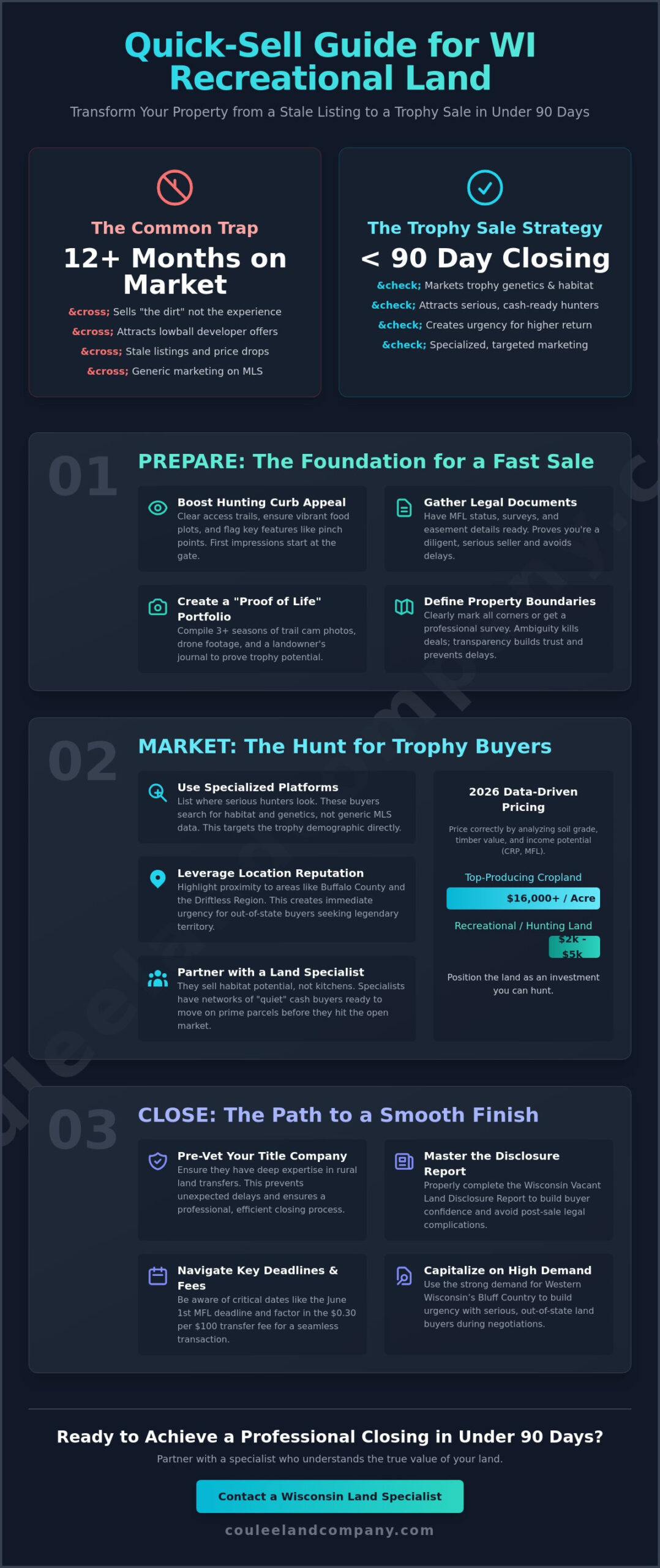
First impressions don’t happen in the deep timber; they start at the gate. If a buyer pulls up to a rusted, sagging entrance, they’ve already mentally discounted your price. You need to conduct a rigorous hunting curb appeal audit. Clear the brush from access trails, ensure your food plots are vibrant and weed-free, and flag key features like pinch points or bedding areas. These Quick-Sell Tips for WI Recreational Land: From Listing to Closing. emphasize that high-value buyers pay for preparation and professional visibility.
You must also gather your legal documentation before the first showing. This includes your Managed Forest Law (MFL) status and recent surveys. A deeper understanding real property laws in Wisconsin helps you avoid delays when a serious hunter asks about easements or agricultural liens. Being ready with these details shows you’re a diligent steward of the land and a serious seller.
To see how these preparation steps impact your final sale price, watch this expert breakdown:
The “Proof of Life” Media Strategy
Serious whitetail hunters want data, not just promises. Curate a Proof of Life portfolio featuring trail camera history from the last three seasons. This proves the trophy potential of your ridges and establishes a track record of success. Using these Quick-Sell Tips for WI Recreational Land: From Listing to Closing. will set your property apart from the thousands of acres currently sitting idle on the market. Use drone photography to showcase the dramatic topography of the Driftless Region and the density of thermal cover. A written Landowner’s Journal detailing past harvests and wildlife movement patterns builds an emotional connection that a generic listing cannot match.
Defining the Property Boundaries
Ambiguity kills deals. Ensure every property corner is clearly marked or professionally surveyed to prevent due diligence delays. This transparency builds immediate trust with buyers and their agents. Verify any existing right-of-ways or easements to ensure a smooth title transfer. If you’re selling hunting properties, precise boundaries are non-negotiable for safety and ensuring the integrity of your habitat management plan.
Marketing Strategies to Attract Serious Recreational Buyers
Marketing recreational land requires a surgical approach that generic real estate platforms simply cannot provide. To reach the trophy demographic, you must list on specialized land platforms that cater to buyers who speak the language of topography and thermal cover. These sophisticated hunters aren’t looking for square footage; they’re hunting for world-class whitetail genetics and strategic bedding areas. If your acreage is located in or near Buffalo County, you’re sitting on a gold mine. This region is the undisputed capital of record-book bucks, and leveraging that reputation creates immediate urgency for out-of-state buyers seeking a piece of Western Wisconsin’s legendary Bluff Country. These are the Quick-Sell Tips for WI Recreational Land: From Listing to Closing. that turn a listing into a bidding war.
Data-Driven Pricing for a 2026 Market
In 2026, rural recreational and hunting land in Wisconsin typically commands $2,000 to $5,000 per acre, while top-producing cropland can exceed $16,000 per acre. To avoid the overpricing trap that kills momentum, you must analyze these trends against your property’s specific soil grade and timber density. Highlight income-producing features like CRP payments or managed forest value to justify a higher ask. By positioning the land as an investment you can hunt, you appeal to both the buyer’s financial logic and their passion for the outdoors. It’s about showing them how the land pays for itself while providing a sanctuary for the hunt.
The Power of the Land Specialist
A residential agent sells kitchens and bathrooms, but a land specialist broker in Wisconsin sells pinch points and habitat potential. Experts like Mike Law or Bryan Lemke maintain deep networks of “quiet” buyers who are ready to move on high-quality parcels before they ever hit the open market. This insider access is why specialized brokers move properties faster and with minimal legal friction. If you’re ready to move your property, you can review our seller resources to understand how we position elite Wisconsin land. These Quick-Sell Tips for WI Recreational Land: From Listing to Closing. ensure you don’t leave money on the table or waste time with unqualified looky-loos.
Navigating the Wisconsin Closing Process with Speed
Closing on a legacy property requires more than just a signature; it demands a title company that understands the nuances of rural transfers. You must pre-vet your closing partner to ensure they’re familiar with agricultural liens and the specific complexities of the Wisconsin real estate transfer fee, which remains at $0.30 for each $100 of value in 2026. These Quick-Sell Tips for WI Recreational Land: From Listing to Closing. emphasize the importance of the Wisconsin Vacant Land Disclosure Report. Filling this out with absolute accuracy prevents post-sale legal friction. Buyers in the current market are diligent. They’ll verify every detail during the final walk-through, from the condition of the access trails to the health of the timber.
Handling MFL and Agricultural Disclosures
If your land is enrolled in the Managed Forest Law (MFL) program, transparency is your greatest asset. For land entered after 2004 that is closed to public access, the 2026 tax rate is $9.49 per acre. You must clearly state these obligations so the buyer is prepared to assume the contract. Confusion over MFL status is a common deal-killer. Providing current year tax estimates and verifying any use-value assessments for agricultural portions of the property ensures there are no surprises at the table. If you’re splitting a larger parcel, address tax prorations early to keep the timeline moving.
Streamlining the Final 14 Days
The final two weeks are where momentum often stalls. Maintain a direct line of communication between the buyer’s lender and the title company to head off any financing hiccups. Since recreational buyers are increasingly using cash in 2026, these closings can move fast if you’re prepared. Organize your gate codes, trail camera data, and historical harvest records into a professional hand-off package. This level of diligence reinforces your reputation as a trusted peer in the hunting community. Following these Quick-Sell Tips for WI Recreational Land: From Listing to Closing. ensures that the transfer is as clean as the land you’ve spent years improving. If you need assistance managing these details, you can review our seller resources to ensure your paperwork is as ready as your ridges.
Secure Your Legacy with a Swift Sale
Selling your Wisconsin acreage isn’t just a business transaction; it’s the final chapter of your stewardship on that specific piece of ground. By focusing on hunting curb appeal and curating a “Proof of Life” media portfolio, you’ve already positioned your property ahead of the generic listings that clutter the market. Navigating the MFL tax rates and vacant land disclosures with precision ensures that your deal stays on track through the final walk-through. These Quick-Sell Tips for WI Recreational Land: From Listing to Closing. provide the definitive blueprint for moving your property in under 90 days while maximizing your return.
Our team specializes in the high-demand corridors of Buffalo County and the Western Wisconsin Bluff Country. We’ve built a reputation for record-breaking land sales, earned through a deep understanding of habitat and a track record endorsed by industry-leading hunting experts. We don’t just list land; we tell its story to a niche audience of serious buyers who value the work you’ve put into your ridges and valleys. Take the next step toward a clean, professional closing today. Get a Professional Property Valuation for Your Wisconsin Land and see what your legacy is worth in the 2026 market. Your next adventure is waiting.
Frequently Asked Questions
How long does it typically take to sell recreational land in Wisconsin?
Average market time for rural land often exceeds 12 months for listings that lack professional preparation. However, by applying strategic Quick-Sell Tips for WI Recreational Land: From Listing to Closing., you can target a closing in under 90 days. Serious buyers in 2026 are frequently cash-ready, which allows for a much faster timeline when the property’s habitat and legal status are clearly documented from day one.
Do I need a survey to sell my hunting land in 2026?
While a new survey isn’t always a legal requirement for every transfer, it’s a powerful tool for preventing due diligence delays. Marking corners clearly builds immediate trust with buyers who want to avoid boundary disputes. If you’re splitting a larger parcel, a professional survey is non-negotiable to ensure accurate legal descriptions and proper tax prorations at the closing table.
What is the Wisconsin Vacant Land Disclosure Report?
This is a mandatory legal document where you disclose any known defects or conditions affecting the property’s value or safety. It covers everything from environmental hazards to MFL status and boundary issues. Completing this report accurately is one of the most vital Quick-Sell Tips for WI Recreational Land: From Listing to Closing. because it protects you from post-sale legal friction and builds buyer confidence during the offer phase.
Can I sell land faster if it is enrolled in the Managed Forest Law (MFL) program?
MFL enrollment can accelerate a sale by offering significantly lower property taxes, such as the $9.49 per acre rate for closed land entered after 2004. Many hunters view this as a major benefit because it lowers the annual cost of ownership. You must ensure the buyer understands the specific forest management plan obligations to prevent any confusion or delays during the final stages of the transaction.
What is the best time of year to list Wisconsin hunting land for a quick sale?
The “rut” in late October and November is the premier window because buyers can see the property’s whitetail potential in real-time. Spring turkey season is another high-demand period for recreational buyers looking to secure land before the next fall. Listing during these seasonal peaks ensures you’re reaching a motivated audience when their passion for the outdoors and property stewardship is at its highest.
How do I value the timber on my property for a potential buyer?
You should consult a professional forester to conduct a timber cruise and provide a current market valuation based on species and density. In 2026, the Wisconsin Forestry Revitalization Act has opened new markets for low-value wood, making active forest management more financially viable for landowners. Presenting a professional timber report alongside your hunting data justifies a higher asking price by highlighting the land’s dual-purpose investment value.