
You know the true potential of your Wisconsin land. You’ve walked the hardwood ridges, scouted the funnels, and understand the unique story your property tells. But when you look at it through a buyer’s eyes, you might see overgrown access points, wonder about the necessary paperwork, or question the ROI of making improvements. This uncertainty can stand between you and a top-dollar sale. The key to bridging that gap lies in strategically preparing your land for sale, a process that transforms your property from a raw parcel into a premier hunting retreat that commands attention.
This isn’t just about clearing brush; it’s about showcasing the very soul and wildlife capabilities of the property. In this definitive guide, we provide Wisconsin landowners with an actionable checklist to do precisely that. You will learn the essential steps to enhance curb appeal, create navigable trails, and expertly document the trophy potential that serious, qualified buyers are actively searching for. Follow our lead, and you’ll be positioned to attract high-quality offers, feel confident throughout the process, and secure the maximum value for your exceptional piece of Wisconsin.
Key Takeaways
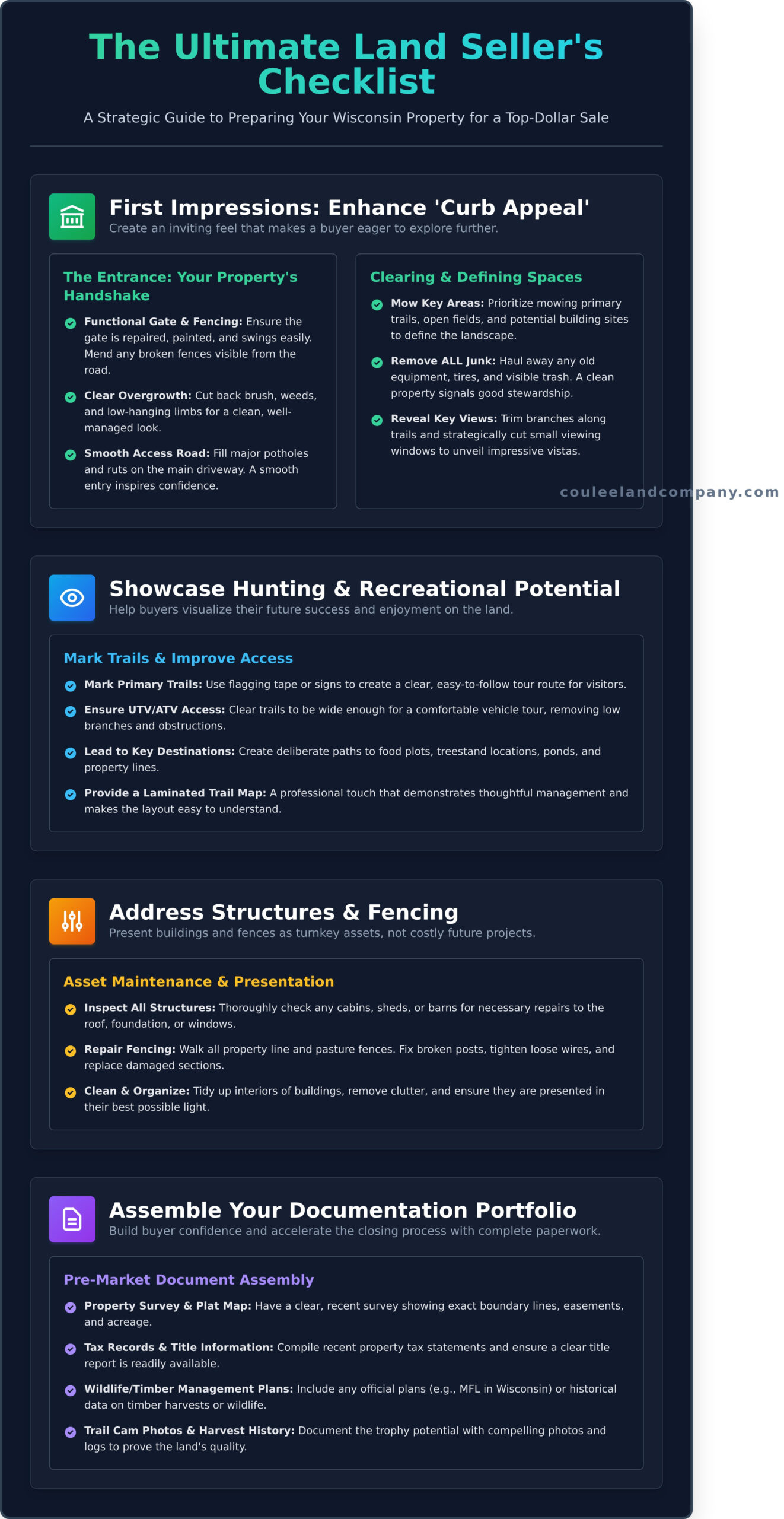
- Enhance your property’s ‘curb appeal’ by clearing entryways and trails to create a powerful first impression that immediately invites buyers in.
- Showcase the true value of your parcel by documenting its hunting and recreational potential, helping buyers envision their future success on the land.
- A critical step in preparing your land for sale is addressing all structures and fencing to present them as turnkey assets, not costly projects.
- Accelerate the closing process and build buyer confidence by assembling a complete documentation portfolio before your property ever hits the market.
First Impressions: Enhancing Your Land’s ‘Curb Appeal’
The first thirty seconds a potential buyer spends on your property are the most critical. Before they ever step out of their truck, they are forming a powerful first impression based on what they see from the road. This initial view can either spark excitement about the dream of owning a piece of Wisconsin’s famed Bluff Country or create immediate doubt. When preparing your land for sale, the primary goal is to create an inviting and accessible feel that makes a buyer eager to explore further.
Small, strategic clean-up efforts yield the highest return on your time and investment. These actions directly impact a buyer’s perception of how well the property has been managed, which is a foundational element in understanding property valuation and securing a superior offer. Think like a buyer: what would make you confident that this property is a worthwhile investment?
For a practical look at getting your property ready, this video offers some excellent insights:
The Entrance: Your Property’s Handshake
The main entrance is your property’s handshake-it should be firm and confident. A buyer wrestling with a rusty, sagging gate or navigating deep ruts before even setting foot on the land starts the showing with a negative mindset. Focus on these key details to ensure a welcoming first contact:
- Gate and Fencing: Ensure the gate is fully functional, swings easily, and is freshly painted. Repair any broken fencing visible from the entrance.
- Clear Overgrowth: Cut back brush, weeds, and low-hanging tree limbs around the entryway to create a clean, sharp look that signals good stewardship.
- Access Road: Fill any significant potholes or ruts on the main driveway. A smooth entry allows buyers to focus on the land, not the road conditions.
- Signage: Add a new, clear sign with the property address or name. It makes the property easy to find and adds a professional touch.
Clearing and Defining Spaces
Once on the property, a buyer needs to be able to see and access its key features. Overgrowth, clutter, and debris can hide the very assets you want to showcase, making it difficult for someone to visualize building a cabin, planting a food plot, or establishing hunting stand locations. Thoughtful clearing is a vital part of preparing your land for sale.
Prioritize mowing primary trails, open fields, and potential building sites. This simple act defines the landscape and demonstrates its usability. It is absolutely essential to remove all junk-old farm implements, discarded tires, and any visible trash must be hauled away. Finally, trim low-hanging branches along main trails for easy UTV or walking access, and strategically cut small viewing windows in the treeline to reveal impressive long-range views. Unveiling a hidden vista can instantly elevate a property’s perceived value.
Showcasing Hunting & Recreational Potential
Any agent can list a vacant parcel of land, but a true land specialist knows that selling a premier recreational property requires telling its story. This critical step in preparing your land for sale is where you transform a simple plot into a destination. You must help prospective buyers visualize themselves tracking a mature buck through the hardwoods, setting up on a turkey-filled ridge, or enjoying a UTV ride with their family. Documenting the land’s history and proven potential is every bit as important as its physical appearance.
Marking Trails and Improving Access
A buyer cannot appreciate what they cannot see. A well-defined and accessible trail system is non-negotiable for showcasing your property’s best features. Your goal is to create an effortless and impressive tour experience.
- Clearly mark your primary trails with flagging tape or small signs to guide visitors.
- Ensure trails are wide enough for a comfortable ATV or UTV tour, clearing any low-hanging branches or obstructions.
- Create deliberate paths to key destinations like food plots, proven treestand locations, ponds, and distinct property lines.
- Provide a laminated trail map for buyers during showings. This professional touch demonstrates thoughtful management and makes the property’s layout easy to understand.
Highlighting Wildlife Habitat Features
Serious buyers are looking for superior habitat that holds and grows wildlife. Go beyond simply pointing out woods and fields; identify the specific features that make your land a hunter’s paradise. Mowing a clean perimeter around your food plots gives them a sharp, well-maintained appearance. Mark key habitat features like thick bedding areas, natural funnels, and critical water sources on your map. If you’ve invested in habitat improvements like Timber Stand Improvement (TSI), be sure to explain the work you’ve done and the long-term benefits. These efforts are fundamental for enhancing land for wildlife and are exactly what discerning buyers of trophy hunting properties are looking for.
Documenting the Wildlife
Proof of a thriving wildlife population turns a property’s potential into tangible, marketable value. When preparing your land for sale, compiling this evidence is one of your most powerful tools. Create a portfolio that includes your best trail camera photos of mature bucks, turkey flocks, and other resident game. A “brag book” with photos of past harvests taken on the property provides a powerful testament to its history of success. On your trail map, note the locations of significant deer sign-clusters of rubs, historical scrape lines, and heavily used trails. This documentation provides the undeniable proof that a serious hunter needs to see.
Addressing Structures, Buildings, and Fencing
When preparing your land for sale, the existing structures can be a powerful asset or a significant liability. From a simple hunting cabin to a full-scale barn, these buildings form a potential buyer’s first impression of how the property has been managed. The objective is to present every structure as a turnkey benefit, not a looming project. Prioritizing repairs that enhance safety and functionality will always provide the best return, as a clean, organized space allows a buyer to envision its potential rather than calculate the cost of fixing its problems. As any professional guide to selling your farmland will confirm, the condition of these improvements directly impacts the property’s market value and appeal.
The Cabin or Country Home
If your property includes a residence, its condition is paramount. This is often the emotional centerpiece for a buyer looking for a weekend retreat or a permanent home in Wisconsin’s Bluff Country. Focus on the essentials to build confidence and showcase the home’s potential.
- Make critical repairs: Address any issues with the roof, windows, and plumbing to prevent a negative inspection report.
- Declutter and neutralize: Remove personal items and apply a fresh coat of neutral paint to create a clean, spacious feel.
- Ensure a fresh welcome: Deep clean the entire space, eliminate any pests, and ensure it smells fresh and inviting.
Properly presenting the residence is vital for country homes with acreage, as it frames the entire lifestyle a buyer is investing in.
Barns, Sheds, and Outbuildings
Outbuildings represent immense utility and value, whether for storing farm equipment, ATVs, or hunting gear. Ensure they look ready for work from day one. Tidy up the interior by organizing tools and removing all trash, old lumber, and unused items. Check that all doors and windows operate smoothly, as a stuck barn door can be a major frustration. Most importantly, address any obvious structural or safety concerns, such as a sagging roofline or rotten support posts. A functional, well-maintained barn adds significant value and capability to a rural property.
Fencing and Gates
Good fencing is a major selling point, especially for buyers with livestock or those who prioritize clear boundary lines for hunting and land management. Before listing, walk all your fence lines. Repair any broken wires, replace rotten posts, and clear brush that may be obscuring the fence. Ensure every gate along interior roads and access points is easy to open and close. For a buyer touring the property, a frustrating gate is a memorable nuisance. Clearly marked boundary fences provide peace of mind and prevent potential disputes, demonstrating diligent ownership and making the property immediately more attractive.
Assembling Your Documentation Portfolio
A serious buyer respects a serious seller. In the world of high-value land transactions, nothing demonstrates your professionalism and commitment more than a complete and organized documentation portfolio. This preparation isn’t just about checking a box; it’s a strategic move that inspires buyer confidence and can prevent significant, costly delays during the closing process. A critical step in preparing your land for sale is to have every relevant document ready for review, proving you are a transparent and diligent owner.
Boundary, Title, and Access Documents
These documents form the foundation of your property’s legal standing. They eliminate ambiguity and provide a buyer with absolute certainty about what they are purchasing. Having these on hand shows foresight and removes major hurdles before they can arise.
- Property Survey: Locate your most recent survey. If one isn’t available, ensure property corners are clearly marked and visible.
- Title Insurance Policy: A copy of your current title policy proves clear and marketable title, a non-negotiable for any savvy buyer.
- Easements: Document any legal easements for access, utilities, or other purposes. Clarity on this point is essential.
- Property Tax Statements: Provide the most recent property tax statements to give a clear picture of carrying costs.
Leases, Contracts, and Government Programs
Full transparency regarding any existing agreements or encumbrances is paramount for a smooth transaction. Surprises in this area can quickly derail a deal, so presenting all information upfront builds immense trust and goodwill with a potential buyer.
- Existing Leases: Compile copies of any current hunting, farming, mineral, or other land-use leases.
- Government Programs: Gather all paperwork for programs like the Conservation Reserve Program (CRP) or Managed Forest Law (MFL).
- System Records: Include any well water test results or septic system maintenance records and permits.
Resource and Land Management Records
For the discerning land buyer, especially in Wisconsin’s famed Bluff Country, the story of the land’s resources and management is as important as its boundaries. These documents showcase the property’s true potential and the stewardship you’ve invested in it. This part of preparing your land for sale can significantly enhance its perceived value.
- Timber/Forestry Plans: Provide any timber cruise reports or detailed forest management plans that outline the value and health of your woodlands.
- Soil and Topography Maps: Include soil maps or reports, especially for tillable acreage, to highlight agricultural or food plot potential.
- Land Improvements: Detail any recent improvements-like new trails, food plots, or water sources-with receipts if possible.
- Hunting History: Consider sharing personal notes on proven stand locations, travel corridors, and past hunting successes to illustrate the land’s wildlife capabilities.
Gathering these materials demonstrates that you are a serious, organized seller. If you need assistance determining what’s most critical for your specific property, the experts at Coulee Land Company are Wisconsin’s Land & Property Sales Specialists, ready to guide you.
Partnering with a Specialist for a Successful Sale
You’ve invested the sweat equity. The trails are cleared, the boundaries are marked, and your property looks its absolute best. But all the effort you put into preparing your land for sale is only half the equation. To truly capitalize on your work and secure a top-dollar offer, you need a marketing strategy as specialized as the property itself. A typical residential real estate agent often lacks the specific knowledge to value and market rural, recreational, or hunting land, potentially leaving significant money on the table.
Professional Photography and Videography
In today’s market, high-quality visuals are your single most powerful marketing tool. A potential buyer’s first impression is formed online, and professional imagery is non-negotiable. We utilize state-of-the-art tools to ensure your property commands attention:
- Drone Footage: Showcases the property’s full scope, from rolling topography to the layout of food plots and timber stands.
- Golden Hour Shoots: Capturing photos and video during the soft light of early morning or late evening ensures your land is presented in its best possible light.
- Feature-Focused Shots: We meticulously photograph every key feature you’ve worked to improve, from new access points to wildlife habitat enhancements.
Timing the Sale for Peak Appeal
Strategic timing can dramatically impact buyer interest and the final sale price. Listing your property when it looks its best-typically in the vibrant green of spring or the rich colors of early fall-is crucial. In Wisconsin, we also consider the hunting calendar; listing just before the major seasons can capture a highly motivated audience of buyers. A land specialist understands these market rhythms and can advise on the optimal time to list, avoiding periods when snow cover might hide your property’s greatest assets.
Why a Land Specialist is Your Greatest Asset
This is where a true land specialist proves their worth. Unlike generalists, we have a cultivated network of qualified buyers actively searching for properties just like yours. We don’t just see acres; we see the value in mature timber, the potential of tillable soil for income, and the unique recreational features that attract trophy whitetail. Experts like our own Bryan Lemke live and breathe this world, bringing an unmatched level of passion and expertise to the table. The process of preparing your land for sale culminates here, with a team that ensures your hard work translates directly into maximum value. Let us help you navigate the entire process from listing to closing. Learn more about selling with us.
From Preparation to Profit: Secure Your Land’s True Value
As we’ve explored, maximizing your property’s value goes far beyond simply listing it. It’s a deliberate process that involves enhancing its ‘curb appeal’ to make a powerful first impression, strategically showcasing its unique hunting and recreational potential, and ensuring every piece of documentation is meticulously organized for a seamless transaction. This dedicated effort in preparing your land for sale is what separates a good outcome from a truly exceptional one, ensuring you capture the full value of your investment.
The final, most critical step is partnering with a team that lives and breathes this land. As Wisconsin’s Land & Property Sales Specialists, Coulee Land Company brings unmatched expertise, particularly in the famed Bluff Country. Our proven track record of maximizing seller returns for hunting and recreational properties is built on a deep understanding of what makes a parcel like yours special to the right buyer. Your hard work deserves a premium result. Let our specialists show you what your prepared property is truly worth.
Get a Professional Valuation of Your Prepared Land
Frequently Asked Questions About Preparing Your Land for Sale
How much should I spend on improvements before selling my land?
Focus on strategic, high-impact improvements that enhance the property’s appeal to hunters and outdoor enthusiasts. Clearing access trails, establishing a small food plot, or creating clearings for potential cabin sites often yields the best return. Avoid costly, large-scale projects. The goal is to showcase the land’s potential, not to completely transform it. A consultation with a land specialist can help you prioritize investments that will truly increase your property’s market value.
Is it better to clear a lot of trees or leave the land wooded?
A balance is almost always superior. Mature timber holds significant value, and dense woods provide crucial cover for trophy whitetails. However, strategic clearing can be highly beneficial. Creating access trails, small food plots, or defined building sites can dramatically improve a property’s functionality and appeal. The key is selective clearing that enhances the land’s wildlife capabilities and accessibility without diminishing its natural, wooded character and timber value. It’s about smart land management, not deforestation.
Do I need to have a new survey done before listing my property?
While not always legally required, a recent, clearly marked survey is one of the most powerful tools you can have. It eliminates any uncertainty about property lines for potential buyers, preventing future disputes and building immediate trust. A survey provides clarity on acreage, access points, and easements, which streamlines the closing process. We strongly recommend it as it makes your property a much more attractive and straightforward purchase for serious buyers looking for their piece of Bluff Country.
How can I prepare my land for sale if I live out of state?
Managing this process from a distance is a significant challenge, which is why partnering with a local land specialist is critical. A trusted agent on the ground can coordinate everything from trail clearing and gate repairs to professional photography and showings. When you’re preparing your land for sale remotely, your realtor acts as your project manager, ensuring the property is presented in its best light. This principle holds true everywhere; for instance, sellers in Southern California rely on the local expertise of firms like County Properties to handle these details and secure the highest possible price.
What is the biggest mistake sellers make when preparing their land?
The most common and costly mistake is neglecting access. If a potential buyer can’t easily walk or drive the property, they can’t fully appreciate its features or envision themselves using it. Overgrown trails, unmarked boundaries, and difficult entry points are major deterrents. A close second is failing to showcase the property’s “story”-its hunting history, key wildlife travel corridors, or prime cabin locations. You must make the dream tangible for the buyer.
Can I sell my property while it is enrolled in a government program like CRP or MFL?
Absolutely. Properties enrolled in programs like the Conservation Reserve Program (CRP) or Managed Forest Law (MFL) can be sold. These programs can even be a selling point, offering the new owner guaranteed income or significant tax advantages. The key is full disclosure. The buyer must be made aware of the program’s contract terms, obligations, and any transfer requirements. Our team is highly experienced in navigating these sales to ensure a smooth and compliant transaction for all parties.