
A trophy buck in the Driftless Area isn’t won in November; it’s earned during the humid, mid-summer months when most hunters are still dreaming of cooler weather. Preparing for deer season in Wisconsin requires more than just sighting in your rifle or checking trail cameras. It demands a transition from a casual hunter to a dedicated land steward who understands the unique demands of Buffalo County’s bluff terrain. We know that navigating the 2026 DNR regulation changes and managing a property on a tight timeline can feel overwhelming, especially when the stakes are this high.
This guide serves as your tactical roadmap to ensure you’re ready when the archery and crossbow season opens on September 12, 2026. You’ll gain expert insights into land management strategies that actually move the needle and a clear checklist for gear readiness. We’ll also break down the critical 2026 regulations, including the $24 resident license fees and the November 21 gun opener, so you can focus entirely on the hunt. From patterning mature whitetails to mastering the topography of Western Wisconsin, this is how you secure your legacy on the land.
Key Takeaways
- Finalize food plots and stand placements using specific late-season trail camera data to optimize your property’s holding power.
- Navigate the 2026 Go Wild licensing system and gear verification process to ensure total compliance before the September opener.
- Gain a tactical advantage by mastering complex thermal air currents and identifying high-traffic “bench” travel corridors in rugged bluff terrain.
- Follow a proven professional timeline when preparing for deer season in wisconsin to move from simple scouting to elite land stewardship.
- Implement expert strategies tailored for Buffalo County and the Driftless Area to consistently target the region’s most mature trophy whitetails.
Land Stewardship: Property Preparation and Habitat Management
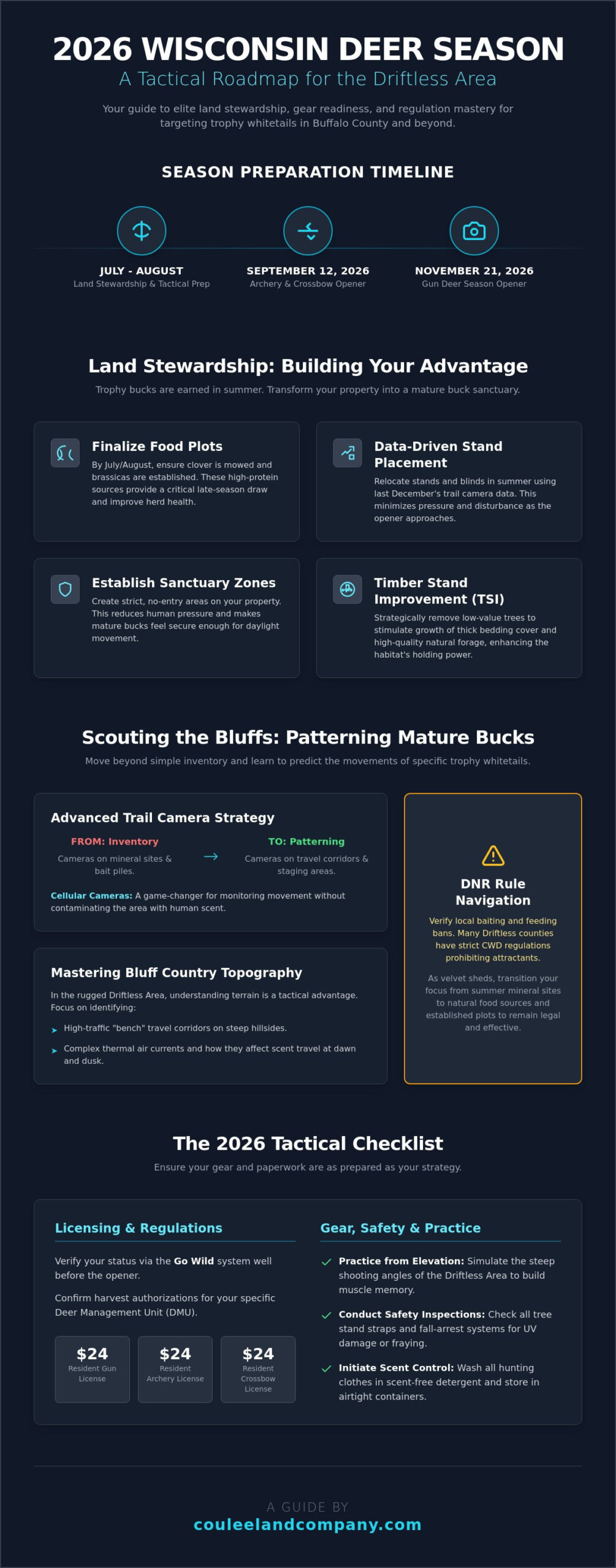
Success in the Wisconsin woods is a year-round commitment that goes far beyond the nine-day gun season. By July and August, your focus must shift from general maintenance to tactical execution. Finalizing food plots is the immediate priority; ensure your clover is mowed and your brassicas are established to provide a reliable late-season draw. These high-protein forage sources are essential for the health and retention of the white-tailed deer herd on your acreage. Timber Stand Improvement is a strategic forest management method used to remove low-value trees to stimulate the growth of thick bedding cover and high-quality natural forage.
Relocating stands and blinds during the summer prevents intrusive activity as the opener draws near. Use trail camera data from last December to identify exactly where mature bucks were moving during the late season. Once these stands are set, establish strict sanctuary zones where human entry is forbidden. This reduces pressure and ensures that older age-class bucks feel secure enough to remain on your property during daylight hours.
To visualize how to get your land and camp ready for the upcoming months, watch this look at seasonal preparation:
Trail Camera Strategy: Moving from Inventory to Patterning
Patterning a specific buck requires a shift in how you deploy your technology. Move cameras away from mineral sites and toward travel corridors or staging areas where bucks transition from bedding to feed. Using cellular cameras is a game-changer when preparing for deer season in wisconsin because it allows you to monitor movement without leaving a scent trail. For more detailed advice on optimizing your acreage for trophy potential, explore our resources on Wisconsin land management for wildlife.
Mineral Sites and Baiting: Navigating Wisconsin DNR Rules
As the 2026 season approaches, you must verify the specific baiting and feeding bans in your hunting county. Many areas in the Driftless region have strict Chronic Wasting Disease (CWD) regulations that prohibit the use of attractants. Transition your focus from summer mineral sites to natural food sources and established plots as the velvet sheds. This ensures your property remains a legal and productive destination while preparing for deer season in wisconsin and helps maintain the long-term health of the local herd.
The 2026 Wisconsin Tactical Checklist: Gear and Regulations
Your administrative readiness is just as critical as your field skills. All hunters must verify their status through the Go Wild system well before the September opener. According to the official 2026 Wisconsin hunting regulations, resident gun deer licenses remain $24, while archery and crossbow licenses are also $24. Ensure your harvest authorizations are correctly allocated for your specific Deer Management Unit (DMU) to avoid legal complications on opening day. This is a baseline requirement for anyone preparing for deer season in wisconsin.
Physical preparation should mirror real-world scenarios. Don’t just shoot at static targets from a flat range. Practice from an elevated platform to account for the steep angles typical of the Driftless Area. This builds the muscle memory needed for a clean harvest when a trophy buck finally steps into a shooting lane. Precision is earned through repetition in conditions that simulate the actual hunt.
Safety inspections are non-negotiable. Check every tree stand strap and fall-arrest system for signs of UV damage or fraying. Once your gear passes inspection, initiate a strict scent control regimen. Wash all field clothing in scent-free detergent and store it in airtight containers until you reach the woods. If you’re still looking for the perfect ridge to hang your stand, our hunting land specialists can help you find a legacy property in the heart of big buck country.
Staying Legal: Important Dates for the 2026 Season
Mark your calendar for the September 12, 2026, archery and crossbow opener. The traditional nine-day gun season begins on November 21, 2026. Be sure to check the specific requirements for your DMU, as some areas may have antlerless-only restrictions or specific harvest requirements. For a deeper look at regional nuances, consult our Buffalo County Wisconsin Deer Hunting Guide.
Gear Maintenance and Tactical Prep
Precision is the product of meticulous maintenance. Bow hunters should check strings for wear and ensure broadheads fly true with their field point groupings. Rifle hunters must zero their optics for the 200-plus yard shots often required in agricultural corridors. Preparing for deer season in wisconsin means leaving nothing to chance when the moment of truth arrives in the crisp November air.
Scouting the Bluffs: Patterning Bucks in Western Wisconsin
The unique topography of the Driftless Area creates a specific set of challenges for those preparing for deer season in wisconsin. Mastering thermal drifts is the difference between a filled tag and an empty ridge. Thermal Drift is the movement of air caused by temperature changes in hilly terrain. In the Coulees, morning air warms and rises, while evening air cools and sinks into the valley floors. Positioning your stand to account for these shifts ensures your scent doesn’t betray you at the critical moment of sunrise or sunset.
Mature bucks in Western Wisconsin are notorious for using “benches,” which are flat shelves located in the middle third of a steep bluff. These corridors allow them to travel with the wind in their favor while maintaining a visual advantage over the terrain below. When planning your entry and exit routes, stay off the valley floors whenever possible. Scent pools in low-lying areas, so accessing stands from the ridge tops or using dry creek beds can keep your presence a secret. Effective Deer and Woodland Stewardship involves understanding these natural movements to minimize impact on the herd.
Why Buffalo County Remains the Gold Standard
Buffalo County’s reputation as the premier destination for trophy hunters isn’t accidental. The region’s high-quality, mineral-rich soil and superior genetics produce massive racks that consistently land in the record books. The rugged topography of the Buffalo County landscape provides natural security, allowing bucks to reach the four and five-year-old age classes required for true trophy status. Preparing for deer season in wisconsin requires a deep understanding of how these animals utilize the bluffs to survive.
Long-Term Preparation: Investing in Your Own Piece of Wisconsin
The ultimate pre-season move isn’t a new piece of gear; it’s securing the land itself. Owning your hunting ground allows for total control over habitat management and hunting pressure. Our Land Specialists, such as Mike Law and Bryan Lemke, understand that a property’s value is found in its ridges and bedding thickets. They help you navigate the market to find turn-key properties optimized for success. Ready to secure your own hunting ground? View our exclusive Wisconsin hunting land listings.
Secure Your Legacy in the Driftless Area
Success during the 2026 opener isn’t a matter of luck; it’s the result of disciplined land management and a deep respect for the terrain. By mastering the complex thermals of the Coulees and strictly adhering to the latest DNR regulations, you position yourself for a season that transcends the ordinary. Preparing for deer season in Wisconsin is a journey from being a visitor on the land to becoming its primary steward. This transition ensures that when that trophy buck finally crosses a bluff bench, you’re ready with the right gear and a proven strategy.
As the Midwest’s leading experts in trophy whitetail land, we specialize in the world-famous Buffalo County Bluff Country. Our team provides unmatched authority in land management and property valuation to help you find more than just a place to hunt. We help you find a legacy. If you’re ready to move beyond the public woods and invest in your own high-value acreage, explore our exclusive Western Wisconsin hunting properties for sale. The crisp November air is coming. Make sure you’re standing on ground you call your own.
Frequently Asked Questions
When does the 2026 Wisconsin deer season start?
The 2026 Wisconsin archery and crossbow deer season begins on September 12, 2026. For those planning for the traditional nine-day gun season, the opener is scheduled for November 21, 2026. Other important dates include the youth hunt on October 10 and 11, 2026, while the muzzleloader season starts on November 30. Always verify your specific sub-unit dates through the DNR Go Wild portal before heading into the field.
Can I use bait for deer in Wisconsin in 2026?
Baiting and feeding regulations are county-specific and primarily dictated by Chronic Wasting Disease (CWD) management zones. In many Western Wisconsin counties, including Buffalo County, baiting is strictly prohibited to prevent the spread of disease. You must consult the updated 2026 DNR map to confirm the status of your specific hunting area. We recommend focusing on permanent food plots and natural forage to legally attract and hold mature bucks.
What are the most common hunting land management mistakes in Wisconsin?
The most frequent mistake landowners make when preparing for deer season in wisconsin is over-pressuring their property through excessive scouting or poor stand access. Walking through the heart of bedding areas or failing to account for thermal drifts on bluff faces can educate mature bucks before the season even starts. Neglecting to establish sanctuary zones often pushes the highest-quality deer onto neighboring properties where they feel more secure.
How do I find trophy whitetail land for sale in Buffalo County?
Finding elite trophy whitetail land requires partnering with a specialized brokerage that understands the unique topography and soil quality of the Driftless Area. You should look for properties with diverse timber, established travel benches, and high-protein food sources. Our land specialists at Coulee Land Company focus exclusively on high-value acreage in Buffalo County. We help buyers identify turn-key properties that have been professionally managed for long-term hunting success.