
A single, well-placed apple tree is more than just a snack for a doe; it’s a strategic land asset that can dictate exactly where the biggest buck in the county spends his November afternoons. Most landowners understand that planting a fruit tree orchard for wildlife is a smart move, yet they often watch their investment wither away due to poor soil, harsh winters, or aggressive deer browse. You’ve likely felt the sting of seeing expensive saplings destroyed before they ever had a chance to produce.
In the rugged terrain of Bluff Country, we agree that a habitat project should yield tangible results, not just more chores. By focusing on high-yield, climate-adapted varieties and utilizing modern protection systems like tree tubes and weed mats, you can build a food source that outlasts any seasonal plot. This guide teaches you how to design a tactical orchard that patterns deer for your bow season and adds long-term value to your acreage. We’ll preview the best species for staggered drop dates, the ideal planting density of 302 to 435 trees per acre recommended by the NRCS, and the layout strategies that create high-percentage kill plots.
Key Takeaways
- Learn how to select specific tree varieties based on staggered drop dates to ensure your property provides a reliable food source from early bow season through December.
- Discover the tactical advantages of planting a fruit tree orchard for wildlife to create a permanent social hub that patterns trophy bucks more effectively than annual food plots.
- Master the essential planting and protection techniques required to ensure your saplings survive aggressive deer browse and the harsh winters of rugged Bluff Country.
- Identify the critical role of weed control during the first three years to maximize root establishment and ensure the long-term survival of your investment.
- Understand how a mature, high-yield orchard functions as a key driver for property valuation and long-term land stewardship success.
Strategic Planning and Species Selection for Wildlife Orchards
A successful wildlife orchard is a tactical tool, not a landscape feature. While a commercial grower focuses on uniform fruit for the market, your goal when planting a fruit tree orchard for wildlife is to create a consistent, reliable food source that patterns deer during the months you actually hunt. Understanding what is an orchard in a hunting context means prioritizing drop timing and nutritional value over fruit size or skin color. You’re building a social hub that attracts trophy bucks and holds them on your property through the winter.
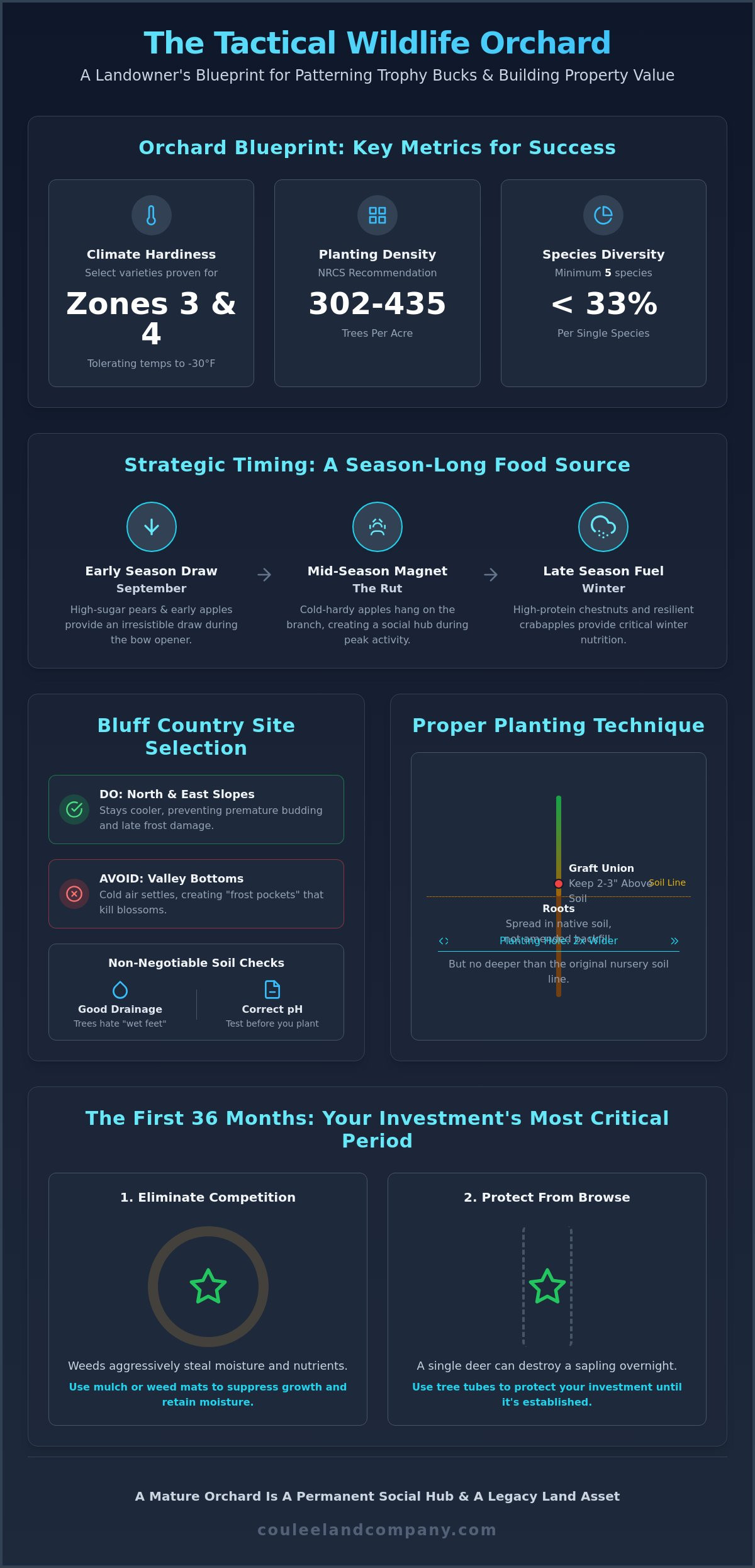
In the harsh climate of Western Wisconsin, specifically Zones 3 and 4, tree survival is your first hurdle. You need varieties that can withstand minus 30 degree nights and late spring frosts. A diverse mix is essential. The NRCS recommends a minimum of five species for wildlife plantings, ensuring that no single species makes up more than 33% of your total count. This diversity protects your investment if one variety fails to produce in a given year.
To better understand this concept, watch this helpful video:
Selecting Varieties for Extended Drop Windows
Early season draws include soft-flesh pears and early-ripening apples that hit the ground just as the September bow opener arrives. These provide high-energy sugar sources when deer are still in their late-summer patterns. Conversely, late-season magnets like crabapples and specific cold-hardy apples are designed to hang on the branch until the rut or the late muzzleloader season. Integrating hybrid chestnuts is a game changer for wisconsin land management for wildlife, as these blight-resistant varieties offer a high-protein alternative to traditional acorns during the critical winter months.
Site Selection in Bluff Country Terrain
Bluff Country terrain presents unique challenges for site selection. We’ve found that northern and eastern slopes often provide superior survival rates because they stay cooler in late winter, preventing trees from breaking dormancy too early and losing their blossoms to a late frost. Avoid valley bottoms where cold air settles; these frost pockets can wipe out an entire year’s production in a single night. Finally, verify your soil drainage. Fruit trees won’t tolerate “wet feet,” which is a common issue in the heavy soils found in certain Coulee Region basins. Testing your soil pH is a non-negotiable first step before you ever break ground.
Practical Planting Techniques and Protection Strategies
Success in planting a fruit tree orchard for wildlife depends almost entirely on the first 36 months of care. On remote hunting properties, the most common reason for tree mortality isn’t disease; it’s neglect and competition. Weeds aggressively steal moisture and nutrients, while a lack of supplemental watering during July droughts can kill a sapling in weeks. In our rugged landscapes, applying a thick layer of wood chips or mulch is essential to retain moisture and suppress the invasive grasses that thrive in disturbed soil.
Selecting the right tree and shrub species for wildlife is only half the battle. You must execute the planting with precision to ensure these trees reach maturity and provide the high-protein forage your deer herd requires.
Soil Preparation and Planting Best Practices
The “gold standard” planting hole should be twice as wide as the root system but no deeper than the original nursery soil line. Avoid the temptation to over-amend the backfill with potting soil or heavy fertilizers. Forcing the roots to adapt to the native Bluff Country soil immediately encourages deeper establishment and long-term resilience. For bare-root stock, spread the roots naturally and prune any damaged tips before backfilling with native soil. Ensure the graft union remains two to three inches above the final soil line to prevent the scion from rooting and losing the benefits of the rootstock.
Protecting Your Investment from Browse and Pests
In high-density buffalo county wisconsin deer hunting areas, standard tree tubes often fall short because they don’t prevent large bucks from knocking over saplings. We recommend five-foot welded wire cages supported by heavy-duty T-posts to prevent rubbing and browse. Don’t forget the “small stuff” either. Wrap the base of the trunk in hardware cloth to stop voles and rabbits from girdling the tree under the snow. Finally, use white trunk wraps to reflect the intense winter sun. This prevents the bark from splitting due to sunscald during our brutal Western Wisconsin winters.
Managing Your Orchard for Long-Term Property Value and Hunting Success
An established orchard isn’t just a food source; it’s a permanent social hub for your local deer herd. Unlike annual food plots that require yearly tillage, seed costs, and favorable weather to germinate, planting a fruit tree orchard for wildlife creates a multi-generational destination. Over time, deer develop generational patterns, visiting these specific trees from the moment the first pears drop in September through the late winter. Your annual maintenance cycle should focus on winter pruning. Aim to encourage horizontal, fruit-bearing branches rather than vertical wood growth, as this keeps the canopy productive and the fruit within reach of the deer.
Tactical Orchard Placement for Bow Hunting
We utilize an “Interception Strategy” when designing these habitats. Place your orchard between thick bedding cover and large destination food sources like corn or soybean fields. This tactical positioning forces movement during daylight hours, catching bucks as they stage before heading to the larger fields. Stealth is everything in the Coulee Region. Your layout must account for prevailing Bluff Country winds, allowing you to enter and exit your stand without blowing your scent into the orchard or the adjacent bedding area. Clear specific shooting lanes within the tree spacing during the initial design phase to ensure ethical shot opportunities once the canopy fills in.
How Habitat Improvements Increase Land Value
From a real estate perspective, mature mast-producing trees are a significant driver of recreational land appraisal values. Serious buyers recognize the years of effort and capital required to establish a high-yield orchard. They’re often willing to pay a premium for “turn-key” properties where the hard work of land stewardship is already done. It’s a tangible asset that distinguishes your acreage from a standard timber tract or an unimproved pasture. We recommend documenting your progress meticulously. Keep records of tree varieties, planting dates, and survival rates to provide to wisconsin land brokers when it’s time to list. This level of detail signals a well-managed property and justifies a higher asking price.
Ready to find the perfect canvas for your wildlife orchard? Browse our current hunting land listings.
Building Your Legacy in the Bluff Country
Building a high-yield wildlife habitat is a multi-year commitment that requires a deep understanding of the land. By selecting climate-adapted species and implementing rigorous protection strategies, you’re doing more than just feeding deer. You’re creating a permanent social hub that patterns trophy bucks and significantly boosts your property’s appraisal value. We’ve seen firsthand how the long-term impact of planting a fruit tree orchard for wildlife can transform a standard timber tract into a premier hunting destination.
Our team at Coulee Land Company specializes in the unique terrain of the Western Wisconsin Bluff Country. As recognized experts in trophy whitetail properties, we’re a deeply authentic group of land specialists and hunters who understand exactly what it takes to build and maintain world-class habitat. Whether you’re looking to purchase your first forty acres or sell a highly improved legacy property, we have the regional expertise to guide your decision.
Ready to start your next project on the right ground? View our exclusive Buffalo County hunting land listings to find your future trophy whitetail habitat. Your vision for a self-sustaining orchard begins with the right piece of land, and we’re here to help you find it.
Frequently Asked Questions
How many fruit trees do I need for a successful wildlife orchard?
You should aim for a planting density of 302 to 435 trees per acre to create a high-yield habitat. While a small cluster provides a temporary snack, a true orchard requires enough volume to become a reliable destination. For landowners focused on planting a fruit tree orchard for wildlife, the NRCS suggests using at least five different species. This diversity ensures consistent annual production and builds long-term resilience across your acreage.
What is the best time of year to plant fruit trees in Wisconsin?
Early spring is the ideal window for planting in Western Wisconsin, specifically after the frost leaves the ground but before bud break occurs. This timing allows root systems to establish in cool, moist soil before the stress of the summer heat. While fall planting is an option for some, our brutal Zone 3 and 4 winters often cause higher mortality for young saplings that lack a full season to anchor.
How long does it take for fruit trees to start producing for deer?
Most modern soft mast varieties begin producing fruit within three to five years if they receive proper care and protection. Hybrid chestnuts are particularly impressive, often dropping nuts within just two or three years of establishment. You’re investing in the long-term value of your land, so focus on root health and structural integrity during these initial years. This patient approach ensures the orchard remains a permanent social hub for trophy bucks for decades.
Do I need to plant different varieties for pollination?
Yes, you must plant at least two different varieties of the same species to ensure successful cross-pollination and a heavy fruit set. For instance, two different apple varieties with overlapping bloom windows will produce a significantly higher yield than a single-variety stand. When planting a fruit tree orchard for wildlife, this technical detail is critical. It determines whether your trees actually drop the high-energy forage your deer herd expects during the hunting season.