
While thousands of tourists flock to the village for a weekend on Lake Pepin, the real value lies in the rugged bluffs where 170-inch whitetails roam undisturbed. You’ve probably noticed that searching for Pepin often yields more results for celebrity chefs than it does for actual land data. It’s frustrating when you’re trying to gauge the market for a 40-acre ridge-top property or a secluded country estate. You know this region holds some of the finest dirt in the Driftless Area, but finding clear information on land values and wildlife capabilities shouldn’t be a hunt in itself.
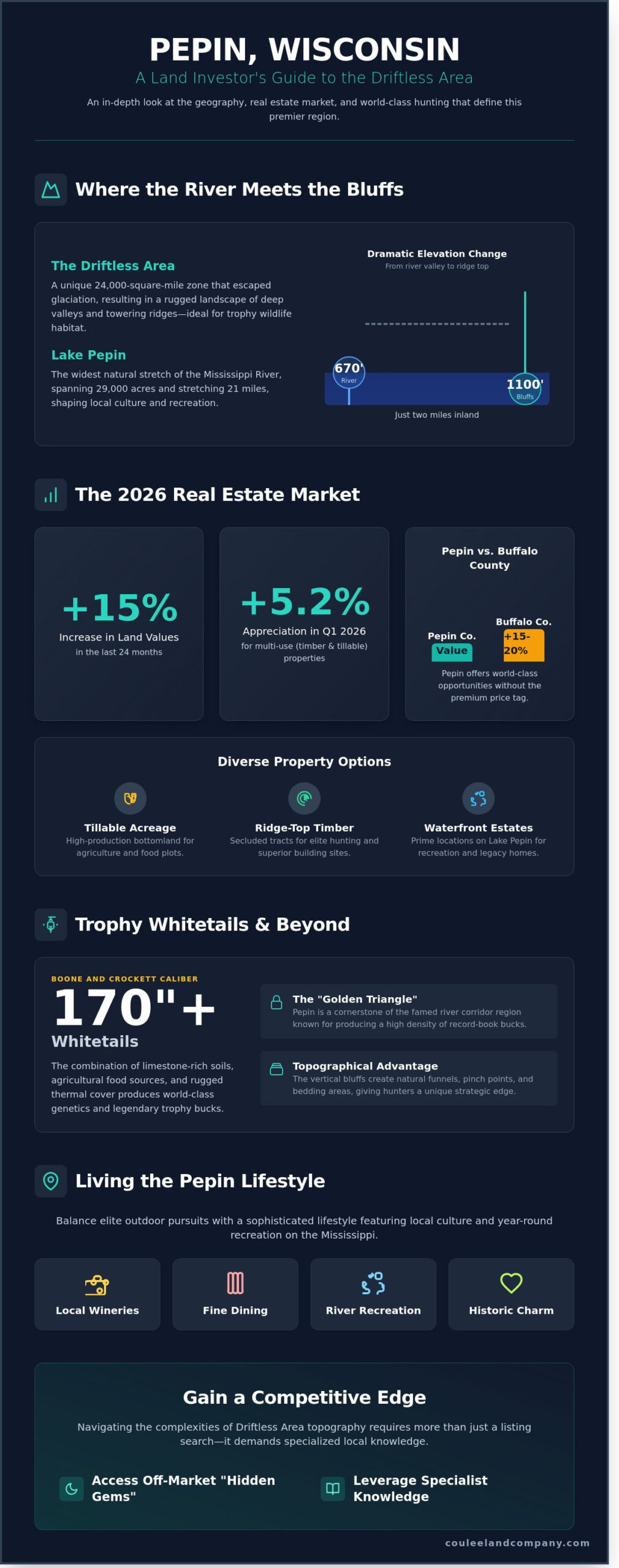
We understand the dream of owning a piece of the famed Bluff Country because we live it every day. This guide cuts through the ambiguity to show you why this area is a premier location for world-class hunting land and high-performing real estate. You’ll learn the critical differences between village life and rural county acreage, get an inside look at why these bluffs produce Boone and Crockett entries, and see how Coulee Land Company serves as your expert guide in this specialized market. We’re diving deep into the topography and the numbers, including why land values have increased by 15% in the last 24 months, to help you secure a legacy property that stands the test of time.
Key Takeaways
- Understand the unique geography of Pepin, where the wide Mississippi meets the rugged bluffs to create a world-class landscape for recreation and property ownership.
- Explore the diverse real estate options available in the 2026 market, ranging from high-production tillable acreage to secluded ridge-top timber tracts.
- Discover why this region is a cornerstone of the “Golden Triangle” and how the river corridor’s genetics produce legendary trophy whitetail bucks.
- Learn how to balance elite outdoor pursuits with a sophisticated lifestyle featuring local wineries, fine dining, and year-round river recreation.
- Gain a competitive edge by leveraging specialist knowledge to navigate Driftless Area topography and secure off-market “hidden gem” properties.
Where the River Meets the Bluffs: Defining Pepin, Wisconsin
This region represents a unique intersection of water and stone. It serves as both a historic village and a sprawling rural landscape within the namesake county. The village sits at the edge of a massive waterway that spans over 29,000 acres, marking the widest natural stretch of the Mississippi River. This body of water, known as Lake Pepin, stretches 21 miles in length and reaches widths of nearly 2 miles at certain points. It isn’t just a river; it’s a vast inland sea that has dictated the local economy and culture for centuries.
Understanding the geographic significance of this area requires a look at the “Driftless Area.” This 24,000-square-mile zone across the Midwest escaped the flattening effects of the last glacial period 10,000 years ago. While much of the state was leveled by ice, this specific territory remained untouched. The result is a landscape of deep valleys and towering ridges. For those researching the area, Pepin, Wisconsin provides a foundational look at the village’s 19th-century origins and its current role as a gateway to the Mississippi.
The geographic identity here is defined by rugged, unglaciated bluffs that rise sharply from the river valley. Hunters and land investors recognize this “Bluff Country” as a premier location for trophy whitetail habitat. The verticality of the land creates natural funnels and pinch points that are legendary among serious outdoorsmen. It’s a real estate anomaly where the value isn’t just in the soil quality, but in the topographical “edges” that create superior wildlife capabilities. We don’t see this kind of terrain in the central or eastern parts of the state. It’s a specialized market for those who want a piece of the famed Driftless ridges.
Lake Pepin vs. The Interior Highlands
The transition from the shoreline to the high ridges is dramatic. At the river’s edge, elevation sits near 670 feet. Move just two miles inland and you’ll find ridges peaking at 1,100 feet. These landforms dictate property use. Bottomland provides fertile soil for agriculture. The steep timbered hillsides offer the thermal cover and bedding areas essential for world-class hunting. High ridges often command premium prices because they provide unobstructed views and superior building sites.
A Historic Connection to the Land
The legacy of this land is tied to the 1867 birth of Laura Ingalls Wilder. Her “Little House in the Big Woods” describes a landscape that was once a dense frontier. Early settlers established 40-acre and 80-acre parcels that still define local plat maps today. The village functioned as a critical river port during the mid-1800s steamboat era before evolving into a recreational retreat. Today, the economy has shifted toward managed wildlife properties and seasonal estates, preserving the rural character while maximizing the land’s potential.
The Pepin Real Estate Market: From Waterfront to Ridge-Tops
Pepin offers a rugged, diverse landscape that serves as the gateway to the Driftless Area. The market here isn’t just about residential lots; it’s about securing a legacy in a region where steep timbered ridges meet fertile valley floors. As we move through 2026, the Western Wisconsin land market shows a clear shift toward multi-use properties. Data from the first quarter of 2026 indicates a 5.2% appreciation in land values for parcels that combine high-quality timber with tillable acreage. Buyers are no longer looking for just a cabin; they want a productive asset that offers both recreational joy and a tangible return on investment.
Many land seekers view Pepin as a strategic alternative to neighboring Buffalo County. While Buffalo County remains the “Boone and Crockett” capital, it often carries a 15% to 20% price premium for the same topography. Smart investors recognize that Pepin shares the same genetics and limestone-rich soils that produce trophy whitetails. You get the same world-class hunting and dramatic views without the inflated entry costs of the more famous neighboring zip codes.
Building on the bluff-tops in this region requires a pragmatic approach. You can’t just drop a foundation anywhere. Local zoning often requires 50-foot setbacks from the bluff edge to ensure structural integrity and preserve the viewshed. Understanding the limestone bedrock layers is critical for well drilling and septic design. It’s a complex process, but the result is a home that sits above the clouds with a view that never gets old. If you’re ready to start your search, you can browse our current listings to see what’s available on the ridge.
Signature Country Homes and Estates
The demand for country homes for sale Wisconsin has reached a new peak in 2026. Buyers are prioritizing estates with at least 20 acres to ensure privacy and control over their immediate environment. When evaluating these properties, you have to weigh the “million-dollar view” against practical daily accessibility. A steep, winding driveway looks majestic in July, but it requires a serious maintenance plan during a January snowstorm. Bluff Country homes hold their value through market cycles because they’re a finite resource. There are only so many ridge-tops with a clear view of the Mississippi River valley, and that scarcity drives long-term equity.
Agricultural and Investment Land
Tillable land is the engine that makes a land investment work. It provides immediate cash flow through rental agreements and helps offset annual property taxes. In the coulees of Pepin, soil types like Seaton and Fayette silt loams are highly sought after for their productivity. These soils are excellent for high-yield corn and beans, but they’re even more valuable for the hunter who wants to establish nutrient-dense food plots. Proximity to the 13,000-acre Tiffany Wildlife Area further enhances the value of private land, as this massive sanctuary acts as a recruitment zone for mature bucks and diverse wildlife. The average parcel size for recreational buyers in this region is 40 to 80 acres, providing enough room for multiple stand sites without over-pressuring the resident herd.
Hunting in Pepin County: Trophy Whitetails and Beyond
Pepin sits at the heart of the “Golden Triangle,” a region comprising Buffalo, Trempealeau, and Pepin counties that produces more record-book entries per square mile than almost anywhere in North America. The Mississippi River corridor acts as a biological engine for this area. It provides a constant flow of superior genetics and nutrient-rich forage. While Buffalo County often commands the national spotlight, Pepin offers the same elite driftless topography with a fraction of the public recognition. This creates a strategic advantage for the serious land buyer. You get the same world-class dirt and vertical gain without the same level of competition found in neighboring zip codes.
Hunters in this region don’t just chase whitetails. The spring turkey season in the bluffs is world-class. You’ll find thunderous gobblers echoing through the coulees every April. Small game, particularly squirrels and ruffed grouse, thrive in the thick oak motts and secondary growth. Always consult the latest Wisconsin hunting regulations to stay current on zone changes and tag allocations before heading into the timber. The diversity of the landscape ensures that from the early September squirrel opener to the late-season archery hunts in January, there’s always a reason to be in the woods.
The Science of the Bluff: Why Big Bucks Live Here
Big bucks reach 5.5 or 6.5 years of age here because the terrain protects them. The rugged coulees of Pepin provide thermal cover where bucks bed on the upper third of south-facing slopes during winter to soak up solar heat. Savvy hunters prioritize hunting properties with top-access. Entering a stand from the ridge top allows you to keep your scent above the deer bedding in the valleys below. Natural funnels created by limestone outcroppings and steep dry runs dictate deer movement with surgical precision. These pinch points are the “X” on the map for any serious archer.
Land Management for the Serious Hunter
Owning land in Pepin is an investment in wildlife capabilities. Success starts with Timber Stand Improvement, or TSI. Removing invasive species and thinning the canopy allows sunlight to hit the forest floor. This creates the hinge-cut bedding and browse that holds mature bucks on your side of the fence. While the surrounding valleys are filled with commercial corn and alfalfa, a strategically placed 1-acre clover or brassica plot on a secluded ridge can be a total game-changer. Consider these management essentials:
- Water Scarcity: Water is often the scarcest resource on high-ridge properties. Installing a small, 500-gallon pond can increase daytime deer activity by 40 percent during the early October lull.
- Edge Feathering: Creating soft transitions between timber and fields provides security cover that encourages daylight movement.
- Sanctuary Zones: Designating 25 percent of your acreage as a “no-human” zone ensures bucks feel safe enough to reach maturity on your property.
Effective management turns a standard piece of dirt into a trophy producer. It’s about more than just luck; it’s about engineering the habitat to meet every biological need of a mature whitetail. When you combine the natural advantages of the Pepin bluffs with disciplined land stewardship, the results speak for themselves in the harvest photos each November.
Living the Pepin Lifestyle: Community and Recreation
Pepin represents a rare intersection of sophisticated amenities and rugged outdoor opportunity. This isn’t your standard rural village; it’s a destination that manages to feel both cosmopolitan and deeply rooted in Wisconsin’s bluff country. The culture here revolves around the water. It’s a “River Town” where you’ll find world-class dining and wineries like Villa Bellezza, a Mediterranean-style estate, sitting just minutes away from prime whitetail habitat. This balance defines the local lifestyle. Residents enjoy a quiet, rural community of 731 people according to the 2020 Census, while the population and energy surge between May and October as visitors arrive.
Proximity to major hubs is a significant advantage for land buyers in this region. You’re roughly 75 miles from the Minneapolis-St. Paul International Airport, making the village a viable option for those seeking a secondary residence or a permanent move without sacrificing access to high-level medical services and international travel. The local economy is resilient, supported by a mix of agriculture, artisan trades, and a robust tourism sector that thrives on the town’s unique geography.
Year-round recreation keeps the community active regardless of the temperature. Winter doesn’t slow this region down. When the lake freezes, it transforms into a village of ice fishing shacks where anglers target perch and crappie in the protected bays. Snowmobiling trails connect the village to the wider Buffalo County network, offering hundreds of miles of groomed paths through the bluffs. This year-round utility is what makes the area a superior investment compared to seasonal-only destinations.
Life on the Water
Lake Pepin is the widest naturally occurring part of the Mississippi River, stretching 21 miles long and up to 1.7 miles wide. This creates a massive playground for boaters and sailors. For those investing in waterfront properties, the value lies in the dual access to recreational cruising and elite-level angling. Walleye and sauger fishing here are legendary; local tournaments often see winning bags exceeding 20 pounds. The Pepin Marina serves as the community’s nautical heart, providing 120 slips and essential services for those who live for the river.
The ‘Little House’ Legacy and Local Tourism
The town’s identity is anchored by the Laura Ingalls Wilder Museum, celebrating the author born seven miles northwest of the village in 1867. This heritage brings a steady stream of cultural tourism that supports local businesses without eroding the town’s character. The Fresh Art Tour, held annually, showcases over 20 local studios and galleries along the Great River Road. This stretch of Highway 35 is a National Scenic Byway. It ensures that the views remain protected and the local visibility stays high for property owners. The artisan culture is authentic, driven by creators who have called these bluffs home for decades.
Connect with Wisconsin’s Land & Property Sales Specialists to explore available acreage and homes in the Pepin area.
Navigating Your Pepin Land Purchase with Coulee Land Co.
Purchasing land in the Driftless Area requires a level of precision that standard residential real estate agents simply cannot provide. The rolling topography of Pepin County creates complex challenges for everything from building site preparation to long-term land management. At Coulee Land Company, we recognize that a 40-acre parcel on a map looks vastly different when you are standing on a 30-degree slope or tracking a mature buck through a pinch point. Our team operates as Wisconsin’s Land and Property Sales Specialists, bringing over 25 years of combined experience to every transaction.
Our team identifies hidden gem properties before they ever reach the open market. In a competitive landscape where high-quality hunting land often sells within 72 hours, our deep-rooted connections with local farmers and multi-generational landowners give our clients a distinct advantage. We don’t just wait for the MLS to update. We are active in the community, often securing off-market opportunities that allow our buyers to bypass bidding wars. This proactive approach is why 65% of our successful closings involve properties with unique attributes that a casual search would never uncover.
The Coulee Land Company difference is rooted in our identity as hunters and landowners first. We understand the emotional and financial weight of investing in “Bluff Country.” We look at a property through the lens of a land manager, evaluating soil quality, timber value, and historical deer movement. We know that Buffalo and Pepin counties consistently produce world-class whitetails, and we use that data to ensure your investment serves both your lifestyle and your portfolio. We speak the language of the land, focusing on the pragmatic details that ensure your legacy property performs for decades.
Expert Guidance from Local Specialists
Success in the Driftless Area depends on the expertise of agents like Mike Law or Bryan Lemke. These specialists don’t just show you boundaries; they evaluate a property’s wildlife capability. This involves analyzing bedding cover, water source proximity, and internal trail systems. We provide a comprehensive network of local land managers and contractors to help you with everything from food plot installation to custom home construction, ensuring you have the right team in place from day one.
Ready to Find Your Piece of the Bluffs?
Your search for the perfect Pepin property starts with customized search alerts tailored to your specific goals. Whether you want a riverfront retreat or a high-ridge hunting tract, we filter the noise to find exactly what fits. We believe in boots-on-the-ground scouting, meaning we walk every acre with you to identify the best stand sites and building envelopes. This hands-on process eliminates surprises and builds confidence before you reach the closing table. Contact our land specialists to start your Pepin journey today.
Secure Your Legacy in the Wisconsin Bluffs
Owning a piece of the driftless region means more than just holding a deed; it’s about securing a foothold in a landscape where trophy whitetails roam and the Mississippi River shapes the horizon. You’ve seen how the ridge-tops and hidden valleys of Pepin offer a rare combination of world-class hunting and enduring land value. This region consistently ranks among the top Boone and Crockett record-producing counties, making it a premier destination for serious land managers who demand superior wildlife capabilities.
Coulee Land Co. brings deep local roots and decades of specialized experience to every transaction. Our team is recognized as Wisconsin’s Land & Property Sales Specialists, a reputation backed by endorsements from leading outdoor television personalities who trust our eye for elite hunting ground. We don’t just list farms; we understand the soil, the timber, and the bedding areas that define a legacy property. Whether you’re seeking a waterfront retreat or a secluded ridge-top tract, we have the expertise to navigate the complexities of Bluff Country real estate.
View Our Exclusive Pepin and Bluff Country Listings
Your dream of owning a premier hunting property is within reach, and we’re ready to help you find the perfect ground to call your own.
Frequently Asked Questions
Is Pepin, Wisconsin a good place to buy retirement property?
Pepin is an exceptional choice for retirement because it combines peaceful rural living with essential services. The village offers a crime rate 40% lower than the national average, providing a secure environment for long-term residency. Retirees benefit from being within a 20-minute drive of Mayo Clinic Health System in Durand. You get the serenity of the Driftless Area without sacrificing access to high-quality medical care or community amenities.
How do land prices in Pepin compare to Buffalo County?
Land prices in this county typically list between $4,500 and $7,500 per acre, making it 15% to 20% more affordable than high-demand tracts in Buffalo County. While Buffalo County holds the world record for whitetail entries, this area offers nearly identical topography and genetics for a lower entry price. This price gap allows savvy buyers to invest more into land management and food plots to maximize their property’s trophy potential.
What are the hunting regulations specific to Pepin County?
Pepin County follows the Wisconsin DNR Central Farmland Zone guidelines, which include a 9-day firearm season starting the Saturday before Thanksgiving. Hunters in this region can often utilize multiple antlerless tags depending on the annual quota set by the County Deer Advisory Council. It’s critical to check the current DNR handbook for specific baiting bans, as the county has historically faced restrictions to prevent the spread of Chronic Wasting Disease.
Can I build a home on the bluff-side properties in Pepin?
You can build on bluff-side properties provided you follow the 40-foot setback requirement established by local zoning laws. These regulations protect the structural integrity of the Driftless Area’s limestone foundations and preserve the viewshed. We recommend a soil boring test before purchase to ensure the site supports a traditional septic system or requires a specialized mound system, which can add $15,000 to your budget.
What is Lake Pepin known for in terms of recreation?
Lake Pepin is the widest natural part of the Mississippi River, spanning over 2 miles across and 21 miles long. It’s the site where Ralph Samuelson invented water skiing in 1922, and it remains a premier destination for large-scale sailing regattas. Anglers target the lake’s robust walleye and sauger populations, with many pulling in 25-inch trophies near the Maiden Rock area during the spring run.
How far is Pepin, Wisconsin from the Minneapolis-St. Paul area?
The drive from the Twin Cities to the village takes about 90 minutes, covering a distance of 75 miles along the Great River Road. This scenic route is consistently voted one of the best drives in the Midwest by travel publications. The proximity makes it a perfect weekend getaway for urban professionals who want to transition from a corporate office to a hunting blind or a boat slip in under two hours.
Are there public hunting lands available in Pepin County?
The Tiffany Wildlife Area is the primary public resource, offering 13,000 acres of bottomland timber and marshland for public use. It’s one of the largest continuous hardwood forests in the state, providing excellent opportunities for waterfowl and whitetail hunting. While these lands are productive, they don’t offer the controlled environment of a private 40-acre tract where you can manage the habitat specifically for mature bucks.
What should I look for when buying hunting land in the Driftless Area?
Focus on properties that feature steep ridges and deep coulees, as these natural funnels dictate deer movement. A quality tract should have at least 30% south-facing slope for winter thermal cover and a reliable water source like a spring-fed creek. Ensure the property has a clean access point that allows you to enter stands without blowing your scent across the main bedding areas or food plots.