
Buying a farm based on its acreage alone is the fastest way to compromise your return on investment before the first seed hits the ground. You understand that in the Driftless Area, true value lies beneath the surface in the complex biology of the soil. Finding high-quality organic farm land for sale in Wisconsin requires more than a standard real estate listing; it demands a deep dive into chemical history and topographical protection. Many buyers realize too late that a lack of proper buffer zones or a history of synthetic runoff can reset their certification clock.
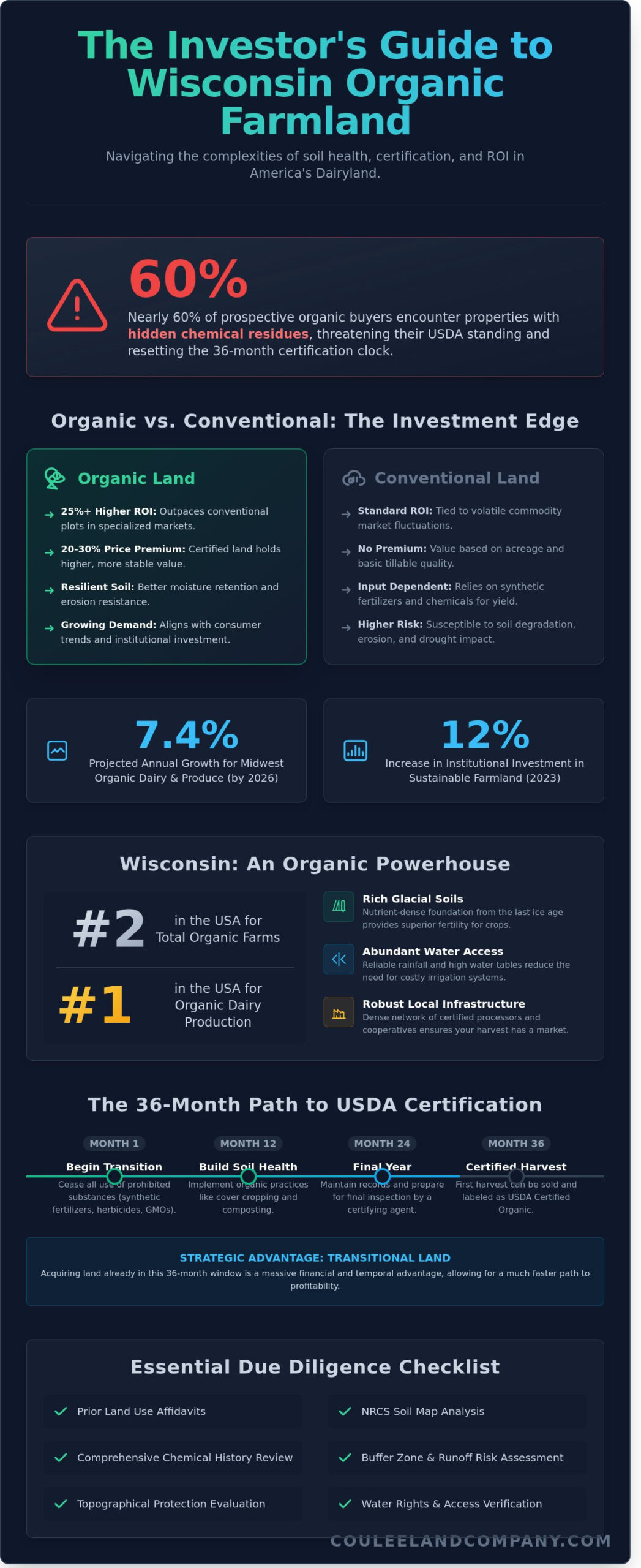
It’s a frustrating reality that nearly 60% of prospective organic buyers encounter properties with hidden chemical residues that threaten their USDA standing. We’ll help you address these hurdles with expert insights on soil health and the financial benefits of certified acreage. You’ll learn how to evaluate the 36-month transition period and why the ROI on organic land often outpaces conventional plots by 25% or more in specialized markets. This guide provides the pragmatic, results-oriented roadmap you need to secure a legacy property that’s as productive as it is pristine.
Key Takeaways
- Discover why surging demand for organic dairy and produce is driving the 2026 market trends for organic farm land for sale wisconsin.
- Navigate the complexities of USDA certification by identifying the strategic advantages of acquiring transitional land versus fully certified acreage.
- Learn how the unique topography of the Driftless Area protects your soil health and prevents chemical runoff in the heart of Bluff Country.
- Secure your investment using a professional due diligence checklist that covers everything from prior land use affidavits to NRCS soil map analysis.
- Understand how specialized land management expertise bridges the gap between high-yield organic farming and elite wildlife habitat preservation.
The Rising Value of Organic Farm Land for Sale in Wisconsin
Wisconsin isn’t just America’s Dairyland; it’s the beating heart of the nation’s organic movement. Our state’s agricultural heritage is rooted in rich, chemical-free soil that predates modern industrial farming. Today, finding organic farm land for sale wisconsin offers is about more than just acreage. It’s an investment in a legacy of soil health and productivity. The 2026 market projections indicate a 7.4% annual growth rate for organic dairy and produce in the Midwest, fueled by shifting consumer demands and a tightening supply of certified acres. This growth makes these properties a superior choice for those looking to secure land with built-in value.
In the rugged “Bluff Country” of Western Wisconsin, these properties provide a unique blend of diversified income and world-class recreation. This region is famous for its steep ridges and fertile valleys, creating micro-climates perfect for high-value specialty crops. Whether you’re looking for a small-scale vegetable operation or a sprawling organic dairy, the land here is as resilient as the people who work it. The demand for these tracts is high, and the results for owners are often transformative.
To see the potential of these properties firsthand, watch this tour of a remarkable Driftless Region farm:
Why Wisconsin Leads the Nation in Organic Farming
Wisconsin currently ranks second in the United States for the total number of organic farms, trailing only California. We lead the nation in organic dairy production, with over 450 certified farms contributing to a robust local economy. Organizations like Marbleseed, which started as MOSES in 1989, provide the technical support that keeps our farmers at the cutting edge. The state’s diverse geography supports niche organic markets through several key features:
- Glacial Soils: Rich mineral deposits from the last ice age provide a nutrient-dense foundation for crops.
- Water Access: Reliable rainfall and high water tables reduce the need for expensive irrigation systems.
- Local Infrastructure: A dense network of organic-certified processors and cooperatives ensures your harvest has a place to go.
Investment Potential of Organic vs. Conventional Land
Investing in organic land is a strategic move for long-term wealth. When looking for organic farm land for sale wisconsin buyers often prioritize the immediate ROI of established certification. Certified land often carries a price premium of 20% to 30% over conventional tillable acreage because it bypasses the grueling three-year transition period required by the USDA. This value is anchored in organic farming principles that prioritize soil biology over synthetic inputs.
In 2023, institutional investors increased their holdings in sustainable farmland by 12%. They recognize that chemical-free soil resists erosion better and retains moisture more effectively during droughts. This resilience ensures that your investment remains stable even when commodity markets fluctuate. While conventional land values can be volatile, the scarcity of certified organic ground in the Bluff Country provides a solid floor for your capital. It’s a pragmatic choice for the diligent land manager who values both the hunt and the harvest.
Understanding USDA Organic Certification and Transitional Land
Securing organic farm land for sale wisconsin involves vetting the previous owner’s chemical use as much as the acreage itself. The USDA maintains a strict 36-month “no prohibited substances” rule. This means any synthetic fertilizers, herbicides, or GMO seeds must have been absent from the soil for three full years before your first certified organic harvest. Finding a property already deep into this window is a massive advantage. We call this “transitional land,” and it represents a strategic entry point for savvy investors. You’re often able to purchase these tracts at a lower price point than fully certified ground, even if the land is only 12 months away from command-level organic premiums.
Your roadmap through this process is the Organic System Plan (OSP). This document acts as a comprehensive contract between the farmer and the certifier, detailing everything from seed sources to manure management. When we evaluate properties in the Bluff Country, we look for a clear paper trail. You’ll need signed affidavits from the previous owners confirming the land history. Without this documentation, the USDA clock resets to zero the day you take ownership, regardless of what the seller claims verbally.
The 3-Year Rule: Navigating the Transition Period
The transition timeline is unforgiving. If a prohibited pesticide was last applied on June 1, 2022, your crop isn’t eligible for the organic seal until June 2, 2025. During this gap, you’re often performing the intensive labor of organic farming while receiving conventional market prices. Evaluating Soil Health during this phase is vital to ensure the land can support a chemical-free system. University of Wisconsin research indicates that soil microbial activity needs these 36 months to stabilize. We help our clients identify “transitional premium” opportunities where the heavy lifting of the three-year wait is nearly finished.
Buffer Zones and Neighboring Land Use
Chemical drift from neighboring conventional operations is a constant risk for organic producers. To maintain certification, you must establish physical buffer zones to prevent cross-contamination. While a standard 30-foot grass strip is a common baseline, we prefer properties with natural fortifications. The rugged topography of Western Wisconsin offers unique benefits here. Thick stands of hardwoods, steep ridges, and deep coulees act as superior barriers against wind-borne spray. When scouting organic farm land for sale wisconsin, we analyze the prevailing winds and the specific crop rotations of every bordering neighbor. If you’re looking for a property with these built-in protections, our team can help buyers find tracts that offer both privacy and production security. Protecting your soil’s integrity starts at the property line.
Evaluating Soil Health and Topography in Wisconsin’s Bluff Country
Success in the organic market depends on the physical characteristics of the dirt and the lay of the land. When you search for organic farm land for sale wisconsin, you must prioritize the Driftless Area. This region escaped the last glacial period 10,000 years ago, leaving behind a rugged landscape of high ridges and deep valleys. This topography provides more than just scenic views; it offers a functional shield for organic growers.
The Driftless Advantage: Micro-climates and Soil Diversity
The unique “coulee” topography creates distinct micro-climates that are perfect for specialty crops. These protected valleys offer shelter from harsh winds, which is vital for high-value organic produce and delicate fruit orchards. You can explore the specific terrain of this region on our Buffalo County community page. These non-glaciated soils contain complex mineral profiles and silt loams that provide a superior foundation for nutrient-dense produce. The steep slopes also provide a tactical advantage. They naturally direct drainage away from your fields, preventing chemical runoff from conventional neighbors that could jeopardize your 36-month organic transition or permanent certification.
Essential Soil Testing for Organic Buyers
Standard N-P-K tests don’t tell the full story for an organic investment. You need a comprehensive analysis of the biological life within the soil. We recommend buyers perform specific tests for the following:
- Heavy Metals: Ensure lead, arsenic, and cadmium levels are below safety thresholds.
- Herbicide Residues: Screen for persistent chemicals like glyphosate or dicamba that may linger from previous conventional farming.
- Microbial Activity: Measure the fungal-to-bacterial ratios that drive nutrient cycling.
High Organic Matter (OM) is the engine of an organic farm. In Western Wisconsin, prime ground often shows OM levels between 4% and 7%, providing the carbon necessary to sustain a healthy ecosystem. Soil health is the primary biological asset and the true driver of long-term property value for any organic producer. Finding the right organic farm land for sale wisconsin requires a partner who understands these geological nuances. Natural water sources like spring-fed creeks or deep-aquifer wells are also superior assets. They provide clean irrigation that meets strict USDA standards without the risk of municipal chlorine or industrial contaminants found in more developed areas.
The Essential Due Diligence Checklist for Organic Land Buyers
Buying organic farm land for sale wisconsin requires a higher level of scrutiny than a standard row-crop purchase. You aren’t just buying acreage; you’re buying a documented history of stewardship that must withstand federal audits. Start by verifying the Prior Land Use affidavit from the current owner. This legal document confirms no prohibited substances, like synthetic fertilizers or certain pesticides, were applied in the last 36 months. Without this, your transition clock resets to zero on day one.
Review the NRCS Web Soil Survey maps to distinguish between tillable and non-tillable ground. A property might boast 160 total acres, but if 35% of that is classified as highly erodible land (HEL), your organic tillage options will be restricted by strict conservation plans. You also need to assess water rights. In Wisconsin, high-capacity wells pumping over 70 gallons per minute require specific DNR approvals. Test the water for nitrates; levels exceeding 10 mg/L often indicate runoff issues from neighboring conventional operations that could complicate your organic status.
Analyze the property’s proximity to organic processing hubs. Wisconsin leads the nation in organic dairy and beef, yet if your farm sits more than 60 miles from a certified handler or grain elevator, transportation costs will significantly impact your bottom line. Infrastructure matters too. Inspect grain bins for cleanliness and ensure there’s enough space to keep organic crops isolated from conventional neighbors.
Reviewing the Paper Trail: Certification History
Demand the last three years of input records, including every seed tag and fertilizer receipt. You’re looking for consistency. Check for any previous Notice of Non-Compliance from certifiers like MOSA or OCIA. These documents reveal if the previous owner struggled with buffer zone requirements or record-keeping. It’s smart to consult with Mike Law to vet the property history. He knows how to dig into the local land records to ensure the dirt you’re buying is as clean as the seller claims.
Physical Site Inspection: Beyond the View
Walk the fence lines to identify potential “hot spots.” Old fuel tanks or spray sheds can leach chemicals into the soil for 20 years or more. Evaluate the condition of perimeter fencing. For organic livestock, you need robust 4-strand high-tensile or woven wire perimeters to manage the intensive grazing rotations required by the USDA. Look for invasive species like Palmer amaranth or Canada thistle. These weeds are a nightmare for organic producers because you can’t reach for a spray jug to fix a management mistake. If 15% of a field is already infested, your labor costs for mechanical weeding will skyrocket.
Securing Your Legacy with Coulee Land Company’s Expertise
Finding organic farm land for sale wisconsin requires a broker who understands the dirt, not just the deed. Generalist realtors often overlook the specific requirements of the USDA National Organic Program, such as the mandatory 36 month transition period where no prohibited substances are applied. Missing these details can cost a buyer three years of premium crop revenue. Coulee Land Company bridges this gap by identifying properties with documented chemical-free histories that protect your investment from day one.
We leverage deep local networks to find off-market deals in counties like Pierce and St. Croix that never hit the public portals. Our team handles the complexities of Wisconsin agricultural law, including the Farmland Preservation Credit which provides tax credits of $7.50 to $10.00 per acre for participating landowners. We also navigate the nuances of agricultural easements and the Managed Forest Law (MFL) program to ensure your tax burden is minimized while your land’s conservation value is maximized.
The Hunter’s Realtor Advantage for Farmers
The best organic farms often double as the region’s premier hunting grounds. There’s a direct correlation between high-quality organic soil and the health of local wildlife. When you eliminate synthetic pesticides and focus on diverse cover crops, you create a superior nutritional base for trophy whitetails. Buffalo County leads the nation with over 150 Boone and Crockett entries, a testament to what happens when biology and land management align. You should view our specialized listings to find parcels that offer both agricultural productivity and elite hunting property management potential.
Expert Guidance from Western Wisconsin Specialists
Our team lives and breathes the Western Wisconsin landscape. We’ve spent decades building relationships in New Richmond and across the bluff country to ensure our clients get first access to the best organic farm land for sale wisconsin. Beyond tillable acreage, we’ve successfully brokered millions of dollars in agricultural and waterfront properties, proving our versatility in complex rural transactions.
We don’t just sell land; we help you secure a legacy. Whether you’re looking for a 40 acre starter farm or a 500 acre contiguous tract, our expertise ensures your closing is smooth. We understand the heartbeat of the Coulee Region because we’re part of it. Contact us today for a personalized land consultation and let’s find the property that fits your vision.
Cultivate Your Legacy in Wisconsin’s Bluff Country
Investing in the rich soil of the Driftless Area is a strategic move for your portfolio and your lifestyle. Securing organic farm land for sale wisconsin requires more than a simple search; it demands an understanding of the 3-year USDA transition period and the specific drainage patterns of the Coulee Region. You’ve seen how the right acreage combines high-yield agricultural potential with the world-class wildlife habitat that has led Buffalo County to record more Boone and Crockett whitetail entries than any other county in the nation.
Coulee Land Company stands as the premier authority for buyers seeking this dual-purpose excellence. We’re Wisconsin’s Land & Property Sales Specialists, and our team is endorsed by top outdoor industry professionals who trust our deep knowledge of Western Wisconsin’s terrain. Whether you’re evaluating a 160-acre certified organic tract or a smaller hunting parcel, we provide the pragmatic results you need. We’ll help you navigate the complexities of land management and soil health to ensure your investment thrives for generations. Your piece of the legendary Bluff Country is within reach.
Find Your Perfect Piece of Wisconsin Land Today
Frequently Asked Questions
Is organic farmland more expensive than conventional land in Wisconsin?
Organic farmland in Wisconsin typically commands a 25% premium over conventional acreage due to its established soil health and immediate earning potential. Buyers often pay more because they bypass the costly three-year transition period. In regions like the Driftless Area, this value increases when the land also features prime timber and bedding areas for trophy whitetails.
Can I hunt on my organic farmland in Wisconsin?
You can absolutely hunt on your organic farmland, and you’ll likely find the wildlife quality is superior. Organic practices encourage diverse forage and healthy soil, which attracts mature bucks looking for high-quality nutrition. Managing your property for both organic crops and trophy whitetails creates a dual-purpose investment that is highly sought after in Wisconsin’s Bluff Country.
What is the 3-year transition period for organic certification?
The three-year transition period requires that no prohibited substances, like synthetic fertilizers or pesticides, are applied to the land for 36 months before the first organic harvest. During this time, you must manage the land according to USDA standards without receiving organic price premiums. It’s a rigorous process that demands 1,095 days of documented compliance to secure your certification.
How do I verify if a property has been sprayed with prohibited chemicals?
You verify a property’s chemical history by reviewing signed affidavits from previous owners and requesting a three-year history of field applications. Soil tests for residual chemicals like glyphosate provide additional peace of mind. When searching for organic farm land for sale wisconsin, our team helps you scrutinize these records to ensure the soil meets strict certification standards.
Are there tax incentives for organic farmers in Wisconsin?
Wisconsin offers specific tax credits through the Farmland Preservation Program, providing up to $10 per acre for farmers following an approved conservation plan. The USDA’s Environmental Quality Incentives Program also provides financial assistance for organic transitions. These incentives help offset initial costs while you build a sustainable operation that supports both your bottom line and the local ecosystem.
What are the best counties in Wisconsin for organic farming?
Vernon County leads the state with over 200 certified organic farms, making it a top choice for buyers. Buffalo and La Crosse counties are also premier locations because they offer a perfect mix of fertile valley soil and rugged terrain. These areas provide the specific topography required for both high-yield organic production and world-class hunting opportunities.
Do I need a special type of financing for organic land?
While you don’t need a specific organic loan, specialized lenders like Compeer Financial and the USDA Farm Service Agency offer programs tailored to organic operations. The FSA provides ownership loans up to $600,000 with favorable rates for those purchasing organic farm land for sale wisconsin. Working with a lender who understands the value of organic certification ensures your financing matches the land’s true potential.
How much buffer space is required for organic certification?
Organic certification typically requires a 30-foot buffer zone between your crops and any adjacent conventional land. This distance prevents cross-contamination from synthetic spray drift or fertilizer runoff. In hilly regions like the Coulee Country, you might need wider buffers or natural barriers like treelines to satisfy a certifier’s requirements and protect your organic integrity.