
What if the most stunning waterfront property on the St. Croix River wasn’t a financial liability, but your strongest long-term asset? Many landowners feel a sense of dread when they see a shaded flood zone on a map, especially with new FEMA flood maps set to take effect on June 10, 2026. Navigating Flood Zones for St. Croix River Homes: Essential Advice for Buyers and Sellers is the key to turning that uncertainty into a strategic advantage. You’ve likely worried about the impact of Risk Rating 2.0 or feared that a flood designation might devalue your legacy. It’s a valid concern in a region where the median home price in St. Croix County reached $391,772 in late 2024.
This guide will help you master the complexities of riverfront designations so you can protect your investment and secure your dream property. You’ll learn how to navigate the upcoming June map updates, understand the nuances of the NFIP reauthorization deadline on September 30, 2026, and discover how assuming a seller’s policy can lock in a more favorable rate. We’re providing the clarity you need to buy or list a riverside home with absolute confidence in its true value and lasting worth.
Key Takeaways
- Identify the critical differences between high-risk Zone AE and moderate-risk Zone X to understand how local topography impacts specific riverfront parcels.
- Master the complexities of Navigating Flood Zones for St. Croix River Homes: Essential Advice for Buyers and Sellers by securing an Elevation Certificate early in your due diligence.
- Learn how to calculate the true cost of ownership by obtaining property-specific insurance quotes during the contingency window.
- Position your property for a successful sale by using transparency and detailed flood documentation to highlight the unmatched value of the riverfront lifestyle.
Decoding FEMA Flood Zones on the St. Croix River
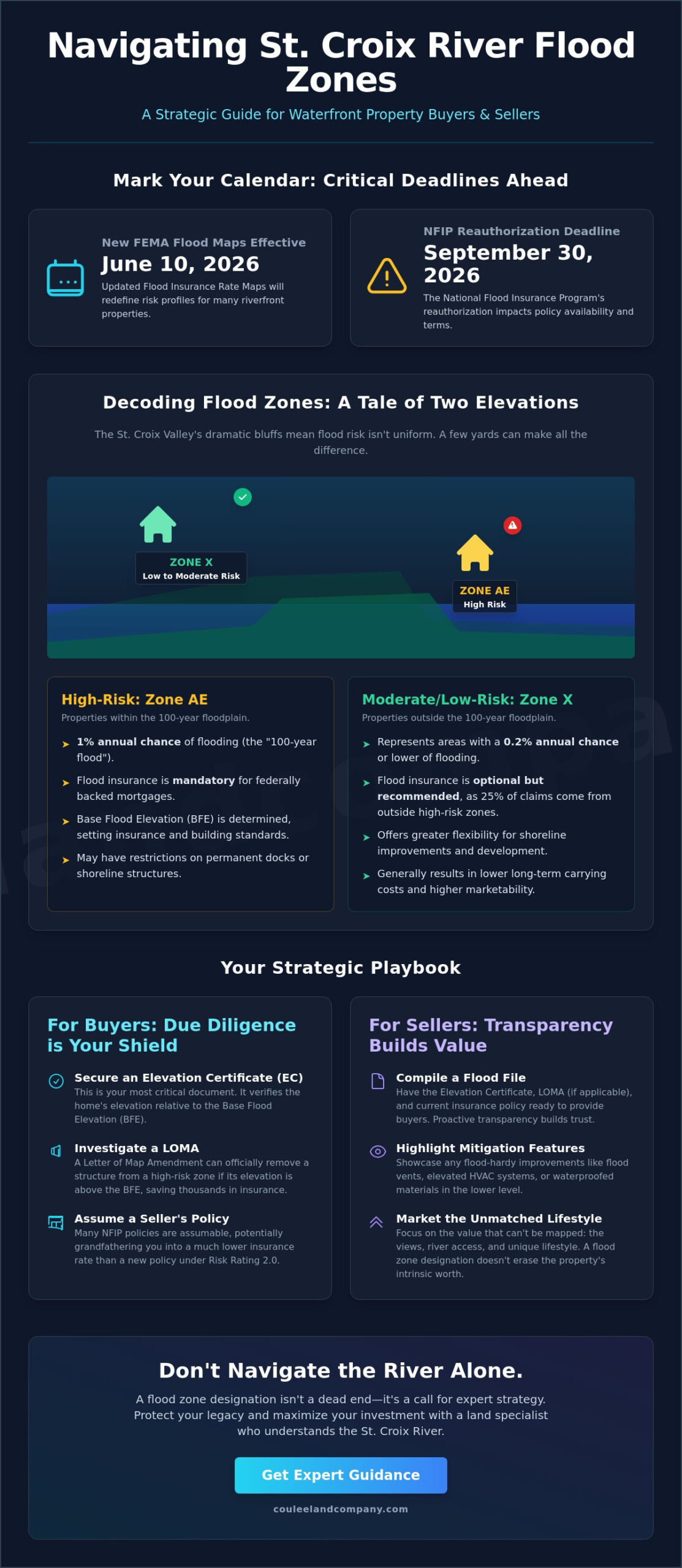
Understanding the St. Croix River means respecting its power. When Navigating Flood Zones for St. Croix River Homes: Essential Advice for Buyers and Sellers, you’ll encounter two primary designations: Zone AE and Zone X. Zone AE represents high-risk areas where a base flood elevation has been determined; Zone X covers moderate to low-risk territory. Unlike flat coastal plains, the St. Croix Valley features dramatic elevation changes. A property perched on a limestone bluff might sit in Zone X, while its neighbor just fifty yards away on a lower bench falls into Zone AE. This extreme variation is why generalized maps often fail to capture the granular reality of these riverfront parcels.
The landscape is shifting both physically and legally. FEMA is set to release updated Flood Insurance Rate Maps on June 10, 2026, which will redefine risk for many Valley residents. These updates are a critical factor in current property valuations, as a shift from Zone X to Zone AE can significantly impact long-term carrying costs. It’s vital to remember that the 100-year floodplain refers to a 1% statistical probability of flooding in any given year, not a guaranteed event that occurs once every century.
To better understand how these zones impact your specific piece of land, watch this helpful breakdown:
The Role of the National Flood Insurance Program (NFIP)
The National Flood Insurance Program (NFIP) sets the standard for how these risks are managed across the Wisconsin and Minnesota border. If you’re securing a federally backed mortgage for a home in Zone AE, flood insurance isn’t optional; it’s a mandatory requirement. Regional experts like Mike Law understand these technicalities deeply. They help clients navigate the intersection of federal law and local river reality. This expertise is vital because NFIP policies are often assumable, allowing buyers to potentially grandfather in lower rates from the previous owner.
Flood Zones vs. Recreational Utility
Flood zones dictate more than just insurance premiums. They often govern your ability to install permanent docks or shoreline structures. For those managing hunting land along the river, these designations help identify high-water refuge areas for wildlife. Proper stewardship means protecting these habitats during seasonal surges while ensuring your recreational improvements remain compliant with local ordinances. Navigating Flood Zones for St. Croix River Homes: Essential Advice for Buyers and Sellers ensures you don’t just buy a view, but a sustainable investment for generations to come.
Advice for Buyers: Due Diligence Beyond the Map
A glossy listing description rarely tells the whole story of a riverfront property’s relationship with the water. While FEMA’s Flood Map Service Center provides a necessary macro view, serious buyers must verify the Elevation Certificate (EC) during the earliest stages of due diligence. This document is the gold standard for Navigating Flood Zones for St. Croix River Homes: Essential Advice for Buyers and Sellers. It provides the exact elevation of the lowest floor relative to the Base Flood Elevation. If a structure is technically situated above the risk level but remains caught in a shaded zone on the map, you can leverage a Letter of Map Amendment (LOMA) to officially remove it from high-risk requirements. A seasoned land specialist identifies subtle hydrological indicators and historical crest data that generic residential realtors often overlook during a standard walkthrough.
Financing and Appraisal Hurdles
High-value waterfront properties face unique scrutiny during the appraisal process. Appraisers must account for the added carrying costs of insurance and how those premiums affect long-term marketability. By June 2026, expect federally backed lenders to enforce strict requirements for escrowing flood premiums. You shouldn’t rely on a seller’s old insurance bill; instead, obtain a property-specific quote during your contingency period to calculate the true cost of ownership accurately.
Evaluating Mitigation and Structural Integrity
Examine the physical bones of the home for flood-hardy features. Look for properly installed flood vents, elevated mechanical systems like furnaces and water heaters, and the use of moisture-resistant materials in lower levels. Don’t fall for the myth of permanently “grandfathered” insurance rates. Under Risk Rating 2.0, premiums move toward a full-risk rate over time, though annual increases are currently capped at 18%. For those exploring broader rural acquisitions, our guide to country homes offers additional context on managing high-value land. Securing expert buyer representation ensures you aren’t blindsided by these regulatory costs after the keys are in your hand.
Advice for Sellers: Preserving Value in a Flood-Prone Market
Sellers often fear that a flood zone designation is an automatic dealbreaker, but in the St. Croix Valley, it’s simply a variable that requires expert management. Transparency serves as your greatest value-add. By providing a recent Elevation Certificate upfront, you eliminate the “fear of the unknown” for prospective buyers. This proactive approach speeds up the sale by providing the data needed for insurance quotes immediately. When Navigating Flood Zones for St. Croix River Homes: Essential Advice for Buyers and Sellers, successful listings shift the narrative from regulatory hurdles to the unmatched recreational utility of the land. Documenting your mitigation efforts, such as the installation of flood vents or the elevation of mechanical systems, provides tangible proof of property stewardship and structural integrity.
Positioning your property as a premier hunting or recreational asset ensures that the land’s intrinsic value transcends its flood map status. While the river’s edge may be subject to seasonal changes, the world-class habitat it creates is a permanent draw for outdoor enthusiasts. You can provide peace of mind by sharing resources like the National Park Service’s data on St. Croix River high water conditions, which helps buyers understand historical patterns versus modern risk.
Marketing the St. Croix Lifestyle
The St. Croix Riverway is a legendary corridor for trophy whitetail and elite smallmouth bass fishing. Your marketing should lead with these high-value attributes. Use professional photography to clearly illustrate the home’s elevation relative to the riverbank, proving that “river life” doesn’t have to mean constant risk. For a deeper dive into maximizing your return on these unique parcels, consult our guide on selling hunting land in Wisconsin to ensure your property stands out in a competitive market.
Navigating Disclosures and Legal Requirements
Accurate flood history disclosure is non-negotiable for protecting yourself from post-sale litigation. Honesty builds trust and attracts the right buyer who understands the landscape. Consulting with a regional expert like Bryan Lemke ensures your listing is positioned for maximum market appeal while remaining fully compliant. Navigating Flood Zones for St. Croix River Homes: Essential Advice for Buyers and Sellers requires a team that understands the dirt as well as the data, ensuring your legacy is passed on with confidence.
Secure Your Legacy on the St. Croix River
The St. Croix River Valley offers a lifestyle that few other regions can match. Understanding the nuances of FEMA designations and preparing for the June 2026 map updates shouldn’t be a source of stress. Instead, it’s a strategic part of responsible property stewardship. By prioritizing early due diligence through Elevation Certificates and focusing on the unmatched recreational value of these parcels, you can move forward with absolute certainty. Navigating Flood Zones for St. Croix River Homes: Essential Advice for Buyers and Sellers is about more than just insurance; it’s about protecting the dream of owning a piece of this iconic landscape.
Our team brings over a decade of regional land brokerage experience to every transaction. We specialize in the unique Bluff Country terrain of Western Wisconsin and maintain a deep understanding of waterfront and recreational land regulations. Whether you’re tracking trophy whitetails or seeking a quiet riverfront retreat, we have the expertise to guide you through every technicality. Explore our exclusive St. Croix River listings and connect with a land specialist today. Your dream of owning a premier riverside property is within reach when you have the right experts by your side.
Frequently Asked Questions
Does every home on the St. Croix River require flood insurance?
Flood insurance is only mandatory for properties with federally backed mortgages located within a Special Flood Hazard Area, such as Zone AE. If you own your home outright or sit in a moderate-risk Zone X, federal law doesn’t require coverage. However, many savvy riverfront owners choose to carry a policy regardless of mandates to protect their equity from unpredictable surges and seasonal high water.
Can I build an addition on a home located in a 100-year floodplain?
You can build an addition, but it must adhere to rigorous local zoning ordinances and FEMA’s substantial improvement rules. If the cost of your project exceeds 50% of the home’s market value, you’re often required to bring the entire structure up to current flood-protection standards. This typically involves elevating the lowest floor above the Base Flood Elevation to ensure long-term structural integrity and compliance.
How much does flood insurance typically cost for a St. Croix River home?
Premiums depend on your specific property’s risk profile under Risk Rating 2.0, though state averages provide a helpful baseline. As of October 2025, the average annual rate in Wisconsin was $651, while Minnesota’s average reached $1,058 per year. Factors like your home’s distance from the river and its foundation type will ultimately determine your individual quote rather than just the zone on a map.
What happens if the FEMA maps change after I buy my property?
A map update that moves your property into a high-risk zone usually triggers a mandatory insurance requirement from your lender. Navigating Flood Zones for St. Croix River Homes: Essential Advice for Buyers and Sellers means preparing for the new maps effective June 10, 2026. You can often mitigate cost increases by assuming a seller’s existing policy or filing for a Letter of Map Amendment if your structure sits on naturally high ground.