
You can plant the most lush food plots in Buffalo County, but if your land lacks high-security cover, you’re likely just feeding the neighbor’s mature bucks after the sun goes down. It’s a frustrating reality for many landowners in Western Wisconsin’s bluff country. You see the world-class genetics on your trail cameras at midnight, yet your daylight sightings remain sparse. This often stems from a lack of strategic native grass planting for deer bedding near your primary food sources. We understand that a property without a secure sanctuary is essentially a pass-through, especially when the winter winds begin to bite.
This guide will show you how to transform your acreage into a premier whitetail sanctuary using specific plantings designed for our rugged regional terrain. By creating the thermal cover and security mature bucks crave, you’ll see a dramatic shift in herd behavior. We’ll cover everything from the specific species like Switchgrass and Big Bluestem needed for winter standability to the 2026 CRP enrollment deadlines. This roadmap is designed to help you increase your daylight sightings and significantly boost your long-term property value.
Key Takeaways
- Learn why native warm-season grasses are the gold standard for horizontal cover, offering superior thermal protection that stands up to heavy Wisconsin snow.
- Discover the strategic advantage of placing bedding areas on the leeward sides of ridges and in transition zones to keep mature bucks on your property during daylight hours.
- Master the critical “kill it twice” site preparation technique to ensure your native grass planting for deer bedding thrives without competition from invasive fescue.
- Understand how established sanctuaries and high-security cover act as a primary value-add, significantly increasing the market demand and resale price of hunting land.
- Develop a long-term land stewardship plan that transforms your acreage into a self-sustaining sanctuary capable of holding world-class whitetails through the late season.
The Science of Security: Why Native Grasses are Critical for Bedding
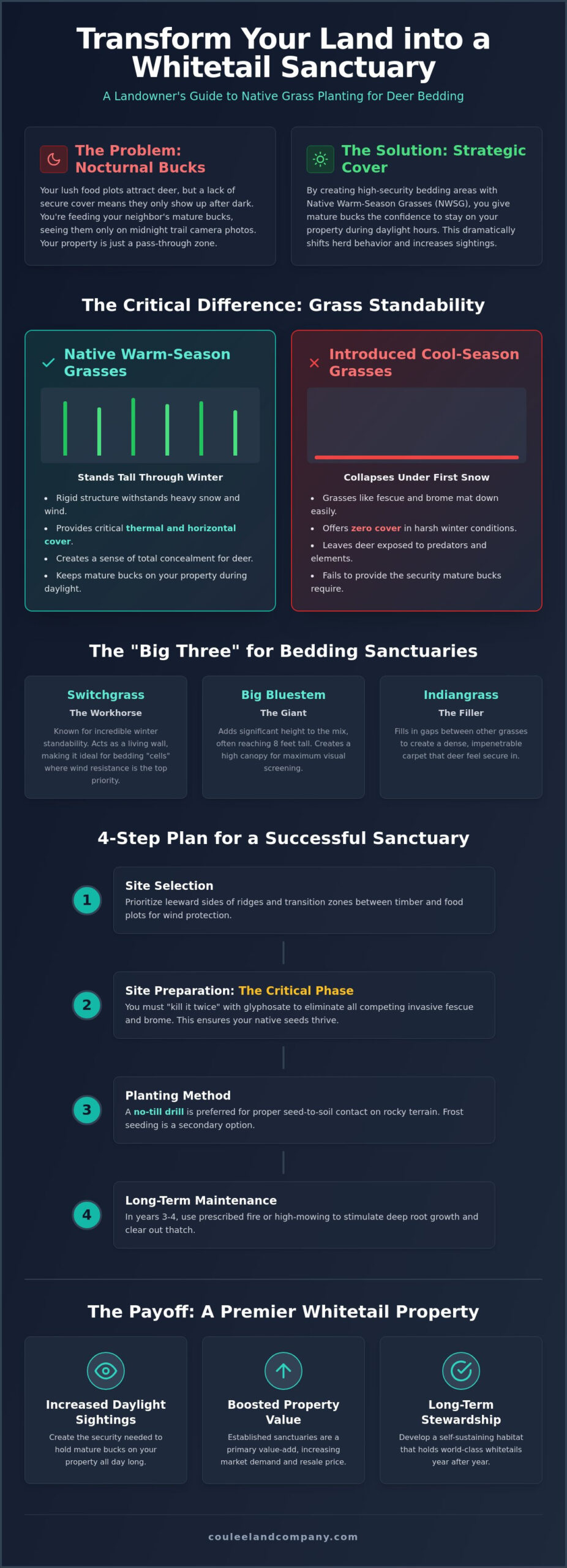
Mature bucks in Western Wisconsin prioritize horizontal security above all else. While a woodlot might look appealing to a human eye, a four year old buck views open timber as a vulnerability. Native warm-season grasses (NWSG) represent the gold standard for creating this necessary security. Unlike cool-season grasses that mat down under the first frost, NWSG provides a rigid, upright structure that persists throughout the harshest winters. This structural integrity creates the “thermal cover” required to shield deer from biting winds and heavy snow loads common in the Coulee Region.
To better understand how these systems function on the ground, watch this helpful video:
The psychological impact of stem density cannot be overstated. A buck feels invisible when surrounded by six foot tall stalks. This high-density environment allows him to bed with the wind at his back, using the thick grass to detect any movement from the front. Effective native grass planting for deer bedding relies on this sense of total concealment. It’s important to remember that these habitats require patience; a successful stand typically takes two to three growing seasons to reach its full potential. For those managing high-value hunting properties, this wait is a necessary investment in long-term sanctuary quality.
The Big Three: Switchgrass, Big Bluestem, and Indiangrass
A diverse mix within the tallgrass prairie ecosystem provides the best results for year-round bedding. Switchgrass is the workhorse of the group, known for incredible winter standability and its ability to act as a living wall. Big Bluestem adds significant height, often reaching eight feet, while Indiangrass fills in the gaps to create a dense, impenetrable carpet. While a mix is often ideal, many land managers in Buffalo County utilize a Switchgrass monoculture for specific bedding “cells” where wind resistance is the top priority.
Native Grass vs. Introduced Species: The Standability Factor
Introduced species like brome or fescue are failures in a bedding context. These grasses collapse under the weight of the first heavy Wisconsin snow, leaving deer exposed to the elements and predators. NWSG provides essential visual screening that keeps deer from being spooked by neighbor activity or distant road traffic. This screening effect is what keeps big bucks on your side of the fence during daylight hours, turning a standard piece of land into a true sanctuary.
Designing the Bedding Area: Layout and Species Selection for Western Wisconsin
Successful native grass planting for deer bedding in the Coulee Region requires a deep understanding of topography and wind. You can’t simply broadcast seed and expect a world-class sanctuary to appear. The process begins with a four-step strategic plan tailored to our rugged landscape:
- Step 1: Site Selection. Prioritize the leeward sides of ridges and the transition zones between steep timber and valley food plots. These areas offer the best protection from prevailing winds.
- Step 2: Site Preparation. This is the most critical phase. You must “kill it twice” with glyphosate. Eliminating every trace of invasive fescue and brome ensures your native seeds don’t face impossible competition.
- Step 3: Planting Methods. For the rocky, thin soils common in Buffalo County, a no-till drill is the preferred method for proper seed-to-soil contact. Frost seeding is a secondary option if the ground is prepped perfectly the previous fall.
- Step 4: Maintenance. During years three and four, use prescribed fire or high-mowing to stimulate deep root growth and clear out thatch.
The “Pockets and Browse” Strategy: Surpassing Generic Seed Mixes
A solid wall of grass is often a desert for whitetails. To create a truly functional bedding area, aim for a mix that includes 40 to 60 percent internal pockets of broadleaf weeds and briars. Use surveying flags to map out specific “bedding rooms” within a larger field before you plant. After the grass is established, you can use grass-specific herbicides to release native forbs within the stand. This creates a “bed and breakfast” effect where bucks can browse without leaving the safety of the tall cover. If you are preparing a property for the market, these sophisticated habitat improvements can significantly increase interest from high-tier land buyers looking for turnkey sanctuaries.
Bluff Country Specifics: Managing Bedding on Slopes
In our region, native grasses are the best tool for “softening” the hard edge between bluff timber and flat valley fields. Strategic native grass planting for deer bedding on these slopes allows bucks to catch “thermal drift.” This upward air movement lets a buck scent-check the entire valley floor from his bed while his eyes cover the ridge above. Positioning your tallgrass stands to take advantage of these currents is what separates a generic field from a high-security sanctuary.
Maximizing Your Land’s Potential: Habitat Improvements and Property Value
A property with established bedding areas isn’t just a piece of dirt; it’s a high-performance asset. In the competitive market for selling hunting land in Wisconsin, a proven sanctuary often commands a premium price. Buyers aren’t just looking for raw acreage. They are searching for a property that holds mature bucks during daylight hours. When you invest in native grass planting for deer bedding, you are building equity that translates directly to a higher resale value and a more desirable listing.
High-quality bedding creates a “sanctuary” reputation that precedes the property’s sale. We recommend keeping detailed records of your land management efforts. Document the planting dates, seed mixes, and the two to three year establishment phase with high-quality photos. This level of transparency builds incredible trust with high-tier buyers who value stewardship. Coulee Land Company specializes in identifying properties with the specific soil types and topography needed to maximize these improvements, ensuring your sweat equity isn’t wasted on poor ground.
Strategic Placement Near Food Plots and Travel Corridors
Effective habitat design uses native grass as more than just a place to sleep. Tall stands of switchgrass act as vital visual screens, allowing you to access your stands without being detected by deer. You can also use these thick grass walls to funnel movement. By blocking certain paths and leaving strategic openings in the grass, you can direct mature bucks past your preferred Buffalo County hunting stand sites with surgical precision.
The ROI of a Sanctuary: Why Buyers Pay More
A property that “holds deer” consistently outperforms pass-through properties in our regional market. In Western Wisconsin, the difference between a farm that deer visit and one they live on can be significant in terms of market value. Serious hunters want the confidence that a world-class whitetail is spending its day on their side of the fence. We encourage you to consult with Mike Law or Bryan Lemke to evaluate your land’s potential. Our team understands the nuances of Bluff Country and can help you turn your acreage into the premier sanctuary it deserves to be.
Secure Your Bluff Country Sanctuary
Establishing a high-security sanctuary is a long-term commitment that yields dividends both in the tree stand and on your property’s balance sheet. By focusing on species diversity and strategic topographical placement, you’re doing more than just growing grass. You’re creating a permanent home for the region’s top-tier genetics and ensuring your land remains a destination rather than a pass-through for mature bucks.
Successful native grass planting for deer bedding requires a blend of biological science and regional intuition. Our team of land specialists brings deep regional expertise in the Bluff Country whitetail market to every property evaluation. We have extensive hands-on experience with Wisconsin land management for wildlife, helping you identify exactly where habitat improvements will have the greatest impact on daylight buck movement and overall property value.
Whether you’re looking to enhance a family legacy or prepare a tract for a record-breaking sale, your vision deserves an expert partner who knows the soil as well as the market. View our exclusive hunting property listings in Western Wisconsin to find your next project. Your legacy in the bluffs begins with the first growing season.
Frequently Asked Questions
How many acres of native grass do I need for a deer bedding area?
A functional bedding sanctuary should ideally encompass at least 2 to 5 acres to provide the horizontal security mature bucks require. While smaller pockets of half an acre can serve as transition cover, larger blocks are more effective at buffering against the shifting thermals and unpredictable winds of the Coulee Region. In Buffalo County’s rugged terrain, larger stands ensure that the center of the bedding area remains undisturbed even if the edges are exposed to peripheral noise or movement.
What is the best time of year to plant native grass for deer?
Late spring, specifically from mid-May through June, is the optimal window for planting native warm-season grasses in Western Wisconsin. These species require soil temperatures to consistently reach 60 degrees Fahrenheit for successful germination. Planting too early in the cold, damp soils of April often leads to seed rot or allows cool-season invasive grasses to outcompete your native mix before it has a chance to take hold.
Will deer bed in switchgrass the first year it is planted?
Deer rarely utilize a native grass planting for deer bedding during its first growing season because the plants prioritize deep root establishment over vertical growth. You’ll likely only see 6 to 12 inches of top growth in year one, which doesn’t offer enough concealment for a mature buck. Significant bedding activity typically begins in the second year, with the stand reaching its full potential as a high-security sanctuary by the third or fourth season.
Do I need to mow my native grass bedding area?
Mowing is a critical management tool during the first two years of establishment to prevent broadleaf weeds from shading out your young native seedlings. During this phase, you should mow to a height of 6 to 8 inches whenever weeds reach a foot tall. Once the stand is mature, you don’t need to mow annually. Instead, use prescribed fire or high-mowing every 3 to 5 years to remove accumulated thatch and stimulate vigorous new growth.