
What if the thickest cover on your back forty isn’t actually protecting your deer herd, but is instead a silent thief stealing your property’s potential? Managing invasive species on wisconsin property is more than just a weekend chore; it’s a strategic reclamation of the native habitat required to grow and hold trophy whitetails in the heart of Bluff Country. You’ve likely felt the frustration of buckthorn choking out native forage or the fear of using the wrong chemicals on a landscape you’ve spent years cultivating. It’s easy to feel overwhelmed when the workload on large acreage seems never-ending.
We understand that your land is a legacy, and we’re here to help you protect it. This guide provides a clear, multi-year plan to identify, control, and eradicate invasive species while staying compliant with the latest 2026 Wisconsin DNR Chapter NR 40 updates. You’ll learn how to transform a tangled mess into a high-value hunting paradise through proven stewardship. We’ll cover everything from financial assistance programs like the 2026 Environmental Quality Incentives Program to the specific steps needed to boost your property’s resale value by restoring its natural productivity.
Key Takeaways
- Learn to identify the aggressive invasive species specific to Wisconsin’s Bluff Country ecosystems to prevent a total collapse of your native habitat.
- Implement a professional four-step framework for managing invasive species on wisconsin property that focuses on mapping, containment, and long-term monitoring.
- Adopt a multi-year management mindset that treats land reclamation as a strategic marathon to ensure permanent results on large acreage.
- Discover how to effectively transition from eradication efforts to establishing elite whitetail habitat that holds trophy bucks year-round.
- Understand the critical link between diligent land stewardship and maximizing the market value of your recreational or hunting property.
Identifying and Prioritizing Invasive Species on Your Wisconsin Property
In the rugged terrain of Wisconsin’s Bluff Country, the health of your land is measured by the diversity of its native plants. Invasive species are non-native organisms that aggressively outcompete vital native forage like acorns and berry-producing shrubs, fundamentally altering the local ecosystem. Managing invasive species on wisconsin property is a critical priority because early detection is the only way to prevent a total habitat collapse. Waiting until a species is fully established usually means the battle for your understory is already lost.
Beyond the ecological toll, there is a significant economic reality for landowners. Property choked with invasive brush often sells for significantly less than land with well-managed timber and healthy native growth. Understanding the broader impact of Invasive species in the United States helps frame why our local efforts in the Coulee Region are so vital for maintaining your investment’s value. It’s a hard truth: record-book bucks don’t live in buckthorn thickets.
To better understand how to spot these threats on your own acreage, watch this helpful video from the Wisconsin First Detector Network:
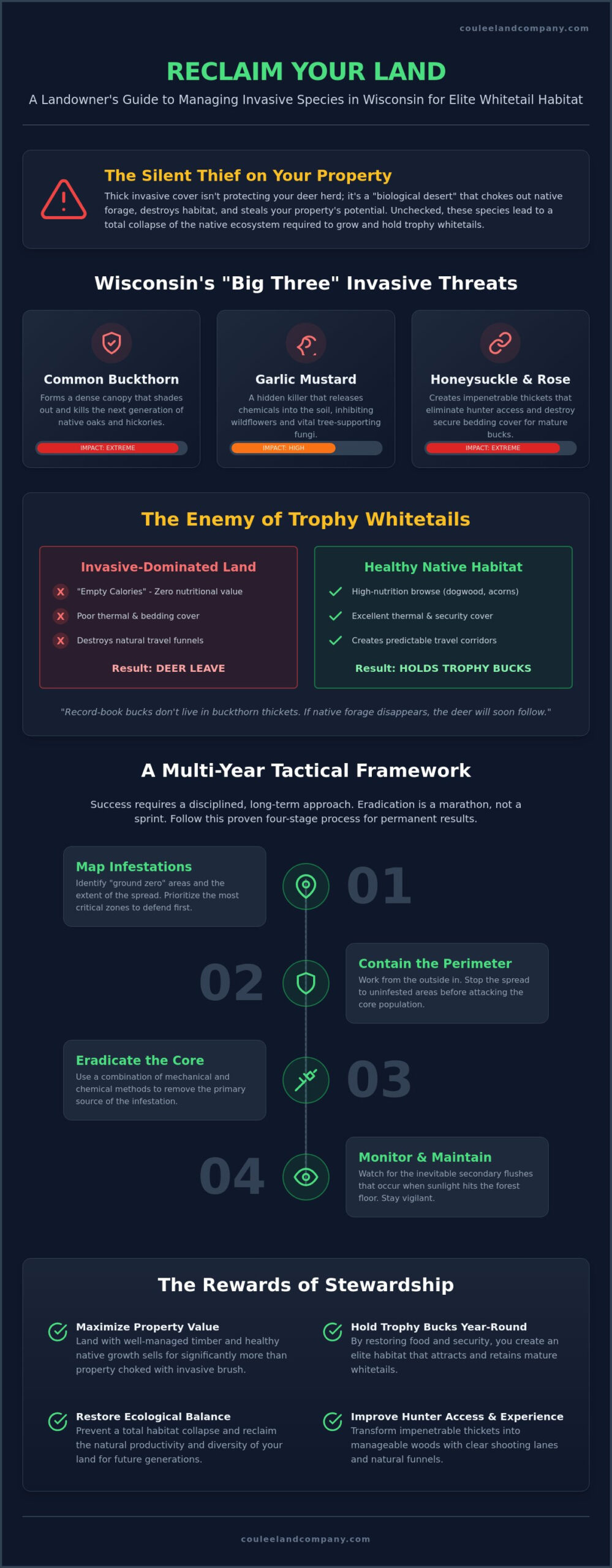
The “Big Three” Threatening Wisconsin Hunting Land
Managing invasive species on wisconsin property often begins with identifying these three primary offenders that degrade our local forests:
- Common Buckthorn: This aggressive shrub creates “biological deserts” by forming a dense canopy that shades out the forest floor. It prevents any native oak or hickory seedlings from taking root, eventually killing the next generation of your timber.
- Garlic Mustard: A hidden killer of soil health, this plant releases chemicals that inhibit the growth of native spring wildflowers and the fungi that trees need to thrive.
- Multiflora Rose and Honeysuckle: These species create impenetrable thickets that ruin hunter access and destroy the high-quality bedding cover that mature bucks require for security.
Why Invasives are the Enemy of Trophy Whitetails
Invasive plants are essentially empty calories for wildlife. They offer zero nutritional value compared to native browse like dogwood or viburnum. When invasives take over, you lose the thermal cover and natural funnels created by native saplings. Effective habitat management for trophy whitetails requires a proactive approach to ensure your woods provide the food and security that record-book bucks demand. If the native forage disappears, the deer will soon follow.
Tactical Control Methods for the Wisconsin Landowner
Managing invasive species on wisconsin property requires a fundamental shift in perspective. You aren’t just weeding a garden; you’re conducting a multi-year tactical campaign. Eradication is a marathon, not a sprint, and success depends on a disciplined framework. Most experts recommend a four-stage approach: map your infestations to identify the “ground zero” areas, contain the perimeter to stop further spread, eradicate the core populations, and monitor for the inevitable secondary flushes that occur once sunlight hits the forest floor.
When dealing with woody stems like buckthorn or honeysuckle, timing is your greatest ally. The winter window is particularly effective for chemical treatments because native plants are dormant, making it safer to use herbicides without damaging desirable species. Basal bark applications involve spraying an oil-based herbicide directly on the lower trunk, while the cut-stump method requires applying chemical to a fresh chainsaw cut. Both are highly effective when executed correctly according to Wisconsin’s invasive species rule. This strategic timing ensures you’re killing the target while the rest of the woods sleeps.
Mechanical vs. Chemical: Choosing Your Battle Plan
Choosing the right tool depends on the scale of the infestation and your physical capacity. Manual pulling works best for early-stage garlic mustard, but large-scale buckthorn often requires heavy machinery like forestry mowers to clear the way for treatment. For chemical control, always prioritize safety and water quality by using DNR-approved herbicides like Glyphosate or Triclopyr. A well-equipped DIY landowner needs a high-quality backpack sprayer, sharp loppers, and a reliable chainsaw to make real progress on a weekend work session.
The Role of Prescribed Fire and Professional Contractors
Prescribed fire is a powerful tool that resets the clock on many invasives while stimulating the native seed bank to thrive. However, the steep coulees and limestone bluffs of Buffalo County present unique challenges that can quickly overwhelm a solo landowner. If you’re facing massive infestations on vertical terrain, calling in professional contractors is often the most cost-effective move to reclaim your land. If you’re searching for a property where the hard work of habitat restoration has already begun, explore our current hunting properties to find your next legacy tract.
Reclaiming Your Land: From Eradication to Elite Habitat
Managing invasive species on wisconsin property isn’t just about what you kill; it’s about what you cultivate in its place. Once you’ve successfully removed the “Big Three” mentioned earlier, you face a critical window where the soil is vulnerable. Nature doesn’t tolerate a vacuum. If you leave the forest floor bare, you risk a secondary invasion of even more aggressive weeds that thrive on the newly available sunlight. Transitioning from eradication to elite habitat creation requires a proactive planting strategy that replaces invasive brush with high-quality native forage and security cover.
This transition is where you turn a liability into a legacy. In Western Wisconsin’s competitive market, diligent land stewardship is a primary differentiator when selling hunting land in Wisconsin. Savvy buyers aren’t just looking at acreage; they’re evaluating the health of the timber and the quality of the browse. Properties with a documented history of invasive management consistently command higher prices because they offer immediate hunting utility and long-term ecological stability. Expert land management ensures your property stands out as a premier destination for trophy whitetails.
Restoring Native Cover and Forage
The goal of any restoration project is to jumpstart the natural succession of the forest. This often involves planting native hardwoods like White Oak and Shagbark Hickory to provide a reliable mast crop for years to come. In open areas or along field edges, native warm-season grasses can provide the essential bedding and screening cover that mature bucks crave for security. This process is a vital component of comprehensive habitat management, ensuring your woods remain a sanctuary rather than a transit zone. For help Identifying invasive species that might be lurking in your new plantings, consult regional consortium resources to stay ahead of the curve.
Protecting Your Land Investment for 2026 and Beyond
A well-executed management plan acts as a powerful value-add for future buyers. It proves the land has been cared for by a diligent steward who understands the nuances of Bluff Country ecosystems. We recommend documenting your progress with detailed before and after photos from fixed points on the property. These visual records are invaluable for property listings, showcasing the dramatic transformation from a buckthorn-choked thicket to a productive oak savannah. If you’re ready to find your next stewardship project or need an expert to value your managed acreage, reach out to the team at Coulee Land Company today.
Secure the Future of Your Wisconsin Heritage
Successful land management hinges on identifying invasive threats early and applying a tactical, multi-year eradication plan. By replacing aggressive brush with native mast-producing trees and security cover, you don’t just kill weeds; you build an elite sanctuary for record-book bucks. Consistently managing invasive species on wisconsin property is the single most effective way to protect your investment and ensure your land reaches its full biological potential. This process transforms a tangled thicket into a high-value asset that will serve your family for generations.
Coulee Land Company has been the undisputed authority in Bluff Country land brokerage since our inception. Our team brings deep expertise in trophy whitetail habitat management and a professional reputation for excellence that has been featured in major outdoor media outlets. Whether you’re looking to acquire a managed tract or prepare your current property for the market, we are your expert guides. View our exclusive Wisconsin hunting land listings to see the difference that professional stewardship makes. Your vision for a premier hunting legacy starts with the first step toward a healthier, more productive landscape.
Frequently Asked Questions
Is it possible to completely eradicate buckthorn from my Wisconsin property?
Complete eradication of buckthorn is achievable, but it requires a disciplined, multi-year commitment to exhausting the seed bank. Seeds can remain viable in the soil for several years; therefore, even after you remove the mature shrubs, you must stay vigilant. Successful landowners treat the initial infestation and then return annually for follow-up spot treatments to ensure new sprouts don’t reach maturity and restart the cycle.
What is the best time of year to treat invasive species in Wisconsin?
The optimal window for treating woody invasive species like buckthorn or honeysuckle is late autumn through mid-winter. During this time, native plants are dormant, which reduces the risk of non-target damage from herbicides. Treating during the winter allows you to use basal bark or cut-stump methods with high efficacy. For herbaceous species like garlic mustard, the best time is early spring before the plant sets seed.
Are there grants or financial assistance for Wisconsin landowners to manage invasives?
Wisconsin landowners can access several financial assistance programs, such as the 2026 Environmental Quality Incentives Program (EQIP) and the Regional Conservation Partnership Program (RCPP). The first application deadline for FY2026 EQIP is October 31, 2025. Additionally, the Wisconsin DNR’s Weed Management Area | Private Forest Grant Program offers up to 75% reimbursement for eligible management costs, though you should check the latest 2026 deadlines for specific funding cycles.
How do invasive species affect the resale value of Wisconsin hunting land?
Managing invasive species on wisconsin property directly enhances resale value by improving timber health and creating elite whitetail habitat. Buyers in the Bluff Country market prioritize land that is accessible and biologically productive. A property choked with buckthorn is seen as a liability that requires immediate investment, whereas a well-managed tract is a turn-key asset. Documenting your management history provides powerful proof of stewardship that justifies a premium asking price.