
What if the secret to elite angling isn’t a faster boat or more expensive gear, but a deed to the right stretch of shoreline? In the Driftless Area, the most coveted Local Fishing Spots on WI Rivers: Properties with Access and Agent Tips are those that offer a private escape from the crowded public boat launches that frustrate so many sportsmen today. You shouldn’t have to guess about riparian rights or worry if a potential investment sits in a flood zone that ruins the fish habitat. Owning land in Wisconsin’s Bluff Country is about more than just a view; it’s about securing a multi-season recreational asset that works as hard as you do.
We understand that you’re looking for a legacy property that balances world-class fishing with the potential for trophy whitetail bucks. This guide will show you how to identify top-tier riverfront tracts and navigate the complexities of Wisconsin DNR regulations, including the specific protections of Wis. Stat. § 30.132. You’ll discover how to secure a premier river fishing corridor before the 2026-2027 general inland season opens on May 2, 2026. We’re going to break down everything from shoreline permitting to current market trends to ensure your next land purchase is a superior investment for your family’s future.
Key Takeaways
- Identify the premier river systems in Western Wisconsin, from the legendary Mississippi and Black Rivers to the world-class trout streams of the Driftless Area.
- Master the art of evaluating Local Fishing Spots on WI Rivers: Properties with Access and Agent Tips to secure a tract with superior shoreline stability and private water access.
- Learn why riverfront corridors are the ultimate travel funnels for trophy whitetail bucks, creating a high-value, dual-purpose recreational investment.
- Navigate the nuances of 2026 Wisconsin shoreland zoning and riparian rights to understand exactly what you can build and manage on your own bank.
- Gain expert insights on identifying healthy fish habitats and avoiding properties with poor drainage or high-risk erosion issues that can devalue your land.
The Premier Fishing Rivers of Western Wisconsin: Beyond Public Access
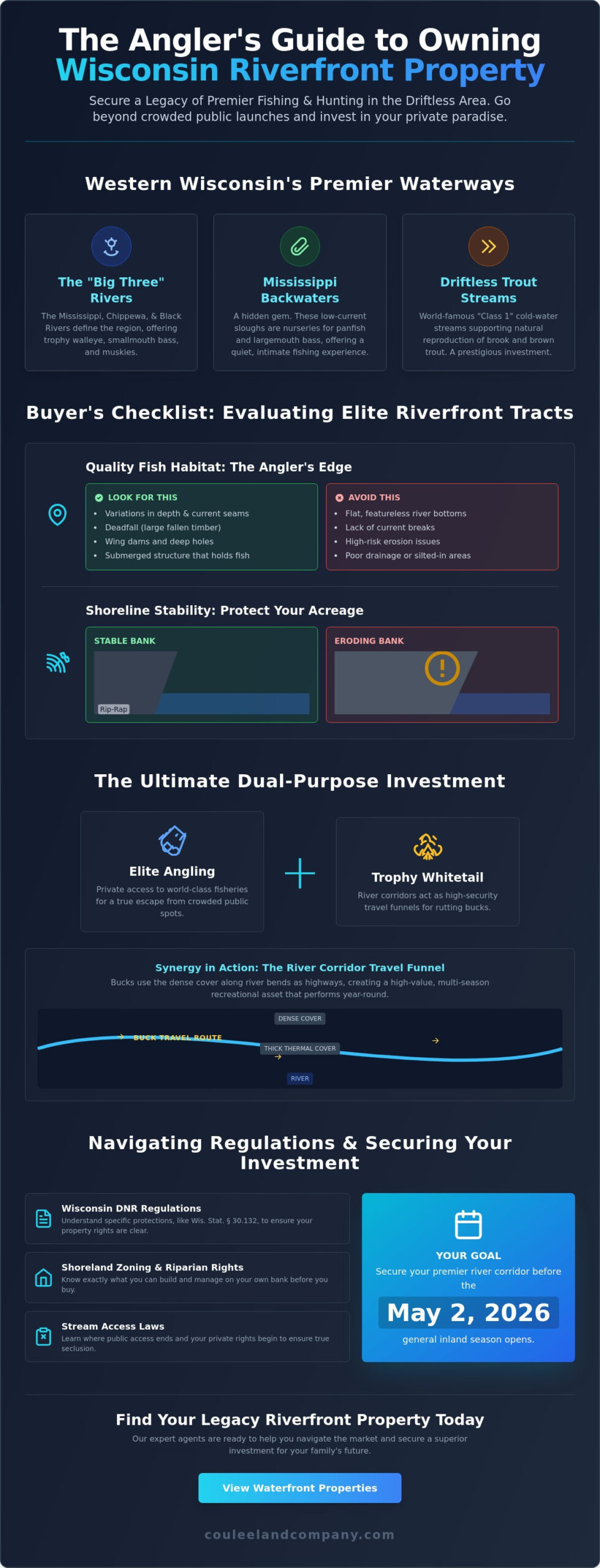
Western Wisconsin is an angler’s paradise, but the true prize isn’t found at the public docks. It’s found where the bluff country meets the water. The “Big Three” systems—the Mississippi, Chippewa, and Black Rivers—define this region. While the Wisconsin River is a legendary corridor further east, our local western waters offer a diverse mix of trophy walleye, smallmouth bass, and muskies. When we evaluate waterfront properties, we look for “Quality Frontage.” This means more than just a view; it requires specific structure like current breaks, deep holes, and submerged timber that hold fish year-round.
Owning your own stretch of bank solves the “launch ramp headache” that plagues every holiday weekend. You don’t have to wait in line or deal with crowded public spots. Instead, you have 24/7 access to secluded honey holes right out your back door. This is why Local Fishing Spots on WI Rivers: Properties with Access and Agent Tips are so highly valued by serious outdoorsmen who want to maximize their time on the water. Private access turns a standard land purchase into a world-class recreational investment.
The Mississippi River Backwaters: A Hidden Gem
The main navigation channel gets the most press, but the real action often happens in the sloughs and backwaters. These protected, low-current areas are nurseries for panfish and largemouth bass. Properties bordering these backwaters provide a sanctuary from heavy commercial barge traffic. They offer an intimate fishing experience that feels miles away from the nearest town. We focus on identifying tracts that border these quiet pockets where the water stays clear and the fish stay hungry.
Trout Stream Gems in the Driftless Region
The Driftless Area is world-famous for its spring-fed, cold-water streams. Western Wisconsin valleys are home to “Class 1” trout waters, which support natural reproduction of brook and brown trout. Owning a property with a private spring or stream access is a prestigious investment. These tracts often double as elite hunting properties, as the water provides a consistent, year-round draw for wildlife. It’s a rare combination of superior fishing and legendary whitetail habitat that defines our region’s best land.
Evaluating Riverfront Properties: What Every Buyer Should Look For
Owning a piece of the bluff country is a dream for many, but not every shoreline offers the same value. When scouting Local Fishing Spots on WI Rivers: Properties with Access and Agent Tips, you must look beneath the surface. A river bottom that is perfectly flat and featureless is often a deal-breaker for serious anglers. You want to see significant variations in depth and natural current breaks. Shoreline stability is equally critical; look for banks that are naturally stable or have been professionally rip-rapped. Signs of active erosion, like undercut trees or slumping soil, can lead to losing valuable acreage over time and may require expensive permitting to fix.
There is also a powerful synergy between elite angling and world-class hunting. River corridors act as the ultimate travel funnels, making these tracts some of the most sought-after trophy whitetail properties for sale in the state. Bucks use the dense cover along the water as high-security highways during the rut. If you find a property that combines deep river bends with thick thermal cover, you’ve found a recreational investment that performs in every season.
Habitat Features that Hold Fish
Top-tier properties feature “deadfall”—large fallen timber—and wing dams that create oxygen-rich eddies. These structures are magnets for walleye and smallmouth bass because they provide relief from the main current. During a site visit or a property drone tour, look for current seams where fast and slow water meet. These are the natural feeding lanes where trophy fish wait for a meal. Understanding Wisconsin Stream Access Laws is also vital, as it defines where the public can legally wade and where your private rights begin.
Access Logistics: Roads, Trails, and Banks
The best fishing hole in the world doesn’t matter if you can’t reach it. Evaluate the ease of getting from your cabin or home site down to the water’s edge. On larger riverfront tracts, a well-maintained trail system is essential for moving gear or launching a small boat. Determine if the bank allows for a dock or if the water is strictly “wade and cast” due to shallow depths or rock bars. If you are ready to start your search, you can browse current waterfront properties for sale in Wisconsin to see how different bank types affect property utility.
Expert Agent Tips: Navigating Regulations and Maximizing Value
Securing a premier riverfront tract requires more than just a passion for the water; it demands a firm grasp of the legalities that govern Wisconsin shorelines. As we move through 2026, understanding Wisconsin Shoreland Zoning is vital. These regulations dictate exactly what you can build near the water, from cabin setbacks to the size of your pier. When we scout Local Fishing Spots on WI Rivers: Properties with Access and Agent Tips, we prioritize tracts where the riparian rights are clear. Under Wis. Stat. § 30.132, owners of land abutting navigable waters have the right to use the water and protect their shoreline, but these rights are always subject to state permitting. We help you navigate these rules so your investment remains protected and compliant.
Smart buyers also look at the long-term potential of the land. A riverfront property in Buffalo County isn’t just a place to cast a line; it’s a premier hedge against inflation. This region dominates the record books for trophy whitetail, and the combination of elite hunting and private river access creates a rare asset class. While flooding is a natural concern, we use a combination of FEMA maps and deep local knowledge to assess risk. A property that sees occasional high water in the bottomlands can still be a superior investment if the building sites are secure and the fish habitat is robust.
Working with the DNR, Not Against Them
Successful landowners view the DNR as a partner in conservation. Shoreline restoration projects can actually improve your property’s aesthetics while creating a better aquatic ecosystem. Land management isn’t just for the timber and the deer; it applies to your river bank too. By installing natural rip-rap or planting native vegetation, you stabilize your soil and attract more fish to your private honey hole. This proactive approach ensures your land remains a world-class recreational asset for generations.
Selecting the Right Land Specialist
You need an agent who doesn’t just read a map but actually fishes these currents and understands the terrain. Our team, including experts like Mike Law and Bryan Lemke, knows the Bluff Country inside and out. We understand how river dynamics affect property value and wildlife capabilities. If you’re ready to secure your own piece of the river, contact Coulee Land Company to find your riverfront legacy property today.
Secure Your Legacy on the Water
Owning a private stretch of the Mississippi or a pristine Driftless trout stream is about more than just the catch. It’s about building a multi-season recreational asset that serves as both a world-class fishery and a premier travel funnel for trophy whitetail. We’ve explored the Big Three river systems and the critical importance of shoreline stability and riparian rights. Navigating these Local Fishing Spots on WI Rivers: Properties with Access and Agent Tips. requires a specialist who understands the land as well as you do.
Coulee Land Company brings decades of experience in Buffalo County land sales to every transaction. We’re Wisconsin’s Land & Property Sales Specialists, a team endorsed by leading outdoor television personalities for our diligent, hands-on approach. We don’t just sell property; we help you secure a piece of the famed Bluff Country that your family will enjoy for generations. Browse our current Waterfront and Riverfront Listings to find your next investment. The perfect shoreline is waiting for you.
Frequently Asked Questions
What are Riparian Rights in Wisconsin and how do they affect my fishing access?
Riparian rights are the legal entitlements of landowners whose property borders navigable waters. These rights allow you to use the water, protect your shoreline from erosion, and construct structures like piers to reach navigable depths. Under Wis. Stat. § 30.132, you have exclusive use of the bank, though the public may still boat or wade in the stream as long as they keep their feet wet. This ensures your private access to the water’s edge remains a secure part of your property deed.
Is it better to buy property on a major river or a smaller trout stream in WI?
The best choice depends on whether you prefer warm-water species or cold-water fly fishing. Major rivers like the Mississippi offer diverse opportunities for walleye and bass along with boat navigability for larger vessels. Smaller trout streams in the Driftless Area provide elite, spring-fed habitats and often act as superior travel corridors for wildlife. Both types of Local Fishing Spots on WI Rivers: Properties with Access and Agent Tips represent high-value investments that offer multi-season recreational utility.
How do I know if a riverfront property is in a high-risk flood zone?
You should start by reviewing FEMA Flood Insurance Rate Maps (FIRMs) to identify the official flood zone designation. We supplement this data with local knowledge of historical water levels and terrain elevation to find building sites that sit safely above the floodplain. While river bottomlands naturally hold water during high-flow events, a quality investment ensures that your cabin or home site remains dry. Professional land specialists can help you interpret these maps to avoid high-risk tracts.
Can I build a private boat launch on my own Wisconsin riverfront land?
Constructing a private boat launch typically requires a permit from the Wisconsin DNR and must adhere to local shoreland zoning ordinances. State regulations are designed to prevent erosion and protect fish habitats, so simple piers are much easier to permit than excavated concrete ramps. We recommend consulting with a land specialist before you buy to determine what shoreline modifications are feasible. Understanding these rules early helps you maximize the utility of your bank without facing regulatory fines.