
What if the steep, limestone cliffs that make your winter commute a bit more technical are the exact same reason you’ll see world-class whitetails from your back porch? For many outdoor enthusiasts, the decision to move here isn’t just about a house; it’s about securing a piece of the legendary Driftless Area. You’ve likely spent years dreaming of owning land where the ridges meet the sky, but you also have legitimate concerns about isolation and the practicalities of managing vertical acreage. Understanding the living in bluff country wisconsin pros and cons is essential before you sign a deed on a ridge-top retreat or a secluded valley farm.
We understand that a property’s value goes far beyond its market price. It’s about the quality of the soil, the health of the timber, and the accessibility of the terrain when the snow flies. In this 2026 update, you’ll discover the honest trade-offs of life in this unique region. We’ll cover the latest economic data, including the 1.42% effective property tax rate and current median home prices in counties like Vernon and Crawford. By the end of this article, you’ll have the confidence to choose a property that supports your recreational goals while meeting the demands of daily life in the bluffs.
Key Takeaways
- Discover why the Driftless Area’s unique geography creates world-class hunting and privacy opportunities found nowhere else in the Midwest.
- Evaluate the logistical realities of living in bluff country wisconsin pros and cons, specifically regarding winter accessibility and steep terrain management.
- Learn how to manage high-value land effectively by addressing regional challenges like erosion control and invasive species.
- Gain the confidence to choose between ridge-top or valley properties by testing your “Outdoor IQ” against the demands of the landscape.
- Understand why visiting the region during the harsh winter months is the most critical step in validating your long-term property investment.
The Pros: Why Bluff Country is the Crown Jewel of the Midwest
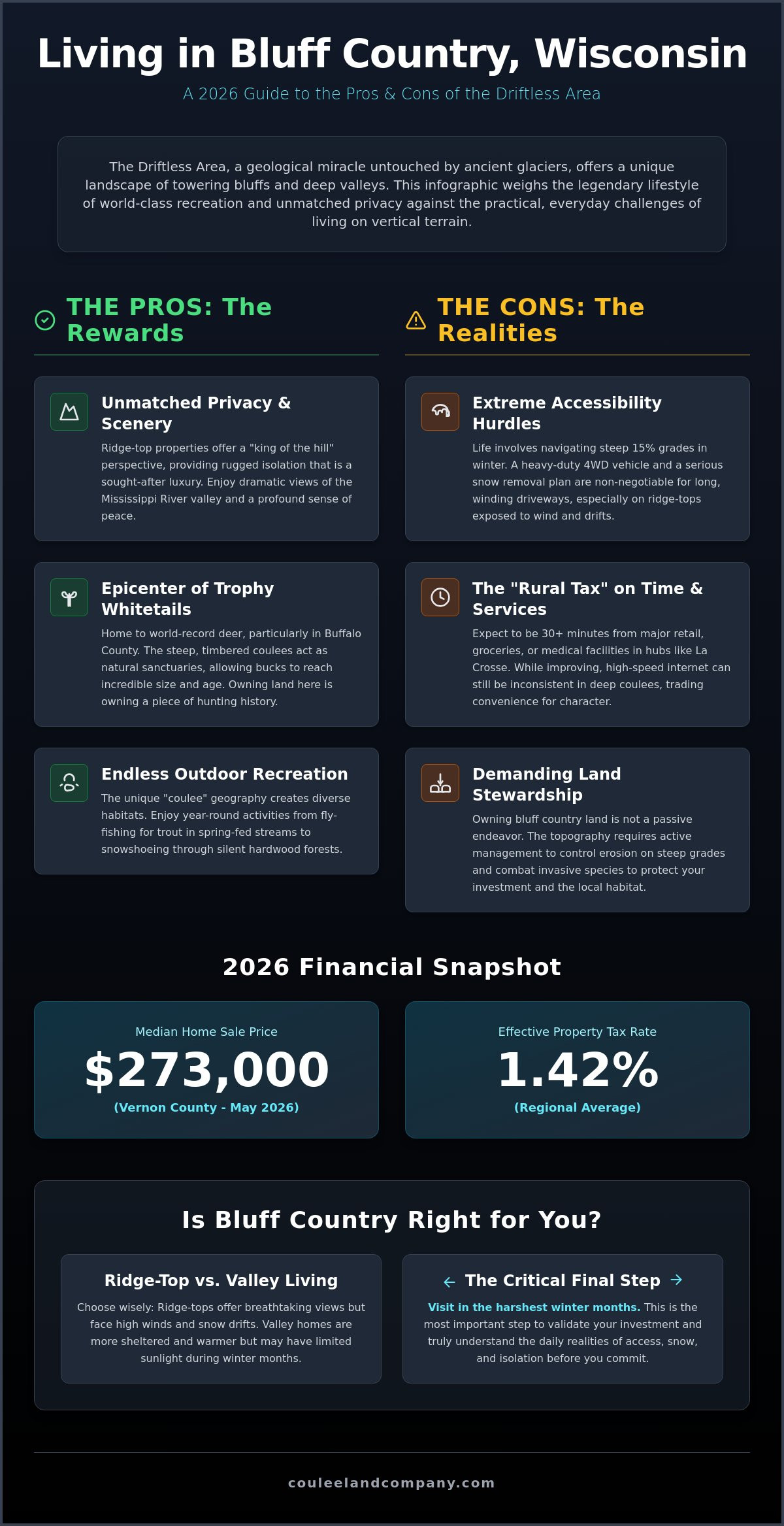
Bluff Country isn’t just a place on a map; it’s a geological miracle. While the rest of the Midwest was leveled by ancient glaciers, this region remained untouched. This unique history created the Driftless Area, a rugged expanse of towering limestone bluffs and deep, spring-fed valleys. When you’re weighing the living in bluff country wisconsin pros and cons, the visual drama of the Mississippi River valley usually lands firmly in the “pro” column. It’s a landscape that feels more like the foothills of the mountains than the traditional American heartland.
Living here offers a level of privacy that’s becoming increasingly rare in 2026. Ridge-top properties provide a “king of the hill” perspective, where your only neighbors are the eagles soaring at eye level. It’s a place where rugged isolation isn’t a burden but a sought-after luxury for those looking to escape the suburban grid. The sense of peace you find on a quiet morning in a Driftless coulee is something you simply can’t find in a standard subdivision.
To better understand the lifestyle and market dynamics of the region, watch this helpful video:
The Epicenter of Trophy Whitetail Hunting
The local culture is built on the back of the whitetail deer. This region, particularly Buffalo County, consistently dominates the Boone and Crockett record books. The steep, timbered coulees act as natural sanctuaries, allowing bucks to reach the age and size that hunters across the country only dream of. It’s not just about the harvest; it’s about a community that understands and respects property stewardship. For an outdoor enthusiast, owning land here means owning a piece of hunting history.
A Landscape Like No Other
The “coulee” geography defines the Driftless. These deep valleys and high ridges create micro-climates and diverse habitats found nowhere else in the state. Beyond the hunt, the recreation is endless. You can spend a morning fly-fishing for trout in cold, spring-fed streams and an afternoon snowshoeing through silent, snow-covered hardwoods. Evaluating the living in bluff country wisconsin pros and cons often leads to one conclusion: the natural beauty and recreational diversity are unmatched in the Midwest.
The Cons: Practical Challenges of the Driftless Landscape
The same ridges that offer world-class privacy demand a high level of respect and preparation. Owning a piece of the Driftless isn’t a passive endeavor. While the vistas from Wyalusing State Park showcase the region’s majesty, the daily reality of living in bluff country wisconsin pros and cons includes navigating 15 percent grades on a Tuesday morning in January. If your driveway is a quarter-mile of winding gravel, a standard sedan won’t cut it. You’ll need a heavy-duty 4WD vehicle and a reliable plan for snow removal before the first flake hits the ground.
There’s also a “rural tax” on your time. Living in deep coulee country often means you’re at least 30 minutes away from major retail hubs or medical facilities in La Crosse. While high-speed internet availability is improving across the region in 2026, some valley floors still struggle with consistent connectivity. You’re trading convenience for character, a bargain that requires a shift in mindset. With the median home sale price in Vernon County sitting at $273,000 as of May 2026, the entry cost is manageable, but the ongoing logistical effort is real.
Terrain and Accessibility Hurdles
Maintaining a ridge-top property is a different beast than a valley home. Ridge-tops offer the best views but leave you exposed to high winds and drifting snow. Conversely, valley homes stay warmer but may deal with limited sunlight in the winter months. You’ll need to invest in professional-grade equipment, like a tractor with a blower or a heavy-duty plow truck, to ensure you aren’t stranded when a Wisconsin storm rolls through the bluffs.
Land Stewardship Responsibilities
The topography requires active management to protect your investment. Steep grades are prone to erosion, meaning you must be diligent about maintaining water bars on your trails and monitoring soil runoff. You’ll also face a constant battle with invasive species like buckthorn, which can quickly choke out native hardwoods if left unchecked. For a deeper dive into these duties, read our Wisconsin Land Management for Wildlife: A Landowner’s Guide. If you’re looking for a tract that’s already been well-maintained, browse our latest hunting properties to see what’s available.
Is Bluff Country Right for You? Making the Decision
Deciding to call the Driftless Area home requires more than a love for a scenic view. It’s an evaluation of your “outdoor IQ.” You’ve got to ask yourself if you’re prepared to engage with the land actively rather than just observing it from a window. We view property ownership here as a legacy investment. It’s the moment you transition from being a consumer of nature to a true steward of the soil. This region’s unique agricultural landscape, characterized by its rugged terrain and specialized farming potential, demands an owner who values conservation and grit over simple convenience.
To truly grasp the living in bluff country wisconsin pros and cons, you must experience the region outside of the lush summer months. We always suggest visiting during the “gray season” of late November or the deep freeze of February. If you still find beauty in the stark silhouettes of the limestone bluffs when the mercury drops and the wind howls up the coulee, you’re likely ready for the commitment. This isn’t just a real estate transaction; it’s a lifestyle choice that pays dividends in privacy and world-class recreation.
Finding Your Perfect Pocket of the Coulee
When evaluating a potential tract, look beyond the square footage of the home. You need a checklist that addresses the physical reality of the bluffs:
- Access: Is the road maintained by the township, or are you responsible for a private, half-mile climb?
- Timber Quality: Are the hardwoods healthy and managed, or is the forest floor choked with invasive buckthorn?
- Tillable Acreage: Does the property offer enough flat ground for strategic food plots or small-scale agricultural use?
For a curated selection of properties that meet these rigorous standards, consult our Country Homes for Sale in Western Wisconsin: Your 2026 Buyer’s Guide.
The Importance of a Regional Land Specialist
A standard residential realtor might understand school districts and kitchen finishes, but they often miss the nuances that define high-value land. They won’t know how to identify primary bedding areas for trophy bucks or evaluate the productivity of specific soil types in a coulee bottom. You need an expert who lives this lifestyle daily. Our team, including specialists like Mike Law and Bryan Lemke, brings a level of regional expertise that only comes from years of boots-on-the-ground experience. We help you navigate the complexities of living in bluff country wisconsin pros and cons so your investment stands the test of time.
Secure Your Legacy in the Driftless Area
The decision to own land in this region is about finding the perfect balance between the rugged terrain and the unparalleled recreational rewards. While the logistical hurdles of winter accessibility and land stewardship are real, they are the necessary price for owning a piece of the world’s most prestigious whitetail habitat. We have explored the living in bluff country wisconsin pros and cons, from the technical demands of ridge-top maintenance to the unmatched privacy of a hidden coulee sanctuary. Ultimately, the successful buyer is one who transitions from a casual visitor to a dedicated steward of these ancient hills.
As a brokerage specializing in Buffalo County trophy whitetail land, we don’t just sell property; we share a lifestyle we live every day. Our team of authentic land specialists and hunters has a proven track record in Western Wisconsin land sales, ensuring you avoid the common pitfalls of steep-terrain acquisitions. We invite you to browse our exclusive Bluff Country listings today and take the first step toward your own Driftless retreat. Your vision of owning a high-value natural landscape is within reach, and we have the expertise to help you secure it with confidence.
Frequently Asked Questions
What is the “Driftless Area” and how does it affect property values?
The Driftless Area refers to the specific region that glaciers missed, leaving behind the steep, unglaciated terrain that defines our local market. This geography limits the amount of buildable or tillable land, which creates a natural scarcity that bolsters property values. Investors seek out these tracts because the vertical landscape provides privacy and wildlife corridors that you simply cannot replicate in the flatter, glaciated parts of the state.
Is Buffalo County really the best place for deer hunting in Wisconsin?
Buffalo County’s reputation is built on a unique combination of mineral-rich soil and a community-wide commitment to aging bucks. The culture here prioritizes letting young bucks reach maturity, which is why the region consistently dominates the record books. When evaluating the living in bluff country wisconsin pros and cons, many buyers find that the chance to hunt a managed, contiguous block of habitat outweighs any logistical challenges.
How do I manage a steep driveway in a Wisconsin winter?
Managing a vertical driveway requires professional-grade equipment and proactive maintenance. You’ll need a heavy-duty 4WD vehicle and a tractor with a blower or a plow truck to handle the drifting snow common on ridge-tops. Many residents use a mix of sand and salt for traction on gravel inclines. It’s essential to clear the snow before it packs into ice, as the steep grades leave very little room for error.
Are property taxes higher in the Bluff Country compared to the rest of the state?
Wisconsin’s tax landscape is challenging, with an average effective property tax rate of 1.42% of a home’s value. In Bluff Country, the tax burden is often balanced by the fact that the overall cost of living in rural counties like Vernon or Crawford remains at or below the national average. You’re paying for the specialized infrastructure that keeps these rugged roads open, making the tax a practical investment in your property’s accessibility.