
The dream of owning your own slice of Wisconsin’s Bluff Country-a sprawling tract for trophy whitetails or a secluded country home-can often feel just out of reach. Traditional banks can be hesitant to finance raw land, and sellers of unique properties often struggle to find qualified buyers. This is a common hurdle, but for many ambitious individuals, a land contract Wisconsin has proven to be the ideal solution to close the deal.
This powerful financing tool opens doors that conventional loans can’t, creating a direct path for buyers to secure their dream property and for sellers to attract a much wider audience. As Wisconsin’s Land & Property Sales Specialists, we’ve guided countless clients through this process. In this complete guide, we’ll demystify the legal terms, weigh the distinct advantages and risks for both parties, and provide the expert knowledge you need to confidently navigate every step. You’ll gain the clarity to make a land contract work for you.
Key Takeaways
- Discover how a land contract can unlock the purchase of a dream hunting parcel or unique property that traditional lenders may not finance.
- For sellers, learn how offering owner financing can attract a wider pool of qualified buyers and secure a faster sale, often on your own terms.
- A properly structured land contract wisconsin must contain specific, legally-binding terms to protect both the buyer and seller throughout the agreement.
- Understand why these transactions require a land specialist’s expertise, as a standard real estate agent may lack the experience to navigate the complexities involved.
What is a Land Contract and How Does it Work in Wisconsin?
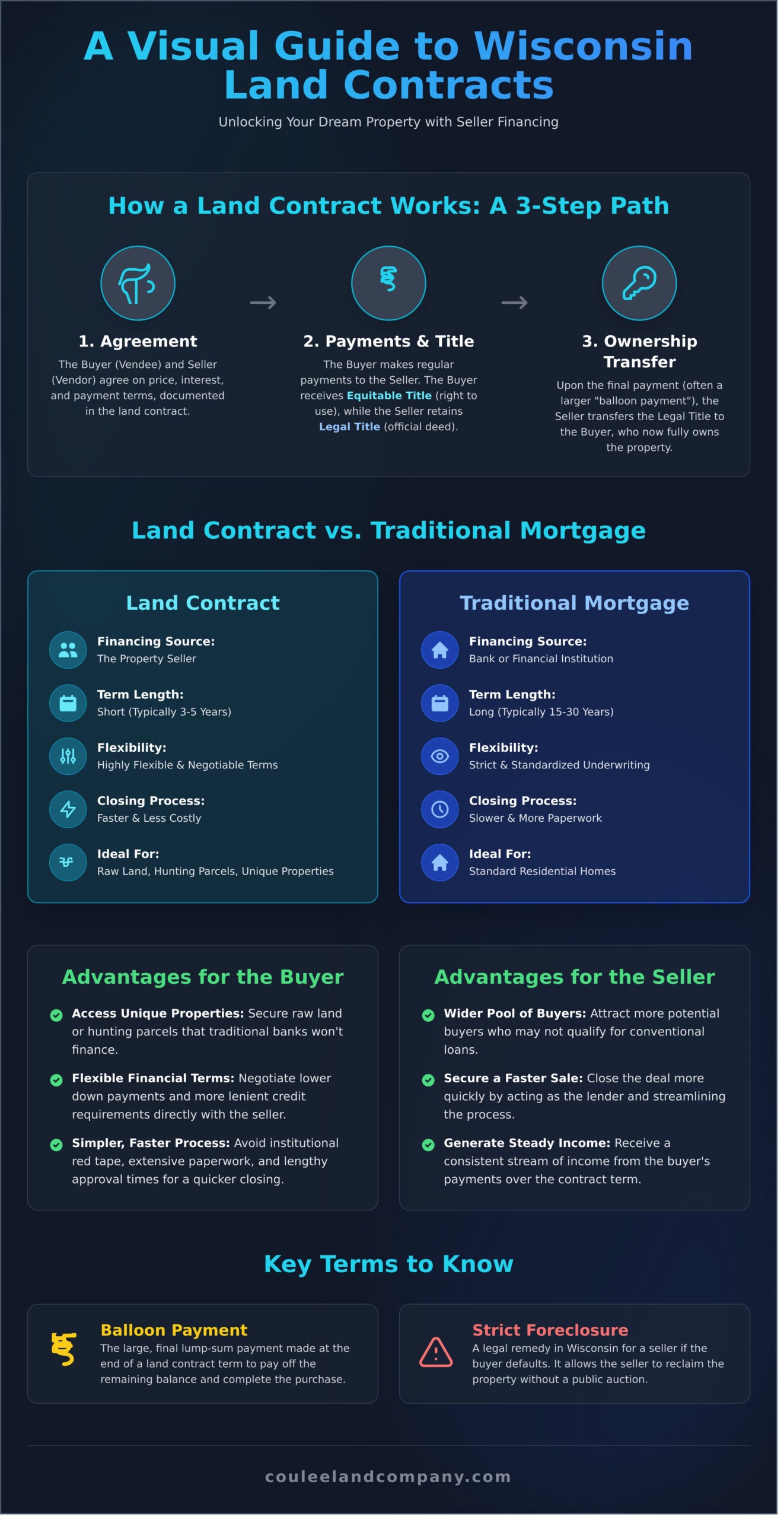
For many aspiring landowners, particularly those dreaming of their own slice of Wisconsin’s famed Bluff Country for hunting or recreation, a land contract can be a powerful and flexible path to ownership. In simple terms, a land contract is a form of seller financing. Instead of the buyer securing a loan from a traditional bank, the property owner (the seller) acts as the lender, and the buyer makes regular payments directly to them over an agreed-upon period.
The process is straightforward. The buyer and seller agree on a purchase price, interest rate, and payment schedule, which is then documented. For a more detailed overview, this resource explains What is a Land Contract? in a broader context. Typically, the buyer makes monthly payments for a set term-often a few years-which culminates in a large final “balloon payment” to pay off the remaining balance.
To see how the official recording process works, this video provides a helpful visual guide:
A critical distinction in a land contract wisconsin agreement is the difference between equitable title and legal title. Upon signing, the buyer receives equitable title. This grants them the right to occupy, use, and enjoy the property as if it were their own. However, the seller retains legal title-the actual deed and official ownership-as security until the contract is paid in full. Once the final payment is made, legal title is formally transferred to the buyer.
Land Contract vs. Traditional Mortgage
A land contract offers a pragmatic alternative to bank financing, especially for unique land parcels or buyers with non-traditional credit. The primary distinctions are clear and significant:
- Direct Financing: The seller acts as the lender, eliminating institutional red tape.
- Shorter Terms: Typically 3-5 years, culminating in a balloon payment, not a 30-year amortization.
- Flexible Underwriting: Sellers can be more flexible on down payments and credit history.
- Efficient Closing: The process is often faster and less costly than a conventional mortgage.
Key Terminology You Need to Know
Navigating a land contract requires understanding its specific language. As your expert guides, we believe in empowering you with this knowledge. These are the essential terms you’ll encounter:
- Vendor & Vendee: The legal terms for the seller and buyer, respectively.
- Equitable Title: The buyer’s interest and right to use the property during the contract period.
- Balloon Payment: The large, final sum paid to the seller to complete the purchase.
- Strict Foreclosure: A remedy in Wisconsin if the buyer defaults, allowing the seller to reclaim the property.
The Buyer’s Perspective: Is a Land Contract Right for You?
For many aspiring landowners, a land contract is the key that unlocks the door to property ownership, especially when conventional bank financing is out of reach. This alternative path is not for everyone, but for the right buyer and the right property, it represents a powerful and flexible tool. A land contract makes the most sense when you have a clear financial plan but may not fit the rigid mold required by a bank, or when you’ve found that perfect parcel of Wisconsin land that traditional lenders are hesitant to finance.
Advantages for Wisconsin Land Buyers
The primary benefit of a land contract Wisconsin buyers discover is access. It opens up opportunities that might otherwise be impossible. The advantages are significant:
- Access to Unique Properties: Conventional banks often refuse to finance raw land, especially tracts intended for recreational or hunting use. A land contract can be the only way to secure that dream hunting parcel or remote cabin location.
- Flexible Financial Terms: Sellers can offer terms that banks won’t. This often means a lower down payment, more flexible credit requirements, and a willingness to work with self-employed buyers or those with non-traditional income streams.
- A Simpler, Faster Process: By removing the bank from the equation, you eliminate underwriters, extensive paperwork, and lengthy approval times. Closing can happen much more quickly, getting you on your property sooner.
Risks and Responsibilities for Buyers
While advantageous, a land contract places significant responsibility on the buyer. It is crucial to understand the risks before proceeding. While you gain equitable title and the right to occupy and improve the land, the seller retains the legal deed until the final payment is made. This arrangement creates specific obligations, which differ from the legal duties of a land contract vendor in a traditional mortgage scenario. If you default, you risk a forfeiture action, potentially losing the property and all equity you’ve built. Furthermore, you are typically responsible for all property taxes, insurance, and maintenance from day one. Many contracts include a balloon payment, meaning you will need to secure conventional financing down the road to pay the seller in full.
Finding the Right Property
Land contracts are most common for specific types of real estate where bank financing is a known hurdle. This financing tool is particularly well-suited for acquiring unique parcels like raw Wisconsin hunting properties that don’t have an existing home, making them difficult for banks to appraise. They are also frequently used for fixer-upper country homes or properties with unconventional structures. The key to a successful land contract is working with a specialist who understands the nuances of these deals and can connect you with sellers willing to offer them.
The Seller’s Perspective: When to Offer a Land Contract
For many Wisconsin landowners, the goal is a straightforward cash sale. However, offering a land contract can be a powerful strategic tool, not a last resort. When structured correctly, it can unlock a property’s full market potential, attract a unique set of buyers, and achieve a faster sale-especially for the distinct hunting tracts and rural parcels we specialize in. By acting as the lender, you gain significant flexibility and control over the sale of your property, turning your asset into a reliable source of income.
Benefits for Wisconsin Property Sellers
Opting for a land contract wisconsin sellers can provide several distinct advantages over a traditional sale. It’s a method that allows you to dictate the terms and potentially reap greater financial rewards. Key benefits include:
- Attracting a Wider Buyer Pool: You open the door to creditworthy individuals who may not qualify for conventional bank financing, such as self-employed buyers or those seeking to purchase a unique property that lenders are hesitant to finance.
- Commanding a Higher Price: In exchange for the convenience and accessibility of seller financing, you can often negotiate a higher purchase price or a more favorable interest rate than the current market offers.
- Generating Passive Income: Instead of a single lump-sum payment, a land contract transforms your property into a consistent, long-term income stream through monthly principal and interest payments.
- Selling “As-Is” or Niche Properties: Land contracts are an incredibly effective tool for selling properties that may be difficult to finance traditionally, such as raw land, hunting cabins, or parcels with unconventional features.
Mitigating Risks as a Seller
The primary risk for any seller is the buyer defaulting on payments. However, this risk can be professionally managed with proper due diligence and an ironclad agreement. It’s crucial to vet your buyer as thoroughly as any bank would, reviewing their financial stability and background. A well-drafted contract is your greatest protection; it must clearly define default terms and outline the process for reclaiming the property, which in Wisconsin is typically strict foreclosure. Understanding the legal standing of the buyer’s interest in a land contract is crucial, and a well-drafted agreement protects your position. We always advise requiring a substantial down payment to ensure the buyer has significant equity and “skin in the game” from day one.
Expert Guidance for Sellers
Deciding to offer a land contract is a significant financial decision that requires expert guidance. A land specialist can analyze your specific property and goals to determine if seller financing is a sound strategy. Properly marketing a property with this option is key to attracting qualified, serious buyers who understand the value you’re providing. At Coulee Land Company, we help you navigate every step, from vetting potential buyers to coordinating with legal counsel for a secure closing. Learn more about our proven approach for Wisconsin land sellers and how we can position your property for a successful and profitable sale.
Essential Terms to Include in a Wisconsin Land Contract
A handshake might feel honorable, but when it comes to your dream hunting parcel or slice of Bluff Country, it’s not enough. In Wisconsin, a land contract must be in writing to be legally enforceable. This isn’t just a formality; it’s a critical legal instrument that protects both the buyer and the seller. A well-drafted contract serves as a clear roadmap for the transaction, preventing costly disputes and confusion down the trail. Think of it as the foundation for your land ownership journey.
While the specifics can vary, every solid land contract wisconsin agreement should meticulously detail the following key components. We always recommend having any contract reviewed by a qualified real estate attorney.
Financial and Payment Terms
There should be zero ambiguity when it comes to the numbers. The contract must explicitly state the complete financial arrangement, including:
- Total Purchase Price: The final, agreed-upon price for the property.
- Interest Rate & Amortization: The annual interest rate and how payments are structured over the life of the loan.
- Payment Schedule: The exact amount of each payment, the specific due date (e.g., the 1st of every month), and where to send it.
- Balloon Payment: If applicable, the amount and final due date for the lump-sum payment that settles the contract.
Property Responsibilities and Conditions
Beyond the payments, the contract must assign responsibility for the property during the contract term. This includes clarifying who is responsible for property taxes and maintaining adequate homeowner’s insurance. It should also define who handles routine maintenance versus major repairs. For rural land, an ‘as-is’ clause is common, indicating the buyer accepts the property in its current state. The agreement must also outline what happens in the event of significant property damage or condemnation.
Default Clauses and Transfer of Deed
This section outlines the rules of engagement if things don’t go as planned and clarifies the final step of the process. It must clearly define what constitutes a default (such as missing a series of payments) and detail the seller’s remedies, like foreclosure. Finally, it must specify the exact process for the seller to deliver the clear and marketable deed to the buyer upon receiving the final payment, officially transferring ownership. We also strongly advise including a clause for recording the contract with the county Register of Deeds to protect the buyer’s equitable interest in the property.
Navigating these terms requires a specialist’s knowledge. The expert team at Coulee Land Company has the experience to guide you through every step of securing your Wisconsin property.
Why You Need a Land Specialist to Navigate the Process
Navigating a land contract Wisconsin deal is a powerful way to buy or sell property, but it’s far from a standard real estate transaction. Many residential agents lack the specialized knowledge required to handle its complexities, potentially exposing you to significant risk. When you’re dealing with a valuable piece of Wisconsin land, you need an expert who understands the terrain-both literally and financially. A true land specialist protects your interests, whether you’re the buyer realizing a lifelong dream or the seller passing on a legacy.
Valuing the Property Correctly
Valuing a tract of land is fundamentally different from a residential home appraisal. A specialist looks beyond square footage to assess the land’s true, multi-faceted worth. This includes analyzing critical factors like:
- Timber value and potential harvest income.
- The quality and quantity of tillable acres for farming or food plots.
- The property’s wildlife capabilities and hunting potential, especially for trophy whitetails.
This expert analysis ensures the price is fair and sustainable, forming the solid foundation of your land contract.
Structuring a Favorable Deal
The terms of the contract are just as important as the price. A land specialist advocates for you, negotiating terms that align with your financial goals. They have a deep understanding of current market rates for interest and down payments specific to land deals, ensuring you secure a competitive and favorable structure. Our team, including seasoned experts like Mike Law, has decades of combined experience crafting contracts that work for our clients long-term.
Connecting You with the Right Professionals
A successful land contract requires a team of experts. We don’t just find the property; we help you build the right team to secure it. We connect our clients with qualified real estate attorneys who specialize in Wisconsin land transactions. This vital step ensures your contract is legally sound, properly recorded, and free of loopholes that could cause costly problems down the road. From the initial offer to the final signature, we guide you through every step of the process.
Don’t leave one of the biggest transactions of your life to chance. Partnering with a specialist from Coulee Land Company ensures your investment is protected and your dream of owning a piece of Wisconsin becomes a reality.
Navigating Your Land Contract with a Trusted Partner
A land contract offers a powerful and flexible path to property ownership, but its success hinges entirely on a meticulously crafted agreement. For both buyers and sellers, understanding the terms and navigating the legal landscape is critical-especially when your dream is a piece of Wisconsin’s legendary recreational land. The right guidance transforms a complex transaction into a confident step toward your goals.
Don’t leave your investment to chance. As Wisconsin’s Land & Property Sales Specialists, Coulee Land Company brings unmatched expertise to every land contract Wisconsin transaction. Our deep knowledge of Bluff Country recreational properties makes us a trusted partner for serious buyers and sellers who demand excellence. We ensure your interests are protected and your vision for the land becomes a reality.
Your legacy property is waiting. Explore Wisconsin land listings with our experts and take the next step with a team that knows the land like no other.
Frequently Asked Questions About Wisconsin Land Contracts
What happens if a buyer defaults on a land contract in Wisconsin?
If a buyer defaults, the seller can pursue a remedy called strict foreclosure. In this process, the court allows the buyer a specific “redemption period” to pay the remaining balance. If the buyer fails to do so within that time, the seller regains full ownership of the property, and the buyer forfeits all prior payments. This is a critical risk for buyers, making it essential to ensure you can fulfill the contract’s terms before signing.
Can a buyer get a traditional mortgage to pay off a land contract balloon payment?
Yes, this is a common and effective strategy. The land contract period allows a buyer to build equity and improve their credit profile. As the final balloon payment approaches, the buyer can apply for a conventional mortgage from a bank or credit union. Securing this financing allows them to pay the seller the remaining balance in full, at which point the legal title and deed are transferred into the buyer’s name, completing their ownership.
Who is responsible for property taxes and insurance on a land contract?
Typically, the buyer is responsible for all property taxes, insurance, and general maintenance. Even though the seller holds legal title, the buyer has “equitable title” and enjoys the use and benefits of the property, so they assume these financial duties. To prevent any confusion, these responsibilities must be clearly and explicitly defined in the written land contract agreement, leaving no room for future disputes over who pays for what.
Does a land contract have to be recorded with the county in Wisconsin?
It is highly recommended that every land contract wisconsin agreement be recorded with the county’s Register of Deeds. Recording the document provides public notice of the buyer’s interest in the property. This is a crucial step that protects the buyer from the seller attempting to take out new loans against the property or selling it to another party. It formally establishes the buyer’s claim and provides significant legal security throughout the contract term.
Is a land contract a good option for buying remote hunting land or a cabin?
A land contract can be an amazing tool for securing your dream hunting property or a remote cabin. Traditional lenders are often hesitant to finance raw land or non-traditional recreational properties. Seller financing through a land contract provides a direct path to ownership for these unique parcels. It empowers buyers to lock down a prime piece of Wisconsin’s famed bluff country and start building their legacy, even when a conventional bank loan is not an option.
What are the typical interest rates for a land contract?
Interest rates on a land contract are typically higher than rates for a conventional mortgage from a bank. This premium reflects the additional risk the seller assumes by acting as the lender. The final rate is fully negotiable between both parties but often lands a few percentage points above the current market rate. Factors like the buyer’s down payment amount, credit history, and the contract length will all influence the final agreed-upon interest rate.