
Most people see a scenic waterway, but a seasoned land manager sees the most strategic funnel for trophy whitetails in the entire Upper Mississippi River Valley. You’ve likely noticed that finding a property that balances world class fishing with elite bluff country hunting is becoming nearly impossible as demand for Western Wisconsin acreage hits record highs in 2026. Generic maps often fail to distinguish between public access and the private tracts that hold the real value, leaving many buyers frustrated by split information between Minnesota and Wisconsin sources.
This guide provides the definitive breakdown of Lake Pepin, moving past surface level tourism to give you the hard data on private land boundaries, depth charts, and the specific glacial geology that makes this 29,000 acre expanse a premier investment. We’ll analyze the unique formation of the lake; pinpoint the highest producing hunting corridors; and evaluate the current real estate market for those ready to secure a legacy property in the heart of the Coulee Region. You’ll gain the tactical knowledge needed to master this complex landscape and identify the superior land opportunities that others frequently overlook.
Key Takeaways
- Explore the 10,000-year geological history of Lake Pepin and the glacial forces that carved the region’s iconic, towering bluffs.
- Gain expert insights into the premier fishing and boating opportunities that make this area a top destination for trophy walleye and sauger.
- Navigate the historic shoreline towns of Wisconsin to experience the unique blend of artisan culture and deep-rooted Midwestern heritage.
- Evaluate the enduring investment potential of waterfront properties and bluff-side estates that provide elite access to world-class hunting grounds.
- Discover how to secure your own piece of the famed Mississippi River valley through strategic property selection in the heart of Bluff Country.
What is Lake Pepin? Understanding the Mississippi’s Greatest Widening
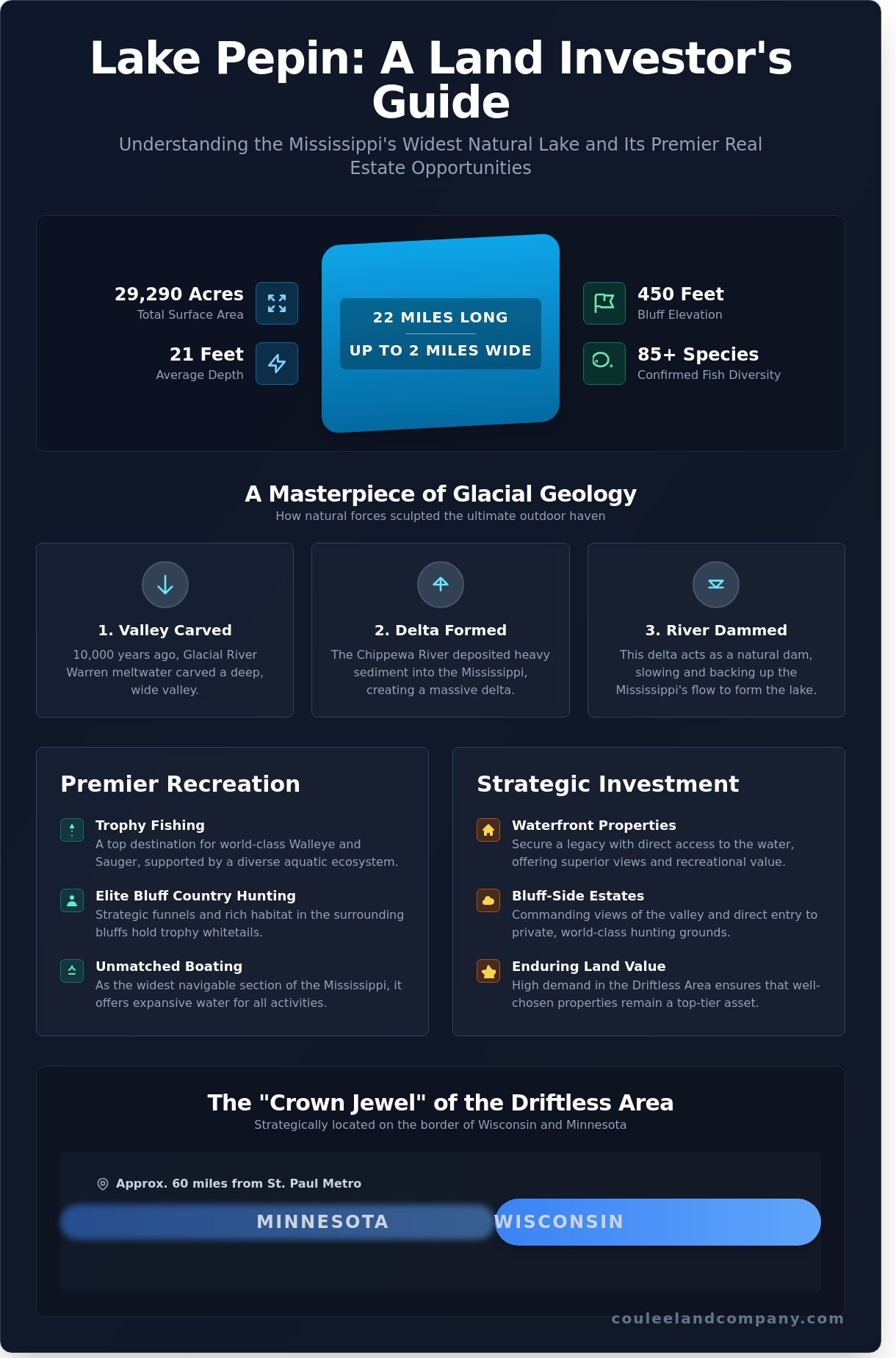
Lake Pepin isn’t just another body of water; it’s the defining feature of the upper Mississippi River valley. Stretching 22 miles from Bay City to Read’s Landing, this natural reservoir spans nearly 30,000 acres of prime waterfront properties and rugged shoreline. It marks the essential border between West-Central Wisconsin and Southeastern Minnesota, sitting roughly 60 miles downstream from the St. Paul metro area. As the widest navigable stretch on the entire 2,340-mile length of the Mississippi, it offers a scale that’s truly unmatched in the Midwest. The lake is framed by massive 400-foot bluffs that create a dramatic corridor, making it a focal point for anyone serious about Bluff Country land.
The Geography of the Driftless Giant
The lake serves as the “Crown Jewel” of the Driftless Area, a region famous for its steep limestone ridges that escaped the flattening effects of the last glacial period. According to geological data on Lake Pepin, the water maintains an average depth of 21 feet, though specific river channels can be much deeper. Its existence is a natural phenomenon caused by the Chippewa River. This fast-moving tributary carries heavy sediment into the Mississippi, creating a massive delta at the foot of the valley. This delta acts as a natural dam, backing up the Mississippi’s flow to create a lake that reaches up to 2 miles wide in several sections. For land buyers, these dimensions mean expansive views and superior recreational access that you won’t find on standard river lots.
A Natural Filter for the Mighty Mississippi
Beyond its visual appeal, the lake functions as a critical sediment trap for the entire river system. It slows the current enough to let suspended materials settle, creating a unique ecological environment that supports a massive diversity of wildlife. Wisconsin’s “South Shore” is a haven for land management enthusiasts and serious outdoorsmen. The area supports over 85 species of fish and boasts one of the highest concentrations of nesting bald eagles in the United States. For those looking at hunting properties in the surrounding bluffs, the lake provides a constant, stabilizing water source that anchors the local ecosystem and keeps trophy game in the area. The combination of deep water and high timber makes this specific stretch of the Mississippi a superior habitat for both aquatic and terrestrial species.
- Total Surface Area: 29,290 acres
- Maximum Width: 2 miles
- Average Depth: 21 feet
- Bluff Elevation: Up to 450 feet above the water line
- Fish Diversity: 85 confirmed species
Owning land here means more than just having a view. It’s about being part of a legacy landscape where the geography dictates the lifestyle. The sheer size of Lake Pepin creates a microclimate that benefits local vegetation and wildlife, making it a top-tier destination for those who value the rugged, authentic character of Wisconsin’s river country.
The Geology and Ancient History of the Pepin Valley
Lake Pepin is a geological masterpiece carved by ancient forces that began long before the first settlers arrived. Approximately 10,000 years ago, the retreat of the Laurentide Ice Sheet sent massive torrents of meltwater southward through the mid-continent. The Glacial River Warren, a colossal predecessor to the modern Minnesota River, carved the deep and wide trench that defines this valley today. You can find detailed data on the geological history of Lake Pepin in USGS reports that document how these cataclysmic floods shaped the rugged landscape we see from the bluffs. For 12,000 years, Native American cultures thrived along these shores, leaving behind a rich archaeological record of mounds and village sites. By the mid-1800s, this stretch of the Mississippi became a vital transportation corridor for the timber industry, moving millions of board feet of white pine from northern forests to downstream markets via steamboats and massive log rafts.
How the Chippewa River Created a Masterpiece
The existence of Lake Pepin depends entirely on the unique geology of the Chippewa River delta at Reads Landing. Because the Chippewa River carries a significantly heavier sediment load than the Mississippi, it deposited a massive alluvial fan that acts as a natural dam. This geological obstruction causes the Mississippi to back up, forming the 21-mile long, wide reservoir that makes this region so distinctive. It’s a living system that continues to evolve. Sedimentation rates monitored since the late 1800s show the lake is slowly filling at its northern end, proving that the landscape is still in a state of constant, natural transition.
Bluff Country: The Unglaciated Landscape
This region sits at the heart of the Driftless Area, a rugged territory famously missed by the flattening effects of the last glacial period. The towering 400-foot cliffs consist of Cambrian sandstone capped by durable Prairie du Chien Group dolomite and limestone. These vertical rock faces create the world-class hunting properties and scenic vistas that define the Coulee Region. Because the terrain is so steep and rocky, it remained largely immune to the industrial over-development seen in flatter parts of the Midwest. This preserved topography provides the thermal cover and secluded bedding areas that allow local whitetail herds to reach legendary age classes. If you’ve ever dreamed of owning a piece of this historic terrain, our team can help you find the right land for sale in this iconic valley.
Outdoor Recreation: From Trophy Walleye to Bluff Country Bucks
Lake Pepin serves as the crown jewel of the Driftless Area, offering a diverse ecosystem for both aquatic and terrestrial wildlife. It acts as a critical corridor within the Mississippi Flyway, making it a premier destination for bird watching. Every spring and fall, thousands of migratory birds, including tundra swans and bald eagles, congregate along these shores. For the serious sportsman, this region represents more than just a scenic vista; it is a high-performance environment for fishing, hunting, and world-class boating.
Angling Success on the Mississippi
Walleye and sauger are the primary targets for anglers visiting these waters. The spring run typically peaks between late March and mid-April, when fish move toward the dams and shallower gravel bars. Success often depends on targeting specific structures like wing dams and the expansive Chippewa River delta. This delta creates a nutrient-rich environment that supports massive populations of white bass and trophy-sized perch. You should consult the MN DNR regarding recreational activities on Lake Pepin to ensure you follow the reciprocal licensing rules for these border waters. Vertical jigging with fathead minnows or trolling crankbaits along the channel breaks are the most effective methods for filling a livewell during the autumn transition.
Hunting the Bluffs of Buffalo County
The rugged terrain surrounding the lake is globally recognized for producing massive whitetails. Buffalo County dominates the record books, and the proximity to the water creates unique thermal currents that savvy hunters use to their advantage. The lake acts as a massive heat sink, influencing wind patterns and scent dispersal in the adjacent coulees. Expert hunters prioritize hunting properties in this region because the steep bluffs naturally funnel mature bucks into predictable travel corridors. Owning land here isn’t just about the harvest; it’s about managing a piece of the nation’s best trophy whitetail habitat where the wildlife capabilities are truly superior.
Boating and the Birth of Water Skiing
The legacy of Lake Pepin is forever tied to the 1922 milestone when Ralph Samuelson invented water skiing. On July 2, 1922, he used two pine boards and a clothesline to skim across the surface, a feat that transformed global lake culture. Today, the lake remains a Midwest sailing mecca due to the “Pepin Winds” that sweep across its 21-mile length. Unlike smaller inland lakes, this wide expanse provides consistent gusts and deep water for keelboats. Access is convenient through full-service marinas in Pepin, Stockholm, and Lake City, which cater to everything from high-performance powerboats to traditional sailing vessels.
Exploring the Historic Shoreline Towns of Wisconsin
The Wisconsin side of Lake Pepin offers a rugged, authentic experience that contrasts sharply with the more commercialized Minnesota shore. This stretch of Highway 35, known as the Great River Road, connects a series of villages that define the Bluff Country lifestyle. Bay City marks the northern entrance, sitting where the Mississippi River slows to form a sprawling delta that serves as a critical habitat for migratory waterfowl. It’s a prime starting point for those exploring the upper reaches of the pool, where the river’s current first begins to widen into the lake.
These shoreline communities are more than just stops on a map; they represent a preserved way of life. The 2026 traveler finds a region that has resisted urban sprawl, opting instead to maintain its historic architecture and connection to the land. The following towns anchor the Wisconsin coast:
- Bay City: The gateway to the delta and a favorite for backwater fishing.
- Maiden Rock: Home to the most iconic limestone bluff on the lake.
- Stockholm: An artisan enclave with deep Swedish heritage.
- Pepin: A cultural hub known for literature and fine dining.
Stockholm and the Artisan Lifestyle
Stockholm remains a premier destination for those seeking a slower pace of life. Founded by Swedish immigrants in 1854, this village of roughly 70 residents has transformed into a hub for world class pottery, galleries, and farm to table dining. The Stockholm Pier serves as the town’s communal heart, offering a 1,000 foot walk into the water for unparalleled sunsets. Many visitors eventually decide to stay, searching for country homes for sale in Western Wisconsin to secure their own piece of this quiet landscape. The local park system provides direct access to the shoreline, making it a favorite for families and weekend explorers alike.
Pepin and Maiden Rock: History Meets the Horizon
A few miles downriver, Pepin honors its status as the 1867 birthplace of Laura Ingalls Wilder. The “Little House in the Big Woods” heritage draws thousands of history buffs annually. Beyond the museum, Pepin hosts a deep water marina and some of the region’s highest rated culinary spots. It’s often called the “quiet side” of the lake because it lacks the heavy industrial traffic found elsewhere, preserving a serene atmosphere for residents. The village serves as a sophisticated anchor for the southern end of Lake Pepin.
Maiden Rock stands as the literal high point of the journey. The legendary limestone bluff rises 400 feet above the water; a hike to the overlook provides a 180 degree view of the valley. This village is a gateway to the back country, where the elevation changes create the perfect habitat for trophy whitetails. The combination of historic charm and raw natural beauty makes these shoreline towns the backbone of the region’s identity. Professionals who understand this land know that the steep coulees and timbered ridges surrounding Maiden Rock are what make this territory so prized by hunters and conservationists.
Ready to find your own retreat along these historic shores? Contact our team to view available waterfront properties in the heart of Bluff Country.
Investing in Lake Pepin: Waterfront Properties and Bluffside Estates
Owning land along the shores of Lake Pepin isn’t just a financial move. It’s a legacy investment in one of the most topographically unique regions of the Midwest. The market in 2026 shows a 14 percent increase in demand from urban buyers in Minneapolis and Rochester who seek the “sanctuary land” found only in the Driftless Area. This region offers a rare combination of high-end residential potential and elite hunting access that general real estate markets can’t replicate.
The enduring value of waterfront properties on Lake Pepin remains high because the inventory is physically limited by the massive bluffs. Investors recognize that these acres are finite. Bluff-top estates are particularly prized in the current market. These properties provide a tactical advantage for land management, allowing owners to overlook the Mississippi River while maintaining secluded, top-tier habitats for trophy whitetail bucks in the timbered coulees behind the house.
Working with a land specialist broker in Wisconsin is essential for navigating the complexities of this terrain. Shoreline regulations and bluff-side zoning require expert knowledge to ensure your build site is both legal and optimized for long-term appreciation. We don’t just sell dirt; we analyze the wildlife capabilities and the structural integrity of the land to ensure your investment is sound and your goals are met.
What to Look for in a Lake Pepin Property
Success in this market requires a deep dive into DNR regulations and shoreline setbacks. Buyers must verify the 75-foot setback rules from the ordinary high-water mark to avoid costly permit delays. We also emphasize the value of the “viewshed.” An unobstructed bluff-top view of the water often adds a 25 percent premium to the property value compared to land without a river sightline. Evaluate the acreage for its recreational utility, focusing on how the thermal cover and water access will support local wildlife populations over the next decade.
Why Bluff Country is a Landowner’s Dream
The privacy found within the deep coulees of the Driftless Area is unmatched. It’s a place where the majesty of the river meets the ruggedness of the timber. Our team helps sellers showcase the unique wildlife value of their land by highlighting record-book potential and existing habitat improvements. Owning a piece of this region means owning a piece of American history. It’s a tangible asset that provides a lifetime of memories, world-class hunting, and a secure hedge against market volatility.
Claim Your Stake in Wisconsin’s Driftless Legacy
Owning land along the 22 mile expanse of Lake Pepin isn’t just a real estate investment; it’s a commitment to a lifestyle defined by the rugged beauty of the Driftless Area. You’ve explored how the ancient geology of the Pepin Valley created a premier corridor for trophy whitetails and world class walleye fishing. Whether you’re drawn to the historic charm of Pepin or the legendary hunting grounds of Buffalo County, this region offers unmatched wildlife capabilities. Buffalo County remains the gold standard for hunters, consistently leading the Boone and Crockett record books with more entries than any other county in the nation.
As Wisconsin’s Land & Property Sales Specialists, we understand that finding the right acreage requires an expert eye for land management and soil quality. We specialize in the specific topography of the Driftless Area that makes Western Wisconsin a top destination for serious outdoorsmen. Don’t let the 2026 market pass you by without securing your piece of the bluff country. Our team brings decades of experience and a deep passion for the outdoors to every transaction. We’re ready to help you navigate the unique challenges of waterfront and hunting land acquisitions. Find Your Dream Waterfront Property or Hunting Land Near Lake Pepin. The bluffs are calling, and your legacy starts here.
Frequently Asked Questions
Is Lake Pepin a real lake or just part of the river?
Lake Pepin is a naturally occurring lake formed by the backup of the Mississippi River behind the delta of the Chippewa River. It spans 21 miles in length and averages 1.7 miles in width, making it the widest part of the entire Mississippi River. While it functions as part of the river system, its distinct basin and slower currents classify it as a true riverine lake. It covers roughly 28,000 acres of water surface for recreation.
Can you swim in Lake Pepin?
You can absolutely swim in Lake Pepin, with public beaches available in towns like Pepin and Stockholm. Most locals head to the Pepin Marina Beach or the designated swimming area at Frontenac State Park. Water temperatures typically reach 70 to 75 degrees Fahrenheit by mid-July, providing a refreshing break for families. The sandy bottoms in these specific areas make it a safe and enjoyable experience for all ages throughout the summer months.
What is the deepest part of Lake Pepin?
The deepest part of this body of water reaches a depth of 60 feet near the foot of the basin. This deep water provides critical habitat for various fish species, including the massive sturgeon that roam the river floor. For land buyers looking at waterfront acreage, understanding these bathymetric depths is essential for assessing boat dock capabilities. Our team uses these specific data points to help clients evaluate the superior wildlife capabilities of shoreline tracts.
Why is Lake Pepin famous?
The region is globally recognized as the birthplace of water skiing, where Ralph Samuelson first successfully glided across the water on pine boards in 1922. These shores also gained literary fame as the setting for Laura Ingalls Wilder’s book, “Little House in the Big Woods,” published in 1932. Today, the area is equally famous among hunters for the trophy whitetail bucks that inhabit the surrounding bluffs of Buffalo and Pepin Counties.
Are there sharks in Lake Pepin?
There are no sharks in these waters because it’s a freshwater environment located over 1,000 miles from the nearest ocean. While rumors of “river monsters” persist, the largest creatures you’ll actually encounter are lake sturgeon, which can grow to over 6 feet in length and weigh more than 100 pounds. These prehistoric fish are harmless to swimmers but offer an incredible sight for conservation-minded outdoorsmen who appreciate the diverse wildlife of the region.
How was Lake Pepin formed?
This basin was formed approximately 10,000 years ago when the Chippewa River deposited a massive delta of sediment into the Mississippi River valley. This natural dam caused the Mississippi to back up, creating the 28,000-acre pool we see today. The resulting geography created the steep limestone bluffs that define the region. These bluffs now provide the rugged terrain necessary for world-class land management and hunting opportunities in the heart of Wisconsin’s Bluff Country.
Do I need a Wisconsin or Minnesota fishing license for Lake Pepin?
You can use either a Wisconsin or Minnesota fishing license on these waters due to a reciprocal agreement between the two states. This agreement applies to the area between the railroad tracks on the Wisconsin side and the tracks on the Minnesota side. Whether you’re targeting walleye or trophy smallmouth bass, a single resident or non-resident license from either state covers your legal requirements for the entire pool. This makes planning a trip simple for everyone.
What are the best towns to visit on the Wisconsin side of Lake Pepin?
The top towns to visit on the Wisconsin side include Pepin, Stockholm, and Maiden Rock, each offering a unique gateway to Bluff Country. Pepin serves as a primary hub with its 120-slip marina and historic sites, while Stockholm features a 100 percent local artisan economy. These communities sit at the base of the towering bluffs where we specialize in managing and selling premier hunting land and rural estates for our clients who value the outdoors.