
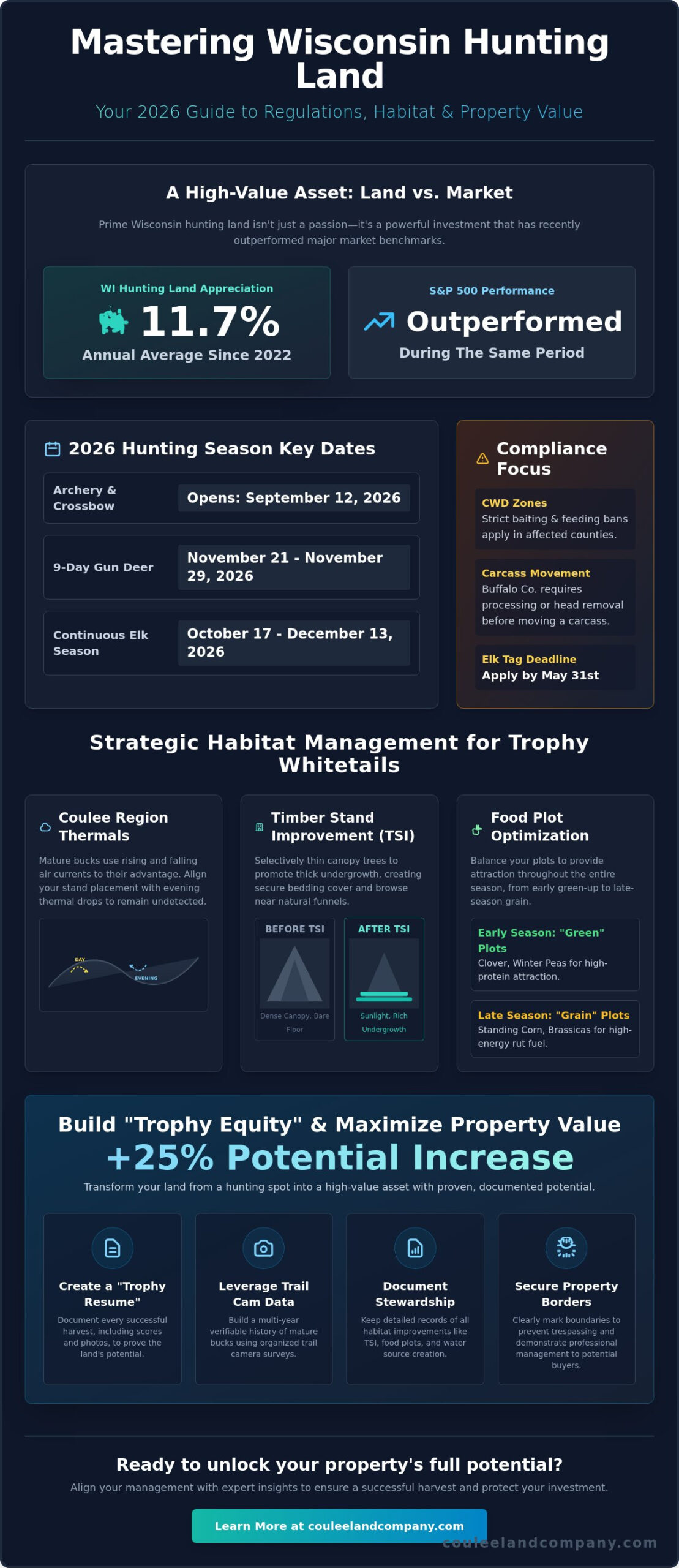
Did you know that prime Wisconsin hunting land has appreciated by an average of 11.7% annually since 2022, actually outperforming the S&P 500 in that same period? As a dedicated steward of the outdoors, you know that your acreage is more than just a place to hang a stand; it’s a high-value asset that requires precise management and expertise. Proper Hunting Season Prep for Property Owners: Local Regulations and Insights is the essential bridge between ensuring a successful harvest and protecting the long-term value of your investment.
You likely recognize that navigating complex DNR changes and managing bluff terrain is a year-round commitment. This guide will help you master the 2026 regulatory requirements and habitat strategies needed to optimize your land for trophy whitetails and increased property value. We’ll examine the new continuous elk season dates running from October 17 to December 13, updated harvest fees for residents and non-residents, and the specific “trophy equity” tactics that can increase your land’s worth by up to 25% through documented stewardship and record-breaking wildlife statistics.
Key Takeaways
- Stay ahead of the latest Wisconsin DNR harvest quotas and zone-specific restrictions to ensure your acreage remains fully compliant throughout the 2026 season.
- Apply professional-grade Hunting Season Prep for Property Owners: Local Regulations and Insights by aligning food plot locations with the specific thermals and shifting wind patterns of the Coulee Region.
- Enhance your land’s holding capacity by implementing Timber Stand Improvement (TSI) techniques that create secure bedding cover near high-traffic natural funnels.
- Discover how a documented “Trophy Resume” transforms your land from a simple hunting spot into a high-value real estate asset with proven harvest potential.
- Leverage multi-year trail camera data to build a verifiable history of mature bucks, effectively turning your scouting efforts into tangible property equity.
Navigating Wisconsin’s 2026 Hunting Regulations and Compliance
Successful land stewardship begins with a rigorous commitment to legal compliance. For those focused on Hunting Season Prep for Property Owners: Local Regulations and Insights, understanding the 2026 Wisconsin DNR framework is paramount. The high-stakes 9-day gun deer season is set for November 21 through November 29, 2026. Archery and crossbow seasons open on September 12, providing a long window for those targeting mature bucks in the early season. These dates are firm; staying within these windows is the first step toward maintaining a compliant, high-yielding property.
Effective management relies on the principles of wildlife management, where harvest quotas are designed to balance the local ecosystem. In the Coulee Region, these quotas are strictly monitored to ensure the health of the herd while maintaining the world-class trophy potential that defines our “Bluff Country.” You must also account for the new continuous elk season running from October 17 to December 13, which eliminates the old split-season structure and requires precise tag application by the May 31 deadline.
To better understand these maintenance and prep concepts, watch this helpful video:
CWD Management and Carcass Movement Rules
Identify if your property falls within a 2026 CWD surveillance or management zone immediately. Wisconsin continues to enforce strict baiting and feeding bans in affected counties to slow the spread of disease. For the 2026 season, Buffalo County regulations require that all deer carcasses remain within the county or a designated management zone until the head has been removed for testing or the meat has been fully processed.
Trespass Laws and Property Rights
Boundary markers are your first line of defense against unwanted intrusions. Wisconsin law is specific about “No Trespassing” signage; it must be at least 50 square inches and placed at a height that’s clearly visible to anyone approaching. Secure, well-marked borders are a major factor when selling hunting land in Wisconsin, as buyers prioritize properties with clear, undisputed lines and a history of professional stewardship.
Strategic Habitat Management for Trophy Whitetails
Mastering the terrain is the difference between a close encounter and a cold trail. In the steep hills of Western Wisconsin, Hunting Season Prep for Property Owners: Local Regulations and Insights requires a deep understanding of how thermals affect deer movement. Mature bucks use these rising and falling air currents to navigate safely, often bedding on high points during the day. By placing stands where falling evening thermals intersect with natural travel routes, you can stay undetected. This level of detail is essential for those managing elite hunting properties in the Coulee Region.
Timber Stand Improvement (TSI) is your most powerful tool for creating high-quality bedding cover. By selectively thinning canopy trees, you allow sunlight to reach the forest floor, stimulating the growth of thick, woody browse. Focus these efforts near natural funnels to concentrate deer movement. While you focus on habitat, always ensure your plan aligns with the Wisconsin 2026 Hunting Regulations to keep your management practices within legal bounds. Don’t overlook water; maintaining year-round water sources in high-elevation bluff areas where natural springs are scarce can keep a trophy buck on your property instead of your neighbor’s.
Food Plot Optimization for Bluff Country
Selecting 2026 seed blends that thrive in the specific loess soil types of the Mississippi River valley is critical for success. You should balance “green” plots like clover or winter peas for early season attraction with “grain” plots like standing corn or brassicas for the late-season rut. For a detailed breakdown of what to plant and when, refer to our guide on Wisconsin land management for wildlife.
Creating Natural Funnels and Pinch Points
Topography dictates travel in the bluffs. Use downed timber from your TSI projects to block secondary trails and guide deer movement past your primary stands. Identifying existing topography-based funnels, such as “saddles” or “benches” along a ridge, allows you to create predictable pinch points. These strategic enhancements turn your acreage into a focused hunting destination that produces results year after year.
Maximizing Property Value Through Season Preparation
Your land is a high-performing asset, and strategic Hunting Season Prep for Property Owners: Local Regulations and Insights is the primary driver of its appreciation. With high-net-worth investors projected to increase their allocation to tangible assets like land by 30% by 2026, the market for well-managed hunting ground is becoming increasingly competitive. Engaging in professional stewardship doesn’t just improve your hunting odds; it builds a “Trophy Resume” that can increase your property’s value by 15% to 25% almost overnight after a record-book harvest is documented.
Prospective buyers in the Coulee Region look for more than just acreage; they seek a proven history of success. Ensuring your property records reflect full compliance with the Wisconsin 2026 Deer Hunting Regulations provides peace of mind to buyers who value legal integrity as much as habitat quality. Furthermore, improving access roads and internal trail systems allows for seamless property showings during the peak season without spooking mature bucks, maintaining the sanctuary’s “quiet” status even during the sales process.
Documenting Management Success
Maintaining a digital log of your TSI projects, food plot rotations, and annual soil test results is vital. This data proves you’ve invested in the land’s health and carrying capacity. Organize your trail camera photos by year to demonstrate a consistent population of age-class bucks, effectively proving the property’s potential to produce world-class whitetails. For a better understanding of what constitutes a “trophy” in this region, refer to our Buffalo County Wisconsin deer hunting guide.
Partnering with a Land Specialist
A general realtor often misses the “hidden value” of a strategically placed funnel or a high-protein clover stand. As a specialized hunting land brokerage, we understand how to market the sweat equity you’ve poured into your ridges and valleys. Leveraging Coulee Land Company’s regional authority ensures your property is showcased to high-intent buyers who recognize the worth of professional stewardship. Ready to see what your hard work is worth? Get a professional property valuation.
Secure Your Legacy in the Bluffs
Preparation for the 2026 season is a commitment to both the hunt and your land’s future. By aligning your property with the latest harvest rules and mastering the complex thermals of the Coulee Region, you establish a foundation for consistent success. This thorough approach to Hunting Season Prep for Property Owners: Local Regulations and Insights ensures your acreage remains a premier sanctuary for mature bucks and a secure, high-value investment for years to come. Remember that documenting your management success today is what builds the “Trophy Resume” for tomorrow’s market.
Realizing the full potential of your land requires an expert partner who lives and breathes the outdoor lifestyle. Coulee Land Company brings over 20 years of specialized land brokerage experience to every transaction. We specialize in Buffalo County’s legendary Bluff Country and remain endorsed by industry-leading trophy whitetail experts. Whether you’re refining your current sanctuary or looking to acquire a new legacy property, our team is ready to provide the professional guidance you deserve. Explore our exclusive Wisconsin hunting land listings today and take the first step toward owning a piece of the world’s finest whitetail territory. Your next record-book buck is waiting in the bluffs.
Frequently Asked Questions
What are the primary deer hunting season dates for Wisconsin in 2026?
The 2026 Wisconsin gun deer season is scheduled for November 21 through November 29. Archery and crossbow seasons run from September 12, 2026, to January 3, 2027, with an extension to January 31 in Metro sub-units. Other key dates for your calendar include the Youth Deer Hunt on October 10 and 11, and the muzzleloader season which follows the gun season from November 30 to December 9. These firm dates are the foundation for any successful Hunting Season Prep for Property Owners: Local Regulations and Insights.
Do I need a special permit to plant food plots on my private hunting land?
You don’t need a specific hunting permit from the DNR to plant food plots on private acreage for wildlife attraction. While the act of planting is generally unregulated, you should verify local county zoning ordinances or wetland restrictions if your plots are near water sources or in low-lying areas. Ensuring your habitat work doesn’t violate environmental protections is a hallmark of professional land stewardship and helps maintain the integrity of your property’s value.
How has Chronic Wasting Disease (CWD) changed hunting regulations in Buffalo County for 2026?
Buffalo County continues to enforce strict baiting and feeding bans for the 2026 season to mitigate the spread of CWD. Regulatory updates also require that deer carcasses remain within the county or a designated management zone until the head has been removed for testing or the meat has been fully processed. Adhering to these carcass movement rules is a critical component of Hunting Season Prep for Property Owners: Local Regulations and Insights and helps protect the long-term health of the regional herd.
What is the best way to mark my property boundaries to legally prevent trespassing in Wisconsin?
Wisconsin law requires “No Trespassing” signs to be at least 50 square inches in size and placed at a height where they’re clearly visible to anyone approaching the line. For maximum legal protection, signs should be spaced frequently enough that an intruder can’t enter the property without seeing at least one marker. Maintaining high-visibility, professional signage along your entire perimeter is the most effective way to secure your hunting sanctuary and prevent accidental intrusions during the peak of the season.