
Most hunters spend the first 36 months of land ownership fighting a chainsaw and a seed drill rather than sitting in a stand. Finding hunting land for sale with food plots already planted is the only way to ensure your 2026 season isn’t lost to sweat equity and habitat transition. You’ve likely felt the sting of a wasted November because the clover didn’t take or the clearing was too small to hold a mature 160-inch buck. It’s a common hurdle that turns a dream property into a grueling second job that eats up your precious time in the woods.
We agree that your time is better spent glassing the ridges of Western Wisconsin than clearing brush. This guide reveals why turnkey land in the Coulee Region is the ultimate investment for serious whitetail hunters who demand an immediate return on their hunting quality. We’ll examine the logistical benefits of established habitat and provide a roadmap for identifying properties in Buffalo County that are already programmed to produce Boone and Crockett record book entries.
Key Takeaways
- Understand why turnkey properties are the premier investment for 2026, effectively shortening your “time-to-trophy” by up to five years of land management.
- Learn the critical steps for auditing soil health and historical pH levels to ensure your investment produces high-quality forage from day one.
- Discover how to evaluate tactical layouts on hunting land for sale with food plots already planted to guarantee low-impact entry and exit strategies.
- Gain expert insights on navigating the “Golden Triangle” of Western Wisconsin to secure a legacy property that dominates the record books.
The Strategic Value of Turnkey Hunting Land with Established Food Plots
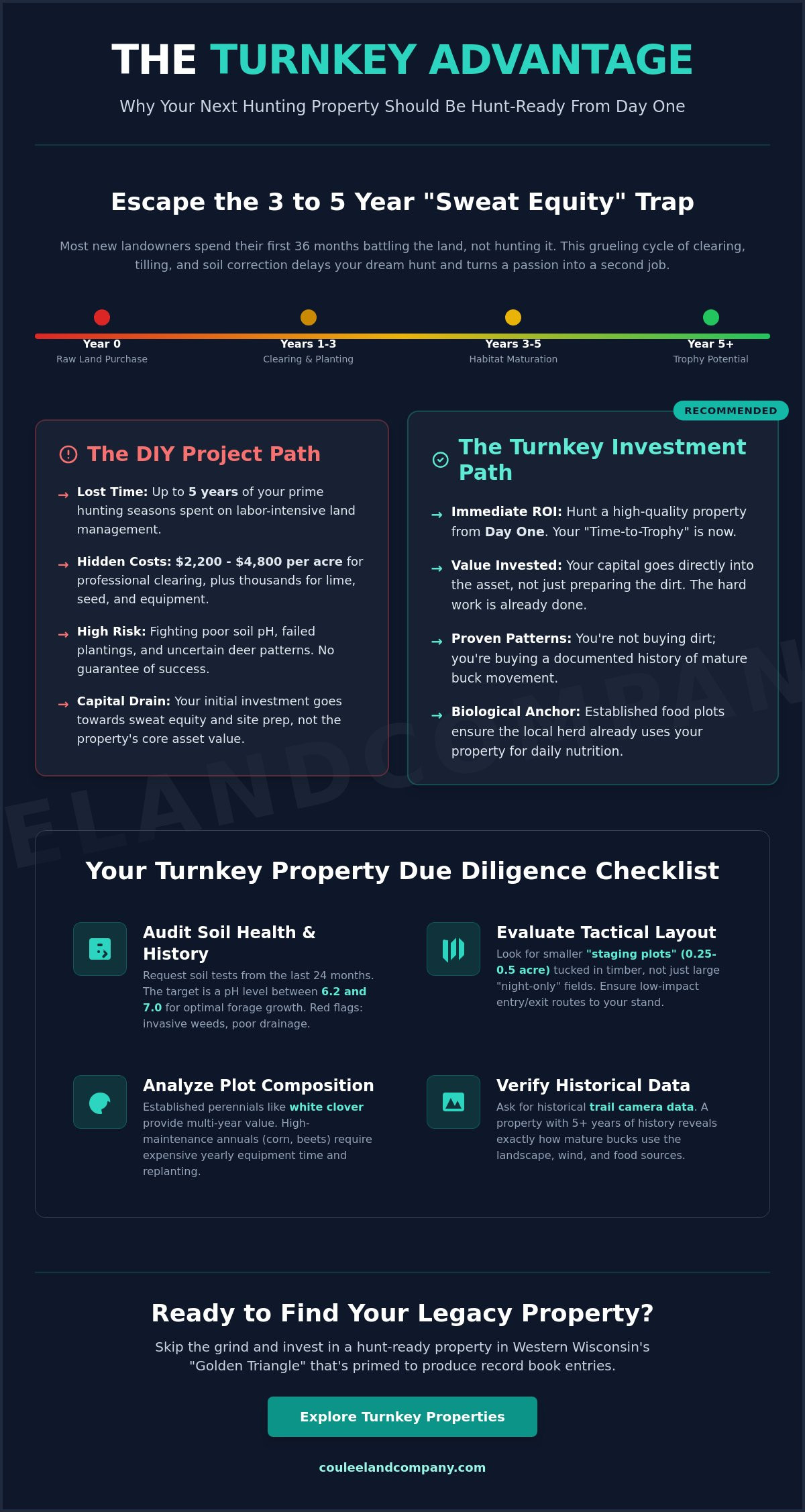
Turnkey properties represent the most aggressive trend in 2026 land sales. Serious hunters no longer want to spend their first three seasons clearing brush or fighting poor soil pH. When you search for hunting land for sale with food plots already planted, you’re investing in a “time-to-trophy” advantage. It takes roughly three to five years of consistent management to transform a raw timber tract into a high-functioning whitetail sanctuary. Established plots provide an immediate biological anchor, ensuring local herds already include your property in their daily nutritional rotation.
Understanding the foundation of these improvements is vital for any land manager. What is a Food Plot? Essentially, it is a strategically planted area designed to provide high-quality forage and supplement natural browse for wildlife. These zones act as the heartbeat of a managed property.
Take a moment to watch this video for a deeper look at essential tools for plot maintenance:
The financial logic of buying established plots is simple. Clearing a single acre of timber for a plot often costs between $2,200 and $4,800 in professional mulching and stump removal. Add the cost of lime, which can require four tons per acre to neutralize acidic forest soils, and you’ve spent thousands before the first seed hits the ground. Buying land where this work is finished means your capital goes toward the asset value, not just the sweat equity of site prep.
Buying Proven Deer Patterns, Not Just Dirt
Mature plots do more than feed deer; they reveal their secrets. A property with five years of history shows exactly how mature bucks utilize thermal cover and wind direction to approach a food source. We recommend reviewing historical trail camera data to verify the “food plot land” value. You aren’t just buying dirt; you’re buying a documented history of movement. For more details on finding the right tract, view our available hunting properties.
Why Bluff Country Topography Demands Strategic Plotting
In Western Wisconsin, topography dictates everything. Ridge-top plots serve as ideal staging areas, while valley-bottom fields offer high-volume late-season nutrition. This interaction between steep terrain and forage is what makes Buffalo County the premier destination for trophy whitetails. Strategic plotting here isn’t just about planting; it’s about managing the thermals and pinch points unique to the Driftless Area. Finding hunting land for sale with food plots already planted in this region secures your position in an incredibly competitive market.
How to Evaluate Existing Food Plots Before You Sign
Buying hunting land for sale with food plots already planted offers a massive head start, but you can’t take a listing photo at face value. A lush, vibrant field in a June photograph might be nothing more than a patch of dirt or unpalatable weeds by the time the November rut arrives. You need to look beneath the surface to ensure the investment holds its value through the hunting season.
Soil Quality and Maintenance History
Success starts with the dirt. Ask the seller for soil test results from the last 24 months; you’re looking for a pH level between 6.2 and 7.0 to ensure optimal nutrient uptake for the crop. Stunted growth, poor drainage, or a heavy presence of invasive mare’s tail are immediate red flags that the land has been neglected. Established perennials like white clover provide incredible value because they offer 3 to 5 years of consistent forage with simple frost-seeding, while high-maintenance annuals like corn or sugar beets require expensive annual tillage and equipment time.
Tactical Placement and Wind Strategy
A food plot’s location is just as important as what’s growing in it. If a plot is situated in the middle of a wide-open 10 acre field, it often becomes a “night-only” destination where mature bucks won’t show their faces until after legal shooting light. You want to see “staging area” plots, smaller 0.25 to 0.5 acre openings tucked into the timber that lead toward larger destination food sources.
The best hunting land for sale with food plots already planted features layouts designed for low-impact entry and exit. Evaluate if you can reach your stand without blowing your scent into the bedding area or crossing the plot itself. A truly comprehensive wildlife management plan integrates these feeding zones with secure travel corridors and thermal cover. For more specific regional advice, review this Wisconsin Land Management for Wildlife guide to see how top-tier properties are structured. Finally, check for existing infrastructure like 8-foot wide cleared access trails and established stand sites. If you’re ready to find a turnkey property in the heart of Bluff Country, explore our latest hunting properties today.
Finding Your Legacy Property with Coulee Land Company
A standard residential realtor sees an open field and calls it a yard. We see a destination food plot. Finding hunting land for sale with food plots already planted requires a broker who understands soil quality, bedding proximity, and travel corridors. At Coulee Land Company, we specialize in the “Golden Triangle” of Wisconsin, where the terrain creates world-class whitetail opportunities. Our agents, including Mike Law, don’t just look at property lines. They evaluate the wildlife capabilities of every acre. They identify where a clover stand will thrive and where a screen of Egyptian wheat will provide the security a mature buck needs. We are hunters first. Our team lives for the “Bluff Country” lifestyle. We use that obsession to find properties that other agents miss because they don’t know how a buck uses the wind.
Your Partner in Bluff Country Land
Our team has deep roots in Buffalo County Wisconsin Deer Hunting. This region consistently leads the Boone and Crockett record books. We know exactly what it takes to maintain that legacy. We don’t stop at the closing table. We help you transition from a buyer to an active land manager, ensuring your forage remains productive year after year. Owning hunting land for sale with food plots already planted gives you a massive head start on the season. Whether you’re looking for a turnkey tract or a project with high potential, we have the insider knowledge to guide your choice. View our current hunting property listings to find your piece of the bluff.
Next Steps for Serious Buyers
If you want to secure a property before the 2026 season, you need to start your search now. We recommend a “boots on the ground” tour to see how our managed properties perform in person. Bring your hiking boots and a list of your goals. Our specialists will show you the hidden details, like pinch points and thermal cover, that make a property elite. We’ll help you prepare your strategy for a competitive market. Contact our land specialists today to begin your journey toward owning the ultimate hunting retreat.
Secure Your Legacy in the Heart of Bluff Country
Owning a premier piece of Western Wisconsin requires more than just a deed; it demands a strategic foundation that starts on day one. By choosing turnkey acreage, you bypass the years of soil conditioning and clearing required to establish high-yield wildlife habitat. You’re not just buying dirt; you’re investing in a proven system designed to hold trophy bucks. Our team specializes in Buffalo County whitetail properties, a region that dominates the whitetail entries in the Boone and Crockett Record Book. Finding hunting land for sale with food plots already planted in this territory puts you years ahead of the competition. Coulee Land Company brings deep expertise in Western Wisconsin land management to every transaction. We’re the specialists endorsed by outdoor television professionals because we understand the specific wildlife capabilities of the region. Don’t waste seasons trying to build what we’ve already perfected for you. Your legacy in the woods starts with a property that’s ready for the stand the moment you close.
Browse Managed Hunting Land for Sale with Food Plots
The right property is waiting for you to take the lead.
Frequently Asked Questions
Do food plots significantly increase the property value of hunting land?
Well-established food plots increase property value by as much as 20% compared to unimproved acreage. This premium reflects the immediate turn-key capability of the land for harvesting trophy whitetail bucks. When you look at hunting land for sale with food plots already planted, you’re paying for the years of soil conditioning and strategic clearing already completed by a land management expert.
What are the best crops to look for in a pre-planted food plot in Wisconsin?
Wisconsin’s Bluff Country demands hardy crops like cold-tolerant brassicas and perennial white clover to sustain deer through the late season. Strategic plots in Buffalo County often feature a 60/40 split between high-energy grains like corn or soybeans and greens that stay palatable after the first frost in October. These forage choices ensure your herd stays on your property when temperatures drop below freezing.
How can I tell if a food plot was planted correctly or just for the sale?
You can identify a quality plot by checking for a 6.5 pH level in recent soil tests and observing the weed to crop ratio. A “for sale” plot often looks green from a distance but lacks the 3 to 4 inches of topsoil development found in professionally managed ground. Look for established perennial root systems rather than just a thin layer of annual rye grass thrown down 30 days before the listing went live.
Will I need to re-plant the food plots every year?
Maintenance schedules depend on whether the plot uses annuals or perennials. Perennial clover stands can last 5 years with proper mowing and herbicide applications, while annuals like brassicas or cereal grains require fresh seeding every August. When purchasing hunting land for sale with food plots already planted, ask for the previous 3 years of planting records to understand the current rotation and future labor requirements.