
The dream of owning your own slice of Wisconsin’s legendary hunting grounds is a powerful one. But when you begin searching for hunting land for sale in Wisconsin, that dream can quickly become overwhelming. Sifting through countless listings, trying to decipher a property’s true potential for trophy whitetails, and fearing hidden issues or a bad investment can turn an exciting pursuit into a daunting task. The path from hopeful buyer to confident landowner feels complex, filled with questions about financing, legal steps, and land management.
This is where expertise makes all the difference. As Wisconsin’s Land & Property Sales Specialists, we’ve created this ultimate guide to eliminate that uncertainty and empower your search. We will walk you through every critical step, from identifying parcels with superior wildlife capabilities to evaluating topography, access, and long-term value. Consider this your definitive roadmap to finding, evaluating, and purchasing the perfect property, ensuring you make a sound investment and finally secure that private piece of the Wisconsin outdoors you’ve always wanted.
Why Wisconsin? Understanding the Trophy Whitetail Landscape
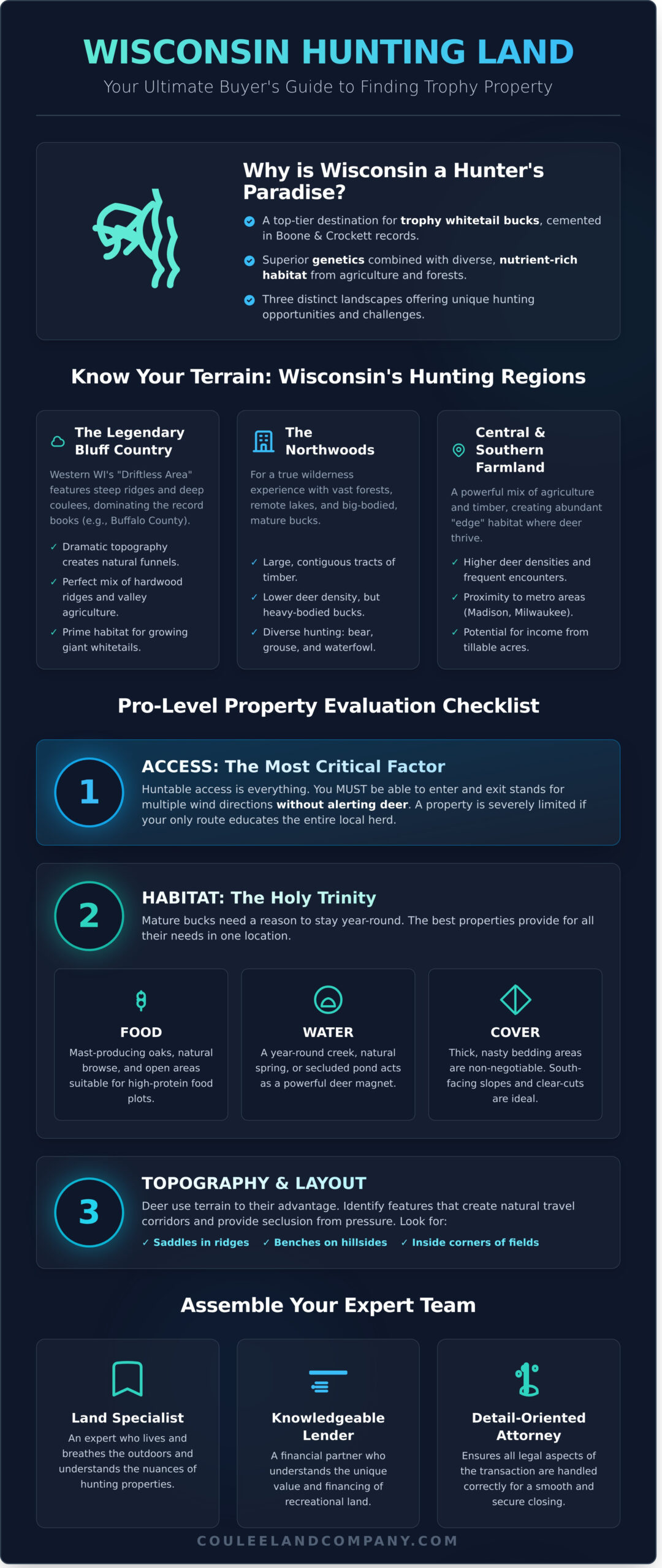
When serious hunters discuss the premier destinations for trophy whitetail bucks, Wisconsin stands in a class of its own. The state’s reputation is cemented in the pages of the Boone & Crockett record books, a testament to its superior genetics and diverse, nutrient-rich habitat. While public land offers a starting point, the ultimate dream for any dedicated hunter is ownership. Owning your own parcel transforms the experience from a game of chance to a strategic pursuit, allowing for meticulous land management, food plot cultivation, and the creation of a personal hunting legacy. The search for prime hunting land for sale wisconsin is the first step toward controlling your own world-class hunting destination.
The state’s unique combination of glacial terrain, rich agricultural feed, and robust genetics has cultivated some of the world’s most impressive Wisconsin’s trophy whitetail deer, a fact well-documented by hunters and biologists. This potential is not uniform, however; the state offers three distinct landscapes, each providing a unique set of opportunities and challenges for the aspiring landowner.
The Legendary Bluff Country: A Hunter’s Paradise
Western Wisconsin’s “Driftless Area” features a dramatic topography of steep ridges and deep coulees that were untouched by glaciers. This terrain naturally creates funnels, saddles, and pinch points that dictate deer movement, giving a strategic advantage to the knowledgeable hunter. It’s no coincidence that Buffalo County consistently dominates the record books; the combination of rugged hardwood ridges and high-protein agriculture on the valley floors is the perfect recipe for growing giant whitetails.
The Northwoods: Big Timber and Wilderness Hunting
For those who dream of vast, contiguous forests and a true wilderness experience, the Northwoods delivers. This region is characterized by large tracts of timber, remote lakes, and a lower deer density that often produces heavy-bodied, mature bucks. Beyond deer, these properties offer outstanding opportunities for bear, grouse, and waterfowl hunting. The appeal lies in the solitude and the challenge of hunting big woods, making it ideal for those seeking an off-grid cabin and a diverse sporting paradise.
Central and Southern Farmland: Edge Habitat and Accessibility
The rolling hills of Central and Southern Wisconsin offer a powerful mix of agriculture and timber, creating thousands of miles of “edge” habitat where deer thrive. While parcels may be smaller, deer densities are typically higher, offering frequent encounters. A key advantage is proximity to major metro areas like Madison, Milwaukee, and even Chicago, making weekend trips for property management or hunting far more feasible. Much of the hunting land for sale wisconsin here is a blend of tillable and recreational acres, providing potential income to supplement your investment.
How to Evaluate a Hunting Property: Secrets of the Pros
When you start browsing listings for hunting land for sale in Wisconsin, it’s easy to get fixated on price and total acreage. But the most successful hunters and land managers know the real value lies in the details. They understand that a rugged 60-acre parcel in the Driftless Area can offer far more opportunity than a flat, featureless 120-acre tract. Learning to read a property’s potential through aerial and topographic maps is the first step in separating a decent property from a truly superior one. It’s about recognizing that the land’s character, and even its neighborhood, are what ultimately create a whitetail paradise.
Access: The Most Critical and Overlooked Factor
Legal access gets you to the property line, but huntable access gets you into your stand undetected. This is the single most important factor in maintaining a low-pressure hunting sanctuary. A parcel is severely limited if the only way to a prime stand location is by walking through an open field or up a noisy ridge, alerting every deer in the area. You must evaluate entry and exit routes for multiple wind directions to ensure you can hunt your best spots effectively and without educating the local herd.
Habitat Diversity: The Holy Trinity of Food, Water & Cover
Mature bucks don’t live on a property by accident; they live there because it provides for all their needs. The best parcels feature a diverse mix of habitat that holds deer year-round. Look for these key elements:
- Secure Cover: Thick, nasty bedding areas are non-negotiable. South-facing slopes, clear-cuts growing back, and marshy thickets provide critical thermal and security cover.
- Water Sources: A year-round creek, natural spring, or secluded pond is a powerful deer magnet, especially during dry periods and the rut.
- Food: A mix of hardwoods with mast-producing oaks, coupled with areas of browse and open ground suitable for food plots, creates a year-round buffet. Assessing the potential for habitat improvement is key; many successful landowners even partner with the Wisconsin DNR through programs like the Deer Management Assistance Program (DMAP) to develop a long-term management plan.
Topography and Layout: How Deer Use the Land
Deer are creatures of efficiency and will always use the terrain to their advantage. Topography creates natural travel corridors that concentrate movement, and identifying them is crucial. Look for saddles in ridges, benches cut into hillsides, and the inside corners of fields where timber meets agriculture. These features act as funnels, creating predictable ambush points. The property’s layout can also use topography to provide vital seclusion from road traffic and neighboring pressure, making deer feel secure and increasing daylight activity.
The Buying Process: A Step-by-Step Guide for Wisconsin Land
Transforming the dream of owning a piece of Wisconsin’s legendary bluff country into a reality requires a clear, strategic roadmap. The journey from identifying a property to closing day is filled with critical milestones. Success hinges on assembling a dedicated team: a land specialist who lives and breathes the outdoors, a lender who understands the unique value of recreational property, and a detail-oriented attorney. This guide outlines the essential steps to navigate the transaction with confidence.
Securing Financing for Your Hunting Property
Financing raw land is fundamentally different from a traditional home mortgage. Lenders view it as a higher-risk investment, which translates to different terms. Expect a higher down payment, typically between 20% and 50%, and shorter loan terms. The single most powerful step you can take is to secure pre-approval before making an offer. It demonstrates you are a serious, qualified buyer. We strongly recommend working with local Wisconsin banks and credit unions; they possess the regional knowledge to accurately value timber, tillable acreage, and trophy whitetail potential.
Due Diligence: Your Pre-Purchase Investigation
Once you identify a promising parcel of hunting land for sale wisconsin, the real work begins. This investigative phase, or due diligence, is non-negotiable for protecting your investment. It ensures there are no hidden surprises that could compromise your hunting legacy. Key areas to scrutinize include:
- Property Survey: A professional survey is the only way to verify exact boundary lines, acreage, and any encroachments. This is crucial for posting your land and placing stands.
- Easements & Restrictions: Uncover any access rights granted to utility companies or neighbors, along with zoning regulations or covenants that could restrict building a cabin or managing the habitat.
- Managed Forest Law (MFL): Investigate if the property is enrolled in Wisconsin’s MFL program. This can provide significant property tax savings in exchange for following a sustainable forest management plan.
- Rights & Regulations: Confirm who owns the mineral and water rights. It’s also wise to consult official Wisconsin hunting information from the DNR to understand any specific CWD zones or regulations affecting the area.
Making an Offer and Closing the Deal
With your due diligence complete, you can craft a competitive offer. This is more than just a price; it includes contingencies for financing, inspections, and a clear closing date. Your offer will be accompanied by earnest money, a good-faith deposit held in escrow. After negotiations conclude and the offer is accepted, a title company performs a search to guarantee the property has a clean title, free of liens. The final step is the closing, where documents are signed, funds are transferred, and you officially receive the keys to your own private hunting paradise. The process can be complex, but the reward is unmatched. Let our experts guide you through the process.
Why You Need a Land Specialist, Not Just a Realtor
When you begin searching for hunting land for sale in Wisconsin, you’re not just buying a piece of dirt-you’re investing in a dream. The agent who helps you sell your suburban home is an expert in their field, but that field is vastly different from the rolling hills and dense timber of Wisconsin’s bluff country. A residential realtor sees square footage and school districts; a land specialist sees deer sign, timber value, and the potential for a world-class food plot.
Navigating the complexities of a land transaction requires a distinct skill set. A general agent may not understand the critical nuances of legal access, mineral rights, or government land programs. This knowledge gap can lead to costly mistakes, such as overpaying for a parcel or purchasing a property with hidden flaws that limit its true hunting potential.
Expert Property Valuation
Accurately valuing a recreational property goes far beyond a simple price-per-acre calculation. A true land specialist assesses the property as a complete asset. This includes evaluating the current and future timber value for potential income, factoring in the quality of the local deer herd, and understanding how neighborhood hunting pressure impacts long-term trophy potential. They have access to hyper-specific comparable sales data for similar hunting tracts, ensuring you make an offer based on true market value, not guesswork.
Deep Knowledge of Wildlife and Habitat
A land specialist speaks your language because they are a hunter, too. They walk the property with a trained eye, identifying subtle travel corridors, bedding areas, and pinch points that a typical agent would miss. They see the landscape not just for what it is, but for what it could be, recognizing prime locations for habitat improvements that will hold and grow mature whitetails. This deep, practical understanding of wildlife biology and land management is essential to finding a property that meets your specific hunting goals.
A Network Built for Land Transactions
Securing the perfect piece of hunting land for sale in Wisconsin often requires a team of experts. Land specialists operate at the center of a professional network built specifically for these unique transactions. Their connections include:
- Land surveyors and forestry consultants who can maximize your investment.
- Lenders who specialize in financing rural and recreational land.
- Attorneys well-versed in the complexities of land contracts.
- A private database of qualified buyers and sellers actively in the market.
This comprehensive network streamlines the entire process, protecting your interests from the initial search to the final closing. It’s the definitive advantage of working with a team that lives and breathes Wisconsin land. Meet the Wisconsin Land Specialists at Coulee Land Company.
Secure Your Piece of Wisconsin’s Trophy Country
Purchasing your own hunting paradise is a significant investment-a legacy in the making. As this guide has shown, success hinges on understanding Wisconsin’s unique trophy whitetail landscape and knowing how to evaluate a property’s true potential. It’s a complex process that demands far more than a simple real estate transaction; it requires the guidance of a dedicated land specialist who shares your passion.
When you are ready to find the perfect parcel of hunting land for sale wisconsin has to offer, partner with a team that lives and breathes this world. At Coulee Land Company, we are a team of passionate, lifelong hunters specializing in Western Wisconsin’s famed Bluff Country. Our unparalleled expertise and hands-on approach are why we are endorsed by leaders throughout the outdoor industry. We don’t just sell land; we help you acquire your dream property.
Your Wisconsin hunting legacy awaits. View Our Current Listings of Wisconsin Hunting Land for Sale and let our team of specialists guide you home.
Frequently Asked Questions About Wisconsin Hunting Land
How much does one acre of hunting land cost in Wisconsin?
The cost per acre for hunting land in Wisconsin varies significantly based on location and features. In the coveted “Bluff Country” of Western Wisconsin, prices can range from $4,000 to over $10,000 per acre, especially for parcels with established food plots, water sources, and trophy whitetail history. Factors like timber value, tillable acreage for income, and road access all play a crucial role in determining the final price for a premier hunting property.
Can I build a cabin or a home on hunting land in Wisconsin?
In most cases, yes, but it is essential to perform your due diligence. Building rights are dictated by local county and township zoning ordinances. You must verify that the property is zoned for residential use or has a designated building site. Key considerations include securing legal road access, ensuring the soil is suitable for a septic system (perc test), and determining the availability of utilities. We help our clients navigate these regulations to find land that meets their complete vision.
What is the Managed Forest Law (MFL) and how does it save me money?
The Managed Forest Law (MFL) is a Wisconsin DNR incentive program that provides significant property tax reductions to landowners who follow a sustainable forest management plan. Enrolling your property can dramatically lower your annual holding costs. Land can be enrolled as ‘Open’ for public access or ‘Closed’ for private use, with different tax rates for each. It’s a powerful tool for owners of hunting land for sale wisconsin to enhance wildlife habitat while minimizing tax liability.
What is the best county in Wisconsin to buy land for trophy deer hunting?
For hunters pursuing record-book whitetails, Buffalo County is in a class of its own, dominating the Boone and Crockett entries. The rugged terrain and rich agriculture of this region consistently produce world-class bucks. Neighboring counties in the Driftless Area, such as Trempealeau, Vernon, and Crawford, also offer incredible opportunities for trophy deer. This specific pocket of Western Wisconsin is the undisputed capital for serious hunters seeking superior genetics and premier habitat.
Is it difficult to get a loan for raw hunting land?
Financing raw land can be more challenging than securing a traditional home mortgage, as many lenders view it as a riskier investment. However, it is entirely achievable. The key is to work with lenders who specialize in recreational or agricultural properties, such as local credit unions and rural land banks. These institutions understand the unique value of hunting land. Buyers should typically be prepared for a larger down payment, often in the 20-35% range, to secure financing.
What are the property taxes like on recreational land in Wisconsin?
Property taxes on recreational land are based on the local mill rate and the land’s assessed value, which can vary widely between counties. The land’s classification-such as agricultural, undeveloped, or forested-is the primary factor. Forested land generally has a lower tax assessment than tillable or residential land. As mentioned, enrolling your timber in the Managed Forest Law (MFL) program is the single most effective strategy for significantly reducing your annual property tax burden.