
Most staging advice tells you to bake cookies and hide family photos. But that advice falls flat when your property’s greatest assets are the food plots out back and the trophy potential of your woodlot. The truth is, knowing how to stage a country home in Wisconsin requires a completely different playbook-one that speaks directly to buyers who value land as much as the house itself. Selling a country property isn’t just about marketing a house; it’s about selling a lifestyle and a legacy.
Buyers for these premier Wisconsin parcels aren’t just looking for a place to live-they’re pursuing a dream. They need to see the potential in your pole barn, understand the value of your tillable acreage, and envision the seasons of hunting ahead. In this definitive 2026 guide, we provide the specialist’s strategy, teaching you how to showcase your entire property-from the mudroom to the back 40-to attract premium buyers and secure the maximum value for your exceptional piece of Wisconsin.
Key Takeaways
- Go beyond the house to stage the complete rural lifestyle buyers are searching for; the real value lies in the privacy, utility, and authentic experience your land provides.
- Your land, trails, and outbuildings are the main attraction. Learn the critical steps to prepare these assets to showcase their full potential and command a higher price.
- Discover how to stage a country home interior by prioritizing durability, function, and connection to the outdoors over fleeting urban trends.
- A general realtor sells houses, but a land specialist understands how to market a legacy. Learn why this expertise is critical for maximizing the value of your country property.
Beyond the Welcome Mat: Why Staging a Country Home is Different
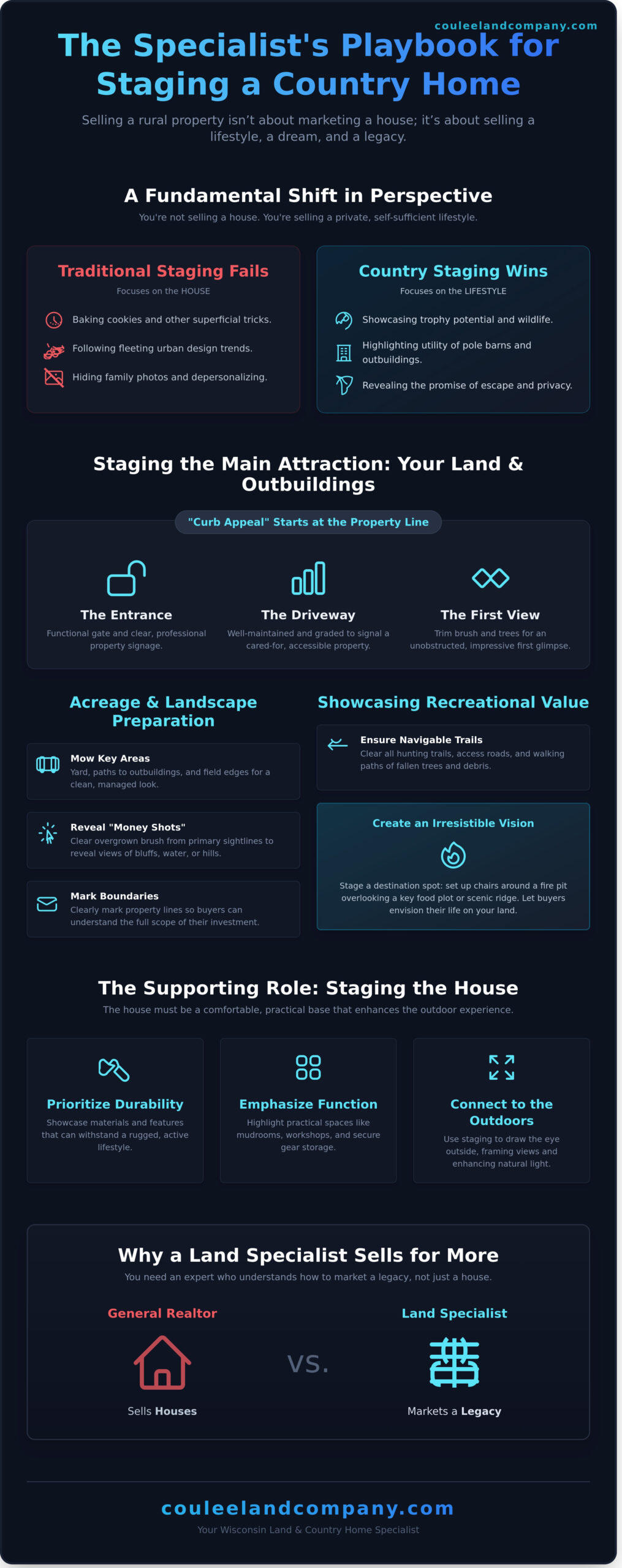
Selling a rural property requires a fundamental shift in perspective. You are not merely selling a house; you are selling a private, self-sufficient lifestyle. When most people consider what home staging is, they picture neutral paint and trendy furniture designed for mass appeal in a subdivision. Staging a country home, however, is less about fleeting urban trends and more about showcasing timeless authenticity, rugged function, and the promise of escape. The first step in understanding how to stage a country home is recognizing that your buyer is purchasing a dream, not just drywall and a foundation.
For a look at how rustic charm and modern comfort can merge to create this dream, this video offers excellent inspiration:
For the right buyer, the acreage, views, water features, and outbuildings are often the main event. The house plays a critical supporting role: it must be a comfortable, practical, and welcoming base of operations that enhances the outdoor experience. It is the warm hearth after a day on the land, the secure storage for valuable gear, and the vantage point for watching wildlife. Your staging efforts must reinforce this synergy between the land and the home.
Understanding Your Target Buyer
Success hinges on identifying your ideal buyer. Are they a passionate whitetail hunter seeking a legacy property, a hobby farmer with dreams of a market garden, or a city dweller looking for a quiet weekend retreat? Tailor your presentation to highlight the features that matter most to them. For the serious hunter, this means showcasing secure and accessible storage for firearms and gear, clear access trails, and well-managed food plots-not just a renovated kitchen.
The Country ‘Curb Appeal’: From the Gate to the Door
In rural real estate, ‘curb appeal’ begins at the property line. A potential buyer’s first impression is formed not on the porch, but as they turn off the main road. This expanded perspective is fundamental to how to stage a country home for maximum impact. Focus on these critical elements:
- The Entrance: Ensure the gate is functional and the property signage is clear and professional.
- The Driveway: A well-maintained, graded driveway signals that the property is cared for and accessible.
- The First View: Trim back overgrown brush and trees to ensure the first glimpse of the home and its surrounding land is unobstructed, impressive, and inviting. Tidy fence lines complete this powerful first impression.
Staging the Main Attraction: Your Land, Trails & Outbuildings
When selling a rural property, the house is only part of the equation. For serious land buyers, the true value lies in the acreage, the wildlife it holds, and the potential for recreation. This is where you create a lasting impression and demonstrate the property’s full potential. Understanding how to stage a country home means focusing a significant amount of your effort outside the four walls of the house.
Acreage & Landscape Preparation
Your land’s first impression begins with a well-maintained appearance. Start by mowing key areas, including the yard around the home, the paths to outbuildings, and the edges of primary fields or pastures. This creates a clean, managed look that signals a well-cared-for property. Clear overgrown brush from primary sightlines to reveal stunning views of bluffs, water features, or rolling hills-these are the money shots. To add authentic curb appeal, consider landscaping with native Wisconsin plants around the home; this not only looks beautiful but also supports the local ecosystem buyers cherish. Finally, ensure property boundaries are clearly marked so prospective buyers can confidently walk the lines and understand the full scope of their potential investment.
Showcasing Recreational & Wildlife Value
A potential buyer needs to be able to envision their life on your land. Make it easy for them. Ensure all hunting trails, access roads, and walking paths are cleared of fallen trees and debris, making them easy to navigate by foot or with an ATV. Go a step further by staging a destination spot: set up a few chairs around a fire pit overlooking a key food plot or a scenic ridge. This simple touch allows buyers to experience the land, not just view it. A laminated property map highlighting these features-trails, stand locations, water sources, and sanctuaries-is a professional tool that showcases the land’s superior wildlife capabilities. This level of preparation is essential when marketing premium hunting properties and sets your listing apart.
Organizing Barns, Sheds, and Workshops
Outbuildings can be a massive selling point or a significant detractor. The key is to present them as clean, functional, and full of potential. The first step in learning how to stage a country home’s outbuildings is to declutter completely. Remove all junk, scrap metal, old tires, and broken equipment. What remains should be organized neatly to demonstrate ample storage space for tractors, tools, and recreational gear. Hang tools, stack lumber, and sweep the floors. Finally, check for functionality: ensure that all doors open smoothly and that the lighting is working. A well-lit, organized barn feels safe and inviting, allowing a buyer to see a future workshop or the perfect storage for their prized equipment.
The Supporting Role: How to Stage the House for a Country Buyer
While the land is the main attraction, the house is where the story of ownership truly comes to life. The secret to how to stage a country home effectively is to present it as a comfortable, functional hub for the outdoor lifestyle. Forget delicate trends; a country buyer values durability, practicality, and a seamless connection to the property. Your goal is to create a space where a potential owner can envision relaxing after a long day on the land, whether tracking a trophy whitetail or managing their food plots. This means decluttering and depersonalizing, but leaving the authentic character that makes a rural house a home.
The Three Most Important Rooms
Focus your primary efforts on the rooms that see the most use in a country setting. These spaces must signal function and comfort above all else.
- The Mudroom: This is the critical transition zone. Showcase superior organization with immaculately clean floors, dedicated boot trays, and sturdy coat hooks. It must look ready to handle mud, snow, and gear.
- The Kitchen: More than just a place to cook, this is the heart of the home. Emphasize it as a gathering space by clearing all countertops and ensuring the pantry is clean and orderly. It should feel spacious and ready for a post-hunt meal.
- The Great Room/Living Room: Arrange furniture to highlight the home’s best assets. If you have a stone fireplace, make it the undeniable focal point. If there’s a stunning view of the property, ensure the seating arrangement draws the eye directly toward it.
Authentic ‘Hunter-Friendly’ Touches
A buyer who understands the outdoor lifestyle will look for practical features that support their passion. Clearly demonstrate secure, legal storage for firearms and gear, such as a built-in gun safe or a dedicated, lockable cabinet. While personal collections should be stored away, displaying one or two high-quality trophies tastefully reinforces the property’s hunting heritage. Most importantly, highlight durable flooring-like hardwood or slate-and a logical layout that can handle the traffic of an active country life.
Bringing the Outside In, Naturally
The connection to the land is paramount. Ensure every window is spotless and all window treatments are pulled back to maximize natural light and frame the views of your acreage. While professional drone video and photography will showcase the property’s scale, the view from inside must deliver on that promise. Use subtle, natural decor like wood accents, stone elements, and simple greenery. A crucial part of knowing how to stage a country home is avoiding the overly cliché ‘farmhouse’ signs and decor that can feel forced in a genuine Bluff Country setting.
Capturing the Dream: Photography & Showings that Sell
You’ve invested significant effort into preparing your property. Now, it’s time to translate that hard work into a compelling online listing that stops serious buyers in their tracks. When it comes to rural land and country homes, professional photography isn’t an option-it’s an absolute necessity. For a buyer to truly understand the value of your acreage, they need to see it from every angle. This is where drone photography becomes critical, providing an unmatched perspective of the property layout, boundaries, topography, and surrounding landscape that standard photos simply cannot capture.
Great visuals are the foundation, but ensuring your property’s online listing is discovered by motivated buyers requires a strong digital marketing strategy. You can learn more about how specialists use techniques like local SEO to attract the right audience.
Your Country Property Photo Checklist
A successful listing tells a visual story. An expert approach to how to stage a country home includes a comprehensive shot list that showcases every unique aspect of your property. Ensure your photographer captures:
- Aerial Views: Drone shots are essential to illustrate the full scope of the land, its access points, and how it connects to neighboring parcels.
- The View from the Porch: Sell the lifestyle. Capture the sunrise or sunset view that makes the property special.
- Key Land Features: Document every valuable asset, including creeks, ponds, food plots, ridgelines, and mature timber stands.
- All Outbuildings: Every barn, shed, and workshop should be photographed inside and out to show its condition and potential.
- Seasonal Appeal: If you have photos from different seasons-especially the vibrant colors of fall or a lush green summer-include them to demonstrate the property’s year-round beauty and utility.
Pro Tip: Schedule your photoshoot during the “golden hour”-the first hour after sunrise or the last hour before sunset-for warm, dramatic lighting that makes your property look its best.
Preparing for an Effective In-Person Tour
Once your stunning photos attract interest, the in-person showing must deliver on that promise. A buyer for a large property needs to be able to navigate it with confidence and ease. Prepare for tours by creating printed maps that highlight property boundaries, trail systems, stand locations, and other key features. Ensure all trails are mowed, cleared of debris, and safe to walk or drive. Providing this level of clear information and easy access helps prospective buyers fully envision themselves on the land, which is a critical step that ultimately serves the best interests of our sellers. When a buyer can explore every corner of your property without hesitation, they connect with it on a deeper level, bringing you one step closer to a successful sale.
Why a Land Specialist Sells a Country Home for More
You’ve put in the work decluttering, cleaning, and highlighting your property’s best features. But knowing how to stage a country home is only the first part of the equation. To truly maximize your return, you need a partner who understands that you aren’t just selling a house-you’re selling a legacy and a lifestyle. A general realtor lists properties; a land specialist markets a dream to a highly specific and qualified audience.
A true land specialist possesses an invaluable network of buyers who are actively searching for acreage, hunting grounds, and rural retreats. They don’t wait for buyers to find them; they take your property directly to the people who will value it most. They understand how to market the unique, intrinsic value of land in legendary areas like Wisconsin’s famed Buffalo County, where the narrative is about much more than curb appeal.
This level of specialization is crucial in high-value rural markets nationwide. For example, niche real estate platforms like Colorado Horse Property show how a dedicated focus—in their case, on equestrian estates and ranches—connects sellers with the most qualified and passionate buyers for that specific lifestyle.
Speaking the Buyer’s Language
A land specialist crafts a story that resonates deeply with outdoor enthusiasts because they are one. They market the trophy whitetail potential, the timber value, and the established food plots, not just the number of bedrooms and baths. They speak fluently about the nuances of habitat, topography, and land management, painting a vivid picture of the experiences the property offers. This authentic connection translates directly into higher perceived value for the right buyer.
Navigating Complex Transactions
Selling a rural property involves complexities that most residential agents rarely encounter. An expert guide removes the stress from this process and ensures no money is left on the table. The best advice on how to stage a country home culminates in this final step: choosing an expert who can expertly manage the details.
- Accurate Valuations: They properly assess the value of assets like outbuildings, merchantable timber, and recreational potential, which are often overlooked.
- Land-Specific Expertise: They confidently navigate issues concerning zoning, easements, government programs, and water or mineral rights.
- Proven Results: Ultimately, letting a specialist guide the transaction is the single most effective way to maximize your final sale price and secure your investment.
Your property is more than just real estate. Partner with a team that understands its true worth. Contact the experts at Coulee Land Company to realize your property’s full potential.
From Staged Property to Sold Legacy: The Final Step
Selling your Wisconsin country home is about much more than presenting a clean house; it’s about marketing a dream and a way of life. The key is to shift the focus from the four walls of the home to the vast potential of the land itself. Mastering how to stage a country home means showcasing the full story of your property-from its wildlife capabilities and groomed trails to its functional outbuildings-ensuring the residence perfectly complements the outdoor lifestyle a buyer is seeking.
Staging sets the scene, but an expert guide closes the deal. As Wisconsin’s Land & Property Sales Specialists, we bring unmatched expertise in Western Wisconsin’s famed Bluff Country. Our proven track record selling the region’s premier hunting and country homes means we know how to connect your unique property with the right buyer for its true value. We don’t just sell real estate; we sell the Wisconsin outdoor legacy.
Ready to realize your property’s maximum potential? Partner with a Wisconsin Land Specialist to sell your country home for its true value. Let’s honor your investment and find its next dedicated steward.
Frequently Asked Questions
How much does it cost to stage a country home?
The cost varies based on scope, but it’s a critical investment, not an expense. A professional consultation may cost a few hundred dollars, while full staging can range from $2,000 to $7,000+. This investment is designed to maximize your final sale price and reduce time on the market. It yields a significant return by attracting serious, qualified buyers who see the property’s full potential from day one and are prepared to make a competitive offer.
Should I remove my hunting trophies and mounts when staging my home?
Yes, we strongly advise it. While your trophy whitetails are a source of pride, they are deeply personal. Removing them allows a wider range of buyers to envision the space as their own, picturing their future successes on the walls. Depersonalizing is a key staging tactic; it helps potential owners connect with the property itself, not the person who currently lives there. This simple step helps generate stronger, faster offers from a broader pool of buyers.
What are the biggest staging mistakes owners of rural properties make?
One of the biggest mistakes when learning how to stage a country home is focusing only on the interior. Owners often neglect the “curb appeal” of the entire property, including messy driveways, cluttered outbuildings, and unkempt trails. Another major error is leaving too much personal clutter inside, which distracts from the home’s features and the views of the land. The goal is to sell a complete lifestyle, and every part of the acreage contributes to that vision.
How do you stage an older country home with outdated features?
The key is to highlight character while minimizing dated elements. Start with a deep clean and thorough decluttering. Apply a fresh coat of neutral paint in earthy tones to brighten spaces and create a blank canvas for buyers. Instead of a full remodel, make small, high-impact updates like changing cabinet hardware or light fixtures. This strategy helps buyers appreciate the home’s solid structure and potential without being distracted by purely cosmetic issues.
Is it possible to ‘over-stage’ a rustic log home and lose its character?
Absolutely. The biggest mistake with a log home is trying to make it look like a generic suburban house. You must honor its authentic, rustic appeal. Avoid trendy, sterile decor and instead use natural textures like wool, leather, and linen. Keep furnishings simple and functional to emphasize the craftsmanship of the logs and stone fireplace. The goal is to enhance the cozy, rugged atmosphere that buyers are seeking, not erase it with out-of-place staging.
Is it really worth staging the barn and outbuildings, or just the house?
Staging your outbuildings is not just worth it; it’s essential for selling a rural property. For many buyers, the barn, workshop, and sheds are just as important as the house itself. A well-organized, clean, and brightly lit outbuilding demonstrates its true utility and value. It allows a buyer to immediately see the potential for their equipment, hobbies, or land management operations, making the entire property a more attractive and complete package from the start.
What is the best season to sell a country home in Wisconsin?
Late spring and early fall are the prime seasons for selling land and property in Wisconsin. In spring, the landscape is green and vibrant, making the property look its absolute best. In the fall, the crisp air and foliage appeal to the hunting demographic, and buyers are motivated to close before winter. These seasons allow for the easiest access to view the entire acreage, from food plots to timber stands, without snow or heavy summer overgrowth.
How important are drone photos when selling a home with acreage?
Drone photography is non-negotiable. For a property defined by its land, standard photos are simply inadequate. Aerial shots are the only way to effectively showcase the full scale of the acreage, the layout of the land, timber diversity, water features, and the location of food plots or trail systems. They provide the critical perspective a serious land buyer needs to understand the property’s true value and wildlife capabilities before ever setting foot on it.