
You know the potential your property holds-the hidden draws, the trophy buck travel corridors, and the quiet mornings in the stand. But when it comes time to sell, translating that deep, personal knowledge into top dollar for a buyer can feel like uncharted territory. Many landowners fear they’ll overlook a critical step or leave money on the table. The truth is, knowing exactly how to prepare your land for sale is the single most important factor in securing a premium price and ensuring a smooth, problem-free transaction.
The presentation of your land doesn’t stop at the treeline; it extends right up to the foundation of any building. The area immediately surrounding a cabin or outbuilding should be as tidy and accessible as the structure itself. Clear away any overgrown brush, mow a clean path, and remove any junk or old equipment. For larger country homes, this principle is the same but on a grander scale—the surrounding yard and landscape should reflect the quality of the home. Using a service like Residential Hydroseeding to establish a lush lawn can dramatically improve this area. This attention to detail demonstrates pride of ownership and reinforces the property’s overall value, a key component of how to prepare your land for sale effectively.
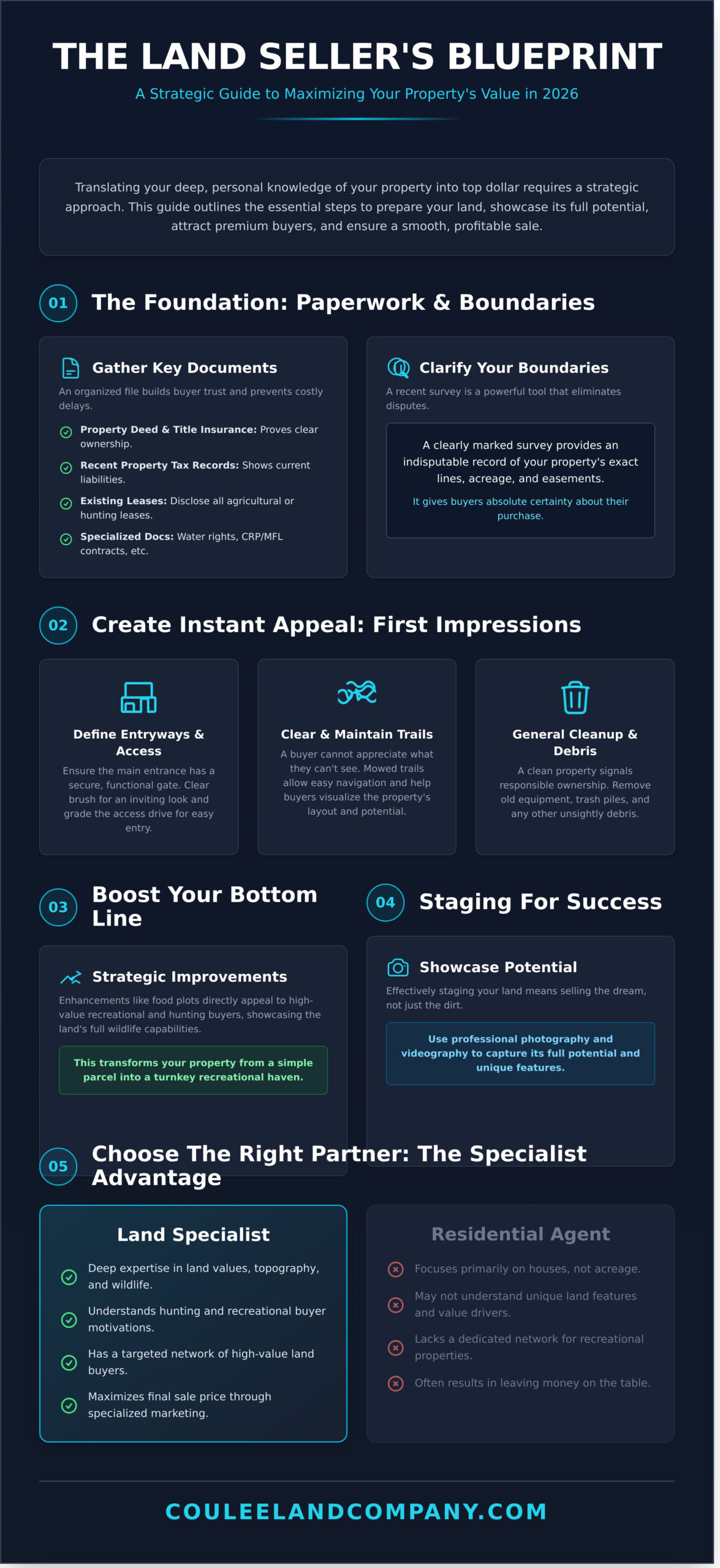
Selling a property ‘as-is’ is a gamble. A truly successful sale requires a strategic approach that showcases its full wildlife capabilities and eliminates buyer objections before they arise. This expert guide for 2026 provides the definitive checklist. We’ll walk you through the essential steps, from verifying boundary lines and improving access trails to strategic enhancements like food plots that will make your parcel stand out. Our goal is to give you the confidence and the plan to present a superior property, attract the right buyers, and maximize your return on investment.
Key Takeaways
- Secure your sale from the start by organizing critical documents and clearly marking boundary lines to prevent legal delays and build immediate buyer trust.
- Discover strategic improvements, from creating clear access trails to establishing food plots, that transform your property and appeal directly to high-value recreational and hunting buyers.
- Learn how to prepare your land for sale by staging it effectively, using professional photography and videography to capture its full potential and sell the dream.
- Understand the critical difference between a residential agent and a true land specialist, and why partnering with an expert is the key to maximizing your property’s final sale price.
Before the ‘For Sale’ Sign: Essential Paperwork & Boundary Prep
Before you clear a trail or even think about staging a property, the most critical step in how to prepare your land for sale happens at your desk. This foundational work-gathering essential paperwork and clarifying boundaries-is the non-negotiable groundwork for a smooth, successful transaction. A well-organized file of documents signals to serious buyers that you are a credible, professional seller, building confidence from day one and preventing costly legal delays down the road.
For a deeper dive into getting your property ready for a swift sale, the following video offers excellent insights:
Gathering Your Key Documents
A buyer and their agent will require a complete set of documents to perform their due diligence. Having these ready demonstrates transparency and expedites the entire process. This organized approach is also fundamental to the early stages of understanding property valuation, as these papers provide the factual basis for an accurate assessment. Before listing, locate and compile the following:
- Property Deed & Title Insurance Policy: These prove your clear ownership of the land.
- Recent Property Tax Records: Shows the current assessed value and tax liabilities.
- Existing Leases: Any current agricultural, hunting, or other leases must be disclosed.
- Specialized Documentation: If applicable, gather any water rights documents, environmental assessments, or government program contracts (e.g., CRP, MFL).
Clarifying Your Boundaries: The Importance of a Survey
For any significant parcel of land, a recent and clearly marked survey is one of the most powerful tools in your selling arsenal. It provides an official, indisputable record of your property’s exact lines, total acreage, and any easements or encroachments. This single document eliminates potential boundary disputes with neighbors and gives a buyer absolute certainty about what they are purchasing. For the vast, rolling tracts of Wisconsin’s Bluff Country or any irregularly shaped property, a survey isn’t just a good idea-it’s absolutely critical for a clean sale.
Creating Instant Appeal: Practical Steps to Improve Your Land’s First Impression
A potential buyer’s opinion is formed within the first few minutes of setting foot on your property. That first visit is your only chance to make a powerful impression. This isn’t just about aesthetics; it’s about presenting a property that is welcoming, accessible, and allows a buyer to immediately visualize its potential. Think of these practical steps as the rural equivalent of ‘curb appeal’ for a country home. The goal is to showcase a tract of land that looks well-maintained and ready for the next owner to enjoy, a critical component of how to prepare your land for sale.
Define Your Entryways and Access
The entrance is the first physical interaction a buyer has with your land. A sagging, rusted gate or an entryway choked with brush sends a clear signal of neglect. Ensure your main entrance is clearly marked with a secure, functional gate that opens easily. Take the time to clear back overgrowth, trees, and brush to create an inviting and open look. Furthermore, grade the main access drive, repairing any significant ruts or washout areas to ensure a potential buyer can drive in without hesitation.
Clear and Maintain Your Trails
A buyer cannot appreciate what they cannot see. Having a network of mowed or brush-hogged trails is non-negotiable for showcasing a property effectively. Clean trails allow prospective buyers to easily and safely navigate the entire parcel, from the low-lying creek bottoms to the hardwood ridges where they might envision a future food plot or stand location. Clearly marked paths help them understand the property’s layout and discover its key features, transforming a simple walk-through into an experience that reveals the land’s full hunting and recreational capabilities.
Execute a General Cleanup and Debris Removal
A clean property signals responsible stewardship and pride of ownership. Removing clutter and hazards is one of the most impactful ways to improve a first impression and demonstrate the land’s value. As detailed in resources like Ohio State University’s The Beginner’s Guide to Farmland Ownership, a property’s physical condition directly reflects on its perceived worth. This is a fundamental step in how to prepare your land for sale and shows a buyer they are investing in a well-cared-for asset.
- Remove any old or abandoned farm equipment, scrap metal, trash piles, and dilapidated structures that are an eyesore.
- Identify and address any safety hazards, such as old, uncovered wells, downed trees across main trails, or abandoned fencing.
- Presenting a clean slate allows a buyer to see opportunity and potential, not a long list of expensive chores.
Section 3: Inspect and Improve On-Site Structures
Any buildings on your property, from a simple hunting cabin to a fully equipped shed, represent a significant part of its perceived value. A potential buyer sees a structure not just as wood and nails, but as a ready-to-use asset for their dream. A critical step in how to prepare your land for sale is ensuring these assets are presented in their best possible light. A well-maintained building suggests a well-cared-for property, while a neglected one can signal underlying problems and deter serious offers. This hands-on approach aligns with many expert tips for selling land, which emphasize that first impressions are paramount in securing a top-dollar sale.
Assess and Repair Existing Structures
Before a buyer ever steps foot inside, they will judge the building’s exterior. Your goal is to project an image of a sound, functional, and secure structure. Start with a thorough inspection, looking for obvious issues that can be rectified with minimal investment. The return on these small efforts can be substantial.
- Structural Integrity: Check for a solid foundation, a leak-free roof, and intact windows. Repairing a few loose shingles or replacing a cracked window pane prevents a small issue from looking like a major expense to a buyer.
- A Fresh Coat of Paint: Never underestimate the power of fresh paint or stain. This is one of the most cost-effective ways to instantly improve appearance, making a cabin or shed look clean, crisp, and cared for.
- Cleanliness and Access: Ensure the interior is swept clean of debris, cobwebs, and any unwanted items. The building should be inviting, allowing a buyer to easily visualize setting up their gear for the next hunting season.
Enhance the Immediate Surroundings
The presentation of your land doesn’t stop at the treeline; it extends right up to the foundation of any building. The area immediately surrounding a cabin or outbuilding should be as tidy and accessible as the structure itself. Clear away any overgrown brush, mow a clean path, and remove any junk or old equipment. For larger country homes, this principle is the same but on a grander scale—the surrounding yard and landscape should reflect the quality of the home. This attention to detail demonstrates pride of ownership and reinforces the property’s overall value, a key component of how to prepare your land for sale effectively.
Boosting Your Bottom Line: Strategic Improvements That Attract Premium Buyers
Once your property is clean and accessible, the next phase of how to prepare your land for sale involves strategic investments that unlock its full potential. This isn’t about spending a fortune; it’s about making smart, targeted improvements that showcase what a premium buyer is looking for. For many searching in Wisconsin’s famed Bluff Country, that means world-class hunting and recreational opportunities. These enhancements answer the critical question, “Is the extra work worth it?” with a resounding yes, often adding significant value to your final sale price.
Enhancing Wildlife Habitat
You don’t need to be a professional land manager to make a powerful impression. Mowing a few strategic clearings or planting a small, simple food plot of clover or brassicas does more than just attract wildlife-it visually demonstrates the property’s capability to produce and hold trophy whitetails. For a serious buyer, seeing this potential firsthand is a game-changer. Highlighting these features is a cornerstone of marketing top-tier hunting properties and helps a buyer envision their future success on the land.
Evaluating Your Timber
The timber on your property is a significant asset that should never be overlooked. We strongly advise sellers to consider a professional timber cruise or a consultation with a certified forester. Understanding the species, volume, and market value of your timber provides you with a powerful negotiating tool. This knowledge can be presented to a buyer as a source of immediate income through a harvest or as a long-term investment. Furthermore, selective thinning, known as Timber Stand Improvement (TSI), can dramatically improve both forest health and wildlife habitat, a dual benefit that is highly attractive to knowledgeable land buyers.
Showcasing Water Features
If your property is blessed with a creek, pond, or river frontage, you have a massive value-driver at your fingertips. Don’t let it be an overgrown secret. Make your water a focal point by clearing access trails directly to it and cleaning up the shoreline or bank. A well-maintained water feature is a magnet for both wildlife and people, creating a premium recreational hub on the property. For buyers, easy access to water for fishing, kayaking, or simply enjoying the view can be the single feature that seals the deal.
Staging Your Property for Success: How to Showcase Your Land’s Full Potential
Once the brush has been cleared and the trails are cut, the real work of marketing your property begins. The physical labor is done; now you must capture the land’s essence and sell the dream. In today’s competitive market, a few blurry phone pictures won’t cut it. To attract serious buyers and command a premium price, you must tell a compelling story with professional visuals that allow a potential owner to understand the layout, features, and immense potential before they ever set foot on the property. This is how you create a listing that stands apart.
Investing in Professional Photography and Videography
Hiring a photographer who specializes in land and drone imagery is non-negotiable. These professionals understand how to capture a property in its best light, showcasing the vibrant green-up of spring or the spectacular blaze of fall colors. Drone video is absolutely essential for a premier hunting property. It provides an unmatched perspective on the scale, topography, and strategic layout of the land, showing how ridges, valleys, and access points relate to neighboring parcels. This is how a buyer visualizes the hunt.
Creating Detailed and Informative Maps
A superior map is one of the most powerful tools in your marketing arsenal and a critical part of how to prepare your land for sale. We work with our sellers to create high-quality, detailed map overlays that translate a flat aerial image into a strategic blueprint for the outdoorsman. A truly effective map goes beyond simple boundary lines and should clearly mark:
- Established trail systems and access points
- Proven food plot locations
- Key water sources like creeks, ponds, or springs
- Existing tree stand and blind locations
- Topographical features that create natural funnels
This level of detail demonstrates the property’s strategic value and wildlife capabilities, allowing a buyer to immediately recognize the thoughtful land management that has already been invested. It’s a testament to the quality of the parcel and the seriousness of the seller. To see how experts market premier Wisconsin properties, explore the listings at couleelandcompany.com.
Choosing the Right Partner: Why a Land Specialist Maximizes Your Sale
Selling a prime parcel of hunting land is a world away from selling a suburban home. The entire process of how to prepare your land for sale requires a different mindset, a specialized skillset, and a partner who understands the soul of the property. A residential agent lists a house; a true land specialist markets its legacy and potential. They are your most critical asset in ensuring all your hard work translates into maximum value at closing.
Expertise in Land, Not Just Listings
A traditional realtor might see 80 acres and a price tag. A land specialist sees the strategic placement of food plots, the future value of a timber stand, and the travel corridors of trophy whitetail bucks. They understand that the true worth of a property lies in its wildlife capabilities and recreational potential. This deep knowledge allows them to:
- Advise on which improvements offer the best return on your investment.
- Tap into a network of qualified buyers specifically seeking hunting and recreational land.
- Accurately assess features that standard appraisals often overlook.
It’s the kind of hands-on experience our expert Mike Law brings to every property, ensuring no detail of its value is left undiscovered.
Marketing to the Right Audience
You can have the most impressive property in the county, but it won’t sell for a premium price if the right people never see it. A land specialist doesn’t just post on the MLS. They leverage niche marketing channels, from specialized land websites to social media groups where hunters and outdoor enthusiasts gather. They speak the language of the buyer, highlighting the very features-like access points, stand locations, and QDM history-that ignite a buyer’s passion. This ability to tell your property’s story is what separates a quick sale from a record-breaking one.
Ready to Sell? Start with a Professional Valuation
The final step in this process is knowing your property’s true market value. After you’ve cleared trails, planted food plots, and gathered your documentation, you need a professional assessment from someone who recognizes the value of that work. A specialist provides an accurate, comprehensive valuation based on your property’s unique hunting and recreational attributes, not just comparable acreage sales. This is the foundation of a successful sales strategy.
Contact Coulee Land Company today for a free, no-obligation property valuation. Let our team of dedicated land specialists show you the true potential of your property.
Partner with a Specialist to Maximize Your Land’s Legacy
Selling your land is a significant decision, and diligent preparation is the key to a successful outcome. This process goes far beyond planting a “For Sale” sign; it involves meticulous paperwork, enhancing the property’s first impression, and making strategic improvements that showcase its full potential, from timber value to wildlife capabilities. Ultimately, understanding how to prepare your land for sale is about revealing its true character and securing its maximum market value.
The final, and most critical, step is choosing the right partner. The team at Coulee Land Company lives and breathes this work. With deep expertise in Western Wisconsin’s famed Bluff Country and a proven track record of maximizing seller returns on properties with exceptional wildlife potential, we know what it takes to attract premium buyers. Don’t leave money on the table. Get a professional valuation of your land from Wisconsin’s specialists.
Your property represents a significant investment and a rich heritage. Partner with the experts to ensure its legacy is honored and your financial goals are exceeded.
Frequently Asked Questions About Preparing Your Land for Sale
How much does it cost to get land surveyed in Wisconsin?
In Wisconsin, a boundary survey for a large parcel can range from $2,000 to over $10,000. The final cost depends on factors like total acreage, the difficulty of the terrain in areas like the Bluff Country, and the property’s legal history. While it is a significant investment, having clearly marked and legally defined boundaries is a non-negotiable step for a smooth, high-value transaction. It provides absolute confidence for both the seller and the prospective buyer.
Do I need to clear my land completely before selling it?
Complete clearing is rarely advisable for a recreational property. Instead, focus on strategic clearing to enhance its features. This means creating well-defined access trails for trucks or UTVs, clearing potential food plot locations, and opening up key views of the landscape. The goal is to showcase the property’s full potential and wildlife capabilities, not to erase the natural habitat that makes it so valuable to a hunter or outdoor enthusiast looking for their dream property.
What single improvement adds the most value to a hunting property?
A well-planned and maintained internal trail system is arguably the single most valuable improvement for a hunting property. Superior access dramatically increases the land’s “huntability,” allowing for quiet entry to stand locations, easy game retrieval, and efficient land management. It lets a potential buyer immediately visualize how they can use and enjoy the entire property, transforming a raw piece of land into a turnkey trophy whitetail paradise that commands a premium price.
How long does it typically take to sell a large parcel of land?
Selling a large parcel of land in Wisconsin typically takes anywhere from 6 to 18 months, though this can vary significantly. Key factors include asking price, the property’s location, and current market conditions. However, the most critical factor is a strategic marketing plan that reaches the right niche buyers. Working with a land specialist who understands the unique appeal of hunting properties can substantially accelerate this timeline and maximize your return on investment.
Should I sell my timber before I sell the land?
Selling timber before the land requires careful consideration. While it provides immediate income, a heavy harvest can negatively impact the property’s aesthetic appeal and wildlife habitat, potentially lowering its overall value to a recreational buyer. We recommend consulting with both a professional forester and a land sales specialist to weigh the timber revenue against the potential impact on the final sale price. A selective, managed harvest is often a better strategy than a clear-cut.
Can I sell a portion of my land and keep the rest?
Yes, you can absolutely sell a portion of your land. This process, known as a parcel split or land division, involves obtaining a new survey and ensuring compliance with local zoning and land use ordinances. It is a critical part of how to prepare your land for sale if you are not selling the entire tract. Navigating specific county requirements is essential, making the guidance of an experienced land agent invaluable to ensure the process is handled correctly and efficiently.
What time of year is best for selling recreational land?
Late summer and early fall are prime seasons for selling recreational and hunting land in Wisconsin. As hunting season approaches, buyers are highly motivated and can see the property in its full glory before the leaves drop. This timing allows them to envision the upcoming season and appreciate the land’s true potential. Spring is also a strong season, as the landscape comes to life and access is typically easy after the snow melts, making it ideal for property tours.