
The vision of a lush food plot drawing in trophy whitetail bucks is a powerful one, but the reality for many landowners is a season of wasted effort, money, and frustration. Here in Wisconsin, our unique soil composition and unforgiving climate present a distinct set of challenges that can derail even the best intentions. If you’re tired of sifting through conflicting advice and ending a season with more questions than answers, you understand that mastering how to plant a food plot for deer in wisconsin requires more than just wishful thinking-it demands a proven, strategic plan rooted in local expertise.
This is that plan. Forget the guesswork. We are providing the definitive, season-by-season guide for the 2026 season, designed specifically for the Wisconsin landowner. Inside, you’ll find a clear, actionable calendar covering everything from spring soil preparation and superior seed selection to strategic fall planting that puts deer on your property when it matters most. This is your blueprint for transforming a patch of ground into a thriving wildlife magnet and achieving the hunting success you’ve earned.
Key Takeaways
- A successful food plot is more than just a food source; it’s a strategic tool designed to overcome Wisconsin’s challenging soil and short growing seasons.
- The guide on how to plant a food plot for deer in Wisconsin begins with the single most critical step: a professional soil test from the UW-Extension.
- Learn to design your plots for successful hunts by mastering placement for specific wind directions and creating distinct “kill plots” versus “destination plots.”
- Discover how proper maintenance and crop rotation can transform your food plot from a one-season wonder into a long-term property asset that improves year after year.
The Foundation: Why Food Plots in Wisconsin Require a Strategic Plan
A food plot is far more than a simple patch of clover; it is a powerful land management tool designed to achieve specific goals. A well-executed plot provides critical nutrition during stressful periods, boosts the overall health of your deer herd, and creates predictable movement patterns for hunting season. While you can find a basic overview of the concept by reading about What is a Food Plot?, true success in our state requires a deeper, more tactical approach tailored to our unique landscape.
To see these principles in action, watch this excellent guide from the experts at Drury Outdoors.
Successfully learning how to plant a food plot for deer in Wisconsin means confronting our state’s distinct challenges. From the acidic soils of the Northwoods to the rugged terrain of the Bluff Country, one size does not fit all. Our compressed growing season demands precise timing and hardy forage selections. A winning strategy is a year-long commitment: spring soil preparation, summer weed control, fall planting for attraction, and providing late-season winter nutrition. The goal is to hold healthier, mature deer on your property and create superior hunting opportunities.
Understanding Your Property’s Potential
Before you break ground, conduct a thorough assessment of your landscape. The ideal size and number of plots depend entirely on your acreage and management goals-a quarter-acre “kill plot” tucked into a wooded funnel serves a different purpose than a three-acre destination field. Identify locations with at least 4-6 hours of direct sunlight, manageable access for equipment, and proximity to water and bedding cover. Your food plots must complement your property’s existing habitat, not fight against it.
Essential Tools: From No-Till to Full Tillage
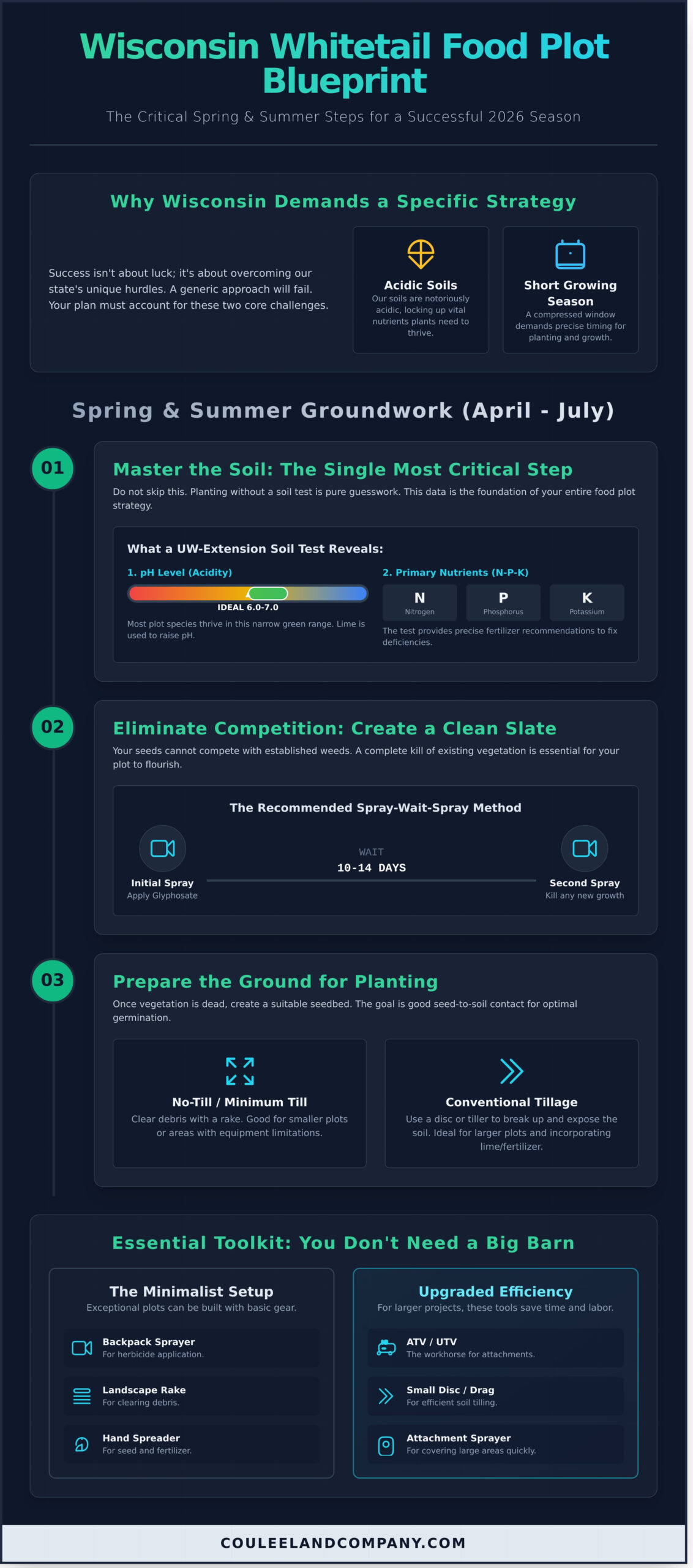
You do not need a barn full of expensive equipment to create a thriving food plot. Many exceptional plots are established with minimal gear, making this a viable project for any landowner. At a bare minimum, you will need:
- A quality backpack sprayer for terminating existing vegetation.
- A sturdy landscape rake for clearing debris and preparing the seedbed.
- A handheld broadcast spreader for applying seed and fertilizer.
For larger projects, an ATV or UTV with a small disc, drag, or sprayer attachment can dramatically increase efficiency. But remember, a strategic plan and diligent effort will always outperform expensive machinery.
Spring & Summer Prep (April-July): The Most Critical Steps
Success in the fall begins with diligent work in the spring. The period from April through July is when you lay the essential groundwork for a thriving food plot that will attract and hold deer on your property. Skipping these steps is the fastest route to a failed plot and wasted investment. True land management is about calculated, strategic action, and it all starts with understanding your soil.
Mastering the Soil Test
If you take only one piece of advice from this guide, let it be this: get a soil test. This is the single most important action for anyone learning how to plant a food plot for deer in Wisconsin. Our state’s soils are notoriously acidic, and planting without this data is pure guesswork. Collect 10-15 random samples from your plot area, digging 6 inches deep and mixing them in a clean bucket. Send your composite sample to the University of Wisconsin Soil and Forage Analysis Lab for a report that will detail:
- pH Level: Measures soil acidity. Most plot species thrive in a 6.0-7.0 range.
- N-P-K: Levels of Nitrogen, Phosphorus, and Potassium-the primary nutrients for plant growth.
The results will provide precise recommendations for lime and fertilizer, removing all doubt and maximizing your seed’s potential.
Weed Control and Seedbed Preparation
With your soil test results in hand, the next step is creating a clean slate for your seeds. You must eliminate weed competition. A broad-spectrum herbicide like Glyphosate is the most effective tool. For plots with stubborn, established weeds, we recommend the spray-wait-spray method: apply herbicide, wait 10-14 days for any new growth to emerge, and spray a second time to ensure a complete kill.
Once the vegetation is dead, you can prepare the seedbed. This can be done by tilling the soil to create a fine, broken-up bed or by using a no-till drill for minimal soil disturbance. Both methods can be effective, but the ultimate goal is the same: achieving excellent seed-to-soil contact. This foundational work aligns with broader land management principles found in the Wisconsin DNR habitat guidelines, which emphasize proper site preparation for wildlife plantings. A firm, clean seedbed ensures your seeds have the best possible start for vigorous growth.
Section 3: Selecting the Right Forage for Wisconsin Whitetails
Once your soil is prepared, the next critical decision is what to plant. The answer depends entirely on your goals for the property. Forages are categorized into two primary types: annuals, which last for a single season, and perennials, which return for multiple years. A successful land manager understands how to leverage both to create a year-round deer destination.
Perennials like white clover, red clover, and chicory are the foundation of a long-term nutrition program. Planted in spring or late summer, these plots provide high-protein forage from early spring green-up through the fall, supporting antler growth and fawn development. They are a consistent, reliable food source that forms the backbone of your property’s wildlife plan.
Annuals, by contrast, are specialists planted for maximum attraction during a specific window-namely, hunting season. The strategy behind how to plant a food plot for deer in wisconsin often hinges on the precise timing and placement of these high-impact plots. With so many options available, expert resources can provide valuable guidance on choosing the right food plot species to match your specific goals and soil conditions.
Planting for Early Season (August – September)
To create an irresistible draw for the September bow opener, focus on fast-growing, highly palatable annuals. A blend of oats, winter rye, and field peas planted in late July or early August will be lush and tender when the season opens. These grains provide immediate attraction, creating ideal hunting opportunities over a green field before the surrounding agriculture is harvested.
Planting for Late Season & Winter (October – December)
For late-season holding power, nothing outperforms cold-hardy brassicas. Plants like turnips, forage radishes, and kale are packed with carbohydrates. After the first hard frost, their starches convert to sugars, turning them into a high-energy food source that deer crave. Planted in late July, these plots become magnets that will hold deer on your property through the rut and into Wisconsin’s harsh winter.
Ultimately, the best hunting properties feature a mosaic of different food plots. Combining the foundational nutrition of perennials with the targeted attraction of early and late-season annuals is a proven strategy for managing and harvesting mature whitetails year after year.
Fall Strategy: How to Hunt Your Wisconsin Food Plots
Planting a successful food plot is only half the equation for a successful hunt. The true art of land management lies in creating a hunting strategy that leverages your hard work without alerting mature bucks to your presence. Mastering how to plant a food plot for deer in wisconsin is one thing; knowing how to hunt it effectively is what separates good land managers from legendary ones. The key is to think like a predator and design every element-from plot placement to your entry route-for a decisive advantage.
A superior strategy often involves a two-plot system. First, you have large destination plots, typically planted in soybeans or corn, which serve as the primary food source and are designed to hold deer on your property. These are often best observed from a distance. Second, and more critical for hunting, are the smaller, secluded kill plots. These half-acre or smaller plots are tucked into strategic locations and planted with highly attractive late-season forage like brassicas or cereal grains, creating a predictable pattern for a high-odds encounter.
The single most critical factor is your access. A perfectly placed plot is worthless if deer pattern you walking to your stand. Your entry and exit routes must be undetectable, utilizing topography, creek bottoms, and screening cover to keep you out of sight and your scent out of the deer’s nose.
Bluff Country Plot Placement
In the rugged terrain of Wisconsin’s Driftless Area, plot placement becomes a specialized skill. We strategically tuck small kill plots onto hidden ridge-top benches and deep inside saddles to intercept cruising bucks during the rut. To ensure silent access, we use screens of native switchgrass or implement hinge-cutting to create visual barriers along trails. This advanced approach is essential for maximizing the wildlife capabilities of properties in famed areas like Buffalo County.
Stand Placement and Hunting Pressure
Your stand location must be dictated by the prevailing fall winds, which in Wisconsin are predominantly from the northwest. Position your stand on the downwind side of the plot or trail you expect deer to use. Most importantly, exercise discipline. Do not hunt a plot unless the wind is perfect, and avoid over-pressuring any single location. Use trail cameras to monitor deer activity remotely, allowing you to gather crucial intel without contaminating the area with human scent.
This strategic approach transforms the question from simply how to plant a food plot for deer in wisconsin to how to create a predictable, low-pressure hunting masterpiece on your own piece of land.
Beyond the First Year: Turning Plots into Property Assets
Successfully learning how to plant a food plot for deer in Wisconsin is a major accomplishment, but the real rewards come from long-term management. A food plot isn’t just a season-long project; it’s a permanent improvement that enhances wildlife, enriches your experience, and builds significant equity in your property. With consistent effort, you can transform a simple feeding area into a dynamic, multi-year asset that defines your land.
Maintaining Your Perennial Plots
Perennial plots, like those planted with clover or alfalfa, are the foundation of a sustainable food source. Proper maintenance ensures they remain productive for years, saving you time and money. Key annual tasks include:
- Strategic Mowing: Mow your clover plots 2-3 times during the summer, especially before they go to seed. Cut them to a height of 6-8 inches to stimulate new, tender growth and control broadleaf weeds before they can mature.
- Annual Fertilizing: Refer back to your original soil test. Apply a low-nitrogen fertilizer (like 0-20-20) each fall to replenish the nutrients consumed by the plot throughout the year. This simple step is critical for plot longevity.
- Frost Seeding: To thicken thinning stands, broadcast clover seed over the plot during the freeze-thaw cycles of late February or early March. The ground’s natural heaving action works the seed into the soil for you, ensuring a lush plot come spring.
For annual plots featuring brassicas or grains, consider crop rotation. Planting a different crop family in a plot each year disrupts disease and insect cycles, improves soil structure, and prevents nutrient depletion. This is a hallmark of advanced land management.
Maximizing Your Land Investment
A well-managed system of food plots does more than attract trophy whitetails; it dramatically increases your property’s market value. Today, savvy buyers aren’t just looking for acreage; they are searching for turnkey hunting parcels where the foundational habitat work is already complete. They understand the time and expertise it takes to establish a premier hunting destination, and they are willing to pay a premium for it.
This is precisely where your efforts translate into a powerful selling point. Your knowledge of how to plant a food plot for deer in Wisconsin and maintain it properly transforms a tract of land into a highly desirable asset. As Wisconsin’s Land & Property Sales Specialists, our agents possess a deep understanding of how these improvements directly impact market value. We don’t just see fields; we see a strategic network of assets that elevates a property above the competition.
Thinking of selling? See how we market properties like yours.
From Seed to Trophy: Your Wisconsin Land Awaits
Ultimately, a successful food plot is the result of a deliberate, year-round strategy. It begins with understanding Wisconsin’s unique challenges, committing to diligent spring and summer prep, and executing a smart hunt plan in the fall. Mastering how to plant a food plot for deer in wisconsin transforms your property from a simple parcel of land into a powerful asset that consistently attracts and holds mature whitetails. This isn’t just about one season; it’s about building a legacy of successful hunts and superior wildlife management.
The right strategy deserves the right property. As Wisconsin’s Land & Property Sales Specialists, we bring unmatched expertise to every transaction, with deep roots in the famed Bluff Country and Buffalo County-the heart of trophy whitetail territory. Our team has a proven record of helping hunters find, manage, and sell premier properties. We understand the land because we live it. Let us help you turn your vision into a reality.
Find your perfect piece of Wisconsin hunting land today.
Frequently Asked Questions About Planting Deer Food Plots
When is the best time to plant a food plot for deer in Wisconsin?
The timing for how to plant a food plot for deer in Wisconsin depends on your goals. For fall hunting plots with annuals like brassicas or winter rye, plant from late July to early August. For perennial clovers, a spring planting after the last frost (late April-May) is ideal for establishment. A late summer planting for perennials is also effective, giving them time to root before winter. Proper timing is critical for success in our northern climate.
What is the cheapest food plot to plant for deer?
For budget-conscious land managers, cereal grains like winter rye or oats are exceptionally cost-effective. These grains establish quickly, are tolerant of less-than-ideal soil, and provide significant tonnage for early and late-season attraction. While they may not offer the year-round protein of a perennial clover plot, they deliver outstanding value and are a foundational component of any successful food plot strategy in Wisconsin’s challenging climate.
Do I need a tractor to plant a food plot?
While a tractor and implements make the job easier, they are not an absolute necessity for smaller “kill plots” or remote locations. With the right approach, you can use an ATV with a small disc and spreader, or even hand tools for a no-till method. This involves spraying to kill existing vegetation, then broadcasting seed just before a heavy rain. This method is a key part of how to plant a food plot for deer in Wisconsin on challenging terrain.
What kind of clover is best for deer in Wisconsin?
In Wisconsin’s demanding climate, a blend of perennial clovers is superior to a single variety. We recommend a mix featuring a high-quality Ladino white clover for its durability and protein content, combined with a medium red clover for its drought tolerance and attractiveness. This combination ensures your plot can withstand our cold winters and dry summers, providing a consistent food source that will hold trophy whitetails on your property.
How much lime do I need for my food plot?
The only definitive way to know the correct amount of lime is to conduct a professional soil test. This is a non-negotiable first step for serious land managers. The test results will provide a specific recommendation, typically in tons per acre, to raise your soil’s pH to the optimal 6.5-7.0 range. Guessing can waste time and money, while a proper soil test ensures your seed investment reaches its full potential and maximizes forage production.
Can I plant a food plot in a wooded area?
Yes, you can establish a “backwoods” or clearing plot, but sunlight is the critical limiting factor. You need a minimum of 4-6 hours of direct sunlight per day for most forage to thrive. Select shade-tolerant species like certain clovers, chicory, or brassicas. You may need to thin the canopy by removing select trees to allow sunlight to reach the forest floor. These small, secluded plots can become dynamite hunting locations for mature bucks.
How do I keep turkeys from eating my food plot seed?
Turkeys can be a major challenge, especially for smaller seeds like clover and brassicas. The most effective strategy is to ensure excellent seed-to-soil contact. Use a cultipacker or drag to press the seed firmly into the soil, making it harder for birds to find. Planting just before a guaranteed rain also helps wash the seed into the soil quickly. For high-pressure areas, some land managers use scare devices like flash tape for the first few days post-planting.