
Most traditional banks see a 40-acre timber tract in Buffalo County and try to fit it into the same box as a three-bedroom ranch in the suburbs. This fundamental misunderstanding of land value is why so many dreams of property ownership stall before the first trail cam is even hung. You have likely already felt the frustration of a lender capping your acreage at 10 acres or demanding a staggering 35% down payment because they simply don’t see the worth in your trophy-managed habitat or standing timber. It’s an exhausting hurdle that makes many buyers feel like the deck is stacked against them.
This expert guide clarifies exactly how to finance a rural land purchase in Wisconsin by connecting you with land-intelligent lenders who value the asset’s specific recreational and ecological potential. We’ll break down the 2026 landscape of loan requirements, explore 20% down payment options, and provide a regional strategy to help you secure that legacy property. From understanding current USDA Farm Service Agency rates to identifying specialized agricultural credit services, you will gain the clarity needed to move from browsing listings to signing a deed on your own slice of the Badger State.
Key Takeaways
- Understand why traditional lenders often reject large acreage and how to bridge the “collateral gap” by targeting land-intelligent institutions that value natural assets.
- Discover why specialized cooperatives and local community banks remain the gold standard for securing competitive rates on premier hunting and agricultural tracts.
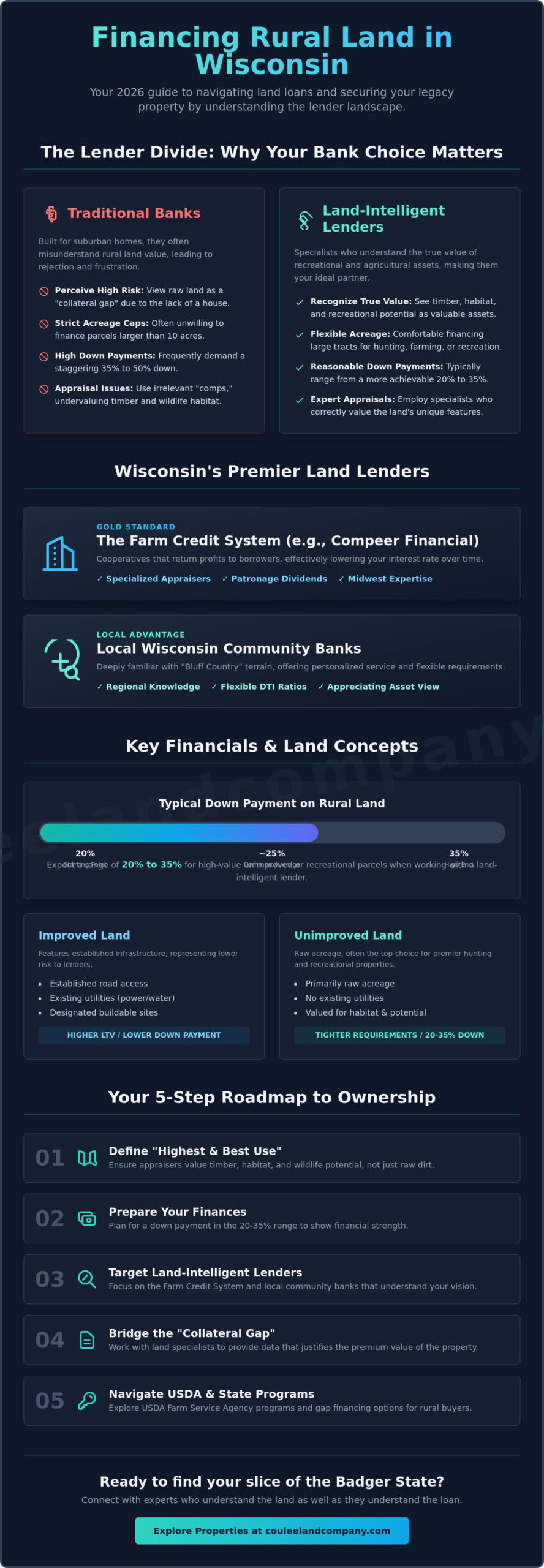
- Master the specific steps of how to finance a rural land purchase in Wisconsin, including preparing for down payments that typically range from 20% to 35% for high-value recreational parcels.
- Learn how to define your property’s “Highest and Best Use” to ensure appraisers accurately value timber, habitat, and wildlife potential rather than just raw dirt.
- Navigate the 2026 lending landscape with updated insights on USDA Farm Service Agency programs and specialized state-level gap financing options for rural buyers.
Why Traditional Banks Struggle with Rural Land Loans
Traditional banks are built for subdivisions, not ridge-top oak savannas. They see a “collateral gap” where the lack of a roof and four walls translates to perceived risk. While a home has a liquid market, raw land can take longer to move, leading many big-box lenders to cap acreage at 10 acres or demand 50% down payments. This rigid approach often forces buyers to seek a Land Contract or look for more flexible financing options that recognize the land’s inherent value.
Understanding how to finance a rural land purchase in Wisconsin requires recognizing that most retail lenders don’t account for the intrinsic value of timber or wildlife habitat. They treat a world-class hunting tract like a vacant lot behind a strip mall. This disconnect is why the 2026 market has seen a distinct shift toward land-intelligent lenders who specialize in agricultural and recreational assets. These experts look beyond the dirt to see the property’s true potential.
To better understand this concept, watch this helpful video:
Improved vs. Unimproved Land: Defining Your Collateral
Improved land features established road access, existing utilities, or designated buildable sites. Unimproved land is raw acreage, which is often the primary choice for hunting properties. Lenders generally offer higher loan-to-value (LTV) ratios for improved land because it represents a lower risk. For unimproved parcels, expect tighter requirements and down payments that typically range from 20% to 35% depending on the lender’s comfort with the specific region.
The ‘Comparable Sales’ Hurdle in Rural Wisconsin
Traditional appraisers often fail in low-turnover regions like Buffalo County. They rely on “comps” from miles away that don’t share the same topographic or biological advantages. Land specialists bridge this gap by providing lenders with data that justifies the premium value of a property’s record-breaking wildlife statistics or managed timber stands. Without this expert context, a loan can easily fall through due to an under-appraisal that ignores the land’s actual stewardship value.
Top Tiers of Banks Offering Land Loans for Wisconsin Properties
Securing a loan for a premier hunting tract requires a lender who understands that “wasteland” on a tax bill is actually high-value wildlife habitat. When you look at how to finance a rural land purchase in Wisconsin, three specific tiers of lenders stand out for their ability to value the land correctly. These institutions move beyond the rigid metrics of urban banks to recognize the true worth of the soil, timber, and topography.
The Farm Credit System and Patronage Dividends
The Farm Credit System, specifically cooperatives like Compeer Financial, represents the gold standard for rural lending in the Midwest. These institutions employ specialized appraisers who know how to value standing timber and tillable acreage alongside recreational potential. This expertise is vital when evaluating Buffalo County land for sale, where the unique topography and trophy potential demand a nuanced financial perspective.
One primary advantage of this system is the patronage dividend. Because these lenders operate as cooperatives, they return a portion of their annual net earnings directly to their member-borrowers. This cash-back payment effectively reduces your net interest rate over the life of the loan. It’s a powerful financial incentive that creates a partnership between the buyer and the lender, ensuring both parties are invested in the land’s long-term success.
The Value of Local Wisconsin Community Banks
Local community banks in Western Wisconsin offer a distinct advantage through their deep familiarity with “Bluff Country” terrain. These lenders don’t flinch at steep coulees or remote access points because they live and work in the same landscape. They often provide more flexible debt-to-income (DTI) requirements for buyers who have established roots in the region. A local banker understands that a 40-acre parcel in the Driftless Area is a stable, appreciating asset, often allowing for a more personalized approval process than a distant national firm.
For those just starting their journey into property stewardship, FSA Farm Loan Programs provide essential support. These government-backed options are designed for beginning landowners who might lack the significant down payment required by conventional routes. If you’re ready to move from dreaming to owning, our expert agents can help you identify properties that align with these specific lending criteria.
Securing Your Rural Land Loan: A 5-Step Roadmap
Closing on a premier property in the Driftless Area requires more than just a solid credit score; it demands a tactical approach to valuation. Learning how to finance a rural land purchase in Wisconsin is the final hurdle between you and your dream property. To ensure your lender recognizes the true value of the coulees and ridges you’re buying, follow this strategic roadmap.
- Step 1: Define your ‘Highest and Best Use’. Whether the land is intended for trophy hunting, agricultural production, or a future residential build, this classification dictates your loan terms and appraisal requirements.
- Step 2: Prepare your capital. Expect to provide a down payment of 20% to 35% for prime recreational parcels. Lenders view this equity as a commitment to the long-term stewardship of the property.
- Step 3: Source a land-literate appraiser. You need a professional who understands how trophy whitetail habitat and standing timber volume contribute to the bottom line. A standard residential appraiser will likely undervalue these natural assets.
- Step 4: Review the property survey and title commitment. Look closely for restrictive easements or access issues that could hinder your management goals or future resale value.
- Step 5: Partner with a land specialist. A broker who understands the local market can bridge the gap between your vision and the lender’s rigid requirements.
Land-Specific Appraisal Factors
A comprehensive Land Management Plan serves as a blueprint for your habitat goals and a powerful tool for your lender. By documenting tillable income or managed timber stands, you provide concrete evidence of the property’s financial productivity. In regions like Buffalo County, where record-breaking wildlife statistics drive demand, these details are vital. For a deeper look at how specific habitat features impact market value, consult our Hunting Land for Sale in Wisconsin: The Ultimate Buyer’s Guide.
Why Working with a Land Specialist Broker Matters
Expert agents like Mike Law or Bryan Lemke do more than just find listings. They actively navigate the appraisal process by providing the specialized “comparable sales” that traditional banks often miss. They understand how “Bluff Country” topography affects utility and value. If your goal includes developing a home site on your new acreage, exploring USDA Rural Housing Site Loans can offer additional paths for funding. Ready to secure your legacy? Connect with a Coulee Land Specialist today.
Claim Your Piece of the Wisconsin Wild
Owning a premier recreational tract is a significant investment that requires more than a standard mortgage application. You now have the roadmap to navigate the “collateral gap” by prioritizing land-intelligent lenders and specialized appraisal data. By focusing on the intrinsic value of timber and habitat, you can secure financing that reflects the true worth of the property rather than just its raw acreage. These financial strategies ensure that your investment is protected and your goals for property stewardship remain within reach.
Our team brings deep expertise in Western Wisconsin’s unique “Bluff Country” market. We maintain a proven track record with trophy whitetail property appraisals and hold direct connections to regional lenders who truly understand rural assets. Knowing how to finance a rural land purchase in Wisconsin is the final step in turning your vision into a reality. Don’t let rigid banking hurdles stand between you and the legacy you’re building for your family.
Start your search for the perfect legacy property in Wisconsin. The ridges and valleys of the Driftless Area are waiting for their next dedicated steward.
Frequently Asked Questions
What is the typical down payment for a rural land loan in Wisconsin in 2026?
Expect to provide a down payment between 20% and 35% for most prime rural parcels this year. While some specialized government programs might offer lower entry points, land-intelligent lenders typically require this level of equity to offset the risks associated with unimproved acreage. Properties with high agricultural value or established income streams may occasionally qualify for the lower end of that range.
Can I get a land loan to buy hunting property with a 30-year fixed rate?
Securing a 30-year fixed rate for raw hunting land is rare as most lenders prefer 15 to 20-year terms or adjustable-rate mortgages. Traditional 30-year products are generally reserved for residential properties with a primary dwelling. However, certain agricultural credit associations may offer long-term fixed options if the property meets specific production or acreage requirements common in Western Wisconsin.
What is a ‘patronage dividend’ and how does it lower my land loan cost?
A patronage dividend is a cash-back payment issued by cooperative lenders like Compeer Financial to their member-borrowers. These payments represent your share of the cooperative’s annual net earnings. This annual check effectively reduces your net interest rate over the life of the loan, making it a vital component in the strategy of how to finance a rural land purchase in Wisconsin.
Is it harder to finance raw land than a country home with acreage?
Financing raw land is more challenging because traditional banks view unimproved dirt as a higher risk than a property with a standing home. Without a primary structure to serve as immediate collateral, lenders often impose stricter credit score requirements and higher down payments. This is why partnering with a lender who understands habitat and timber value is essential for a successful closing.
Do I need a survey before a bank will approve a land loan in Wisconsin?
Most lenders and title insurance companies require a professional survey to verify property boundaries and identify potential encroachments before final approval. In the rugged “Bluff Country” terrain, an accurate survey ensures that the legal description matches the physical landscape. This document protects both you and the lender by confirming exactly what acreage is being used as collateral for the loan.
Can I use the timber value on the property to help with my down payment?
You cannot use standing timber as a direct cash substitute for a down payment at the closing table. However, a professional timber cruise can significantly increase the property’s appraised value, which improves your loan-to-value ratio. Understanding these valuation nuances is a key part of learning how to finance a rural land purchase in Wisconsin and can help you secure more favorable loan terms.