
In the rugged terrain of Bluff Country, a trophy buck’s home range isn’t defined by where he eats, but by where he drinks when the early season dry spells hit. You’ve likely invested heavily in premium food plots and timber stand improvements, only to watch your target deer vanish onto a neighbor’s property because your land lacks a reliable hydration point. It’s a common frustration for landowners who realize that even the best bedding cover can’t hold wildlife without a consistent drink nearby. Recent data shows that extreme drought can reduce fawn survival by over 30 percent, proving that water is the ultimate force multiplier for your herd’s health and your property’s hunting potential.
We understand that the uncertainty of pond construction costs and complex permit regulations often stalls these vital habitat projects. This guide will teach you how to create a water source for wildlife using professional techniques designed to attract and hold mature whitetails year-round. You’ll learn the specific design strategies we use to build low-maintenance systems in remote areas, ensuring your property remains the preferred destination even in the driest years. From navigating regional regulations to choosing between DIY kits and professional excavation, we’re providing the blueprint for a signature water feature that elevates your land’s value and its ecological impact.
Key Takeaways
- Understand why water is the critical “forgotten” nutrient that patterns mature bucks between their bedding cover and primary food sources.
- Discover professional techniques for how to create a water source for wildlife using reliable stock tank methods or natural pond excavation.
- Learn to leverage the “military crest” of ridgetops to provide deer with a secure, high-ground hydration point that encourages daylight movement.
- Identify strategic placement tips for north-facing slopes to ensure summer cooling and south-facing areas for better winter access.
- Gain the expertise needed to transform your land into a signature hunting property with increased holding power and long-term market value.
The Biological and Tactical Impact of Water on Your Property
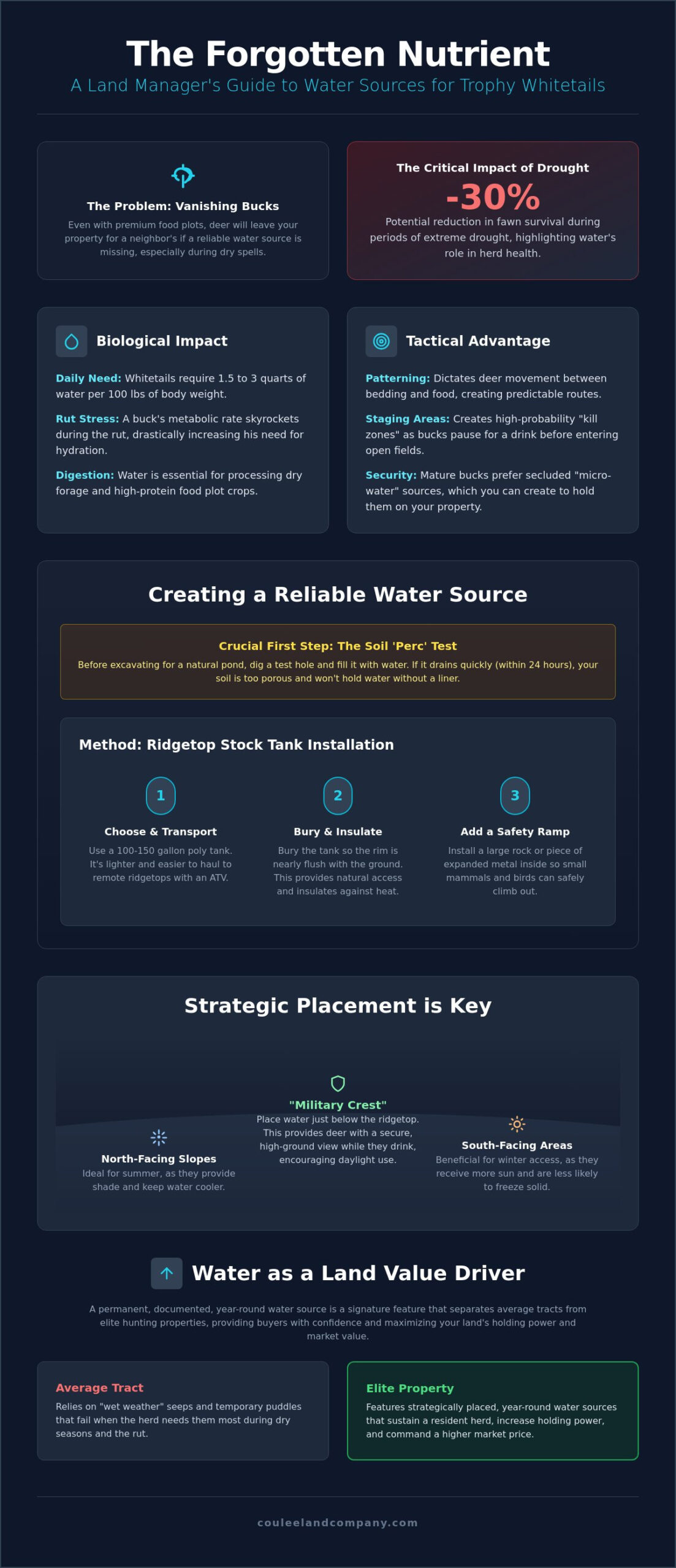
Many land managers obsess over protein levels in food plots or the diversity of their timber stands, yet they often overlook the most vital element of survival. Water is the “forgotten” nutrient in whitetail management plans, but it acts as the primary driver of daily movement patterns across the ridges of Buffalo County. Deer don’t just want water; they need it to process the dry forage and high-protein clover they consume. Without a reliable source on your acreage, you’re essentially forcing your herd to commute to the neighbors when the humidity drops.
During the rut, a mature buck’s metabolic rate skyrockets as he covers miles in search of does. He can lose significant body weight in a matter of weeks, and his need for hydration becomes a physical desperation. Research suggests whitetails typically require 1.5 to 3 quarts of water per 100 pounds of body weight. When the summer heat reaches its peak or the rut kicks into high gear, that demand increases. Learning how to create a water source for wildlife ensures these animals don’t have to leave the security of your cover to find relief during these high-stress periods.
To better understand this concept, watch this helpful video:
Water as a Land Value Driver
From a real estate perspective, permanent water is a signature feature that separates average tracts from elite hunting properties. While “wet weather” seeps might look good during a rainy spring, they fail when the hunting season gets tough. Documented, year-round water sources provide buyers with the confidence that the property has the holding power to sustain a resident herd through every season. This reliability is a major factor in maximizing the return on your land investment.
Whitetail Consumption Patterns
Whitetails meet their hydration needs through a combination of preformed water found in lush vegetation and surface water pulled from open sources. While younger deer might frequent large, open Ponds for wildlife, a mature buck is a different creature. He prioritizes security above all else. He prefers “micro-water” sources tucked into thick staging areas where he can drink without exposing himself to the open sky or long-range glassing. If you are researching how to create a water source for wildlife that actually holds trophy deer, you must prioritize these secluded locations.
Tactically, water allows you to dictate exactly where a buck stands before he enters a food plot. By placing small water holes along transition lines, you create predictable staging areas and high-probability “kill zones.” This psychological anchor reduces “range expansion,” keeping deer focused on your specific acres rather than wandering onto adjacent lands in search of a drink.
Proven Methods for Creating Reliable Water Sources
Before you break ground, you must determine if your soil can actually hold water. A simple “perc test” is the first step. Dig a small test hole, fill it with water, and monitor the drainage rate over 24 hours. If the water vanishes instantly, your soil is too porous for a natural excavation. Understanding how to create a water source for wildlife begins with this technical assessment; otherwise, you’re just digging a dry pit that will never serve your herd.
Step-by-Step: Installing a Ridgetop Stock Tank
For the steep ridgetops common in Buffalo County, a 100 to 150-gallon poly tank is often the most pragmatic choice. Poly tanks are lighter than galvanized steel, making them easier to haul into remote timber with an ATV. Bury the tank so the rim is nearly flush with the ground to provide natural access for deer and better insulation against the sun. You must install a “ramp” system, such as a large rock or a piece of expanded metal, to ensure small mammals and birds can climb out safely. To keep the water open during a Wisconsin freeze, consider burying the tank deeper or using a frost-free waterer if a power source is accessible. These permanent improvements are exactly what savvy buyers look for when evaluating high-end hunting land.
Excavated Ponds and Liners
If your soil lacks natural clay, you can use bentonite clay to seal the basin or opt for a synthetic EPDM liner for a guaranteed seal. When designing these backyard ponds for wildlife, aim for a center depth of at least four feet. This depth helps minimize evaporation during the scorching August heat and provides a thermal refuge that stays cooler than shallow puddles. Shallow edges are still necessary to provide safe drinking spots for diverse species.
In areas where hauling water is impossible, wildlife guzzlers are the gold standard. These systems use a sloped “apron” to capture every drop of rainfall, funneling it into a covered storage tank that prevents evaporation. To maintain water quality, a few ounces of unscented bleach or specialized pond additives can stop algae and mosquito larvae from taking over. This ensures your water source remains a healthy, attractive destination rather than a stagnant health hazard for your trophy wildlife.
Strategic Placement: Mapping Water in Bluff Country
In the vertical world of Buffalo County, location isn’t just a preference; it’s the difference between a used water hole and a wasted investment. You must leverage the natural topography to provide deer with a sense of absolute security. The “military crest” of a ridge, the area just below the actual top, is the premier spot for a water feature. Here, a buck can drink while maintaining a tactical view of the valley below without being silhouetted against the skyline. It’s a nuance that flat-land managers often miss, but it’s essential for holding mature deer in high-relief terrain.
Thermal considerations also dictate how and where you provide water for wildlife on your property. North-facing slopes offer a cooler microclimate and dense thermal cover, making them ideal for summer hydration when bucks are in velvet and sensitive to heat. Conversely, placing a secondary source on a south-facing slope can be a game-changer in November. These spots catch the winter sun, which helps keep the water from freezing solid during those brutal Wisconsin cold fronts. Integrating these strategic points with established food plots for whitetail deer creates a complete habitat circuit that keeps your herd from wandering onto the neighbor’s land.
The ‘Hub and Spoke’ Habitat Model
Think of your water source as the central hub of a wheel. By positioning water between multiple bedding thickets and primary food sources, you create a focal point that patterns movement with surgical precision. In the steep coulees of Western Wisconsin, deer prefer to travel along contours rather than constantly fighting elevation. When you place water at the intersection of these travel lanes, you effectively shorten their daily commute and increase the time they spend on your acres.
Maintenance and Long-Term Success
Understanding how to create a water source for wildlife is only half the battle; you must also manage the human pressure around it. Use a low-impact refill strategy by hauling water during rain events or mid-day when deer are bedded deep. This prevents your presence from turning a sanctuary into a dead zone. Audit your success by placing trail cameras on a high-speed trigger setting to monitor utilization. These data points allow you to refine your strategy, ensuring your water features remain the most attractive destination in the county.
Secure Your Property’s Hunting Legacy
Implementing these hydration strategies shifts your acreage from a seasonal stopover to a year-round destination for trophy whitetails. By mastering the professional techniques of how to create a water source for wildlife, you gain the tactical advantage needed to pattern movement and hold deer through every drought and rut. Whether you’re installing ridgetop tanks on a military crest or designing deep-water ponds, these improvements represent a permanent investment in your land’s holding power and long-term market value.
At Coulee Land Company, we’re active land managers who are trusted by Buffalo County’s top professionals. Our team is specialized in trophy whitetail habitat and deeply rooted in Western Wisconsin terrain. We understand that a signature property is built on more than just boundary lines; it’s defined by the quality of the stewardship you provide. If you’re looking for land that offers the ultimate foundation for these habitat projects, we’re ready to guide you to the best opportunities in the region.
Ready to find your own piece of Bluff Country? View our exclusive hunting land listings.
Frequently Asked Questions
Do I need a permit to dig a wildlife pond in Wisconsin?
Yes, you must consult with the Wisconsin Department of Natural Resources (DNR) before breaking ground on any excavation project. While small, isolated “scrapes” might be exempt in some jurisdictions, any project that intercepts a natural watercourse or involves significant dredging usually requires a state permit. It’s vital to check local Buffalo County ordinances and state regulations to ensure your habitat improvement remains compliant with regional conservation standards.
How do I keep my wildlife water source from freezing in the winter?
To keep your hydration point open during the Wisconsin freeze, you should bury your tanks deep enough to leverage geothermal heat and place them on south-facing slopes. In areas without power, a well-insulated tank with a small opening can resist freezing longer than shallow, open pools. If you have access to electricity, installing a frost-free waterer is the most reliable way to ensure your herd has access to liquid water when temperatures drop below zero.
What is the best time of year to install a new water source for deer?
The ideal window for learning how to create a water source for wildlife and executing the construction is during the late spring or mid-summer. Installing a waterer in May or June allows surrounding vegetation to stabilize the soil before the heavy rains of autumn. Alternatively, a mid-summer installation ensures the project is completed and the area has “cooled off” from human scent well before the pre-rut activity begins in October.
Will a water source attract unwanted predators to my property?
While predators like coyotes or bobcats will certainly use a water source, they are primarily following the movement of the prey species already living on your land. A properly placed water hole doesn’t create a “predator trap” if it’s located near thick escape cover. In fact, providing a secure place to drink can actually reduce a deer’s vulnerability by preventing them from traveling long distances through open territory to reach distant creeks.