
If your real estate agent hasn’t broken a sweat or checked their boots for mud after viewing your property, they’ve already left your money on the table. You recognize that selling a ridge-top in Buffalo County is a specialized trade that requires more than a sign in the dirt. It’s frustrating when a generalist tries to price your legacy property using a suburban algorithm instead of evaluating its actual wildlife capabilities. This guide explains how to choose a real estate agent for selling land in 2026 to ensure your acreage gets the expert representation it deserves.
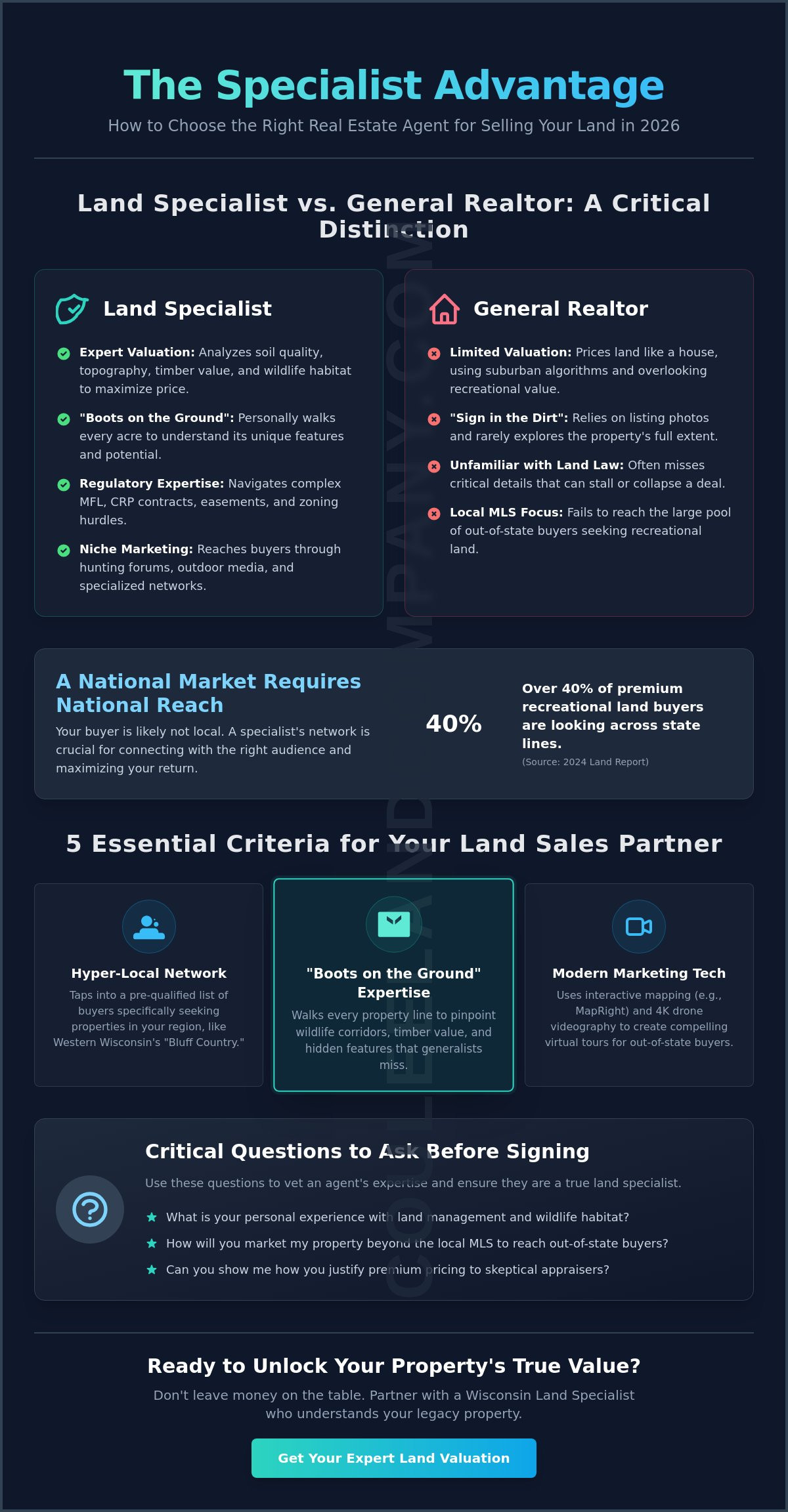
According to the 2024 Land Report, over 40% of premium recreational buyers are looking across state lines, which means your agent must reach far beyond the local MLS. You deserve a partner who provides “boots on the ground” expertise and understands the complex regulations of Western Wisconsin. We’ll show you how to identify a specialist who will walk every property line and use high-level marketing to find the right buyer. You’ll learn the critical differences between a standard realtor and a land expert to maximize your property’s value and secure a seamless closing.
Key Takeaways
- Distinguish between a general residential realtor and a land specialist who understands complex factors like soil quality, topography, and zoning hurdles.
- Master how to choose a real estate agent for selling land by prioritizing “boots on the ground” expertise and a proven ability to personally scout every acre.
- Leverage specialized marketing techniques that reach beyond local listings into hunting forums and outdoor media to find the right demographic for your acreage.
- Prepare for listing success by learning the specific questions to ask about an agent’s personal experience with land management and wildlife habitat.
- Gain the tools needed to justify a premium property price to skeptical appraisers through expert-led land valuation strategies.
Land Specialist vs. Residential Realtor: Why the Distinction Matters
A land specialist acts as a broker with deep expertise in soil quality, topography, and wildlife habitat. They don’t just look at square footage; they analyze the dirt and the drainage. When you’re deciding how to choose a real estate agent for selling land in 2026, you need someone who understands that a 40-acre parcel isn’t just empty space. A standard real estate agent often lacks the tools to navigate property easements or complex zoning laws that can stall a sale. This gap creates a massive financial risk. Generalists often fail to quantify recreational value, which can leave thousands of dollars on the table. In Western Wisconsin, this expertise is known as Bluff Country knowledge. It’s the difference between selling a lot and selling a premier hunting destination.
To better understand the professional requirements for this role, watch this helpful video:
The Knowledge Gap: From Floor Plans to Food Plots
Selling land requires understanding Quality Deer Management (QDM) and overall habitat potential. A specialist identifies hidden value in mature timber stands or strategic water access points that a residential agent would overlook. These features turn a basic woods lot into a high-demand property. Understanding how to choose a real estate agent for selling land involves vetting their knowledge of local deer density and soil productivity. You can see how these details translate to the market by reviewing our current hunting properties listings.
Regulatory Hurdles Generalists Often Miss
Land sales involve specific legal layers like Managed Forest Law (MFL) status, Conservation Reserve Program (CRP) contracts, and perk tests for future building sites. Mismanaging these details leads to legal delays or collapsed deals. These specific regulations and contract statuses will directly dictate your property’s 2026 market price and total liquidity. Using an expert ensures these hurdles become selling points rather than liabilities. Our team manages these complexities daily to protect your equity and ensure a clean title transfer.
5 Essential Criteria for Choosing Your Land Sales Partner
When you’re deciding how to choose a real estate agent for selling land, you need a partner who gets mud on their boots. A true specialist walks every acre of your ridge tops and valley floors to pinpoint wildlife travel corridors and timber value. They don’t just guess at the price. They analyze recent sales in the Bluff Country to ensure your valuation is accurate based on actual dirt-on-dirt comparisons. In 2026, technology is a requirement. Your agent must utilize interactive mapping like MapRight and 4K drone videography to give out-of-state buyers a virtual tour that feels like a physical walk-through. Finally, they should bring a pre-qualified list of recreational buyers ready to move on the right tract immediately.
The Power of a Hyper-Local Network
Being recognized as Wisconsin Land Specialists isn’t just a title; it’s a distinct advantage in every negotiation. Local knowledge of the Mississippi River corridor and the legendary terrain of Buffalo County drives higher returns for sellers. We understand why a north-facing slope in this region commands a premium for trophy whitetail hunters. This hyper-local expertise allows us to tap into a pre-qualified network of buyers who are specifically looking for the unique topography that makes Western Wisconsin famous. You aren’t just selling dirt; you’re selling a legacy, and that requires an agent who lives and breathes this landscape.
Vetting Marketing Strategies for 2026
Traditional agents often stop at the MLS. To maximize your land’s value, look for active engagement in hunting communities and endorsements from outdoor television personalities. These trust signals build immediate rapport with serious buyers. A high-performing listing in 2026 includes high-resolution trail cam photos, detailed topo maps, and a professional habitat analysis. This level of detail speaks the language of the modern land buyer and sets your property apart from the generic listings. If you want to see how this looks in practice, you can view our current hunting properties to see these aggressive marketing strategies in action.
Critical Questions to Ask Before Signing a Listing Agreement
Selling a high-value parcel in the Driftless Area requires more than a sign in the dirt. When you determine how to choose a real estate agent for selling land, you must grill them on their technical knowledge. Land isn’t a commodity; it’s a complex asset with specific wildlife capabilities and management needs. Ask these four questions to separate the hobbyists from the specialists:
- What is your personal experience with land management and hunting? An agent who doesn’t understand bedding areas, thermal cover, or food plot rotation cannot effectively sell the dream of a trophy whitetail property.
- How will you justify a premium price to a skeptical buyer’s appraiser? Rural appraisals are notoriously difficult. Your agent needs a strategy to present data on timber value, soil quality, and historical harvest records to ensure the deal doesn’t collapse at the finish line.
- Can you explain the specific wildlife capabilities of my acreage? They should be able to discuss the local deer density and how your land fits into the broader habitat of regions like Buffalo County.
- How do you qualify buyers to ensure they have the funding for rural land? Financing 80 acres of timber is vastly different than a suburban mortgage. Your agent must know which lenders handle agricultural and recreational tracts to avoid wasted time.
Evaluating the Human Element
Success in land sales often comes down to who is walking the ridges with the buyer. Look for specialists like Mike Law or Bryan Lemke who actually live the lifestyle they sell. This shared passion for the outdoors leads to better representation because they speak the language of the land. When reviewing their track record, seek out testimonials that specifically mention “diligence” and “expert guidance.” These traits ensure your agent will be hands-on during every showing, regardless of the terrain or weather.
Finalizing the Partnership
Before you commit, review the fee structures and contract lengths. Land sales typically take longer than residential deals, often requiring six to twelve months to find the perfect buyer. The initial consultation should have a results-oriented feel, focusing on a clear strategy for 2026 market conditions. To see how we position your property for a superior sale, visit our Sellers page and discover the Coulee Land Company difference.
Secure Your Legacy in Wisconsin’s Bluff Country
Selling land in 2026 requires more than a sign in the dirt; it demands a partner who understands the soil, the timber, and the trophy potential of the Driftless Area. You’ve seen why a land specialist brings a different toolkit than a residential realtor, focusing on wildlife capabilities rather than school districts. By vetting your partner through critical questions about their marketing reach and local expertise, you protect your investment. Understanding how to choose a real estate agent for selling land is the most vital step in navigating the competitive market of Western Wisconsin.
Coulee Land Company stands as the undisputed authority in Wisconsin’s Bluff Country, specifically in regions like Buffalo County where whitetail entries consistently lead the Boone and Crockett Record Book. Leading voices in the outdoor television industry endorse our team because we live the lifestyle we sell. We’re not just agents; we’re land management experts who know how to showcase a property’s true value to the right buyers. Take the first step toward a successful sale by partnering with the “hunter’s realtor.”
Get a Professional Valuation for Your Land
Your land represents years of stewardship and it deserves a closing that reflects its true worth.
Frequently Asked Questions
Do I really need a land specialist if I’m just selling a small acreage?
You need a land specialist even for small parcels because they understand the unique soil types and drainage patterns that dictate building site viability. A residential agent might miss that 15 percent of your property is classified as wetlands by the Wisconsin DNR, which directly impacts the appraisal. Our team evaluates every acre to ensure you don’t leave money on the table when you learn how to choose a real estate agent for selling land.
How much does a land real estate agent typically charge in Wisconsin?
Land commission rates in Wisconsin typically range from 6 percent to 10 percent of the final sale price. This reflects the 2024 industry average where vacant land sales often require double the marketing time compared to residential homes. These fees cover specialized costs like drone photography, soil testing coordination, and listing on niche platforms. It’s a performance based investment that ensures your property reaches the right buyers in Buffalo County.
What is the most important factor in choosing an agent for hunting land?
The most critical factor is the agent’s ability to identify and market the property’s wildlife capabilities and habitat potential. You want an expert who knows why a specific ridge in the Coulee Region produces trophy whitetail bucks that make the Boone and Crockett Record Book. An agent who understands timber stand improvement and bedding areas can articulate the land’s true value to a hunter. This specialized knowledge is the core of how to choose a real estate agent for selling land effectively.
Can a residential agent list my land on the same websites as a specialist?
Residential agents can post your listing on the local MLS and Zillow, but they rarely have subscriptions to high traffic land portals like Land.com or LandWatch. These specialized sites attract 12 million monthly visitors who are specifically searching for acreage rather than houses. A specialist also brings a proprietary database of active buyers looking for Western Wisconsin property. This targeted reach ensures your land isn’t buried under thousands of suburban home listings.