
Your mature, cathedral-like timber might be the primary reason those trophy bucks are bedding on the neighbor’s property instead of yours. While a high canopy is aesthetically pleasing, it often creates a biological desert at the ground level, leaving whitetails without the security cover and low-level browse they crave. Hinge cutting trees for deer habitat is the surgical land management tool you need to bridge this gap, effectively turning open woods into a dense, high-value sanctuary.
We know the frustration of owning a beautiful piece of land only to watch deer pass through it like a hallway. This guide will show you how to master the hinge cut to create immediate bedding thickets and sustainable browse that anchors deer to your property. You’ll learn how to implement the National Deer Association’s 25% sunlight recommendation and why staying under the 10-inch diameter safety threshold is vital for your forest’s health. We will explore how to strategically screen your access trails and maximize your land’s long-term investment potential through expert-level habitat stewardship.
Key Takeaways
- Understand the “Cambium Connection” and how to maintain a living link between the stump and the canopy for years of sustainable browse.
- Transition from creating “messy woods” to designing “tactical thickets” that prioritize side-level security cover over high-canopy shade.
- Master the strategic placement of hinge cutting trees for deer habitat to screen hunter movement and increase your property’s overall market value.
- Leverage regional topography by placing hinge cuts on the top third of ridges to capture rising thermals for superior bedding security.
The Science and Strategy of Hinge Cutting for Whitetail Success
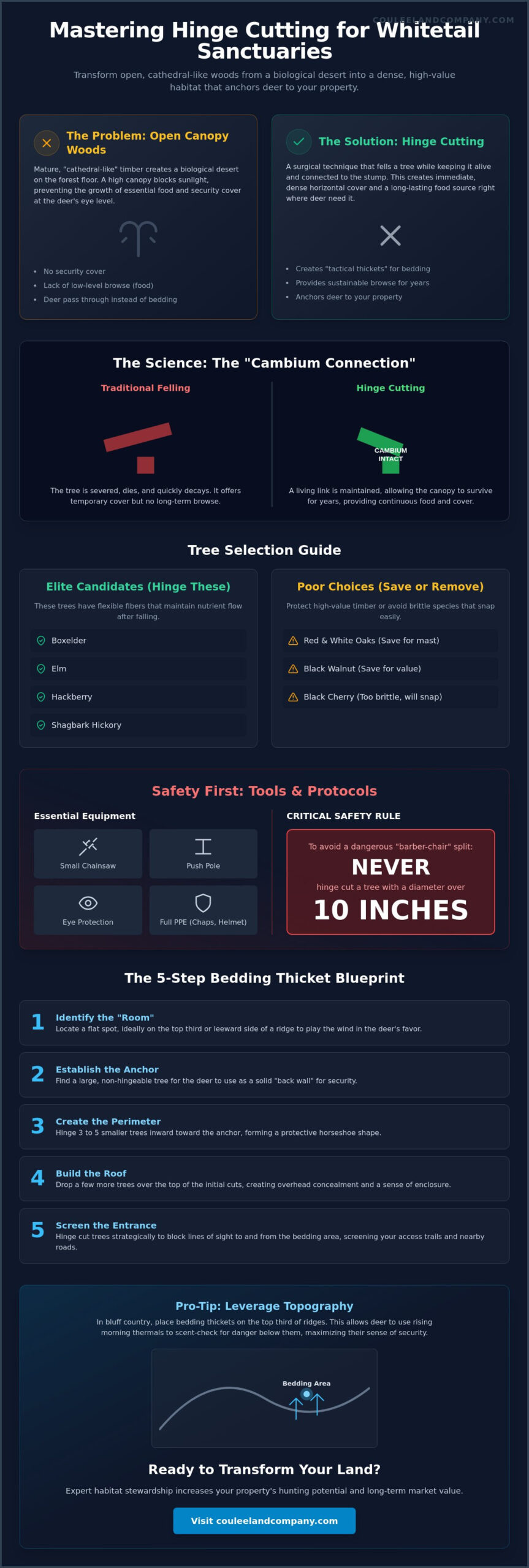
Hinge cutting is a surgical approach to forest management that prioritizes living structure over simple timber removal. Unlike traditional felling, you are partially cutting through the trunk to leave the cambium layer intact, allowing the tree to fall horizontally while remaining connected to the stump. This method of hinge cutting trees for deer habitat creates a living sanctuary that provides immediate horizontal cover and a continuous source of high-quality browse. It’s a sophisticated way to manipulate the landscape, ensuring that your woods offer the security mature bucks require to move during daylight hours.
The Science and Strategy of Hinge Cutting relies on this “Cambium Connection” to keep the fallen canopy alive for years. This technique is a cornerstone of effective Wisconsin land management for wildlife, as it transforms open, park-like timber into a thriving, multi-dimensional habitat. By bringing the food and cover down to the deer’s level, you create a psychological magnet that anchors whitetails to your property.
To better understand this concept, watch this helpful video:
Species Selection: Which Trees to Cut and Which to Save
In the Coulee region, your choice of species determines the longevity of your habitat work. Elite candidates for a living hinge include Boxelder, Elm, Hackberry, and Shagbark Hickory because their fibers are flexible enough to maintain nutrient flow after the fall. You should always protect your high-value timber, such as Red and White Oaks or Black Walnut, for both mast production and future resale value. Brittle species like Black Cherry are poor choices because they often snap completely, resulting in a dead tree rather than a living screen. Hinge-ability is the measure of a tree’s capacity to survive the stress of the fall while maintaining a functional connection to its root system.
Essential Tools and Safety Protocols
When you are hinge cutting trees for deer habitat, precision requires the right equipment. Don’t reach for a heavy felling saw; a smaller, maneuverable chainsaw allows for the delicate, shallow back-cuts needed to keep the hinge alive. Safety is the top priority in any land project. You must wear full personal protective equipment, including chaps, a helmet, and eye protection. Use a dedicated push pole to guide the tree’s descent safely, and never attempt to hinge cut any tree with a diameter at breast height of more than 10 inches to avoid the risk of a dangerous “barber-chair” split.
Designing High-Use Bedding Areas and Strategic Screening
Effective habitat management moves beyond simply making a mess in the woods. You are building tactical thickets with intentionality. While many landowners focus on the overhead canopy, whitetails prioritize side cover. They want to be hidden from the eyes of predators and neighbors at their own eye level. By strategically hinge cutting trees for deer habitat, you can screen your hunting properties from road noise and boundary visibility, creating a true sanctuary where bucks feel safe during daylight hours.
A common mistake is creating a “Wall of Wood” that is so dense it becomes impassable. Deer need to navigate their home range with ease, and you need to be able to slip into your stands without making a ruckus. Properly Implementing Hinge Cuts: Safety and Land Value ensures your habitat work increases the property’s worth rather than creating a tangled mess that future buyers might see as a reclamation project. Understanding how these improvements impact your long-term investment is key when evaluating land for purchase or sale.
The 5-Step Bedding Thicket Blueprint
Creating a bedding area that a mature buck will actually use requires more than just dropping trees. Follow this proven blueprint to build high-use “rooms” within your timber:
- Step 1: Identify the Room. Locate a naturally flat spot, ideally on the leeward side of a ridge where the wind works in the deer’s favor.
- Step 2: Establish the Anchor. Find a large, non-hingeable tree for the deer to back up against. This provides them with a solid back wall for security.
- Step 3: Create the Perimeter. Use hinge cutting trees for deer habitat to drop 3 to 5 smaller trees inward, forming a horseshoe shape around the anchor.
- Step 4: Clear the Bed. Remove every stick and leaf inside that horseshoe until you reach bare dirt. Deer love a clean, quiet place to lay.
- Step 5: Verify Escape Routes. Don’t trap the deer. Ensure there are at least two clear exits so a buck can blow out safely if he senses danger.
Directional Felling for Travel Manipulation
You can use hinge cuts as living fences to dictate exactly where deer travel. By blocking “bad” trails that lead away from your stands, you force deer into high-odds shooting lanes. Strategic edge feathering is another powerful tool; it softens the transition between open food plots and deep timber. This gradual increase in cover encourages deer to enter plots earlier in the evening, providing you with better daylight opportunities. If you’re ready to see how these techniques look on the ground, exploring our latest hunting properties can give you a clear vision of what’s possible on high-quality land.
Implementing Hinge Cuts in Bluff Country: Safety and Land Value
Implementing hinge cutting trees for deer habitat in the rugged terrain of the Driftless Area requires a different set of rules than flat-land management. In Bluff Country, the slope dictates how a tree leans and how a deer chooses its bed. Mature bucks in these regions are masters of the wind; they often prioritize bedding on the top third of a ridge to take advantage of rising thermals that carry scent from the valley floor below. By placing hinge cuts strategically in these leeward locations, you provide the side cover they need to feel secure while they monitor their surroundings.
When a land specialist broker in Wisconsin evaluates a property, they look for these intentional habitat improvements. Superior land management doesn’t just grow bigger bucks; it builds equity. A property with established bedding sanctuaries and screened access is far more valuable to a serious hunter than a tract of unmanaged timber. Safety is paramount on these steep grades. You must manage the risk of “spring poles” and unpredictable downhill slides by always positioning yourself on the uphill side of the cut.
Managing Steep Terrain in Buffalo County
Buffalo County deer hunting is legendary, but the terrain can be unforgiving. Success here often depends on creating ridge-top security cover that keeps deer from bailing onto the neighbor’s land at the first sign of pressure. When you are hinge cutting trees for deer habitat on a steep incline, you have to plan for the tree to slide once it hits the ground. Beyond the hunting benefits, these horizontal structures act as natural debris dams; they slow down runoff and help prevent soil erosion on the steep Coulee slopes.
The Broker’s Perspective: Habitat as an Investment
Professional habitat work acts as a powerful differentiator in a competitive real estate market. We encourage sellers to maintain a “Habitat Journal” that documents the dates, species, and goals of their hinge cutting projects. This record provides tangible proof of stewardship to potential buyers, showing them the vision you’ve already executed. It’s vital to maintain a balanced approach. Don’t over-cut your woods to the point of depleting future timber value; instead, focus on low-value species to ensure your land remains a diversified financial asset for years to come.
Mastering Your Land’s Potential
Success in the woods isn’t left to chance; it’s built through intentional stewardship and a deep understanding of how whitetails use the landscape. By mastering the cambium connection and moving from accidental messes to tactical thickets, you create a sanctuary that holds deer through every season. Implementing hinge cutting trees for deer habitat allows you to dictate movement and provide the side cover that mature bucks demand, especially in the challenging terrain of the Driftless Area.
We specialize in Buffalo County trophy whitetail properties and bring years of experience in Western Wisconsin land brokerage to every client we serve. Our team is endorsed by regional land management experts because we understand that the value of a property is rooted in its habitat. Whether you’re screening access trails or building ridge-top bedding, your efforts today secure the hunting legacy of tomorrow. Ready to find your own piece of Bluff Country? View our latest hunting land listings.
Your journey toward owning a premier hunting destination starts with the first cut. Take the expertise you’ve gained and begin shaping a property that rewards your hard work with the heavy-racked bucks you’ve always dreamed of pursuing.
Frequently Asked Questions
What is the best time of year to hinge cut trees for deer?
Late winter or early spring, specifically during the dormant season, is the premier time for this work. Cutting before the sap begins to flow reduces the physiological stress on the tree and ensures that new buds are ready to pop as soon as the weather warms. This timing also provides critical emergency browse for whitetails during the leanest months of the year when traditional food sources are exhausted.
Will hinge cutting kill my trees eventually?
Hinge cutting is specifically designed to keep the tree alive by maintaining the “cambium connection” between the stump and the fallen canopy. While some trees may eventually succumb to rot or wind damage after many years, the goal is to create a living, growing structure. If you select flexible species like elm or hackberry and avoid brittle ones, your habitat improvements can thrive for a decade or more.
How many trees should I hinge cut in one area for a bedding thicket?
The National Deer Association recommends that no more than 25% of the trees in a given area should be hinge cut to ensure enough sunlight reaches the forest floor. For a single bedding “room,” dropping three to five smaller trees in a horseshoe pattern around a solid anchor tree is usually sufficient. It’s better to create several high-quality pockets than one massive, impassable tangle that deer won’t use.
Can I hinge cut trees that are larger than 10 inches in diameter?
You should not hinge cut any tree with a diameter at breast height (DBH) of more than 10 inches. Larger trees carry immense weight and are prone to “barber-chairing,” which is a dangerous vertical split that can cause the trunk to kick back toward the operator. Sticking to smaller, secondary growth is safer for you and results in more flexible, resilient hinges that are more likely to survive the cut.
How long does a hinge cut tree stay alive?
A properly executed cut on a hardy species can stay alive for five to ten years, and often much longer. The longevity of hinge cutting trees for deer habitat depends heavily on the species and the amount of bark and sapwood left intact during the fall. Resilient species like boxelder or hingeable elms often continue to put out vigorous green growth even when the trunk is nearly horizontal.
Does hinge cutting actually increase property value in Wisconsin?
Strategic habitat improvements definitely increase the market appeal and value of Wisconsin hunting land. Professional-grade hinge cutting trees for deer habitat demonstrates to potential buyers that the property is a managed sanctuary capable of holding mature bucks. Turn-key properties with established bedding and screened access trails often command higher price points and attract more serious interest than unmanaged, open timber tracts in the same region.