
What if the most effective piece of machinery for your Buffalo County food plot isn’t a $50,000 tractor, but the very frost currently locking up your soil? For landowners managing the steep terrain of the Driftless Area, frost seeding clover in wisconsin represents the ultimate “work smarter, not harder” strategy for property stewardship. You likely know the frustration of watching expensive seed wash down a bluff or fail to germinate because you couldn’t get heavy equipment into a secluded timber opening. It’s a significant gamble with your time and your budget, especially with clover seed prices sitting at $2.85 per pound as of July 2026.
We understand that your goal is a high-protein magnet that holds trophy bucks on your acreage. This guide promises to help you master the natural freeze-thaw cycle to achieve perfect seed-to-soil contact without the need for heavy machinery. You’ll learn the precise timing for the 2026 spring window, the best clover varieties for our unique regional soils, and how to leverage cost-share programs like the SSWIG grants to maximize your land’s value and hunting potential.
Key Takeaways
- Learn how to utilize the natural “honeycomb” effect of the freeze-thaw cycle to achieve optimal seed-to-soil contact without expensive equipment.
- Discover why the specific window between late February and mid-March is the most effective time for frost seeding clover in wisconsin.
- Master essential site preparation techniques, such as managing thatch and exposing bare soil, to guarantee high germination rates.
- Implement long-term maintenance strategies, including proper mowing heights, to keep your food plots lush and attractive to trophy bucks.
- Understand how establishing high-quality clover plots can significantly increase the recreational and market value of your Wisconsin hunting property.
Why Frost Seeding Clover is a Game-Changer for Wisconsin Landowners
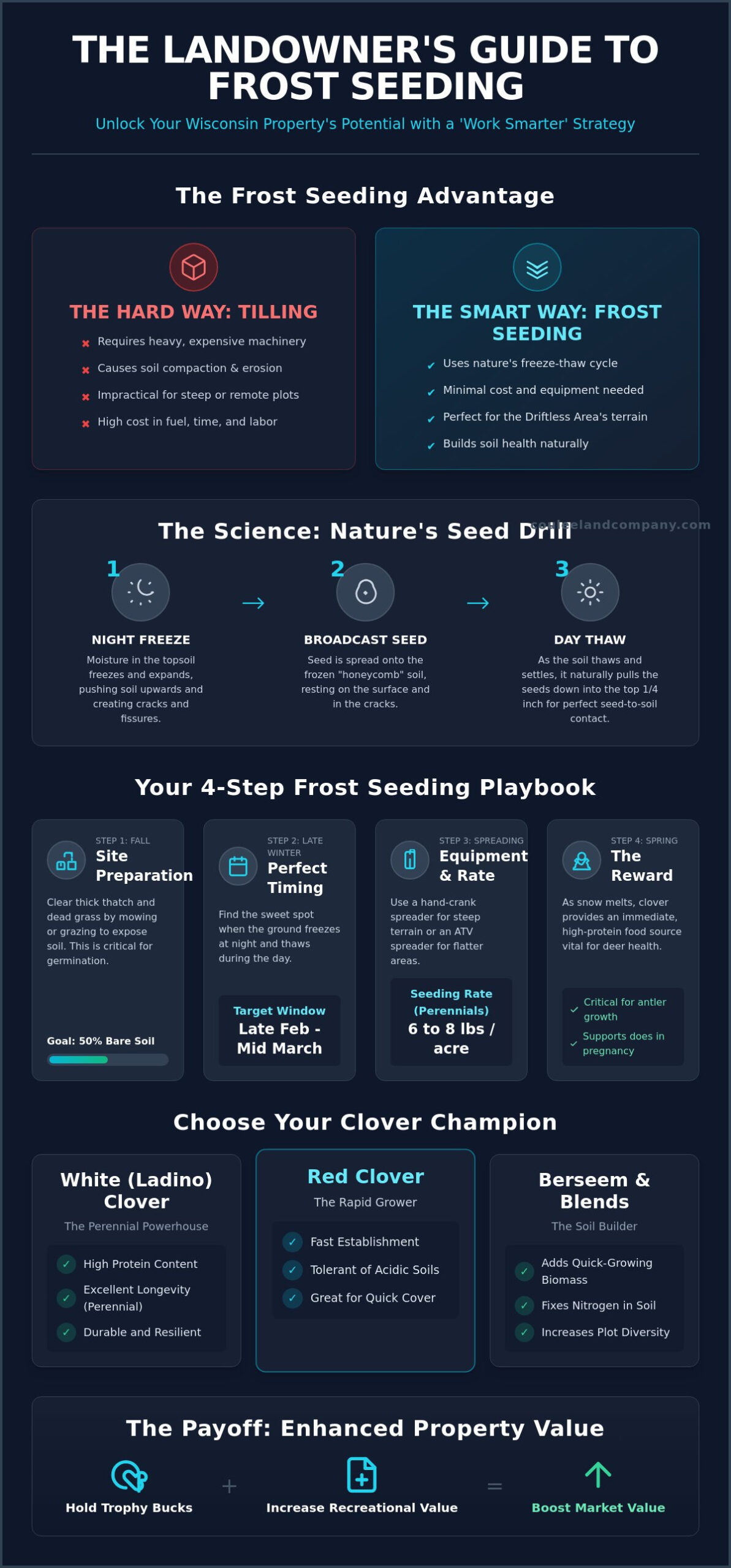
Frost seeding clover in wisconsin is a specialized technique that leverages our harsh climate to your advantage. It involves broadcasting seed onto frozen soil, typically in late winter, to utilize the “honeycomb” effect. As the ground freezes and thaws, the soil surface cracks and opens, naturally drawing the seed into the earth. It’s a low-impact way to establish high-quality forage on hunting properties without the invasive nature or heavy expense of traditional spring tilling. Mastering frost seeding clover in wisconsin allows you to improve your acreage while the ground is still too soft for a tractor, saving you both fuel and unnecessary soil compaction.
For whitetails, this timing is perfect. As the snow melts, clover provides an immediate, high-protein food source during a period of nutritional stress. This protein is vital for bucks entering the critical antler-growth phase and for does in the late stages of pregnancy. By establishing these plots early, you ensure your land remains a primary destination for the local herd throughout the spring and into the summer months.
The Science of the Freeze-Thaw Cycle
Wisconsin’s late-winter weather is unpredictable, but the temperature swings between day and night are exactly what your food plot needs. This “heaving” process acts like a natural seed drill. When the moisture in the top layer of soil freezes, it expands and pushes the soil upward. As it thaws during the day, the soil settles back down, effectively pulling small, dense seeds into the top quarter-inch of the dirt. This creates the perfect environment for germination once the ground temperature consistently stays above 40 degrees.
Clover Varieties for the Upper Midwest
Choosing the right seed is essential for the rugged terrain of the Driftless Area. White (Ladino) clover is a perennial favorite for its longevity and high protein content, while Red clover offers rapid growth and better tolerance for acidic soils. Some landowners also experiment with a Berseem clover mix to add quick-growing biomass and nitrogen fixation to the soil. Using a blend ensures your plot remains durable against the unpredictable droughts and heavy rains common in the Upper Midwest, providing a resilient food source that lasts for years.
Step-by-Step: How to Frost Seed Clover in Wisconsin
Success starts with the right gear and precise timing. In the rugged Driftless Area, a heavy tractor often isn’t an option for secluded timber openings. For steep bluffs, a simple hand-crank chest spreader is your best tool for navigating uneven terrain. On flatter ground, an ATV-mounted spreader allows for faster coverage and more consistent distribution. Mastering the process of frost seeding clover in wisconsin allows you to improve your acreage while the ground is still too soft for heavy equipment. You should aim for a seeding rate of 6 to 8 pounds per acre for perennial clovers. Over-seeding is a common mistake that leads to crowded, stunted plants competing for the same limited soil nutrients. This UW-Madison Extension guide to frost seeding provides excellent technical specs on species selection for our specific climate.
Finding the Perfect Window
Timing frost seeding clover in wisconsin requires constant monitoring of the local forecast. You’re looking for the sweet spot between late February and mid-March when the ground freezes at night and thaws by midday. This creates “honeycomb” soil, characterized by small ice crystals and vertical cracks that look like a beehive. Walking your hunting properties during the early morning hours will reveal this texture. Seeding over a light, melting snow crust can also be beneficial, as the moisture helps carry the seed directly into those soil fissures before the spring rains arrive.
Maximizing Seed-to-Soil Contact
Preparation begins long before the first frost hits the ground. If your plot is choked with thick thatch or standing dead grass, the clover seed will never reach the dirt. Fall mowing or heavy grazing is essential to clear the canopy and expose the earth. To ensure high germination, you should aim for at least 50% exposed bare soil across the entire plot area. If you’re looking to maximize the recreational value of your land, our team at Coulee Land Company can help you evaluate how these stewardship efforts impact your property’s market position.
Managing Your Clover Plots and Enhancing Property Value
Your commitment to frost seeding clover in wisconsin pays dividends long after the initial broadcast. Maintenance is the difference between a plot that fades after one season and a perennial powerhouse that holds deer year-round. Effective management ensures your hunting properties remain the preferred destination for mature whitetails. By focusing on soil health and canopy management, you create a high-protein resource that defines trophy-quality land in the Driftless Area. This hands-on stewardship transforms a simple piece of dirt into an elite wildlife sanctuary.
Clover Maintenance for Longevity
Established clover requires specific nutrients to thrive without encouraging competition from invasive species. Applying a 0-0-60 fertilizer in late spring provides the potassium necessary for root strength and drought resistance. You should avoid nitrogen-heavy fertilizers; clover fixes its own nitrogen, and adding more only feeds the grasses you want to suppress. Clipping your plots to a height of six to eight inches is equally critical. This practice removes seed heads, triggers fresh growth, and keeps the forage at peak palatability. For technical details on managing frost seeding clover in wisconsin through the seasons, this UW-Madison Extension guide to frost seeding offers excellent regional insights.
The Investment Value of Quality Habitat
High-quality food plots are more than just hunting tools. They’re significant assets that increase the market value of Wisconsin land. Savvy buyers recognize that established clover stands represent years of effort and proven success. In prime regions like Western Wisconsin, a turn-key property with a strategic layout of perennial forage commands a premium. It signals to potential owners that the land is managed for elite wildlife production. For a deeper look at what makes this region special, consult our Buffalo County Wisconsin Deer Hunting guide. Investing in habitat today ensures your property stands out as a premier destination for both whitetails and future land buyers.
Elevate Your Land Stewardship This Spring
Mastering the art of frost seeding clover in wisconsin is a definitive step toward building a premier hunting legacy. By aligning your management schedule with the natural freeze-thaw cycles of the Driftless Area, you ensure high-protein forage is available when Buffalo County whitetails need it most. This technique bypasses the need for heavy machinery on sensitive bluff terrain; it also simultaneously boosts the long-term market value of your acreage by establishing a perennial food source that attracts elite wildlife.
As specialists in Western Wisconsin Bluff Country, we understand that habitat management is the heartbeat of a successful property. Our team carries deep roots in local hunting traditions and brings a pragmatic, results-oriented approach to land brokerage. We don’t just sell dirt; we help you find and maintain trophy-quality landscapes that stand out in the marketplace. When you’re ready to invest in your own piece of the Upper Midwest, view our exclusive Wisconsin hunting land listings to see the potential of this world-class region. Your journey to owning a top-tier whitetail magnet begins with a commitment to the land.
Frequently Asked Questions
When is the best time to frost seed clover in Wisconsin?
The ideal window for frost seeding clover in wisconsin generally falls between late February and mid-March. You’re looking for that specific weather pattern where the ground freezes solid at night and thaws into a muddy texture by the afternoon. This cycle is what pulls the seed into the soil. If you wait until the ground is permanently thawed, you’ve missed the natural mechanical advantage of the frost and will likely see poor germination.
Can I frost seed clover over existing grass or sod?
You can seed over existing vegetation, but success depends entirely on seed-to-soil contact. If your plot has a thick mat of fescue or dead thatch, the small clover seeds will get hung up in the debris and never germinate. We recommend mowing your plots extremely short or allowing heavy grazing the previous autumn to ensure at least 50% of the bare dirt is visible before you broadcast your seed.
How much clover seed should I use per acre when frost seeding?
A standard rate for frost seeding clover in wisconsin is 6 to 8 pounds per acre for perennial white or ladino varieties. If you’re using medium red clover, you might increase that slightly to 10 pounds per acre due to the larger seed size. It’s tempting to use more, but over-seeding creates too much competition for moisture and nutrients. This eventually leads to a weaker stand that can’t handle the summer heat.
What happens if I frost seed too early or too late in the spring?
Seeding too early increases the risk of seed loss to runoff or wildlife, while seeding too late misses the critical freeze-thaw window. If you broadcast in mid-winter, a heavy rain on frozen ground can wash your investment into the nearest coulee. Conversely, seeding after the spring thaw requires mechanical incorporation. The soil is no longer “heaving” to pull the seeds down naturally, leaving them exposed on the surface where they may dry out.