
The dream of owning your own piece of Wisconsin’s legendary Bluff Country is powerful-a place for misty mornings in the deer stand and traditions passed down through generations. Yet, for many aspiring landowners, the path to securing financing for hunting land in Wisconsin can feel far more complex and intimidating than a standard home mortgage. Questions about down payments, credit requirements, and which lenders even understand the unique value of a recreational property can quickly turn that dream into a source of stress and uncertainty.
Consider this your complete roadmap. As Wisconsin’s Land & Property Sales Specialists, we’ve guided countless hunters through this exact process. This guide is designed to demystify the entire journey, providing a clear, step-by-step plan from preparing a rock-solid application to understanding all your loan options. By the end, you’ll have the confidence and knowledge to speak with lenders, get pre-approved, and secure the best possible terms for the hunting property you’ve always wanted.
Key Takeaways
- Understand why lenders view unimproved hunting land as a higher-risk investment than a traditional home mortgage.
- Strengthen your loan application significantly by completing a pre-approval checklist before you start your property search.
- Securing the best terms for financing hunting land in Wisconsin often requires partnering with specialized lenders who understand rural properties.
- Learn to decode key loan terms, interest rates, and down payment requirements to accurately compare offers and choose the right financing.
Why Financing Hunting Land is Different Than a Home
Securing your own piece of Wisconsin’s legendary bluff country is a dream for any serious outdoorsman. However, the path to ownership involves a crucial step that many buyers overlook: understanding that financing hunting land is fundamentally different from securing a mortgage for a home. The process of financing hunting land in Wisconsin requires a unique approach because lenders view raw, undeveloped land as a completely different class of asset.
As Wisconsin’s land specialists, we help buyers navigate these unique properties every day. To see what makes these parcels so special, take a look at this tour:
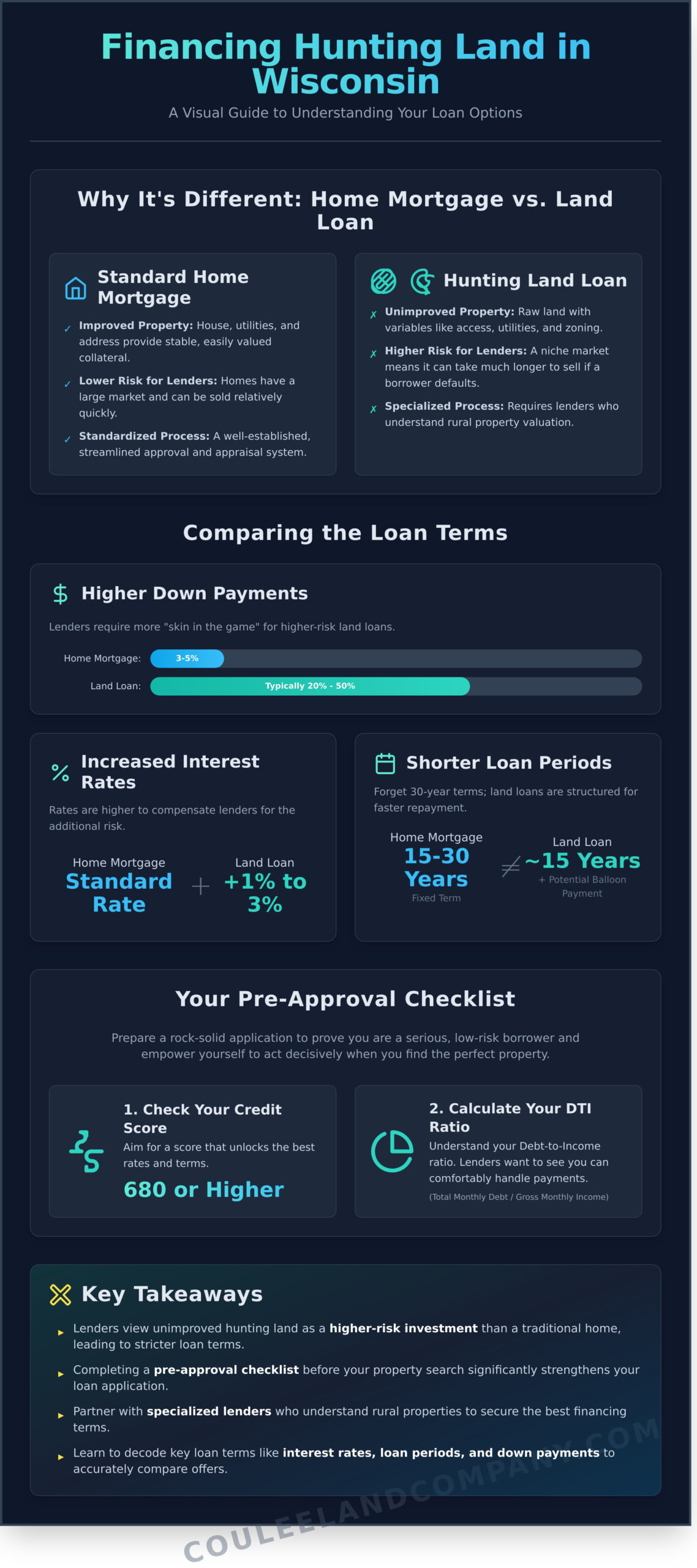
The primary distinction lies in the concept of ‘improved’ versus ‘unimproved’ property. A house is considered improved land-it has a structure, utilities, and a clear street address, making it a stable and easily marketable form of collateral. Unimproved, or raw land, lacks these features, which introduces variables that lenders must carefully consider.
The Lender’s Perspective: Risk and Collateral
From a financial institution’s standpoint, risk is the defining factor. A residential home in a subdivision can be appraised and sold relatively quickly if a borrower defaults. Raw hunting land, on the other hand, is a niche product. Its market is smaller, and it can take significantly longer to sell. Lenders assess potential issues that don’t exist with a home, such as:
- Access: Is the property landlocked or does it have guaranteed, legal access?
- Utilities: The lack of electricity, water, and septic systems adds a layer of complexity and cost.
- Zoning: Local regulations can restrict what can be built or how the land can be used.
Because of this increased risk, lenders protect themselves by offering lower loan-to-value (LTV) ratios, meaning they will finance a smaller percentage of the property’s total purchase price.
Key Differences in Loan Terms
This higher-risk profile directly translates into more stringent loan terms compared to a conventional home mortgage. When you begin the process of financing hunting land in Wisconsin, you should expect significant differences in the structure of your loan.
- Higher Down Payments: While you might secure a home loan with as little as 3% down, land loans almost always require more skin in the game. Be prepared for a down payment of 20% to 50%.
- Increased Interest Rates: To compensate for the added risk, lenders charge higher interest rates on land loans-often 1-3% above the going rate for a traditional mortgage.
- Shorter Loan Periods: Forget the 30-year fixed mortgage. Land loans typically feature shorter amortization periods, such as 15 years, and may include a balloon payment, where the remaining balance is due in full after a set term (e.g., 5-10 years). In some cases, buyers and sellers use alternative arrangements, so understanding What is a Land Contract? is essential as it’s a common tool for seller-financing raw land.
Your Pre-Approval Checklist: Get Prepared Before You Apply
Before you even set foot on a potential property, the most critical hunt begins at your desk. Securing pre-approval is the first, non-negotiable step in the process of financing hunting land in Wisconsin. This preparation accomplishes two key goals: it proves to lenders that you are a serious, low-risk borrower, and it empowers you to act decisively when that perfect piece of Bluff Country appears. A prepared buyer is a successful buyer. Gathering these documents upfront will streamline the entire application and closing process, ensuring you don’t miss out on a legacy property.
Assess Your Financial Health
Lenders evaluate your financial stability with precision. To present the strongest case, you must have a clear picture of your standing before you apply. Lenders must adhere to specific standards, many of which are influenced by Wisconsin’s financial regulations, making these metrics critical. Focus on these three key areas:
- Credit Score: Review your credit report for accuracy. While requirements vary, a score of 680 or higher will typically unlock the most favorable interest rates and terms.
- Debt-to-Income (DTI) Ratio: Calculate this by dividing your total monthly debt payments by your gross monthly income. Lenders strongly prefer a DTI ratio below 43%.
- Proof of Income: Organize your last two years of W-2s and federal tax returns, along with your most recent pay stubs (at least 30 days’ worth). Self-employed individuals should prepare profit and loss statements.
Prepare Your Down Payment & Documentation
With your financial health assessed, the next step is to assemble the necessary funds and paperwork. A significant down payment-often 20% or more for raw land-demonstrates your commitment and reduces the lender’s risk. Ensure these funds are “seasoned,” meaning they have been in your bank account for at least two months, and be prepared to show statements proving the source. You will also need to create a personal financial statement that clearly lists all your assets (cash, investments, property) and liabilities (loans, credit card debt). This comprehensive preparation is a key step for all prospective Wisconsin land buyers and is essential for a smooth and successful transaction.
Where to Get a Land Loan in Wisconsin: Your 3 Best Options
Securing a loan for a piece of raw hunting ground isn’t like financing a house in the suburbs. Many conventional banks lack the experience and specific loan products required for vacant land, especially in rural areas. Finding the right lender is a critical step in the process, and your best partner is one who understands the unique value of Wisconsin’s prime whitetail habitat. As land specialists, we have built relationships with the most reliable lenders in the state. Here are your three best options.
Local Banks and Credit Unions
Your local community bank or credit union can be an excellent starting point, especially if you have an established relationship. These institutions possess invaluable on-the-ground knowledge of local property values and land use. They are often more willing to offer portfolio loans, which means they hold the loan in-house and can provide more flexible terms and underwriting than a larger national bank.
Agricultural Credit Services (e.g., Compeer Financial)
For unmatched expertise in rural properties, look to agricultural lenders like Compeer Financial. These organizations are true specialists in farm and recreational land lending. Because they live and breathe this world, they typically offer the most competitive interest rates and favorable terms for financing hunting land in Wisconsin. They possess a deep familiarity with the unique attributes of premier hunting tracts, from soil quality to timber value, especially in record-book regions like Buffalo County.
Seller Financing: A Creative Option
In some situations, the seller may be willing to finance the property for you. With seller financing, the property owner acts as the lender, holding the note while you make payments directly to them. This arrangement can offer significant flexibility on the down payment, interest rate, and credit requirements. However, it is absolutely essential that any seller financing agreement is drafted and reviewed by a qualified real estate attorney to protect both parties.
Navigating these options can be complex, but you don’t have to do it alone. The right land specialist does more than just find you a property; they connect you with a network of trusted financial partners who are proven to get deals done. This expertise streamlines the entire process, turning your dream of owning a piece of the Northwoods into a reality.
Decoding Loan Details: Terms, Rates, and Property Types
Securing the right loan for your dream hunting parcel is more than just finding a low interest rate. The specific details of your financing are heavily influenced by the property itself. Understanding the key terms, how lenders evaluate a property, and what to expect during closing empowers you to compare offers accurately and make a confident investment in your outdoor legacy.
Common Loan Structures
Unlike a traditional home mortgage, land loans often have shorter terms. A Fixed-Rate Loan offers predictable monthly payments, while an Adjustable-Rate Mortgage (ARM) may start lower but can change over time. Be wary of loans with a balloon payment, which requires a large lump-sum payment at the end of the term. Typical amortization schedules for land are often 5, 10, or 15 years, requiring a more aggressive payment plan than a 30-year home loan.
How Property Features Impact Your Loan
Lenders see land through a lens of risk and value. A remote, raw tract with no utilities is considered a higher risk than a property with a well, septic system, or small cabin already in place. Features that demonstrate income potential, such as tillable acreage for farming leases or marketable timber, can significantly strengthen your application. For nearly every lender, the single most critical feature is guaranteed, legal, year-round access. A landlocked parcel is nearly impossible to finance, a crucial detail when considering options for financing hunting land in Wisconsin.
The Appraisal and Closing Process
Before finalizing any loan, the lender will order a professional appraisal. This isn’t just a formality; it’s a critical step that confirms the land’s market value and ensures it’s sufficient collateral for the loan. You will also be required to secure title insurance to protect both you and the lender from any future claims on the property’s ownership. Be prepared to budget for several closing costs, which typically include:
- Appraisal fees
- Land survey costs
- Title search and insurance fees
- Legal and recording fees
Working with a land specialist who understands the unique variables of rural properties can help you navigate this process and anticipate these final costs. The experts at Coulee Land Company have guided countless buyers through this final stage, ensuring a smooth path to ownership.
The Coulee Land Advantage: Partnering with a Land Specialist
Navigating the financial landscape to purchase your dream property can be as challenging as tracking a trophy buck through the bluffs. The process of financing hunting land in Wisconsin is filled with unique hurdles that standard real estate agents and lenders often don’t understand. This is where the expertise of a true land specialist becomes your most valuable asset. At Coulee Land Company, we are more than realtors; we are dedicated hunters and land managers who live and breathe this lifestyle. Our singular goal is to guide you from identifying the perfect tract to successfully closing the deal, helping you avoid costly mistakes and secure your legacy in Wisconsin’s famed Bluff Country.
Identifying Financeable Properties
A lender’s willingness to finance a property depends heavily on its quality and viability. We meticulously vet our hunting properties before they ever hit the market, ensuring they are free from common deal-killing issues like unclear titles or lack of deeded access. Our deep, localized knowledge of land values means we can accurately assess a property’s worth, which is critical for a smooth appraisal process. We don’t just see a parcel of land; we see its potential for holding mature whitetails, its timber value, and its capacity for strategic improvements that will increase its worth for years to come.
Connecting You with the Right Lenders
We have spent years building powerful relationships with the best rural and recreational land lenders in the state-financial partners who genuinely understand the intrinsic value of a top-access hunting parcel in Buffalo County. They recognize that its worth goes far beyond simple acreage. Our team of specialists, including seasoned experts like Bryan Lemke, can facilitate personal introductions to these key lenders. We work with you to present your offer and financial standing in the best possible light, ensuring both the seller and the bank see the strength and seriousness of your commitment.
Ultimately, partnering with Coulee Land Company transforms the complex journey of financing hunting land in Wisconsin into a clear and confident path forward. We provide the specialized expertise needed to ensure your investment is sound, your financing is secure, and your dream of owning a piece of this hunter’s paradise becomes a reality. Contact our team to get started.
Turn Your Dream Property into a Reality
Securing a loan for prime hunting ground is a different pursuit than buying a home, but it’s a challenge you can conquer. The key takeaways are clear: prepare your financials thoroughly for pre-approval, understand the unique terms of a land loan, and connect with the right lender. This guide has given you the blueprint for successfully financing hunting land in Wisconsin, but you don’t have to navigate the path alone.
At Coulee Land Company, we are seasoned land professionals and specialists in Wisconsin’s famed ‘Bluff Country’. Our expert guidance and deep connections with the top rural lenders in the state provide the critical support you need to secure your legacy property. We help hunters like you turn aspiration into reality. When you’re ready to find that perfect tract of land, we’re here to lead the way. View Our Premier Wisconsin Hunting Properties and start your journey today. The trophy property you’ve always dreamed of is within reach.
Frequently Asked Questions About Financing Hunting Land
What is the typical down payment for hunting land in Wisconsin?
Lenders view raw land as a higher-risk investment, so you should anticipate a larger down payment than for a traditional home. Most financial institutions require between 20% and 35% down for a recreational land loan. Your specific financial profile, credit history, and the property’s characteristics will influence the final requirement. A strong application can help you secure terms at the lower end of this range, bringing you closer to owning your own private hunting ground.
What credit score do I need to finance a recreational property?
To secure the best terms and interest rates when financing hunting land in Wisconsin, lenders prefer to see a strong credit history. A credit score of 700 or higher is the recommended benchmark for a smooth approval process. While some lenders may work with scores in the high 600s, a higher score demonstrates financial discipline and significantly strengthens your position as a borrower, often resulting in a more favorable loan package for your dream property.
Can I get one loan to cover both the land purchase and the cost of building a cabin?
Yes, it is possible to secure a single loan for both the land and a new structure through a construction-to-permanent loan. This specialized loan simplifies the process by combining the financing for the land acquisition and the cabin build into one closing. Lenders will require detailed construction plans, cost estimates, and a contract with a reputable builder. This is an excellent option for buyers who have a clear vision for developing their property right away.
Are there any government loan programs (like USDA loans) for hunting land?
Generally, government-backed programs like USDA loans are not available for land purchased purely for recreational hunting. These loans are typically designated for primary residences in rural areas or for income-producing agricultural operations. To finance a hunting property, you will need to work with a conventional lender, such as a local bank or a credit union that has specific programs and expertise in raw land and recreational property financing.
How long does the land loan approval and closing process typically take?
The timeline for a land loan is often longer than for a residential home, typically ranging from 45 to 60 days from application to closing. This extended period is necessary for the lender to complete a more complex due diligence process, which includes a land appraisal, a boundary survey, and a thorough title search. Being prepared with all your financial documentation and responding promptly to lender requests will help ensure the process moves as efficiently as possible.
Is it better to get a fixed-rate or adjustable-rate loan for a land purchase?
For most land buyers, a fixed-rate loan is the superior choice. It provides the security of a predictable monthly payment that will not change for the life of the loan, which is ideal for a long-term investment like a hunting property. While an adjustable-rate mortgage (ARM) may offer a lower introductory rate, it comes with the risk of future payment increases. A fixed rate allows you to budget with confidence as you manage and enjoy your piece of Wisconsin’s Bluff Country.