
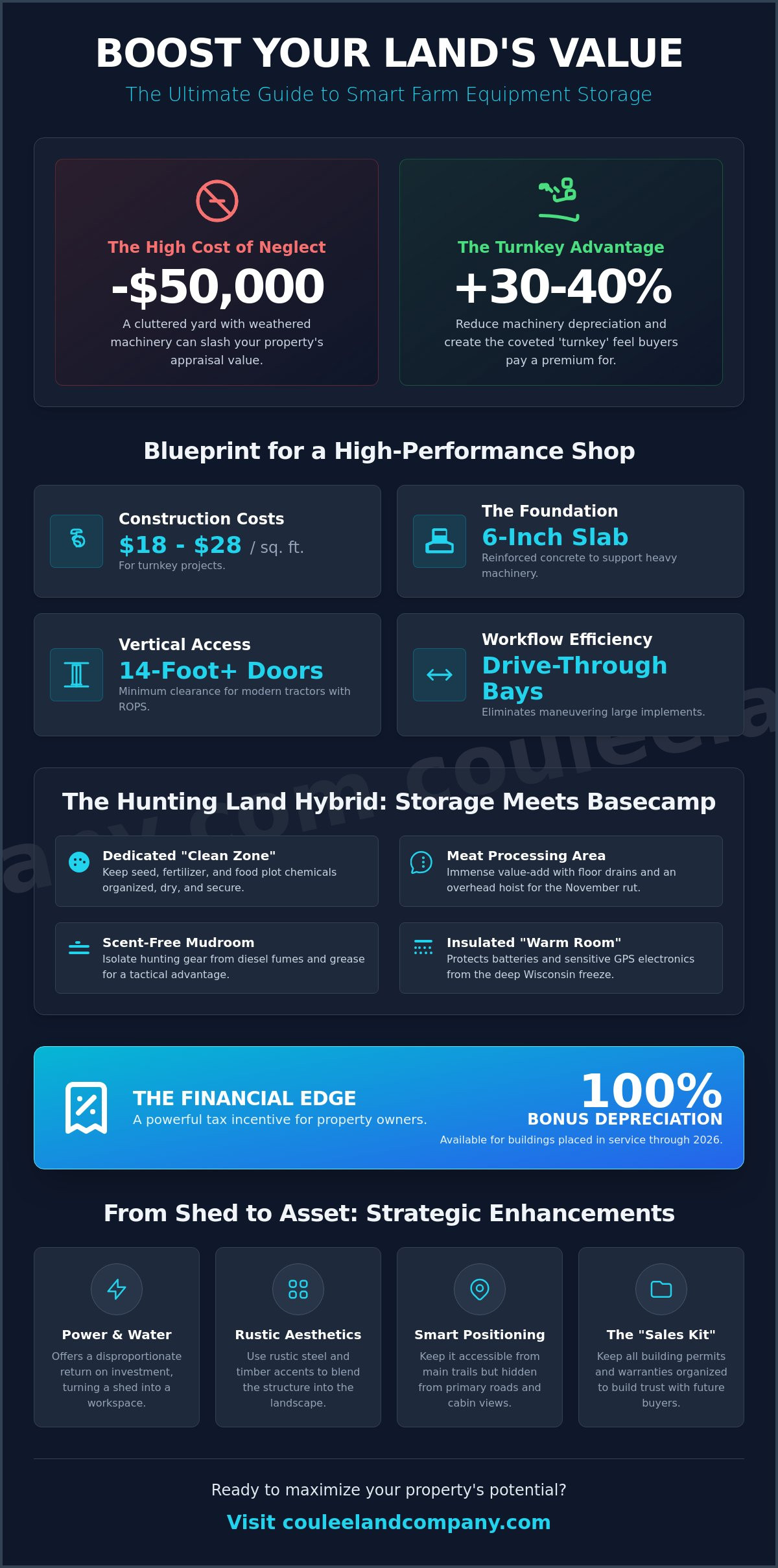
On a premium hunting property in Wisconsin’s Bluff Country, a cluttered yard full of weathered machinery is the fastest way to slash $50,000 off your land’s appraisal value. You’ve invested heavily in your tractors and implements, and you know that leaving them exposed to the harsh elements is essentially throwing money away. A well-designed shop isn’t just a place to park gear; it’s a signal to future buyers that the land has been managed with professional diligence. By building a high-utility structure, you can reduce machinery depreciation by 30% to 40% while creating that coveted turnkey feel that defines the most valuable properties in Buffalo County.
This guide explores Farm Equipment Storage on Rural Land: Design Ideas and Value Adds to help you secure a superior return on investment. You’ll learn how to leverage the 100% bonus depreciation available for buildings placed in service through 2026 and why modern farmhouse aesthetics are driving market premiums today. We will break down current construction costs, which range from $18 to $28 per square foot for turn-key projects, and show you how to design a space that protects your equipment and boosts your land’s market value long before you ever decide to sell.
Key Takeaways
- Optimize your daily workflow by incorporating drive-through bays and specialized “clean zones” for seed storage and food plot chemical mixing.
- Explore Farm Equipment Storage on Rural Land: Design Ideas and Value Adds. that create a turnkey experience for buyers, commanding a premium price in markets like Buffalo County.
- Enhance your property’s visual appeal by using rustic steel and timber accents that complement the rugged beauty of the Driftless Area.
- Master the logistics of building on steep coulee ridges and navigating the specific agricultural zoning ordinances of La Crosse and Vernon Counties.
Designing for Utility: High-Function Ideas for Rural Storage
Designing a building that works as hard as you do requires moving beyond basic four-wall structures. When considering Farm Equipment Storage on Rural Land: Design Ideas and Value Adds, utility must be the primary driver. Modern tractors, such as those used for extensive food plot management, often feature Roll-Over Protective Structures (ROPS) or high-clearance cabs that demand at least 14 feet of vertical door clearance. Incorporating drive-through bays is another 2026 standard. It eliminates the frustration of backing a 15-foot seed drill into a tight corner. These design choices transform a simple building into a high-performance asset.
While there are many types of storage sheds available, a custom agricultural shop with reinforced concrete floors is essential for mid-winter maintenance. A 6-inch slab ensures you can safely operate heavy jacks and store your heaviest machinery without cracking the foundation. This level of durability is what separates a professional shop from a temporary fix.
To better understand this concept, watch this helpful video:
The Hunting Land Hybrid: Storage Meets Basecamp
On elite hunting properties, your storage building should double as your command center. We recommend designing a dedicated “clean zone” for seed storage and chemical mixing to keep food plot supplies organized and dry. A separate scent-free mudroom is a game-changer for serious hunters. It keeps your field gear isolated from diesel fumes and grease. For those managing land in Buffalo County, integrating a meat processing area with floor drains and an overhead hoist adds immense value during the November rut.
Climate Control and Ventilation Strategies
Protecting your investment means managing the air inside the building. Passive ventilation systems are critical; they prevent the condensation that leads to rust on expensive implements. While a full HVAC system might be overkill, insulating a small portion of the shop is a smart move for 2026. This heated “warm room” protects the batteries in your cordless tools and keeps sensitive electronics found in modern GPS-guided tractors from failing during a deep Wisconsin freeze. Proper airflow and temperature management are the keys to longevity for both your tools and the structure itself.
Strategic Value Adds: Turning a Shed into a Property Asset
A storage building isn’t just a shelter; it’s a strategic investment in your property’s equity. In high-demand regions like Buffalo County, out-of-state buyers often seek turnkey properties. These individuals are willing to pay a premium for a site where the infrastructure is already established. They want to focus on the hunt, not on hiring contractors for a new pole barn from 500 miles away. When considering Farm Equipment Storage on Rural Land: Design Ideas and Value Adds., think about the long-term sale and the ease of ownership you are providing to the next steward of the land.
Bringing power and water to your structure offers a disproportionate return on investment. Research into the value of equipment storage shows that protected machinery maintains higher trade-in value, but the benefit to the land itself is equally significant. A shop with a functional sink and reliable electrical service transforms a basic shed into a year-round workspace. To ensure a smooth transition later, keep a “sales kit” that includes all building permits and manufacturer warranties. This level of organization builds trust during the brokerage process and proves the quality of your improvements.
Curb Appeal for the Recreational Buyer
Positioning is everything. Place your building where it remains easily accessible from the main trail but stays hidden from the primary road or the cabin’s main view. Use rustic steel siding or timber accents to ensure the structure blends into the surrounding timber. Softening the edges with native shrubs or a small screen of pines helps the building feel like part of the landscape rather than a stark industrial addition.
Brokerage Insights: What Buyers Look For in 2026
A professional storage solution signals to land specialists that the property has been meticulously managed. Implementing professional Farm Equipment Storage on Rural Land: Design Ideas and Value Adds. tells a buyer that you didn’t cut corners on land maintenance. We’ve seen that selling hunting land in Wisconsin is significantly easier when you can showcase robust infrastructure that supports modern wildlife management. If you’re wondering how your current improvements stack up, you might want to connect with an expert agent for a property valuation.
Implementation: Building in Wisconsin’s Bluff Country
Building in the Driftless Area requires a different mindset than constructing on the flat plains of the Midwest. Successfully executing Farm Equipment Storage on Rural Land: Design Ideas and Value Adds. in these rugged coulees means accounting for elevation changes before the first post is set. Post-frame construction remains the gold standard for Western Wisconsin. It offers the structural integrity needed to withstand heavy snow loads while providing the flexibility to span large interior distances without load-bearing walls. This method is efficient, durable, and highly respected by local appraisers.
Don’t overlook the importance of local zoning and setback requirements. While agricultural buildings are often exempt from the Wisconsin Commercial Building Code as of the October 2025 updates, county-specific ordinances in La Crosse or Vernon still dictate where you can dig. It’s also vital to plan for the future. Building a 60-foot shop today is significantly cheaper than trying to extend a 40-foot building in 2028. A larger footprint ensures you’ll have space for that next piece of machinery without the headache of a second construction phase.
Site Selection on Hilly Terrain
Managing runoff is non-negotiable when building on a ridge or in a valley. You must design for aggressive drainage to prevent erosion from undermining your foundation during heavy spring rains. We also recommend utilizing the natural topography to create windbreaks. Positioning your structure on the leeward side of a hill or a stand of mature timber protects the building from the biting northwesterly winds that define Wisconsin winters. This strategic placement reduces heating costs and prevents snow from drifting against your main bay doors.
Local Resources and Specialist Guidance
Consulting with Buffalo County experts ensures your build matches regional market expectations and adds real equity. Our agents, including Mike Law and Bryan Lemke, regularly evaluate how outbuildings impact a property’s total valuation. They can help you determine if your proposed layout will appeal to the next generation of trophy whitetail hunters or if you’re overbuilding for the specific local market. Getting this perspective early can save you thousands in misplaced construction costs.
Building Equity in Wisconsin’s Premier Hunting Grounds
Building a high-performance storage facility is a direct investment in your property’s future market position. You’ve learned how 14-foot clearance doors and reinforced concrete floors preserve your machinery’s value while creating the turnkey experience out-of-state buyers crave. It’s a strategic move that pays dividends during the brokerage process. By mastering the unique drainage and zoning challenges of the Driftless Area, you transform a simple shed into a permanent asset that commands a premium.
Implementing Farm Equipment Storage on Rural Land: Design Ideas and Value Adds. demonstrates a commitment to elite land management. As Wisconsin’s Land and Property Sales Specialists, we’ve seen how these improvements maximize sale prices in Buffalo County, the #1 trophy whitetail destination in the world. Our team at Coulee Land Company combines a passion for the outdoors with a proven track record of helping owners realize the full potential of their acreage.
Ready to find a property with the perfect infrastructure? View our hunting land listings here.
Your dream of owning a piece of Bluff Country starts with a solid foundation. We look forward to helping you build it.
Frequently Asked Questions
Does adding a storage shed always increase land value?
Adding a high-quality storage shed increases land value by providing a turnkey solution that appeals to buyers in regions like Buffalo County. While a dilapidated structure can hurt property appeal, a professional building signals that the land has been managed with the diligence expected of a premier hunting tract. Proper storage can reduce machinery depreciation by 30% to 40%, which is a significant factor for buyers who plan to manage the land themselves.
What is the best material for farm equipment storage in the Midwest?
Steel-sided post-frame construction is the most effective material choice for the volatile climate of the Driftless Area. This design handles the heavy snow loads typical of Western Wisconsin winters while requiring much less maintenance than traditional wood siding. Incorporating Farm Equipment Storage on Rural Land: Design Ideas and Value Adds. like high-rib steel panels and wainscoting ensures the structure remains durable against the elements and accidental equipment strikes for decades.
How much space do I actually need for a tractor and implements?
A 40×64 foot building is the recommended starting point for a modern tractor and a standard set of land management implements. While a 30×40 foot shed provides 1,200 square feet of space, it quickly becomes cramped once you add a seed drill, mower, and sprayer. You should plan for at least 25% more floor space than your current inventory requires to allow for safe maneuverability and the inevitable addition of new gear.
Do I need a permit for a pole barn on agricultural land in Wisconsin?
You will typically need a zoning permit or a certification of agricultural use, even though these structures are often exempt from the state commercial building code. In La Crosse County, owners must submit a specific form certifying the structure’s agricultural purpose to the zoning department. It’s vital to consult your local administrator in Vernon or Buffalo County to verify setbacks and specific ordinances before you begin any excavation work.