
Imagine sitting in your stand on a crisp November morning in Buffalo County, waiting for one of the trophy whitetail bucks this region is famous for, only to have a neighbor’s truck rattle down a hidden access road right through your sanctuary. This isn’t just a hypothetical nightmare; it’s a legal reality for buyers who overlook the fine print in a property deed. You’ve worked hard to invest in Wisconsin’s Bluff Country, and you expect your land to be a private haven for hunting and land management. It’s frustrating to realize that confusing legal jargon could grant others the right to cross your ridges or restrict exactly where you can build your dream cabin.
We believe your investment should be as solid as the limestone bluffs themselves. Learning how to navigate easement issues when buying land is the most critical step in protecting your privacy and your property’s wildlife capabilities. You’ll learn exactly how to identify these legal encumbrances, evaluate their impact on your hunting goals, and resolve complications before you sign the closing papers. This guide provides a pragmatic due diligence checklist and a clear breakdown of terms like “appurtenant” and “in gross” so you can move forward with the confidence of a seasoned land specialist.
Key Takeaways
- Distinguish between Easements Appurtenant and Easements in Gross to understand which access rights run with the land and which are merely personal agreements.
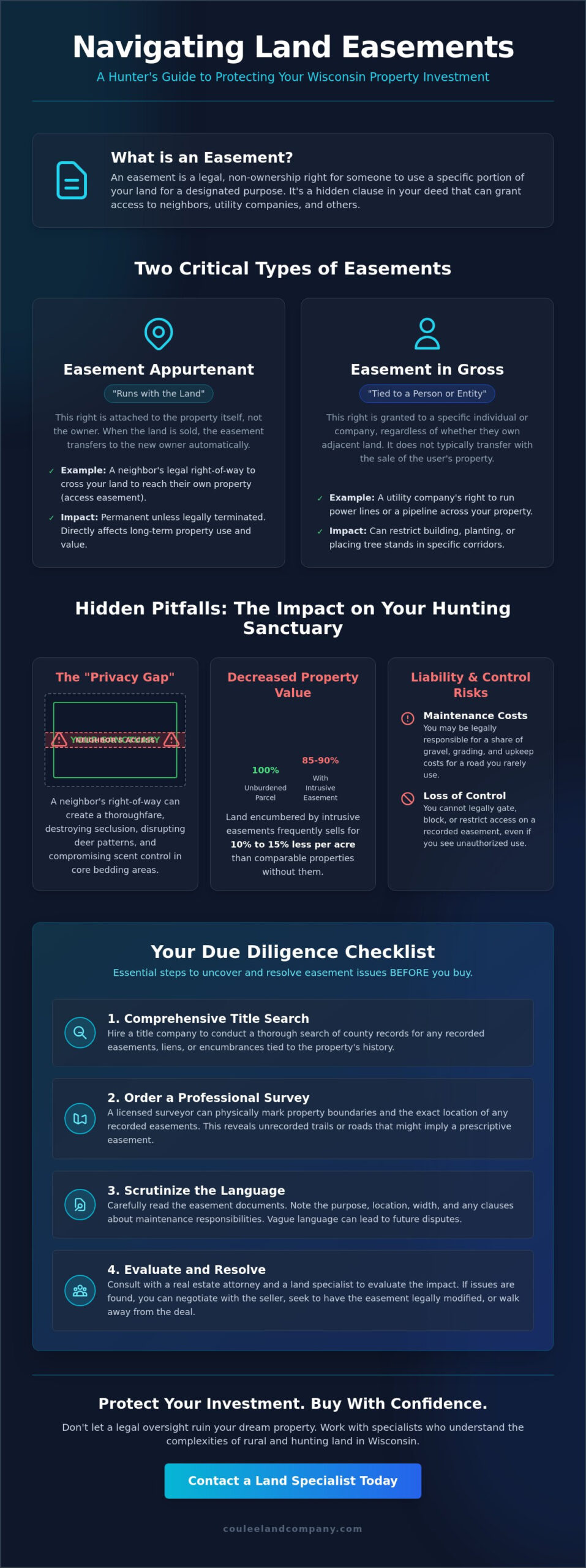
- Identify how a neighbor’s right-of-way can create a “privacy gap” that disrupts your sanctuary and compromises the seclusion of your trophy whitetail bedding areas.
- Master the essential steps for uncovering easement issues when buying land by utilizing comprehensive title searches and professional surveys before you reach the closing table.
- Determine the specific maintenance liabilities for shared access roads to ensure you are prepared for the ongoing costs of gravel and grading.
- Protect your investment in the famed Bluff Country by learning how to evaluate and resolve recorded encumbrances that could impact your property’s long-term value and wildlife capabilities.
Common Types of Easements in Rural and Hunting Land
Owning a piece of the famed Bluff Country is a dream for many hunters, but you’ve got to understand the legal framework of your deed before signing. An easement is a non-ownership right to use a specific portion of land for a designated purpose. Unlike a standard suburban lot where boundaries are often uniform, rural hunting properties carry layers of history that can create Common Types of Easements. You’ll primarily encounter “Easements Appurtenant,” which stay with the property title regardless of who owns it, and “Easements in Gross,” which typically grant rights to a specific utility company or individual.
To better understand how these legal rights function on a property, watch this helpful video:
Rural parcels in Western Wisconsin often feature complex histories involving “Express Easements” documented in the county courthouse. However, you might also face unrecorded historical uses that complicate easement issues when buying land. These undocumented rights often stem from decades of neighborly agreements or old logging paths that were never formalized. As Wisconsin’s Land & Property Sales Specialists, we’ve seen how these historical quirks can impact a sale if not identified during the due diligence period.
Access Easements and Landlocked Parcels
A property without public road frontage requires an “Easement by Necessity.” This legal requirement ensures you aren’t trapped, but the reality on the ground is often a shared gravel driveway or an old logging road. In the Tri-State area, these access points must be wide enough for heavy equipment or emergency vehicles. Maintenance responsibilities for these shared paths often fall on the landowners; reviewing the specific terms of upkeep is a pragmatic step for any serious buyer to avoid future easement issues when buying land.
Utility and Conservation Easements
Utility rights-of-way for power lines or pipelines can restrict where you place permanent stands or deep-rooted food plots. Conversely, conservation easements can be a powerful tool for habitat preservation. By trading certain development rights, you can secure significant tax benefits while protecting the land’s wildlife capabilities. These agreements often align with Wisconsin land management for wildlife, ensuring your acreage remains a sanctuary for trophy whitetails for generations.
Hidden Pitfalls: How Easements Impact Hunting and Land Value
Buying land in Wisconsin’s Bluff Country is about securing a legacy. However, easement issues when buying land can compromise your vision before you even hang a stand. The “Privacy Gap” is a common reality for many buyers. If a neighbor holds a right-of-way through the heart of your property, your sanctuary becomes a public thoroughfare. A truck driving through at 6:00 AM on a crisp November morning doesn’t just make noise; it shifts deer movement patterns for days. Beyond the hunt, shared access roads carry hidden maintenance liabilities. You might find yourself legally responsible for 50% of gravel and grading costs for a road you rarely use. These burdens often lead to lower appraisals, as land encumbered by intrusive easements frequently sells for 10% to 15% less per acre than unburdened parcels.
- Management Restrictions: Easements often prohibit planting high-value timber or installing permanent structures within the right-of-way.
- Liability Risks: You may be liable for injuries occurring on your land even if the person was using a legal easement.
- Loss of Control: You cannot gate or block an easement, even if you see unauthorized individuals using it.
The Impact on Hunting Pressure and Scent Control
Successful land management relies on predictable scent control and zero pressure. An easement allows others to introduce human odor into your bedding areas at the worst possible times. To combat this, smart owners plant dense screens of switchgrass or Norway spruce along easement borders to create visual barriers. You must also watch for “Prescriptive Easements.” If a neighbor uses a trail across your land for 20 years without permission, they might gain a permanent legal right to it. It’s vital to consult with a land specialist to identify these risks before closing.
Limitations on Building and Infrastructure
Easements dictate where you can’t go. You won’t be allowed to build your dream country home directly over a utility line or a major gas easement. These corridors come with strict setback requirements that shrink your usable building envelope significantly. When scouting hunting properties, always verify the existence of unrecorded agricultural drainage easements. These buried tiles can prevent you from digging ponds or installing heavy permanent structures in what looks like a prime building spot.
How to Identify and Resolve Easement Issues Before Closing
Identifying easement issues when buying land requires a proactive strategy that goes beyond standard paperwork. You aren’t just buying a lot; you’re investing in a legacy. Follow these four steps to secure your investment and protect your future hunting grounds:
- Order a comprehensive title search: Ensure the search uncovers all recorded encumbrances, even those dating back 60 years or more.
- Commission a professional land survey: Have a surveyor mark easement boundaries directly on the ground to visualize how they impact your trophy whitetail habitat.
- Physically walk the property lines: Look for tire tracks, worn footpaths, or old utility markers that indicate “visible” easements not found in public records.
- Consult with a land specialist broker: Work with an expert who understands how these legal rights affect specific goals like timber harvests or food plot placement.
Essential Due Diligence for Land Buyers
Standard residential title searches often miss 75-year-old logging rights or historical grazing access. These old agreements can disrupt your land management plans and spook mature bucks. Use historical aerial photos from archives like the USDA to spot hidden trails from previous decades. Ask the seller direct questions about “gentleman’s agreements” or handshake deals with neighbors that could lead to prescriptive easement claims if left unaddressed.
Negotiating and Terminating Problematic Easements
If an access road cuts through a prime bedding area, it often makes sense to pay a neighbor to extinguish their rights. This buyout clears the title and restores total privacy to your Bluff Country retreat. Always draft a formal Maintenance Agreement to clarify financial responsibilities for shared roads before you sign. These discoveries are powerful levers to negotiate a lower price during the buying process. Use every discovery to ensure the final price reflects the true utility of the acreage. Expert guidance ensures that easement issues when buying land don’t become permanent obstacles to your outdoor dreams.
Secure Your Legacy in the Bluff Country
Buying a piece of Western Wisconsin is about more than a deed; it’s about protecting the integrity of your hunt. You’ve learned that identifying access rights and utility corridors is vital to maintaining a property’s wildlife capabilities. Overlooking easement issues when buying land can turn a dream tract into a legal headache that disrupts your land management goals. Our team at Coulee Land Company brings decades of experience to every transaction. We ensure that our expertise protects your investment from hidden title pitfalls. We specialize in the rugged terrain of the Bluff Country. Buffalo County alone accounts for more Boone and Crockett whitetail entries than any other county in the United States. As your Hunter’s Realtors, we don’t just find land. We vet every acre to ensure your sanctuary remains private and productive. Trust the specialists who understand both the legal fine print and the rhythm of the rut.
Browse our exclusive listings and find your perfect, hassle-free property today
Your future trophy property is waiting for you to take the next step.
Frequently Asked Questions
Can I block a neighbor from using an easement on my land?
You can’t legally block a neighbor from using a recorded easement on your property. An easement is a permanent legal right that stays with the land deed; obstructing a neighbor’s access to their hunting grounds can result in a court injunction or significant legal penalties. We’ve seen owners try to gate off access to trophy whitetail habitat, but Wisconsin courts consistently uphold these recorded rights to ensure property access remains functional.
Does a landlocked property always have a right to an easement?
A landlocked property doesn’t have an automatic right to access, but owners can seek an easement by necessity through Wisconsin Statute Chapter 82. This legal path allows landlocked owners to petition the town board for a public way if they’re cut off from a highway. Navigating easement issues when buying land requires this knowledge because a successful petition might force you to provide a 33-foot wide strip for your neighbor’s driveway.
How do I find out if there are easements on a piece of land I want to buy?
You find easements by ordering a title commitment and reviewing the preliminary title report from a professional title company. These documents list every recorded encumbrance, while a physical land survey reveals unrecorded prescriptive easements created by 20 years of continuous use. In Buffalo County, checking the Register of Deeds office ensures you see every utility line or access path that could impact your wildlife management plans.
Will an easement affect my ability to get a mortgage for hunting land?
An easement can affect your mortgage approval if it interferes with the property’s primary use or reduces its appraised value. Lenders like Compeer Financial require clear access and marketable title before they’ll fund a loan for recreational acreage. Addressing potential easement issues when buying land before you apply for a loan prevents the bank from denying your application due to a utility line sitting right where you planned your cabin.