
You’ve finally found it: forty acres of prime Buffalo County bluff country with a view that could stop a heart, but your excitement quickly turns to dread when you realize you don’t know if the rocky soil will actually “perc.” It’s a common fear for land buyers in the Driftless Area where unique topography and strict regulations can turn a dream property into a financial nightmare. You aren’t alone in feeling overwhelmed by the technical requirements of rural development, especially when the difference between a conventional system and a mound system can mean thousands of dollars in unexpected expenses.
We understand that true land stewardship starts with a solid foundation, not a money pit. That’s why we’ve crunched the numbers and consulted the latest state data to give you a clear, authoritative picture of the cost to install a well and septic system wisconsin 2026 edition. From the $50.50 DNR well notification fee to the nuances of drilling through granite bedrock, this guide provides the regional insights you need. You’ll learn the realistic 2026 budget ranges for various systems and gain the confidence to evaluate raw land potential before you ever sign a closing statement.
Key Takeaways
- Learn how the unique geology of the Coulee Region impacts well depth and influences your total drilling budget.
- Discover why the soil morphology test is the critical $1,000 gatekeeper for securing your Wisconsin building permit.
- Prepare for the total cost to install a well and septic system wisconsin 2026 by understanding the price gap between conventional and mound systems.
- Identify high-value investment opportunities by prioritizing raw land that already features a proven, “pre-perced” septic site.
- Build a realistic development budget using expert insights on 2026 labor trends and mandatory DNR permit fees.
Drilling a Private Well in Wisconsin: 2026 Cost Drivers
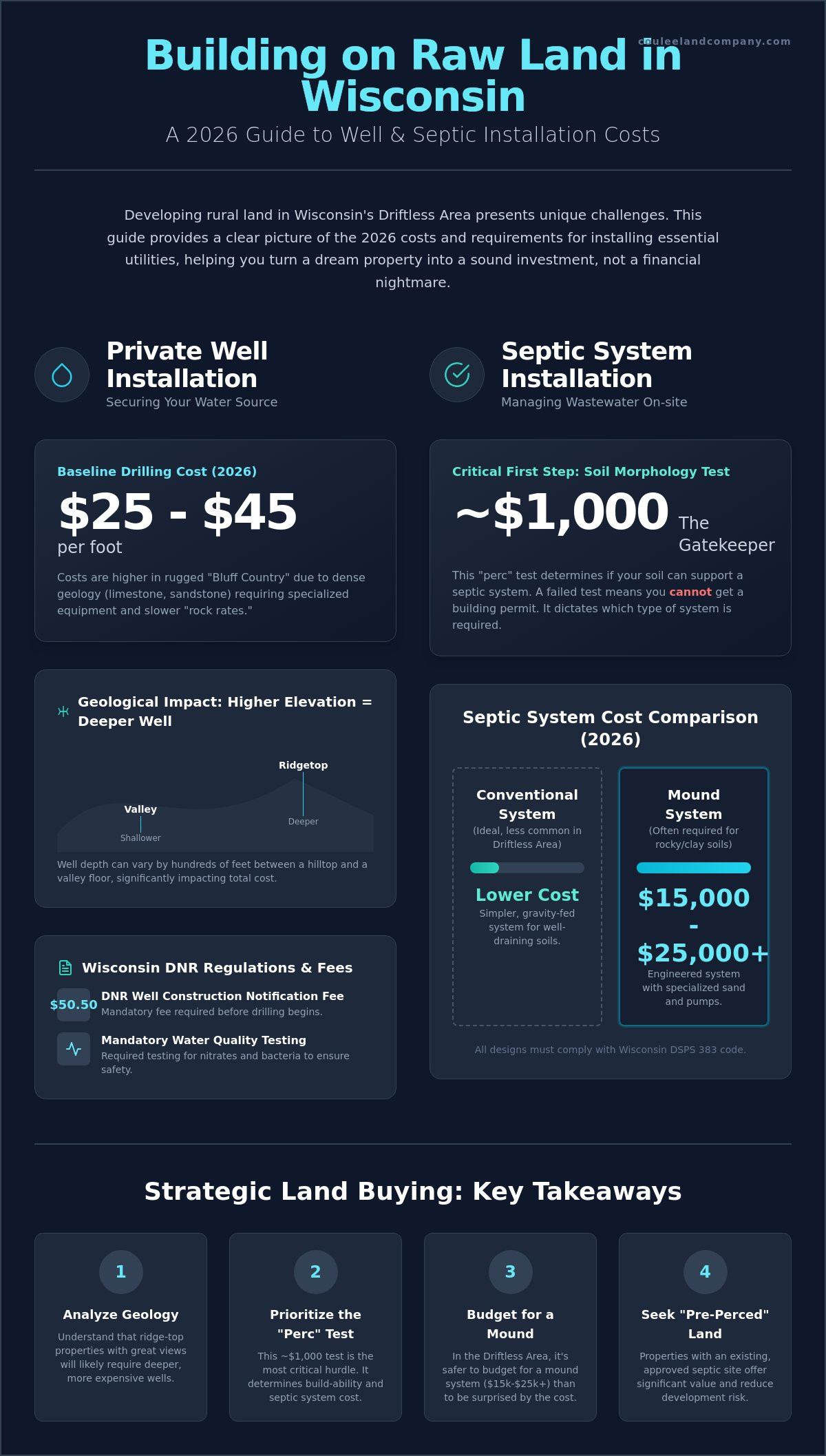
In the rugged terrain of Western Wisconsin, drilling a well is rarely a straightforward task. For the 2026 season, land buyers should budget for a baseline drilling cost ranging from $25 to $45 per foot. This estimate reflects the rising costs of specialized labor and high-grade steel casing required to reach the deep, clean water of the St. Peter and Jordan aquifers. While some flatter regions of the state might see lower rates, the specialized equipment needed to punch through the Bluff Country’s dense geology keeps prices at a premium for those seeking the best vantage points.
Getting water to the surface involves more than just a deep hole in the ground. You must also account for the submersible pump, the pressure tank, and the frost-protected water lines that connect the well head to your home. These components, combined with the professional installation required to meet state standards, are significant factors in the total cost to install a well and septic system wisconsin 2026. Understanding these variables upfront prevents the “money pit” scenario that haunts many first-time rural land buyers who fail to account for the technical demands of the land.
To better understand the financial realities of developing raw land, watch this helpful video:
Geological Factors in the Bluff Country
The Driftless Area is world-renowned for its trophy whitetails and limestone bluffs, but those same features present unique challenges for well drillers. When you’re building a ridge-top cabin to catch the best views, you’re often looking at a significantly deeper well than a valley farmstead. Our team has spent years evaluating properties in Buffalo County, where the depth to the aquifer can vary by hundreds of feet between a hilltop and a creek bottom. Drilling through layers of hard limestone and abrasive sandstone requires specialized bits and slower drilling speeds, which drillers often bill at a higher “rock rate.” It’s a pragmatic reality: the higher the elevation, the deeper the drill must go to tap into a reliable water source.
Wisconsin DNR Regulations & Permits
Wisconsin maintains some of the nation’s strictest groundwater protection standards, and for good reason. Before a single bit touches the dirt, you must secure a DNR Well Construction Notification, which currently carries a $50.50 fee. Your driller is also required to file a formal Well Construction Report. This document is a vital piece of your property’s history, detailing the exact depth, casing specifications, and grout used to seal the well from surface contaminants. As part of the 2026 compliance, you’ll also need to verify water quality through mandatory testing for nitrates and bacteria. While these regulations add to the initial complexity, they ensure your land remains a healthy, sustainable retreat for generations. Before we move on to waste management and the specifics of how septic systems work, remember that your well location dictates the necessary setbacks for your entire building site.
Septic System Installation in Wisconsin: From Perc Tests to Mound Systems
Once you’ve secured a reliable water source, the next hurdle is waste management. In Wisconsin, your soil’s ability to treat effluent determines your building permit’s fate. The soil morphology test, commonly known as a “perc” test, acts as a $1,000 gatekeeper. If the soil doesn’t drain properly, you simply cannot build. This initial step is vital when calculating the total cost to install a well and septic system wisconsin 2026, as it dictates whether you can use a budget-friendly conventional system or a more complex engineered solution.
Most rural buyers hope for a conventional system, but the reality in the Driftless Area often requires a mound. While conventional systems are simpler, mound systems in Wisconsin frequently exceed $15,000 to $25,000 in 2026 due to the specialized sand and pressurized distribution required. This price jump is a major component of the overall cost to install a well and septic system wisconsin 2026. All designs must adhere to the strict DSPS 383 code managed by the Wisconsin septic system program. This state-level oversight ensures that private onsite wastewater treatment systems (POWTS) protect our groundwater and the long-term health of your land.
Why Mound Systems Dominate the Coulee Region
Bluff country is defined by shallow bedrock and heavy clay soils that don’t allow for traditional gravity-fed drainage. In these areas, a mound system is the only viable option. These systems use a “sand lift” to treat wastewater before it reaches the restrictive natural soil. You’re paying for technical design and the logistical cost of hauling tons of specific, washed sand to your site. It’s a pragmatic necessity for property owners who want a home on the ridge without compromising environmental standards.
Hidden Installation Costs
Don’t overlook the site prep. Clearing timber or carving a flat spot on a steep Buffalo County grade adds significant excavation hours to your bill. You’ll also need a licensed electrician to wire the mandatory high-water alarms and lift pumps. If you’re currently evaluating a piece of raw land, our land specialists can help you identify these topographical challenges before you commit. Finally, remember that Wisconsin law requires a professional inspection and tank pumping every three years to keep your system in compliance and avoid costly emergency repairs.
Strategic Land Buying: Utility Readiness and Property Value
In the competitive Western Wisconsin real estate market, a property’s value isn’t just measured by its timber quality or trophy whitetail history. Smart buyers recognize that a “pre-perced” lot carries a significant premium because the hardest work is already done. When you’re calculating the total cost to install a well and septic system wisconsin 2026, you’re actually calculating the baseline for your property’s future equity. A site with a proven septic location and a documented water table removes the most expensive variables from the equation, turning a risky land purchase into a secure investment.
Stewardship is about more than managing food plots; it’s about protecting the very resources that make the land valuable. Modern, high-efficiency septic systems and properly grouted wells ensure that your pursuit of a rural retreat doesn’t compromise the groundwater or the local habitat. If you’re feeling uncertain about a specific parcel’s development potential, it’s best to consult our Wisconsin land specialists for property-specific guidance that goes beyond the surface level.
Avoiding the ‘Unbuildable’ Trap
Low-priced listings in the Coulee Region often hide a fatal flaw: a failure to pass a soil morphology test. A standard residential realtor might see a beautiful ridge and miss the shallow bedrock that makes a septic system impossible. We’ve seen buyers lose thousands because they didn’t perform due diligence on utility feasibility before closing. You should always look for red flags like “sold as-is” or “buyer to verify utilities” in listings that seem too good to be true. Instead, focus your search on our hunting properties for sale where we prioritize land with verified building potential and clear development paths.
The ROI of Infrastructure
There’s a clear distinction between “raw” acreage and “ready” property. Installing a functional well and septic system transforms a simple piece of dirt into a signature residential property. This infrastructure is the foundation of resale value. In a market where 2026 buyers are looking for turn-key opportunities, having these utilities in place can be the difference between a property that sits on the market and one that commands a record-breaking price. It’s a pragmatic investment that pays dividends in both your current enjoyment of the land and your eventual exit strategy.
Secure Your Legacy in Wisconsin’s Bluff Country
Buying raw land is a major milestone, but success depends on understanding the technical realities beneath the surface. You’ve learned how the rugged geology of the Coulee Region influences well depth and why the mandatory perc test is the ultimate gatekeeper for your building plans. Navigating the cost to install a well and septic system wisconsin 2026 requires a pragmatic approach to budgeting for mound systems and specialized drilling rates. These aren’t just expenses; they’re investments in the long-term viability of your property.
At Coulee Land Company, we’re more than just brokers. We’re authentic outdoor enthusiasts who’ve spent over a decade specializing in Buffalo County’s legendary Bluff Country. We know the land because we hunt the land. Our team is dedicated to helping you find a property that isn’t just a beautiful view, but a buildable, sustainable retreat that protects the water table and the trophy whitetail habitat. View Our Exclusive Wisconsin Land & Country Home Listings to find a parcel that meets our rigorous standards for development and hunting quality. Your dream of owning a piece of Wisconsin’s natural paradise is within reach when you have the right expertise in your corner.
Frequently Asked Questions
How much does a perc test cost in Wisconsin in 2026?
A professional soil morphology test, commonly called a perc test, typically costs approximately $1,000 in 2026. This fee covers the licensed soil tester’s labor and the specialized equipment needed to evaluate the soil profile. You must also account for county-level application and review fees, which vary depending on your specific location in the state.
Can I install my own septic system in Wisconsin to save money?
Wisconsin law requires that all Private Onsite Wastewater Treatment Systems (POWTS) be installed by state-licensed professionals. You cannot legally install your own system to cut costs. This regulation ensures that every system meets the strict environmental standards of the SPS 383 code and protects the long-term health of the local groundwater.
What happens if my land fails a perc test?
Failing a perc test for a conventional system usually means you’ll need to move to an engineered solution like a mound or at-grade system. These systems are designed to treat wastewater in areas with shallow bedrock or heavy clay. In rare cases where the soil cannot support any approved system, the lot may be deemed unbuildable for residential purposes.
How deep are most wells in Western Wisconsin’s Bluff Country?
Well depths in the Driftless Area are highly dependent on your property’s elevation. A ridge-top cabin in Buffalo County often requires a well depth of 300 to 600 feet to tap into a reliable aquifer. This depth variance is the single largest factor driving the total cost to install a well and septic system wisconsin 2026 for hilltop developments.