
A standard suburban home build bears little resemblance to the specialized engineering required to perch a cabin atop a 300 foot limestone ridge in the Wisconsin Bluff Country. While the dream of a legacy hunting property is timeless, the financial reality of breaking ground has evolved significantly. You likely understand that securing a prime piece of the Driftless Area is only the first step, yet the logistics of rural construction in 2026 can feel like a moving target. We’ve seen site preparation costs on hilly terrain fluctuate by as much as 18% over the last two seasons alone. This guide provides a definitive breakdown of the cost to build a cabin in wisconsin 2026, ensuring your budget is as rugged as the land itself.
We’ll move past generic estimates to focus on the pragmatic realities of building on hunting land, from $20,000 septic systems to the strategic ROI of high-end gear storage. You’ll gain a clear framework for 2026 price ranges and the expert knowledge needed to manage trades in our remote, world-class whitetail corridors. Here is exactly what it takes to turn a raw ridge top into a premier hunting headquarters without the sting of hidden expenses.
Key Takeaways
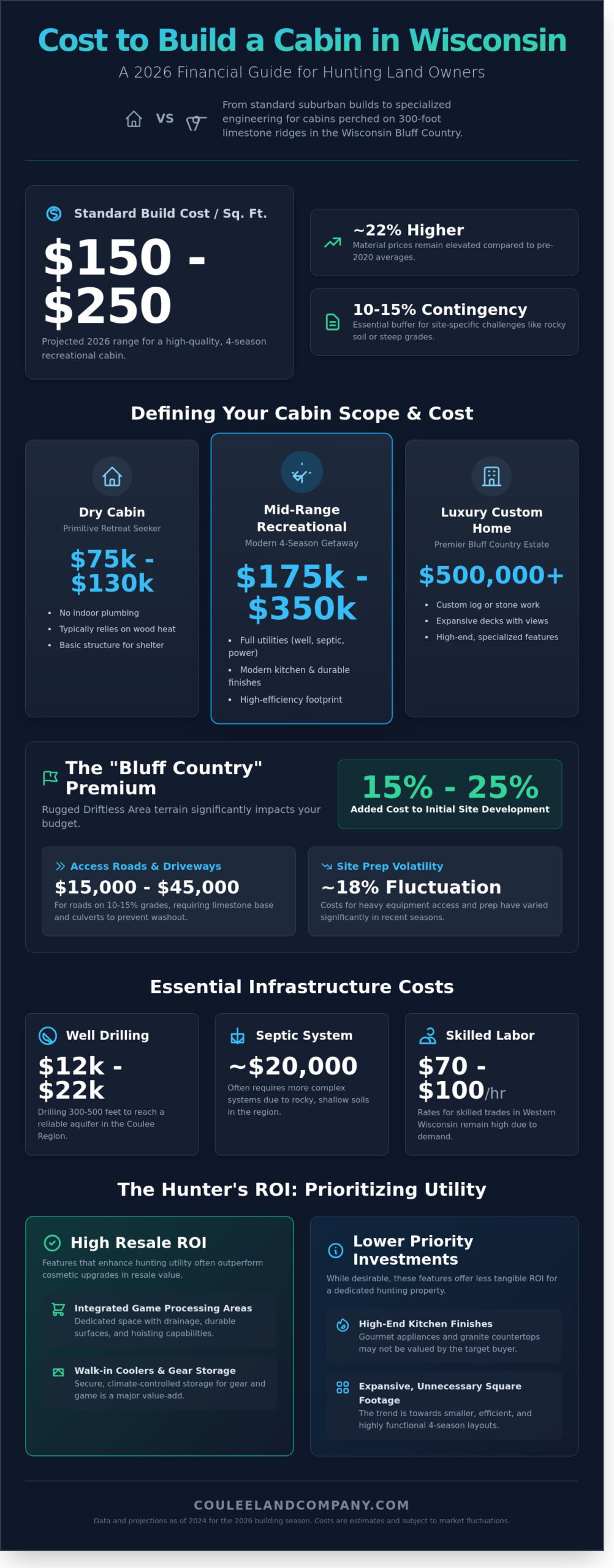
- Establish a realistic budget by exploring the projected cost to build a cabin in wisconsin 2026, where standard builds are expected to range from $150 to $250 per square foot.
- Understand the “Bluff Country” factor, including why the rugged Driftless Area terrain typically adds 15-25% to initial site development and heavy equipment access costs.
- Prioritize high-value hunting utility by learning why integrated game processing areas and walk-in coolers often outperform high-end kitchen finishes in resale ROI.
- Navigate the complexities of land selection in premier regions like Buffalo County to ensure your build site supports both tactical hunting advantages and structural integrity.
- Align your financial strategy with 2026 construction-to-permanent loan trends to streamline the transition from raw land to your first fire in the woods.
The 2026 Wisconsin Cabin Market: Price Ranges and Trends
Owning a piece of the legendary Wisconsin landscape requires a clear-eyed look at the financial reality of construction. For those eyeing the timber-heavy ridges of Buffalo County or the rolling woods near New Richmond, the cost to build a cabin in wisconsin 2026 has settled into a new, elevated baseline. You should expect to pay between $150 and $250 per square foot for a standard, high-quality build. While the extreme volatility of previous years has leveled off, material prices remain roughly 22% higher than pre-2020 averages. This shift has pushed many landowners toward smaller, high-efficiency footprints that prioritize year-round comfort over sheer square footage. Modern 4-season recreational structures are now the standard. Hunters and families want a legacy property they can use during the January muzzleloader season just as easily as the June fishing opener.
Defining Your Cabin Scope: Basic vs. Luxury
Your vision for the land dictates your investment level. A “dry” hunting cabin serves the primitive retreat seeker perfectly. These structures lack indoor plumbing and often rely on wood heat, keeping costs between $75,000 and $130,000 for the build alone. Most buyers target the mid-range sweet spot. These $175,000 to $350,000 recreational cabins feature full utilities, modern kitchens, and durable finishes. If you’re looking at Buffalo County for a custom log home in the heart of Bluff Country, expect to start at $500,000. These premium builds often include custom stone work and expansive decks designed to overlook trophy whitetail travel corridors.
The 2026 Labor and Material Outlook
Labor availability remains tight across Western Wisconsin. Skilled trades in the New Richmond and Buffalo County areas currently command rates between $70 and $100 per hour. This demand is driven by the continued popularity of hunting properties and rural escapes. To combat long-term energy costs, 2026 builds prioritize engineered wood products and high-performance windows. These materials offer superior durability against the harsh winters of the Coulee Region. It’s vital to include a 10% to 15% contingency fund in your initial budget. This protects your project from site-specific challenges like rocky soil or steep grade adjustments that are common in the Driftless Area. Calculating the cost to build a cabin in wisconsin 2026 requires this buffer to ensure the project reaches completion without compromising on quality.
- Dry Cabin: $75,000 – $130,000
- Mid-Range: $175,000 – $350,000
- Luxury Custom: $500,000+
- Labor Rates: $70 – $100 per hour
Site Development Costs: Navigating the Wisconsin Terrain
Building your dream retreat in the Driftless Area requires more than just a vision. The rugged topography of Western Wisconsin’s Bluff Country adds roughly 15% to 25% to initial site preparation compared to flatter regions. When calculating the cost to build a cabin in wisconsin 2026, you’ve got to account for the vertical nature of the land. Ridge-top views are iconic, but they demand heavy equipment access that can be prohibitively expensive. Constructing a driveway on a 10% to 15% grade often requires specialized limestone base layers and culvert systems to prevent washout during heavy spring rains. These access roads can easily run between $15,000 and $45,000 depending on the distance from the nearest town road.
Your hunting land purchase dictates every move your excavator makes. If you’re building near the Mississippi River or on a steep bluff, Wisconsin DNR regulations and local shoreland zoning ordinances come into play. These rules protect the landscape but require specific setbacks and erosion control plans that add several thousand dollars to your pre-construction budget. When you factor in the total cost to build a cabin in wisconsin 2026, remember that the land itself determines the price of the sticks and bricks.
Utilities: Well, Septic, and Power
Drilling a well in the Coulee Region is rarely a shallow endeavor. Most landowners should expect to drill between 300 and 500 feet to reach a reliable aquifer, with costs ranging from $12,000 to $22,000. Septic systems are equally site-specific. Because of the rocky, shallow soils common in Buffalo and Trempealeau Counties, a conventional drain field is often impossible. You’ll likely need a mound system, which typically costs between $18,000 and $28,000. Bringing power to a remote site costs roughly $10 to $20 per linear foot, making off-grid solar an increasingly attractive alternative for cabins tucked deep in the timber.
Excavation and Foundation Strategies
Clearing a build site involves more than just dropping trees. You need to preserve the wildlife funnels that make your property a trophy whitetail haven. Smart excavation keeps the cabin tucked into the timber edge rather than plopped in the middle of a bedding area. For the foundation, a walk-out basement is the gold standard for Wisconsin slopes. While more expensive than a simple slab-on-grade, it provides essential square footage and integrates naturally with the terrain. Managing erosion on these steep slopes is non-negotiable; silt fences and immediate hydroseeding are necessary to keep your topsoil from ending up in the valley floor. If you’re still searching for the perfect site, our team can help you find premium acreage that balances scenic views with buildable terrain.
Construction Costs by Cabin Type: 2026 Comparison
Understanding the cost to build a cabin in wisconsin 2026 requires a realistic look at how your building method interacts with the rugged terrain of the Driftless Area. Building on a ridge in Buffalo County isn’t the same as a flat lot in the suburbs. Your choice between logs, stick-built, or modular components dictates your final price-to-value ratio. We see many landowners prioritize “Turn-Key” pricing because it locks in labor and material rates, protecting your budget from the inflation spikes that hit the construction industry between 2021 and 2025. A turn-key contract simplifies your 2026 budget by wrapping excavation, foundation, and interior finishing into a single, predictable figure.
Log Cabin Kits vs. Stick-Built Construction
Log kits remain a popular dream for those buying hunting properties, but the initial savings are often deceptive. While a shell kit might price out at $65 to $90 per square foot in 2026, the specialized labor required for stacking and chinking adds another $50 per square foot. Maintenance is the real hidden cost. Real logs require re-staining and sealing every 3 to 5 years to prevent rot in Wisconsin’s humid summers and brutal winters. Stick-built construction offers more versatility for custom hunting layouts. You can easily incorporate mudrooms for wet gear or reinforced trophy rooms with 10-foot ceilings. Traditional framing usually costs 15% less in labor because specialized log-home contractors are harder to find and book in rural Coulee regions.
Modular and Prefabricated Options
Modular cabins are the fastest-growing segment for 2026 builds. These factory-built units offer a significant price advantage, typically ranging from $125 to $160 per square foot for the structure. The controlled environment eliminates weather delays, ensuring your base camp is ready before the 2026 November rut. However, the “Bluff Country” landscape presents unique logistical hurdles. You must confirm a semi-truck can actually reach your ridge-top lot. Many logging roads in Buffalo County feature 15% grades or tight switchbacks that a 53-foot trailer cannot navigate. If your site requires a crane rental to set modules from a distance, expect to add $5,000 to $10,000 to your site preparation costs. While modular homes offer a controlled cost to build a cabin in wisconsin 2026, they require clear access for heavy machinery and a level staging area for the delivery crew.
- Log Kits: High aesthetic value, high long-term maintenance, specialized labor.
- Stick-Built: Maximum customization, easier to finance, standard labor rates.
- Modular: Fastest timeline, fixed pricing, requires superior road access.
The Hunter’s Cabin: Specialized Features and ROI
In the rugged terrain of Western Wisconsin, a cabin’s value isn’t defined by the marble in the kitchen or the thread count of the carpet. It’s about how effectively the structure serves the harvest and the hunt. For buyers evaluating country homes with acreage, functional hunting utility often provides a significantly higher resale floor than high-end interior finishes. Integrating a dedicated game processing area with a floor drain and a commercial-grade walk-in cooler can increase a property’s market appeal by 15 percent among serious outdoorsmen. When you calculate the cost to build a cabin in wisconsin 2026, you must weigh these specialized upgrades against standard residential features to maximize your long-term return.
The “Ultimate Mudroom” is a cornerstone of this specialized design. It’s not just a place to kick off boots; it’s a zone for scent control and gear organization. Effective mudrooms in the 2026 market include:
- Independent ventilation systems to isolate cedar, earth, and cover scents from the main living area.
- Reinforced locker systems designed for heavy cold-weather clothing and 80-pound packs.
- Industrial-grade rubber flooring that handles snow melt, mud, and blood without degrading.
- Dedicated charging stations for electric bikes and thermal optics.
In regions like Buffalo County, appraisals for these properties are heavily influenced by the land’s wildlife capabilities. A property that includes a cabin designed specifically for hunters often appraises 12 to 18 percent higher than a standard rural residence because it appeals directly to the region’s most active buyer demographic.
Trophy Rooms and Interior Layouts
Your Great Room is the heart of the hunting camp experience. To properly showcase Boone and Crockett mounts, you need vaulted ceilings reaching at least 14 feet. We advise landowners to install 3/4-inch plywood backing behind the drywall during the framing stage. This provides the structural integrity needed to hang heavy shoulder mounts anywhere on the wall without searching for studs. Window placement is equally critical. You should position primary glass along the North or West elevations to overlook natural funnels or food plots. This layout lets you monitor deer movement during the “golden hour” without silhouetting yourself against interior lights.
Land Management Integration
The cost to build a cabin in wisconsin 2026 must account for more than just the living quarters. A successful hunting property requires a 30×40 or 40×60 pole shed to house tractors, seed drills, and ATVs. These outbuildings currently range from $45,000 to $75,000 depending on insulation and power needs. Your cabin’s footprint should connect seamlessly to established trail systems to ensure “low impact” site access. By tucking the cabin into a timber edge or a corner of the property, you keep the core bedding areas undisturbed. This is the only way to keep mature bucks on your dirt year-round and maintain the integrity of your sanctuary.
Are you looking for a property with superior wildlife capabilities? View our premier hunting properties and find your piece of the Bluff Country today.
Strategic Planning: From Land Selection to First Fire
Your project’s success depends on the dirt beneath the foundation. Selecting the right Buffalo County land is the first and most critical step in managing the cost to build a cabin in wisconsin 2026. A cheap lot often hides expensive problems like poor soil for septic systems or inaccessible building benches on steep bluffs. You need a site that balances trophy whitetail habitat with practical construction access.
Financing for 2026 has shifted toward construction-to-permanent loans. These products allow you to lock in an interest rate before the first shovel hits the ground. Most Wisconsin lenders currently require a 20% to 25% down payment based on the appraised value of the finished project. This appraisal is based on your blueprints and the land’s value. Secure your pre-approval early. It gives you leverage when negotiating with contractors who are already booking 12 months in advance.
Vetting a builder for a remote project requires a specific checklist. A builder who excels in a Madison suburb may struggle with the logistics of Buffalo County’s rugged terrain. Ask these questions:
- Do they have experience with private well and septic installations in rocky or clay-heavy soils?
- How do they handle material delivery on narrow, winding ridge roads?
- Can they provide three references for cabins built at least 20 miles from their home office?
Navigating Permits and Legal Requirements
The Wisconsin Uniform Dwelling Code (UDC) governs all new cabin construction. You must ensure your design meets state standards for insulation, structural integrity, and fire safety. Zoning nuances vary significantly between regions. For example, Buffalo County has strict shoreland protection ordinances that might require larger setbacks than St. Croix County. Expect the permitting process to take 60 to 90 days. Total construction timelines in 2026 typically span 14 months from blueprint approval to the final walk-through.
The Coulee Land Company Advantage
Our agents are more than just real estate professionals; they are land management experts. Agents like Mike Law understand how to identify buildable acreage that doesn’t compromise your hunting hot spots. We look at the topography through the lens of a hunter and a homeowner. We connect our clients with a vetted network of local contractors who understand the unique challenges of building in Bluff Country. This local insight is vital for controlling the cost to build a cabin in wisconsin 2026.
- Verify “perc” test results for septic suitability before closing on land.
- Confirm legal easement access for utility lines and heavy machinery.
- Finalize blueprints that account for Wisconsin’s heavy snow loads.
- Secure a builder contract with a clear “change order” policy to avoid budget creep.
Secure Your Legacy in the Wisconsin Bluff Country
Building a retreat in the heart of the Midwest requires a balance of strategic investment and a deep passion for the land. By 2026, market data suggests that construction costs will stabilize, though premium materials and site preparation for rugged terrain remain significant factors. Understanding the total cost to build a cabin in wisconsin 2026 allows you to prioritize high-ROI features like specialized gear rooms and strategic trail access. Success starts with selecting a property that offers superior wildlife capabilities, particularly in Buffalo County, which continues to lead the Boone and Crockett Record Book for trophy whitetails.
Coulee Land Company stands as Wisconsin’s Land & Property Sales Specialists, offering expertise that’s endorsed by the most respected voices in the outdoor television world. We don’t just sell acreage; we help you find the foundation for your hunting legacy. Whether you’re looking for a secluded ridge top or a valley floor with prime food plot potential, our team provides the diligent, hands-on guidance you need to make your vision a reality.
Find Your Perfect Wisconsin Building Site Today
Your dream of owning a piece of the famed Bluff Country is within reach, and the right ground is waiting for you to make it home.
Frequently Asked Questions
How much does a simple 1,000 sq ft cabin cost to build in Wisconsin in 2026?
Building a simple 1,000 square foot cabin in Wisconsin in 2026 typically costs between $175,000 and $250,000 for standard construction. This figure covers the basic structure and interior finishes but excludes land acquisition or major site prep. High-end custom builds in the Driftless Area often exceed $300 per square foot. Material prices have stabilized since 2022, but labor costs remain the primary driver of these 2026 estimates.
Is it cheaper to build a cabin or buy an existing country home in WI?
Buying an existing country home is generally 15 percent to 20 percent cheaper than building a new cabin from scratch. You avoid the immediate costs of site clearing, driveway installation, and utility hookups. However, new builds offer superior energy efficiency and the ability to optimize the layout for trophy buck management. Many buyers find that the cost to build a cabin in Wisconsin 2026 is a premium they’re willing to pay.
What are the hidden costs of building a cabin on a hunting property?
Hidden costs often include excavation fees ranging from $5,000 to $15,000 and driveway construction which averages $30 per linear foot in rugged terrain. Bringing power to a remote ridge can cost $10,000 or more depending on the distance from the main line. Don’t forget the expense of professional land management plans. These ensure your building site doesn’t disrupt the natural travel corridors used by local whitetail populations.
How long does it take to build a custom cabin in the Wisconsin Bluff Country?
A custom cabin build in the Wisconsin Bluff Country typically takes between 8 and 14 months from the initial site clearing to final inspection. The steep topography of Buffalo and Trempealeau Counties often requires specialized foundation work that adds 4 to 6 weeks to the schedule. Weather is a major factor. Winter construction in Western Wisconsin can cause delays, so most builders aim to have the structure dried in by November.
Do I need a special permit to build a cabin in Buffalo County, WI?
You need a standard Uniform Dwelling Code permit and a county-specific zoning permit to build in Buffalo County. If your cabin sits on a slope greater than 12 percent, you’ll likely need an erosion control plan approved by the Land Conservation Department. Sanitary permits are also mandatory before any construction begins. These regulations protect the integrity of the blufflands and ensure your investment meets all 2026 safety standards and environmental requirements.
Can I build a cabin myself to save on 2026 labor costs?
You can save approximately 40 percent on your total budget by acting as your own general contractor or performing the labor yourself. On a $250,000 project, this keeps $100,000 in your pocket. It’s a significant commitment that requires 20 to 30 hours of oversight per week. Most lenders require a licensed contractor for the structural shell to approve a construction loan, so you’ll need to plan your DIY phases accordingly.
What is the average cost of a well and septic system in Western Wisconsin?
A new well and septic system in Western Wisconsin typically costs between $15,000 and $27,000 combined. Drilling a well through the limestone layers of the Coulee Region costs about $35 to $50 per foot, with depths often reaching 250 feet. Conventional septic systems average $8,500, though a mound system required for poor soil can exceed $15,000. These figures are essential when calculating the total cost to build a cabin in Wisconsin 2026.
How does cabin construction affect the property tax on my hunting land?
Adding a cabin usually triggers a property tax increase because the building site is reclassified from undeveloped land to residential acreage. In counties like Buffalo or Jackson, this can raise the tax rate on that specific acre by 100 percent or more. While the rest of your hunting land might stay under Managed Forest Law rates, the cabin and its immediate footprint will be assessed at full market value by the local assessor.