
What if the biggest obstacle to owning your dream hunting property isn’t the price, but the conversation at your own dinner table? For countless hunters, the vision of a private piece of Wisconsin’s famed Bluff Country is crystal clear. You can already picture the food plots, the trail cam photos, and the sunrises from the stand. Yet, the fear of that one conversation, the one where a passion project is perceived as a selfish expense, keeps that dream locked away. The challenge of convincing your spouse to buy hunting land can feel more daunting than tracking a Boone and Crockett buck through thick cover.
This isn’t just another article; it’s your strategic guide to getting an enthusiastic ‘yes’. We’re going to dismantle the “selfish hobby” argument piece by piece, equipping you with the framework to present a land purchase not as a drain on family resources, but as a secure financial investment and the foundation of a multi-generational family legacy. You’ll discover how to address valid concerns about time and money head-on and transform a point of potential conflict into a shared vision for your family’s future.
Key Takeaways
- Learn how to reframe the purchase from a personal hobby into a shared family asset and multi-generational legacy.
- Understand the powerful financial arguments for owning recreational land, positioning it as a secure investment that appreciates over time.
- Discover a proven, step-by-step strategy for convincing your spouse to buy hunting land by presenting a data-backed vision that appeals to the entire family.
- See why premier regions like Buffalo County offer more than just world-class hunting-they represent a stable, prestigious investment in the famed “Bluff Country.”
Reframing the Purchase: From ‘Hobby Expense’ to ‘Family Legacy’
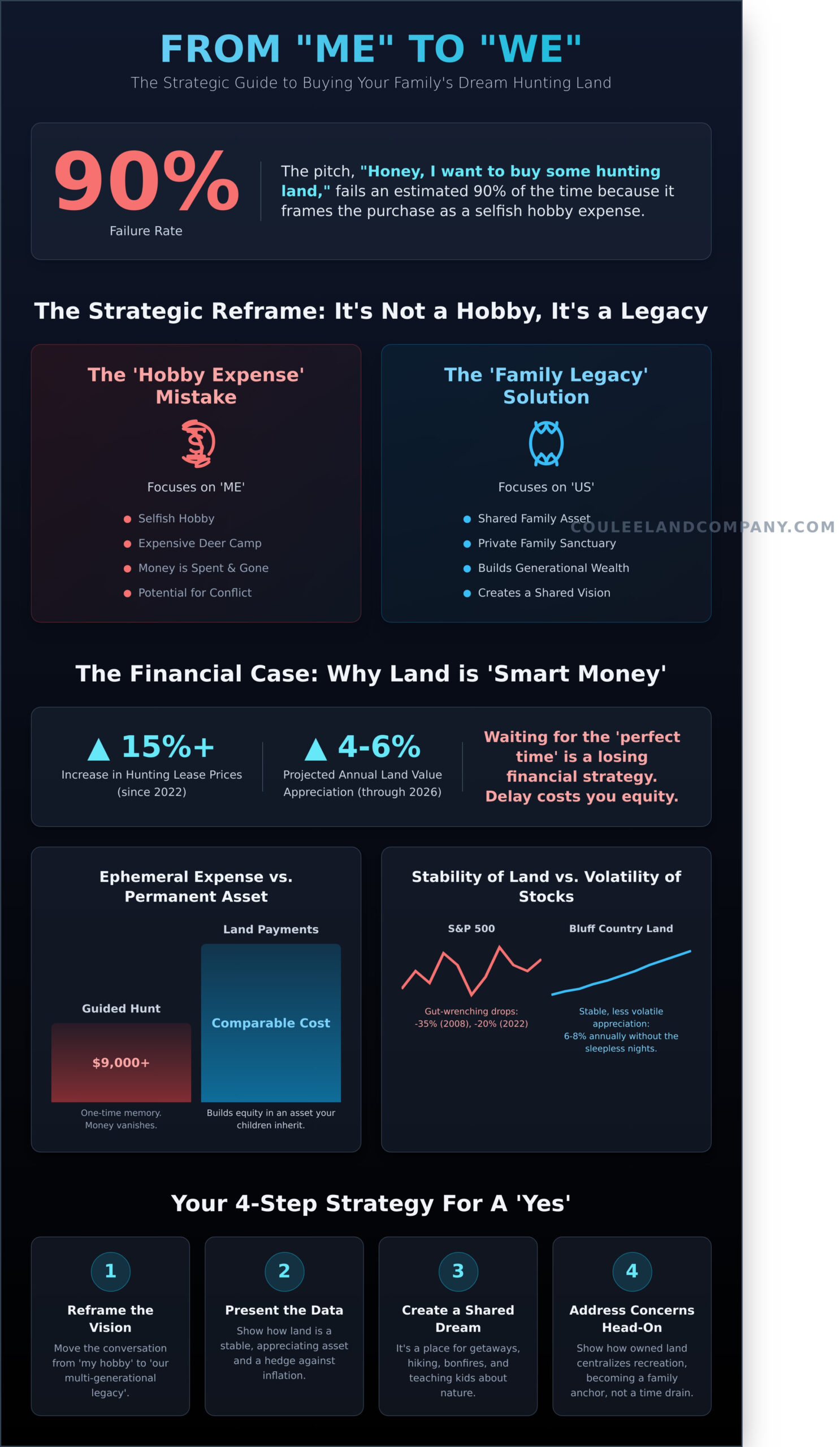
Let’s be direct. The pitch that begins with, “Honey, I want to buy some hunting land,” fails an estimated 90% of the time. It immediately frames the largest purchase you might ever make as a selfish hobby, an expensive deer camp for one. The secret to successfully convincing your spouse to buy hunting land isn’t about better sales tactics; it’s about a fundamental psychological shift in the presentation. You must move the conversation from ‘me’ to ‘us’.
This isn’t just about a place to hang a tree stand. This is about acquiring a tangible family asset. It’s a private sanctuary for weekend getaways, a classroom for teaching your children about the outdoors, and a gathering place for holidays and bonfires. The goal is to define the property as ‘Legacy Land’: a place where memories are built, not just where bucks are harvested. Think of the gear, leases, and out-of-state trips you’ve paid for over the years. That money is gone. Land, however, is a hard asset. It’s a foothold in the famed Bluff Country that grows in both financial and sentimental value every single year. This isn’t just a purchase; it’s a permanent investment in your family’s future.
Identifying Your Spouse’s Core Concerns
Before you present a single property listing, you must understand the ‘why’ behind a potential ‘no’. Is the primary concern financial, the time you’ll spend away, or the feeling of isolation from this part of your life? A common objection is the ‘Time Away’ myth. In reality, owning land can centralize your family’s recreation. Instead of you driving four hours to a distant lease, the entire family can be at your own property in 90 minutes for a weekend of hiking, checking trail cameras, and relaxing together. Legacy Land is a multi-generational anchor, a permanent home base where our family’s story is written into the soil itself.
The Cost of Doing Nothing vs. The Cost of Ownership
Waiting for the ‘perfect time’ is a losing financial strategy. Consider the current landscape: hunting lease prices in Western Wisconsin have inflated by over 15% since 2022, and the hunter density on public land has surged, diminishing the quality of the experience. Delaying a purchase doesn’t save money; it costs you equity. With rural land values projected to appreciate 4-6% annually through 2026, every month you wait is a month you fall behind.
The financial case becomes undeniable when you compare costs. A one-week guided elk hunt can cost upwards of $9,000. That money provides a memory, but it vanishes the moment you return home. A year of payments on a 40-acre parcel in Buffalo County might be comparable, yet it builds equity in an asset that your children will one day inherit. This is the fundamental power of sound real estate investing. You are converting ephemeral expenses into permanent family wealth and a lifetime of shared experiences.
The Financial Case: Why Hunting Land is ‘Smart Money’ in 2026
The conversation about buying a hunting property often starts with passion, but it solidifies with logic. For many couples, the biggest hurdle isn’t the dream; it’s the dollars and cents. Presenting the purchase not as an expense, but as a savvy investment is the most critical step in convincing your spouse to buy hunting land. This isn’t just about a place to hunt. It’s about acquiring a hard asset that grows in value, generates potential income, and secures a piece of your family’s financial future.
In Western Wisconsin, particularly in the hallowed ground of Buffalo County, we’ve seen recreational land consistently outperform expectations. This isn’t speculative; it’s a market trend built on the simple principles of supply and demand. They aren’t making any more of it, and the Bluff Country dirt that grows legendary whitetails is becoming a ‘Blue Chip’ asset for those wise enough to invest. It’s a legacy purchase with tangible financial rewards.
Land vs. Traditional Investments
Over the last 20 years, the S&P 500 has delivered an average annual return of nearly 10%, but that ride included gut-wrenching drops of over 35% in 2008 and nearly 20% in 2022. Prime hunting land in our region, by contrast, has demonstrated a more stable, less volatile appreciation, often in the 6-8% annual range, without the sleepless nights. This stability is a powerful argument. While your 401k exists on a screen, your land is a tangible asset. You can walk it, improve it, and create memories on it. It’s an investment that pays dividends in both dollars and quality of life. In an economy where inflation can erode savings, land is a proven hedge. The value of physical assets tends to rise with inflation, and farm real estate values have seen a nominal increase of 7.4% in 2023 alone according to USDA data, protecting your family’s wealth.
Revenue Potential: Making the Land Pay for Itself
A well-chosen property doesn’t just sit there; it can work for you. Many parcels in Western Wisconsin feature a mix of timber and tillable ground, opening up multiple income avenues that can offset property taxes, mortgage payments, and improvement costs. This is where a property transforms from a simple hunting tract into a performing asset, a key point for convincing your spouse to buy hunting land. Consider these possibilities:
- Agricultural Leases: Renting your tillable acres to local farmers provides a reliable, low-effort income stream year after year. A 40-acre property with 15 tillable acres could generate thousands in annual cash rent.
- Timber Management: Your woods are a long-term savings account. A professional Timber Stand Improvement (TSI) plan not only improves wildlife habitat but cultivates valuable hardwoods like oak and walnut. A selective harvest every 10-15 years can yield a substantial payout.
- Government Programs: Programs like the Conservation Reserve Program (CRP) pay landowners to convert sensitive cropland to native grasses or trees, providing annual payments while creating phenomenal habitat for deer, turkeys, and pheasants.
By diversifying your family’s portfolio with a tangible asset that offers multiple revenue streams, you’re making a powerful financial move. It’s an investment that grows, pays you back, and provides a backdrop for a lifetime of memories. The specialists at Coulee Land Company can help you identify properties with the highest potential for both trophy bucks and financial returns.
Creating the ‘Country Home’ Vision for the Whole Family
Let’s be direct. The biggest obstacle to owning your dream property is often the vision gap. You see pristine deer habitat and food plot locations; your spouse sees a primitive, drafty shack miles from civilization. The key to convincing your spouse to buy hunting land often lies in shifting the entire conversation from a “hunting camp” to a “family sanctuary.” This isn’t about compromise; it’s about upgrading the dream to include everyone.
The era of the bare-bones cabin is giving way to a new standard in rural real estate. Discerning buyers are now building high-end country homes with acreage, creating legitimate four-season retreats that serve the entire family. This approach transforms the property from a seasonal hunting expense into a tangible, appreciating family asset. It’s a hard asset with a strong track record; expert analysis of farmland value trends from agricultural institutions like the University of Illinois consistently underscores the stability and growth potential of rural acreage, making a country home a smart addition to your family’s financial future.
Beyond the investment, the recreational opportunities for non-hunters in Wisconsin’s Bluff Country are immense. This isn’t just empty land; it’s a private park for your family. Imagine:
- Miles of private trails for hiking, snowshoeing, or running ATVs.
- Foraging for spring morels, wild asparagus, and late-summer blackberries.
- Summer afternoons spent skipping stones and cooling off in a crystal-clear creek.
- Unforgettable nights stargazing, far from the light pollution of the city, identifying constellations with your kids.
The mental health return on investment is immediate and profound. Trading the constant noise and stress of city life for the quiet rustle of oak leaves and the call of a distant gobbler provides a level of peace that’s hard to quantify. In a world dominated by screens, this is the sanctuary your family needs. Giving your kids a place where dirt under their fingernails is a badge of honor and their curiosity is rewarded by discovering a fawn bed or a fossil is an invaluable gift in the digital age.
Bluff Country as a Year-Round Destination
This isn’t just a three-week destination in November. The Bluff Country offers a distinct appeal each season, from the explosion of green and the hunt for morel mushrooms in May to the lazy summer days by the water and the world-class fall colors of October. In an uncertain world, owning a piece of self-sufficient rural land also provides the ultimate ‘Plan B’ for family security. The ideal solution is often finding a property that already balances comfort and premier hunting, which is why our inventory of Country Homes For Sale serves as the perfect family-friendly middle ground.
Designing the Family Retreat
Success requires collaborative planning. Design a cabin or home that your spouse genuinely wants to visit, with amenities that rival a vacation rental. It’s also wise to establish “non-hunting zones” on the property, like a dedicated garden area, a fire pit, or a picnic spot by the creek, ensuring everyone feels a sense of ownership. A well-managed property, with its diverse habitats and thriving wildlife, provides a lifetime of hands-on nature education for your children, teaching them more than any textbook ever could.
The ‘Yes’ Strategy: How to Present the Plan
Once you’ve aligned your own goals, the real work begins: presenting the vision to your partner. This isn’t a sales pitch; it’s a strategic conversation built on respect, data, and a shared future. Success hinges on a thoughtful, multi-step approach that moves from the heart to the head, demonstrating that this dream is both emotionally fulfilling and financially sound.
Follow these five proven steps to build a compelling case for your family’s own piece of Bluff Country.
- Step 1: The ‘Soft Launch’. The initial conversation shouldn’t be about acres and asking prices. It’s about the vision. Paint a picture of a family legacy, a private sanctuary where your kids can trade screens for streams. Talk about sunrises over a misty ridge, family campfires, and creating a tradition that will echo for generations. You’re not selling a parcel; you’re sharing a dream.
- Step 2: The Research Phase. This is where you transition from dreams to data. Trail cam photos of trophy whitetails are exciting, but they don’t justify a six-figure investment. You need professional documentation: comparable sales reports, soil maps, timber value assessments, and analysis of the property’s long-term wildlife capabilities.
- Step 3: The Site Visit. A property is just lines on a map until you walk it together. Make the visit an experience, not an inspection. Plan a picnic by the creek or a hike to the highest point for the best view. Help them see the potential beyond deer season. This is where a plat map becomes a future cabin site, and an overgrown field becomes a thriving food plot and family garden.
- Step 4: The Financial Pro-Forma. Passion is powerful, but numbers are persuasive. Present a clear, conservative, and comprehensive financial picture. Include the mortgage, property taxes, potential income from CRP enrollments, and an honest assessment of maintenance costs. Show the historical appreciation of similar parcels; rural land values in Wisconsin’s ‘driftless area’ saw a 12.8% increase in 2022 alone. This reframes the purchase from a ‘hunting expense’ to a tangible investment.
- Step 5: The Partnership. The final, most crucial step in convincing your spouse to buy hunting land is to make it a joint venture. This must be our land, not just your hunting spot. Cede genuine control over the non-hunting aspects. Let them design the cabin, plan the trail network for hiking, or select the location for a future orchard. True partnership is the key to a shared ‘yes’.
Using Social Proof and Expert Testimony
Bringing in a third party adds immense credibility. An experienced Land Specialist isn’t just a realtor; they are a neutral expert who can validate your research and answer tough questions. They act as a ‘Hunter’s Realtor,’ bridging the gap between your passion for the outdoors and the pragmatic financial realities of the purchase. They can also share success stories from other families, providing powerful social proof that this lifestyle is achievable and rewarding.
Addressing the ‘Maintenance’ Objection
The vision of endless weekend work can be a major roadblock. Reframe land management as a shared family project, not a solitary chore. Modern technology makes ownership far easier than it was a generation ago, with tools like cellular trail cameras and remote-access smart gates reducing the need for constant on-site presence. For those with limited time, the ‘turn-key’ option-buying a property with established food plots, trail systems, and stands-means you can start enjoying your investment from day one. Let our team of Land Specialists build the professional case for your dream property.
Why Buffalo County and Coulee Land Co are the Winning Move
You’ve laid the groundwork, established the financial benefits, and shared your vision. Now, it’s time for the final, decisive step: choosing the right location and the right partner. This isn’t just about buying land; it’s about making a legacy investment that your entire family will cherish. The right choice makes the difference between a tough negotiation and a shared dream realized. This is where the combined power of Buffalo County and Coulee Land Company becomes your greatest asset in convincing your spouse to buy hunting land.
The Buffalo County Advantage
Investing in Buffalo County isn’t just buying dirt; it’s acquiring a piece of a world-renowned brand. This is the undisputed epicenter of trophy whitetail hunting, a fact cemented by its utter domination of the Boone and Crockett record books for decades. This prestige creates a stable, high-demand market, ensuring your investment holds its value far better than land in less-proven regions. But the appeal extends far beyond the hunt. The breathtaking topography of the ‘Bluff Country,’ with its dramatic coulees and sweeping ridges, offers four-season beauty that appeals to hikers, photographers, and anyone seeking a peaceful escape. You’re not just joining a hunting club; you’re becoming part of a community of dedicated land stewards and conservationists who share a profound respect for the outdoors.
At Coulee Land Company, we aren’t just real estate agents. We are Wisconsin’s Land & Property Sales Specialists, a team of dedicated “Hunter’s Realtors” who live and breathe this lifestyle. We understand that a property’s value is measured in more than acres and price. It’s found in the strategic access points, the south-facing slopes for bedding, the potential for food plots, and the long-term wildlife capabilities. This deep, authentic expertise is our promise to you.
Our specialization in this coveted region grants our clients a distinct advantage: access. Many of the most legendary trophy properties in Western Wisconsin are sold before they ever touch the public market. Our unparalleled network, built on years of trust and proven results, means we know about these exclusive, off-market listings first. We connect serious buyers with legacy properties that others never get the chance to see.
From the moment you first step onto a property with us, we’re focused on the whole family’s vision. We don’t just point out deer trails; we identify the perfect ridge for a future cabin with a sunset view, discuss trail networks for family UTV rides, and help you see the land’s full potential. Our support continues long after the sale, connecting you with trusted local resources for everything from habitat management to construction. This comprehensive approach is the key to turning a hunting property into a family legacy, and it’s the most powerful tool for convincing your spouse to buy hunting land.
Your Next Steps to a ‘Yes’
The final step is a simple conversation. It’s time to bring your shared vision to the experts who can make it a reality. Here’s how to move forward together:
- Schedule a ‘No-Pressure’ Consultation: Sit down with a true specialist like Mike Law or Bryan Lemke. We’ll listen to both your goals and help you map out a strategy that works for your entire family.
- Request a Custom Property Search: We’ll create a curated list of properties that meets your specific criteria, balancing premier hunting opportunities with the lifestyle amenities your spouse desires, from buildable sites to recreational access.
- Start the Journey: The perfect property is waiting. The dream of owning a piece of Wisconsin’s famed Bluff Country is closer than you think.
Take the first step today. View our current hunting properties and let’s start the conversation that will lead to your family’s new legacy.
Secure Your Family’s Legacy in Wisconsin’s Bluff Country
The conversation about buying land transforms when it’s no longer just a hobby expense, but a tangible family legacy and a smart financial investment for 2026 and beyond. You’ve learned how to frame the purchase as a shared dream, a country getaway where memories are made for generations. A successful strategy for convincing your spouse to buy hunting land involves presenting a clear vision that benefits the entire family. That’s where having an expert guide is critical.
As Wisconsin’s Land & Property Sales Specialists, endorsed by hosts from top outdoor television shows, our expertise in Buffalo County is unmatched. This is the county that dominates the Boone and Crockett Record Book, and our team understands its unique value for both recreational land and rural residential sales.
Start your search for the perfect family legacy property with Coulee Land Company today.
The property you’ve both dreamed of is out there. Let’s make it yours.
Frequently Asked Questions About Buying Hunting Land
Is buying hunting land a better investment than the stock market?
Hunting land is a tangible asset that offers different, often more stable, returns than the stock market’s volatility. According to the Realtors Land Institute, rural land values saw a 7.4% increase in 2022 alone. It’s an investment you can actively use and enjoy with your family, creating a legacy that goes far beyond a stock certificate. This provides both financial and personal returns that you simply can’t get from Wall Street.
How can I involve my non-hunting spouse in the land-buying process?
Focus on the shared family experiences the property will create beyond just the hunting season. Frame it as a private family retreat for camping, hiking, birdwatching, or building a future cabin. A key part of convincing your spouse to buy hunting land is to walk properties together and dream about the future. Show them how it’s a four-season getaway and a legacy for your children, not just a personal hobby.
What are the hidden costs of owning hunting land I should tell my spouse about?
Be transparent about costs beyond the mortgage to build trust. You should budget for annual property taxes, which can vary by county, and liability insurance, typically costing between $400 and $700 per year. Also, plan for maintenance expenses like trail clearing, food plot implementation, and potential property line surveys. A safe estimate is to budget an additional 1-2% of the land’s value each year for these ownership costs.
Can we generate income from our hunting land to cover the mortgage?
Yes, generating income is a realistic goal for many landowners. You can lease tillable acres to local farmers, enroll eligible land in the Conservation Reserve Program (CRP) for annual government payments, or implement a sustainable timber harvest plan. Some owners even lease hunting rights for specific seasons. These strategies can significantly offset, and in some cases completely cover, your annual mortgage and tax payments, making ownership more affordable.
How much land do we actually need for a quality hunting and family experience?
For a quality deer hunting experience for one or two people in Wisconsin’s Bluff Country, 40 acres is a widely accepted minimum to effectively manage wildlife. If your goal is a broader family retreat with space for a cabin, extensive trails, and multiple stand locations, we find that parcels of 80 acres or more provide the best versatility and seclusion. This larger size ensures your activities won’t pressure the local deer herd.
What if we buy land and decide we want to sell it later?
Quality recreational land, particularly in legendary regions like Western Wisconsin, has historically been a highly liquid asset with strong appreciation. The demand for private hunting parcels has never been higher. Our team at Coulee Land Company leverages a national marketing platform to connect sellers with qualified buyers. A well-managed property in a prime location is an asset you can confidently sell when the time is right.
How do I explain the ‘Land Management’ aspect to someone who isn’t a hunter?
Explain land management as “improving the property for all wildlife and family enjoyment,” not just for hunting. It’s like gardening on a much larger scale. It involves creating healthier forests through timber stand improvement, planting food sources that attract everything from trophy bucks to songbirds, and maintaining clear trails for hiking. It’s about being a good steward of a natural resource, a goal everyone can appreciate.
Is Buffalo County, WI really worth the premium price tag?
Absolutely. Buffalo County’s premium is justified by its unparalleled history of producing world-class whitetail deer. It holds the number one global ranking for Boone and Crockett record book entries, a distinction no other county can claim. When you buy land here, you aren’t just buying acres; you’re investing in the world’s best genetics and a legendary hunting heritage. For serious hunters, that access is worth every penny.