
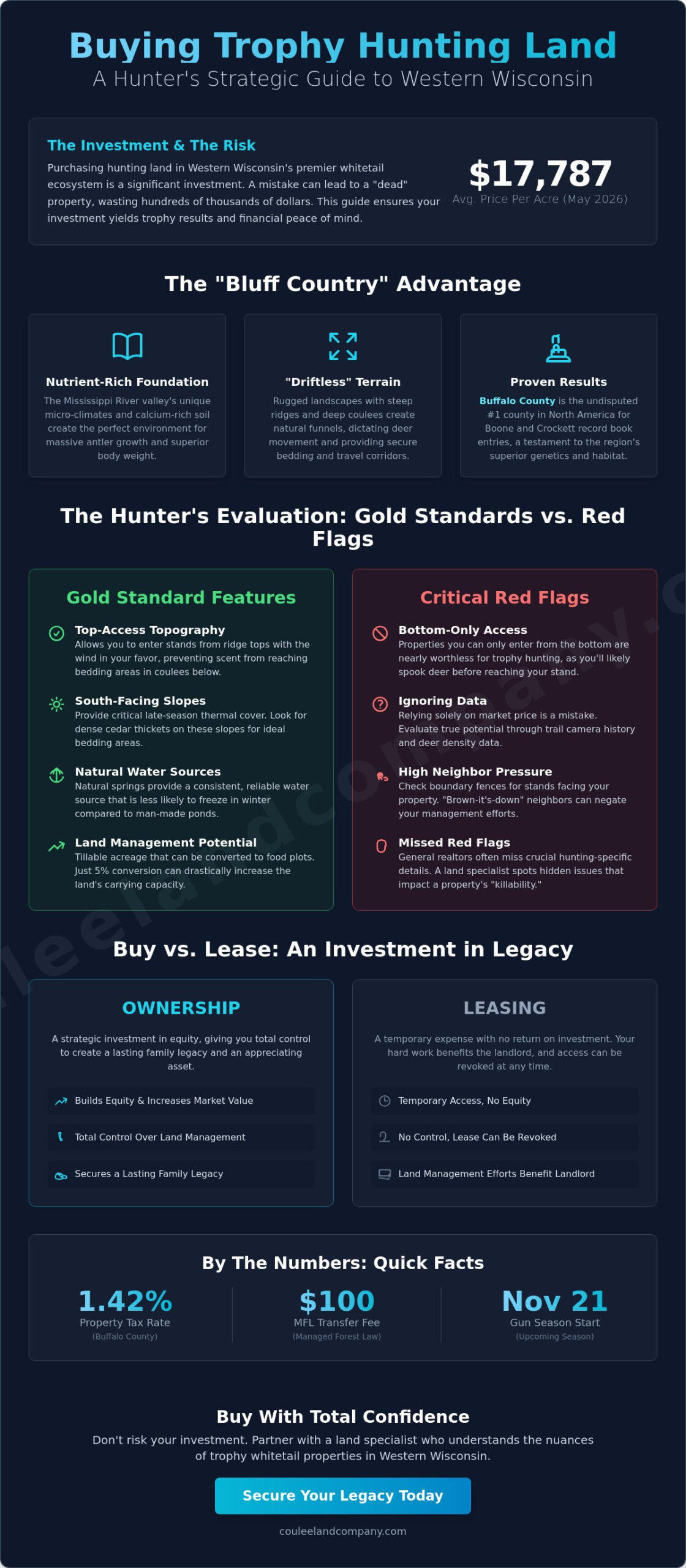
Why do some hunters consistently harvest 170-class bucks while others stare at empty food plots on land they paid hundreds of thousands for? You understand that buying hunting land in western wisconsin is about more than just a real estate transaction; it’s about securing a piece of the world’s premier whitetail ecosystem for your family’s future. With the average price for hunting land reaching $17,787 per acre in May 2026, you can’t afford to make a mistake on a “dead” property that lacks proper deer movement or habitat potential.
We believe your investment should yield both trophy results and financial peace of mind. This guide promises to walk you through the process of evaluating “Bluff Country” dirt, from understanding the 1.42% property tax rates in Buffalo County to navigating the new $100 MFL transfer fees. We’ll preview everything you need to know about current 2026 market trends, land management strategies, and the specific regulations for the upcoming November 21 gun season so you can buy with total confidence and claim your spot in the record books.
Key Takeaways
- Understand how the nutrient-rich soil of the Mississippi River valley creates the micro-climates responsible for Western Wisconsin’s dominance in the Boone and Crockett record books.
- Identify the “gold standard” of hunting properties by prioritizing top-access topography and south-facing slopes for critical late-season thermal cover.
- Gain a competitive edge when buying hunting land in western wisconsin by learning to spot hidden red flags that general realtors often miss.
- Evaluate the true potential of a property through trail camera history and deer density data rather than relying solely on market price.
- Implement strategic land management practices that transform raw acreage into a premier trophy whitetail destination and a lasting family legacy.
Why Western Wisconsin’s Bluff Country is the Premier Destination for Hunting Land
Western Wisconsin’s Bluff Country isn’t just a scenic backdrop; it’s a biological powerhouse. The unique micro-climates found within the Mississippi River valley, combined with calcium-rich soil, create the perfect foundation for massive antler growth. When you’re buying hunting land in western wisconsin, you’re investing in a region that consistently produces world-class results. This specific environment allows whitetails to reach their full genetic potential, far surpassing other Midwestern states in both bone density and body weight.
To better understand the fundamentals of this investment, watch this helpful video:
Buffalo County remains the undisputed king of whitetail records. It dominates the Boone and Crockett Record Book, holding the title for the most entries of any county in North America. This dominance isn’t a coincidence; it’s the result of superior genetics and a landscape that provides incredible security cover. Owning land here means you’re building a legacy on the same ridges featured in the world’s top outdoor television shows, turning an aspirational dream into a tangible, appreciating asset.
The Geography of Buffalo County and Beyond
The Western Wisconsin’s Bluff Country is defined by its “driftless” terrain, a rugged landscape that escaped the flattening effects of the last glacial period. This creates steep ridges, deep coulees, and natural funnels that dictate deer movement with surgical precision. These topographical features provide ideal bedding areas on south-facing slopes and secure travel corridors that aren’t found in flatter regions. You can find deep-dive regional stats on our Buffalo County community page to see how this terrain translates to hunting success.
Why Buying Beats Finding a Hunting Lease
Leasing land is a temporary expense, but buying hunting land in western wisconsin is a strategic investment in equity. While a lease can be revoked at any time, ownership gives you total control over the property’s future. You can implement multi-year Timber Stand Improvement (TSI) projects and establish permanent food plots that increase the property’s market value. Owning the dirt ensures that your hard work in land management stays with your family for generations, rather than simply benefiting a landlord’s bottom line.
The Hunter’s Evaluation: Key Features to Look for Before You Buy
Evaluating a property requires more than a casual walk through the woods. It demands a strategic eye for “killability.” When you’re buying hunting land in western wisconsin, top-access properties are the absolute gold standard. Entering from the ridge tops allows you to hunt with the wind in your favor, preventing your scent from blowing down into the coulees where mature bucks bed. Properties with bottom-only access often spook deer before you even reach your stand. If you can’t get to your blind undetected, the acreage is essentially worthless for trophy hunting.
Bedding and thermal cover are equally vital. Look for dense cedar thickets and south-facing slopes that catch the winter sun. These areas are essential for late-season survival when temperatures drop. You must also evaluate neighboring pressure with a critical eye. If your neighbors practice “brown-it’s-down” hunting, your management efforts might be wasted. Check boundary fences for stands facing your property. Natural springs provide a consistent water source that won’t freeze as easily as man-made ponds, which is a major advantage in the rugged Driftless Area.
Evaluating Land Management Potential
Look for tillable acreage that you can convert into high-protein food plots. Converting just 5% of a property to strategic forage can drastically increase its carrying capacity. You can learn more about land management for wildlife by viewing our currently managed tracts. Many owners also utilize Wisconsin DNR landowner programs to offset costs through sustainable forestry initiatives, ensuring the land pays for itself over time.
Scouting the Timber and Habitat
Identify mast-producing trees, specifically white oaks. These are early-season magnets that drop acorns preferred by whitetails over almost any other food source. A healthy timber stand isn’t just about hunting; it’s a financial asset. Evaluating the health of the hardwoods can reveal potential future harvest income. This revenue helps offset your mortgage or land loan, which currently range from 6.75% to 8.25% APR in 2026. If you’re ready to see these features in person, our team can help you identify the best land for sale that meets these rigorous standards.
Securing Your Legacy: Navigating the Purchase with a Land Specialist
A general realtor might understand square footage and school districts, but they often overlook the critical red flags that determine a property’s hunting value. When buying hunting land in western wisconsin, you need an advocate who understands how to interpret trail camera history and assess deer density. We don’t just look at the acreage; we evaluate the wildlife capabilities and the long-term potential for trophy whitetail bucks. A specialist identifies hidden value, such as a property’s ability to hold mature deer despite neighboring pressure, which a residential agent would simply miss.
Navigating state-specific regulations is where expert guidance becomes indispensable. Over 50,000 landowners are currently enrolled in the Managed Forest Law (MFL) program, which can significantly reduce your tax burden. However, you must be aware of the 2026 legislative changes, including the $100 transfer fee and $300 withdrawal fee. With property tax rates sitting at 1.42% in Buffalo County and 1.63% in La Crosse County, these programs are essential for financial sustainability. We align your purchase with the broader context of the Wisconsin Department of Natural Resources Real Estate program to ensure your land use goals match state conservation priorities.
Why Experience in the Field Matters
Our team, led by experts like Mike Law and Bryan Lemke, brings decades of hands-on land management experience to every transaction. We’ve earned the title of “Wisconsin’s Land & Property Sales Specialists” through a relentless focus on the Driftless Area. Professional endorsements from celebrities in the outdoor television world validate our authority, proving that we speak the language of the hunter. We don’t just sell dirt; we provide a visionary approach to land ownership that general brokerages cannot replicate.
Your Next Steps to Owning the Bluff
Preparing for a recreational land purchase requires a solid financial strategy. Most lenders expect a down payment of 20% to 35% for undeveloped tracts, with interest rates in May 2026 ranging from 6.75% to 8.25% APR. Once your financing is in order, the process moves quickly from offer to closing. Coulee Land Company streamlines every detail, from habitat assessment to the final handshake. You can start your search today and view exclusive hunting properties that represent the very best of the Bluff Country legacy.
Claim Your Piece of the Bluff Country Legacy
Owning a premier whitetail property requires more than just capital; it demands a strategic understanding of the land’s biological and topographical potential. We’ve explored why top-access ridges and nutrient-rich soil make this region the world’s best whitetail dirt. You now understand the importance of navigating 2026 MFL regulations and evaluating neighboring pressure to protect your investment. Buying hunting land in western wisconsin is a significant step toward securing a family legacy that will last for generations.
Coulee Land Company brings decades of combined land management and brokerage experience to your search. We specialize in the high-demand Buffalo County whitetail dirt that consistently produces record-breaking bucks. Our expertise is backed by endorsements from leading outdoor television professionals who trust our deep knowledge of the Driftless Area. Don’t settle for a generic realtor when you can partner with the “hunter’s realtors” who live and breathe this lifestyle every day.
Your dream of owning a world-class hunting property is within reach. View Our Exclusive Western Wisconsin Hunting Land Listings today to find the tract that meets your rigorous standards. We look forward to seeing you in the woods soon.
Frequently Asked Questions
Is Buffalo County really the best place for trophy whitetails?
Yes, Buffalo County holds the record for the most Boone and Crockett whitetail entries of any county in North America. This ranking isn’t just about genetics; it’s about the rugged “driftless” terrain that provides unmatched security cover for aging bucks. While neighboring counties like Trempealeau and La Crosse produce incredible deer, Buffalo’s specific topography and long-standing culture of age-class management make it the gold standard for trophy hunters in 2026.
How much should I expect to pay for hunting land in Western Wisconsin in 2026?
As of May 7, 2026, the average price for hunting land in Wisconsin is $17,787 per acre. Most listings for quality parcels average around $349,343 for a 62-acre lot. When buying hunting land in western wisconsin, it’s also important to factor in current interest rates for undeveloped land loans, which range from 6.75% to 8.25% APR depending on your down payment and terms.
What is Managed Forest Law (MFL) and how does it affect my taxes?
Managed Forest Law is a state program that can reduce your property taxes by nearly 80% if you follow a sustainable forestry plan. This is a vital tool for managing Wisconsin’s 1.42% average property tax rate. You should be aware of the March 2026 bill that updated program fees, including a $100 transfer fee and a $300 withdrawal fee, which are used to support the state’s conservation fund.
Can I build a cabin or country home on Western Wisconsin hunting land?
You can typically build a cabin or home on your land, provided the parcel meets specific county zoning ordinances and any MFL requirements. If your land is enrolled in the MFL program, you’ll need to work with a specialist to withdraw the specific acreage intended for the building site. Our team handles both hunting tracts and country home brokerage to ensure your building plans don’t interfere with your property’s wildlife capabilities.